Best Mouse Traps: Every Type Compared
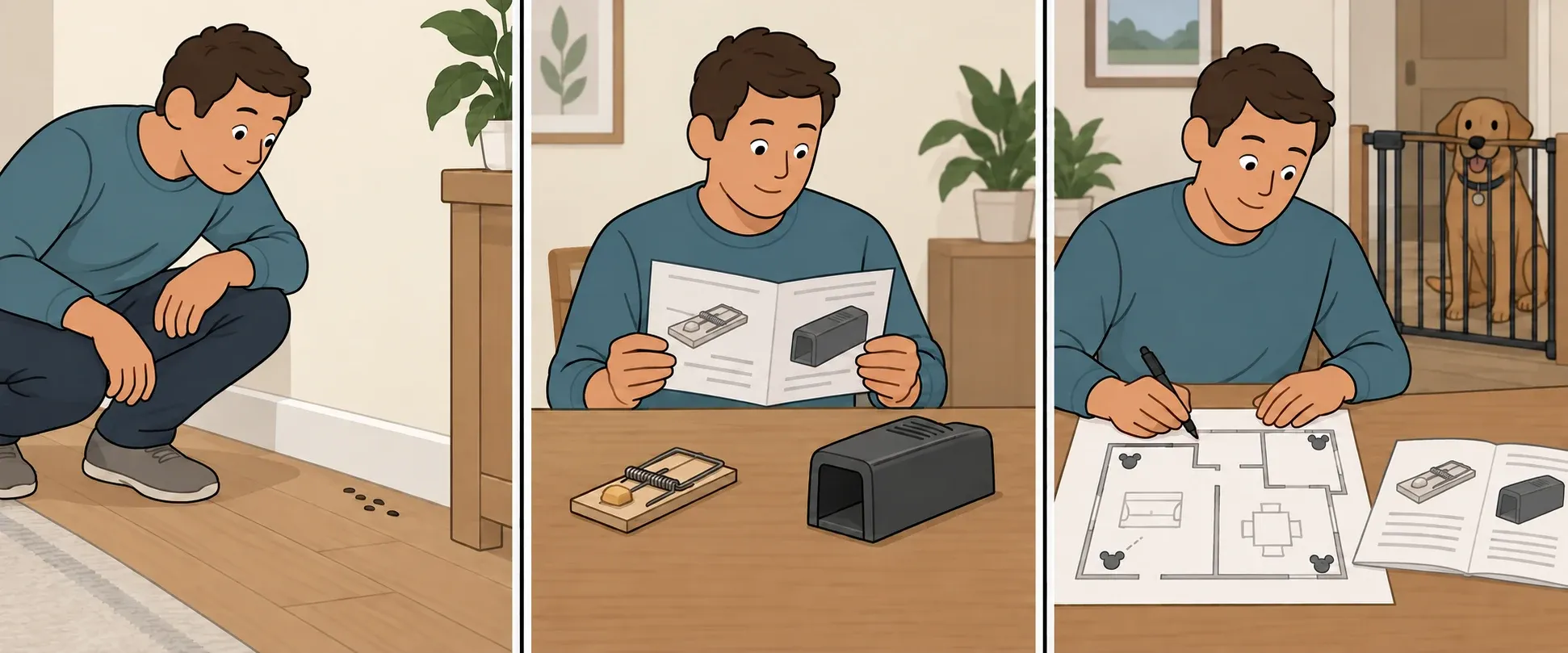
Illustration: a man spots droppings along a wall, compares a snap trap with an electronic trap, then marks trap spots on a floor plan while his dog watches from behind a gate.
The best mouse trap for most homes is a plain wooden snap trap with a wide trigger, set in pairs along the wall. It costs about $1, it kills quickly, and wide triggers catch more mice. Pick an electronic trap only if you’d rather not touch the catch, and skip glue and live traps: the CDC advises against both at home.
This guide compares the five common types of mouse traps on price, catch rate and safety, then matches each one to a home: pets, kids, a rental, an attic. We haven’t field-tested these traps ourselves. The comparison rests on CDC, university extension and animal-welfare research, plus store list prices.
How We Compared These Traps
We rated each type of mouse trap on six things:
- Catch rate: how well it catches house mice when set correctly.
- Price per trap: U.S. list prices from September and October 2026.
- Safety around pets and kids: what happens if a paw or finger trips it.
- Touching the catch: whether you have to see or handle the mouse.
- Reuse: whether the trap goes back out after a catch.
- Humaneness: how quickly and cleanly it kills, from a 2023 welfare study.
Sources: CDC, UC IPM, Nebraska Extension and a 2023 welfare study, listed at the end.
Types of Mouse Traps at a Glance
| Type | Best for and main drawback |
|---|---|
| Snap trap (about $1 each) | Most homes. Cheap and quick to kill, but the trigger is exposed, so set it where kids and pets can’t reach. |
| Electronic trap ($25–$32 each) | People who’d rather not see or touch the catch. Costs far more per trap and needs fresh batteries. |
| Live-catch trap | Not recommended at home by the CDC. Releasing mice elsewhere is illegal in some places, including California. |
| Bucket trap | Outdoors, where it can catch several mice before they get inside. Needs a daily check; drowning isn’t humane. |
| Glue trap | Not recommended. The CDC advises against glue traps, and adult mice often avoid them. |
Prices are the maker’s list prices for a two-pack of wooden snap traps ($2.29, September 2026) and a typical electronic trap ($24.99–$31.69, October 2026).
Different Types of Mouse Traps
Every mouse trap is either catch and kill or live catch, and either single catch or multi catch.
- Snap traps are spring loaded and catch and kill: a mouse touches the trigger and the bar snaps shut. One mouse per setting.
- Electronic traps catch and kill with a battery-powered shock. The typical model holds one mouse per setting.
- Live-catch traps hold the mouse alive. A single-catch box holds one. Multiple-catch live traps, such as the Victor Tin Cat and the Ketch-All, catch several mice without being reset, which UC IPM says reduces the labor involved, but the live mice have to be removed often and humanely euthanized.
- Bucket traps are homemade multi-catch traps that drop mice into a bucket; they belong outdoors, if anywhere.
- Glue traps hold the mouse on an adhesive board. The CDC advises against them.
Single-catch traps need resetting after each mouse, so set plenty of them. Multi-catch traps save resetting but leave you with live mice to deal with, which is why snap traps are still the first choice for most homes.
Snap Traps: The Most Effective Mouse Trap for Most Homes
Start with plain wooden snap traps. They’re the cheapest option, and the CDC recommends snap traps for rodents around the home. Choose a wide trigger plate, not a narrow one: expanded triggers catch more mice. Plastic clamp-style traps cost more but are easier to set and clean.
Buy mouse-size traps, not rat-size; rats need a different approach. Then use more traps than you think. UC IPM says to space them no more than about 10 feet apart wherever mice are active, and setting them in pairs 1 to 2 inches apart helps catch mice that jump over obstacles.
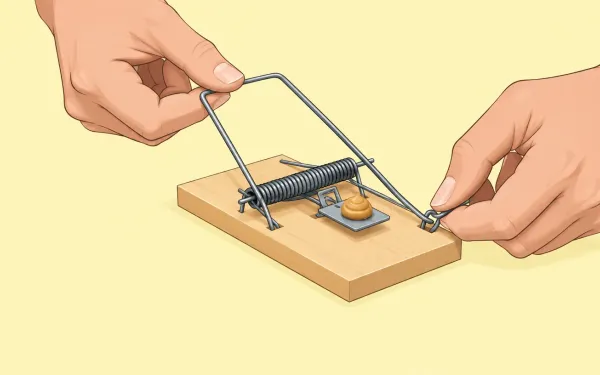
Set each trap against the wall, not out in the open floor: turn it so the baited end touches the wall and the trap forms a “T” with it. The step-by-step is in how to set a mouse trap, and bait choices are in the best bait for mouse traps.
Best for: most homes, kitchens and garages, set in pairs along the walls.
Main limitation: the trigger is exposed, so it needs a spot kids and pets can’t reach, and you handle the catch.
Electronic Mouse Traps: No Touching, at $25 or More a Trap
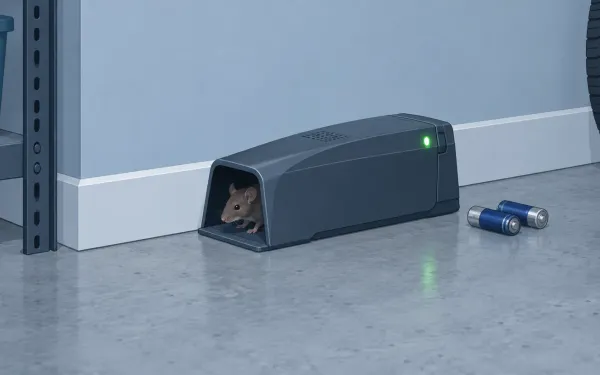
An electronic trap is a battery-powered box that kills with a high-voltage shock when a mouse steps across two metal plates inside. Welfare experts rate electrocution among the least harmful ways to kill a mouse, and glue boards as inhumane (the study).
One trap costs $25 or more, about what a dozen two-packs of snap traps cost, needs fresh batteries, and still has to be checked, emptied and set again. See how electronic mouse traps work.
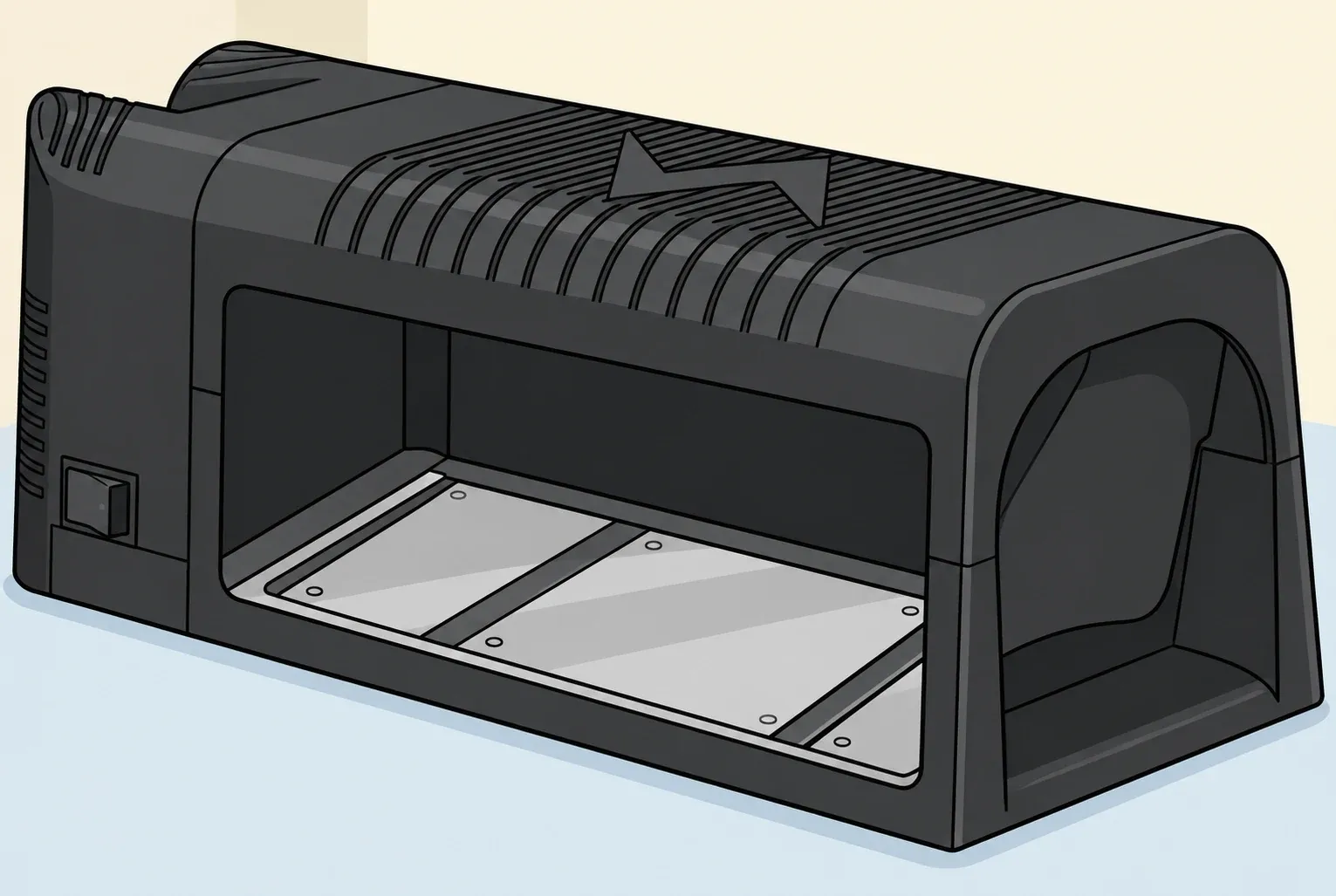
Illustration: an enclosed electronic trap, open along one side to show the metal plates on its floor.
Best for: people who’d rather not see or touch the mouse.
Main limitation: $25–$32 per trap plus batteries, and it still needs a daily check.
Live-Catch (Humane) Mouse Traps: Not Recommended Indoors
A live trap catches a mouse unharmed, but the CDC advises against using them at home: frightened rodents may urinate, which can increase your chance of getting sick.
Letting the mouse go isn’t a real option either. UC IPM says trapped house mice need to be humanely euthanized, that moving them off the property is illegal in California without a state permit, and that mice moved as far as half a mile away can navigate back. A humane trap still leaves you with a live mouse to deal with. If you still choose one, here’s how to use a humane mouse trap safely.
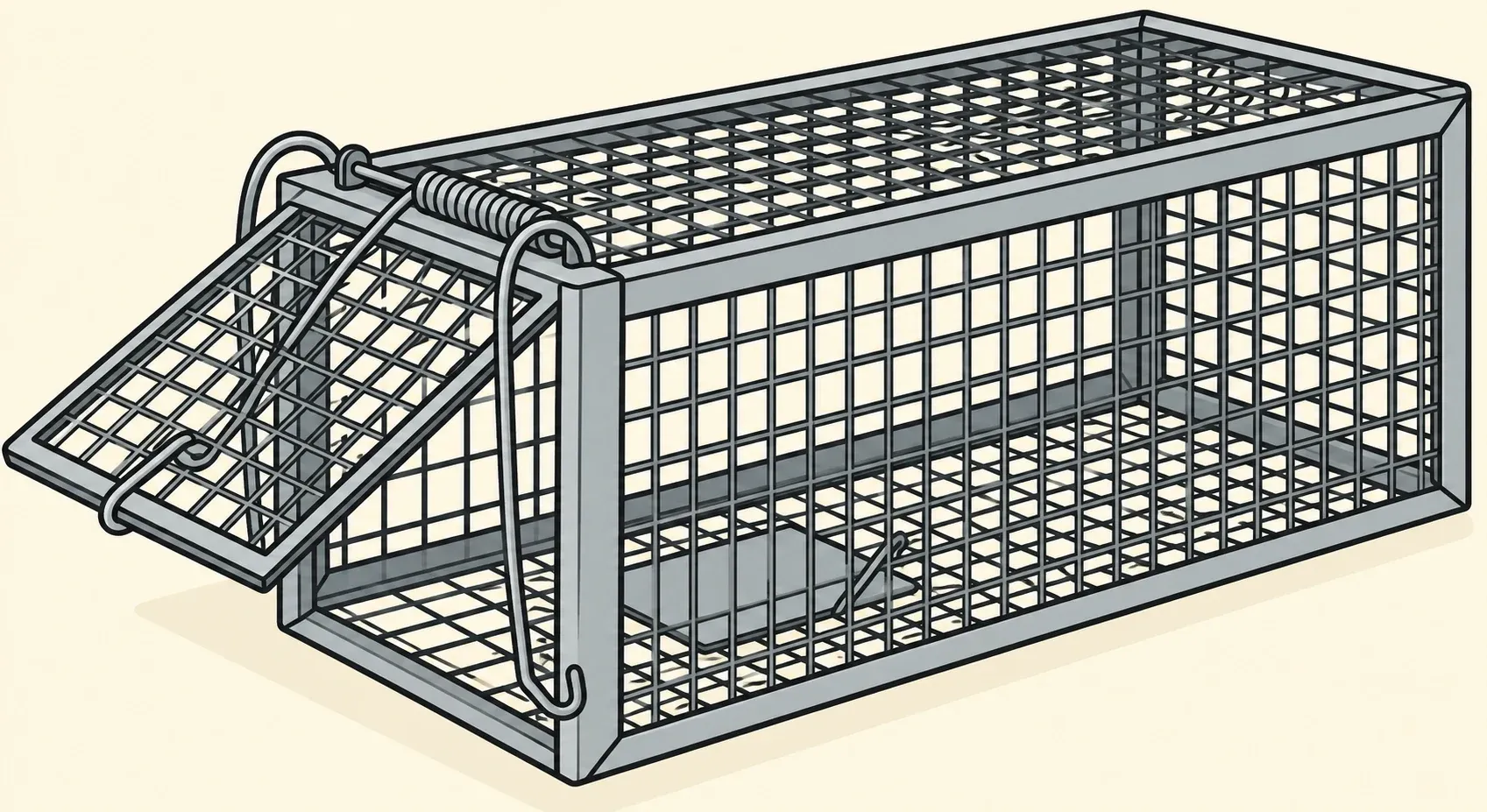
Illustration: an empty wire-cage live trap with its door propped open.
Best for: no good fit inside a home.
Main limitation: the CDC advises against it, and release far away is often illegal or pointless.
Bucket Traps: For Outdoors, Not the Kitchen
A bucket trap tips mice off a rolling can, flip lid or plank into a bucket, so it can catch several at once. That makes it most useful outdoors, to catch mice before they get into the house.
Check it daily and leave the bucket dry, not filled with water: drowning trapped mice isn’t considered humane. See how DIY bucket traps work.
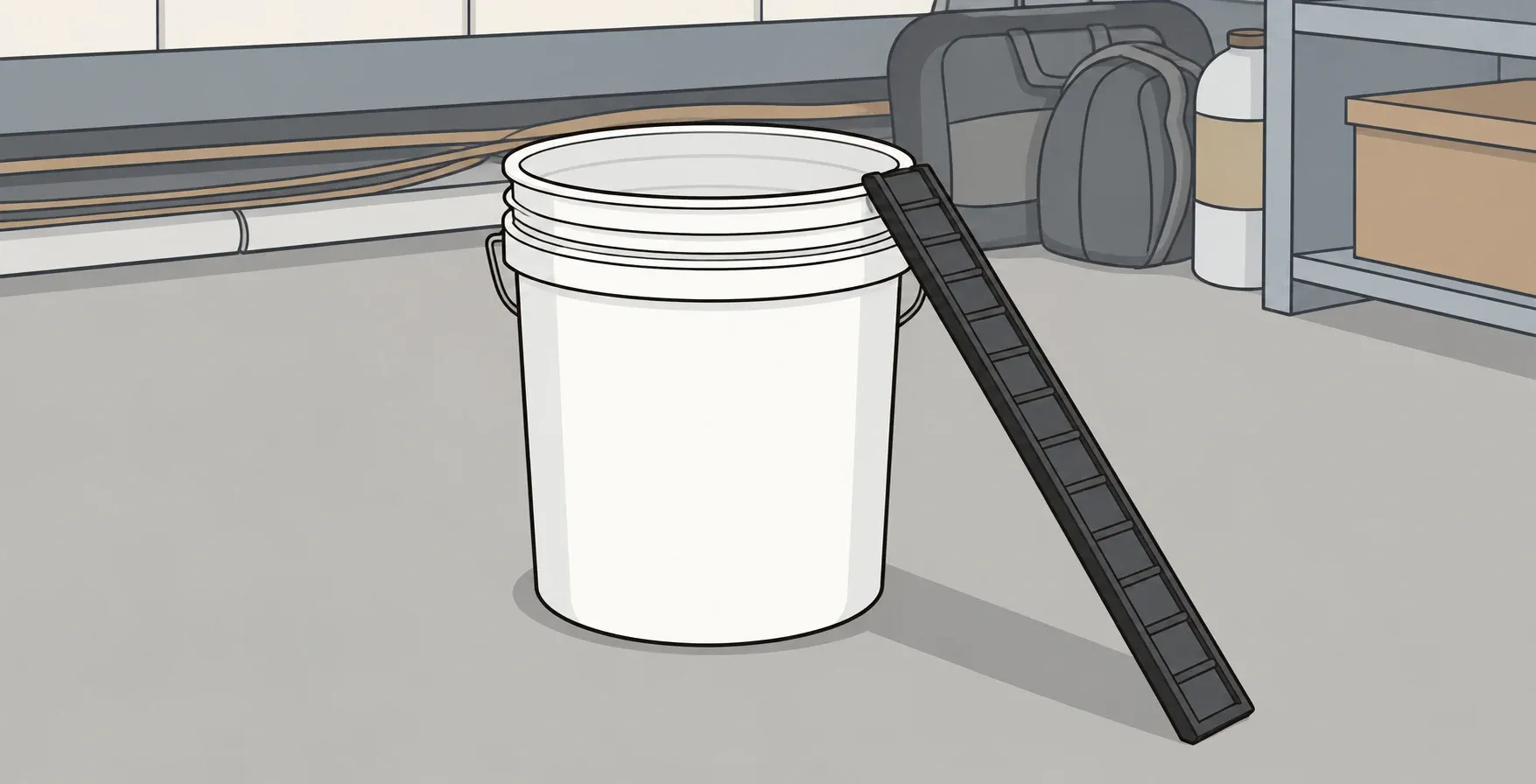
Illustration: a white bucket on a garage floor, with a ramp leaning against its rim.
Best for: sheds, yards and the outside of a garage.
Main limitation: live mice pile up between checks, so it needs a daily visit.
Glue Traps: Skip Them
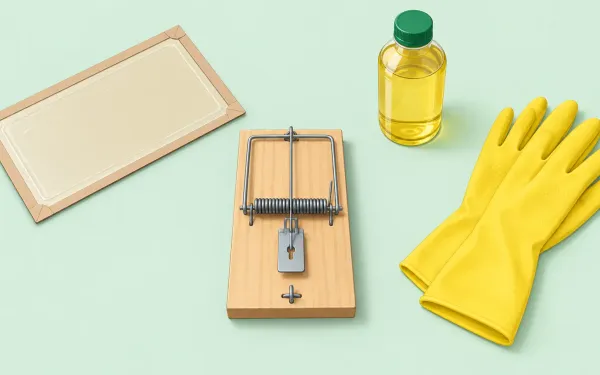
The CDC advises against glue traps at home. They don’t work well anyway: adult mice often spot the glue and step around it, so boards catch mostly young ones, and a caught mouse may not die quickly. Each board is used once and thrown away with the mouse. If a child or pet gets stuck on one of these glue traps, vegetable oil dissolves the glue.
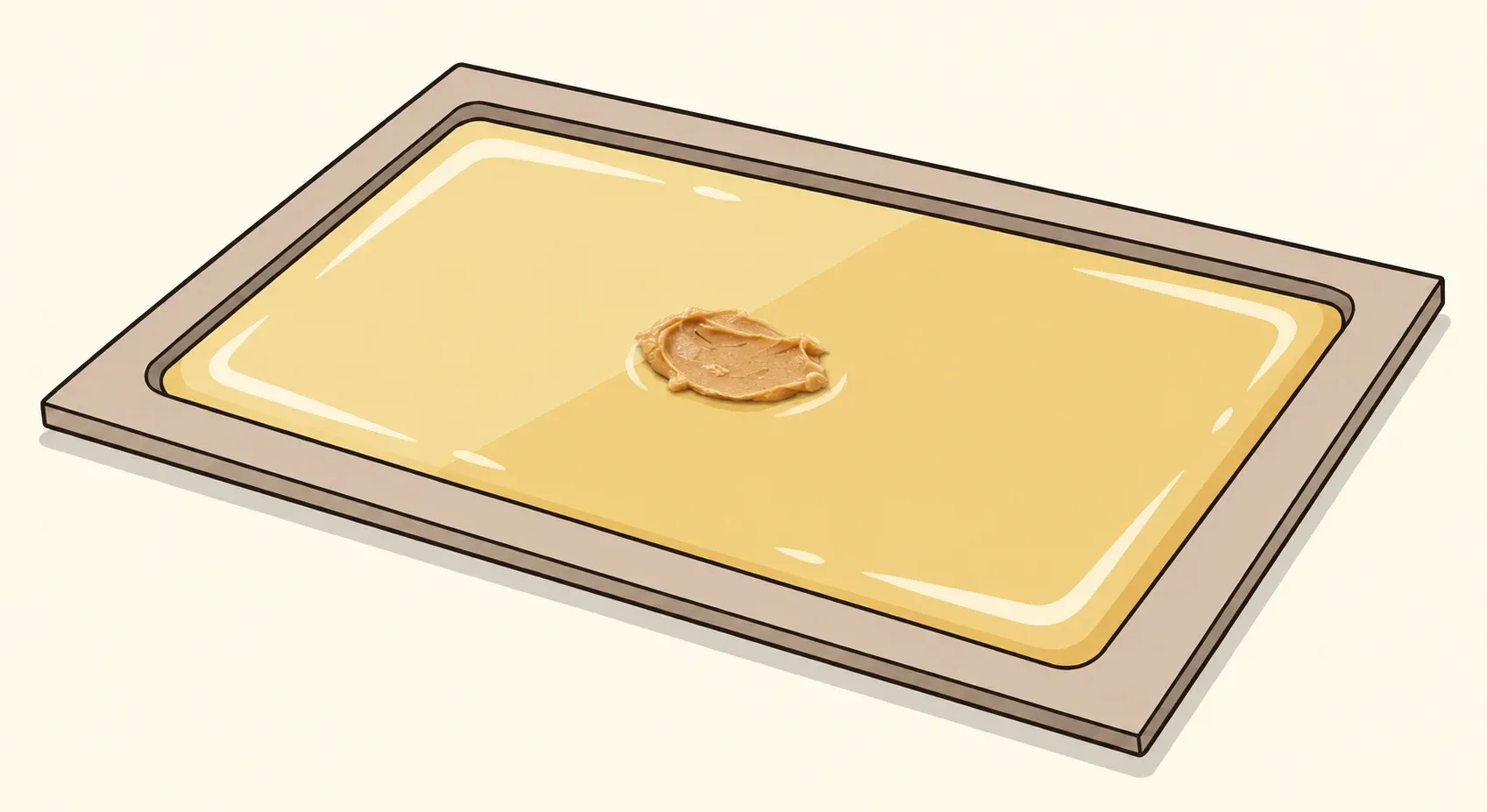
Illustration: a glue board with a smear of peanut butter in the center.
Best for: nothing in a home.
Main limitation: slow, inhumane deaths, and the mice that matter most avoid it.
Which Mouse Trap Is Safe Around Pets and Kids?
No trap is safe by default. The CDC says to keep all traps and bait out of reach of children and pets.
Put traps up and behind, not out in the open: on ledges, on top of stored items, and behind objects along the wall. In a kitchen, that can mean behind the fridge or stove. Enclosed electronic traps hide the plates, but claims that children and pets can’t reach them come from the makers, so place those out of reach too.
Which Trap Fits Your Situation
| Situation | What to use | Why |
|---|---|---|
| Cats or dogs at home | Snap traps behind appliances or on ledges, never glue | Pets can’t reach the trigger there, and glue boards trap paws and fur. |
| Small children | Snap or electronic traps behind furniture and appliances | The CDC says to keep every trap and bait out of children’s reach. |
| You rent | Snap traps inside your unit; ask the landlord in writing to seal gaps | You can trap and clean inside; outside sealing and wall repairs are usually the landlord’s job. |
| Attic or inside the walls | Snap traps along beams near fresh droppings | Mice travel the same edges. If they’re in walls or ducts you can’t reach, that’s when to call a pro. |
| You’d rather not touch a mouse | Electronic traps | You tip the catch into a bag without seeing it, but each trap costs $25–$32. |
| You caught just one | Keep the traps out for at least 15 days | Mice are rarely seen; the CDC treats a week with no catches and no new signs as done. |
Best Mouse Trap by Location
| Location | What to use |
|---|---|
| Kitchen | Snap traps in pairs along the baseboards, behind the fridge and stove, and under the sink. |
| Garage | Snap traps along the walls and behind stored items, where mice run for cover. |
| Outdoors | Most indoor traps aren’t built for weather. Check the label before you put one outside. |
What It Might Still Cost
The trap is the cheap part, not the whole bill. Plan for these too:
| Item | Price |
|---|---|
| More snap traps, for 12–24 in pairs | $2.29 a two-pack, about $14–$28 |
| Bait | Peanut butter from your kitchen |
| Nitrile gloves, 50 count | $8.49 |
| Bleach for cleanup, 81 oz | $6.39 |
| Copper mesh for sealing, 20 ft | $28.80 |
| Caulk and a caulk gun | — |
| Electronic traps instead of snap | $24.99–$31.69 each, plus batteries |
That adds up to about $57–71 for a snap-trap plan against mice (12–24 traps, copper mesh, gloves and bleach; a rat kit runs $65–87), the same supply list as our mouse plan. For sealing, steel wool or copper mesh goes in first, and the exterminator vs. DIY cost page sets these numbers next to a pro’s quote. U.S. online list prices, checked September 30 and October 1, 2026, before tax and shipping; the two-pack total is our math.
Before You Set Traps: A Quick Checklist
- Check the droppings first: rice-grain size means mice, raisin size means rats.
- Buy enough traps to set pairs no more than about 10 feet apart.
- Bait each trap with a pea-size dab, not a spoonful.
- Set traps against the wall, baited end touching it, not out in the open.
- Place them out of reach of children and pets.
- Wear gloves to remove a catch, and clean up droppings with bleach, not a broom.
- Check every trap each morning, and keep going until a week passes with no catches. Nothing after a few nights? See why a mouse trap isn’t working.
Common questions
Not necessarily. “Black box” traps are enclosed plastic snap traps, and Nebraska Extension says all snap-trap designs are effective; what raises the catch rate is an expanded trigger. Plastic ones cost more but are easier to set and clean. If mice keep licking a trap clean, the fixes are in bait gone but no mouse.
Only if the model is sized for rats. Check the label for the target species. For rats, see how to get rid of rats in the house.
No. The phrase only means you can empty the trap without handling the mouse. The CDC still advises checking home traps daily and disposing of dead rodents right away.
The Bottom Line
Buy cheap wide-trigger snap traps, not one expensive gadget, and set them in pairs along the walls where you find droppings. Use electronic traps where you’d rather not handle a catch, and skip glue and live traps.
Traps remove the mice already inside; they don’t stop new ones, and mice can squeeze through openings as small as a quarter inch. The plan to get rid of mice in your house covers sealing, and when it’s time to call a pro.
Sources and further reading · 6
- Centers for Disease Control and Prevention, How to Trap Up to Remove Rodents.
- UC Statewide Integrated Pest Management Program, Pest Notes: House Mouse.
- Nebraska Extension, Controlling House Mice (G1105).
- De Ruyver et al., Assessing animal welfare impact of fourteen control and dispatch methods, Animal Welfare, 2023.
- Victor store pages: a two-pack of wooden snap traps ($2.29 list price, September 2026) and an electronic mouse trap ($24.99–$31.69 list price, October 2026).
- Supply prices: DoMyOwn copper mesh, Target nitrile gloves and Target bleach, checked September 30 and October 1, 2026.