False-Floor Bucket Trap: How DIY Mouse Buckets Work (and Fail)
A bucket mouse trap tips mice off a spinning can, flip lid or plank into a bucket they can’t climb out of. It only works if the moving part turns at a light touch and the bucket is deeper than a mouse can jump. You can build the spinning-can version from a 5-gallon bucket. Check it daily, and skip the water.
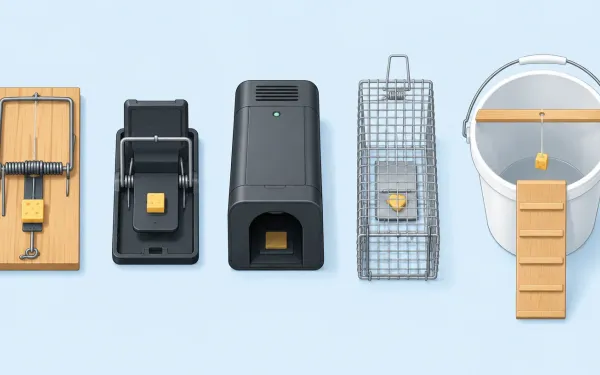
This guide covers the three common designs, how to build one, why most catch nothing and what to do after a catch. We haven’t built or tested these traps ourselves; this rests on UC IPM, Nebraska Extension and CDC guidance, a published DIY design and the makers’ own descriptions. For indoor mice, snap traps are simpler.
What Works and What Doesn’t: DIY Designs
| Design | Works? | Cost | Main limitation |
|---|---|---|---|
| Spinning can or roller | Yes, if it turns at a light touch | Homemade from a bucket | A stiff can lets mice eat and walk off |
| Flip lid or pivoting plank | Yes, if balanced | — | Must tip once a mouse crosses the pivot |
| Any design with water | Skip the water | — | Drowning isn’t considered humane (UC IPM) |
| Dry bucket | Yes | — | Live mice to deal with every morning |
| Poison in the bucket | No | — | Bait belongs in tamper-proof stations |
| Snap traps instead | Yes, the CDC’s pick at home | $2.29 for two | One catch per trap; reset daily |
How a Bucket Mouse Trap Works: 3 Common Designs
All three lure a mouse up a ramp and onto something that moves, then dump it into a bucket. Only the part on top changes:
- Spinning can or roller: a baited drum turns on an axle across the top of the bucket. When a mouse steps onto it, the drum spins and the mouse falls in. Drop In The Bucket, one commercial version, describes this design.
- Flip lid or pivoting plank: a balanced board sits across the opening. Once a mouse crosses the pivot point, the plank tips it into the bucket and swings back. RinneTraps’ Flip N Slide works this way on a standard 5-gallon bucket.
- Roller with a floating floor: some products pair a roller with extra parts. Kick The Bucket, for example, adds “floating trap floor filter rocks” for use with water (product FAQ).
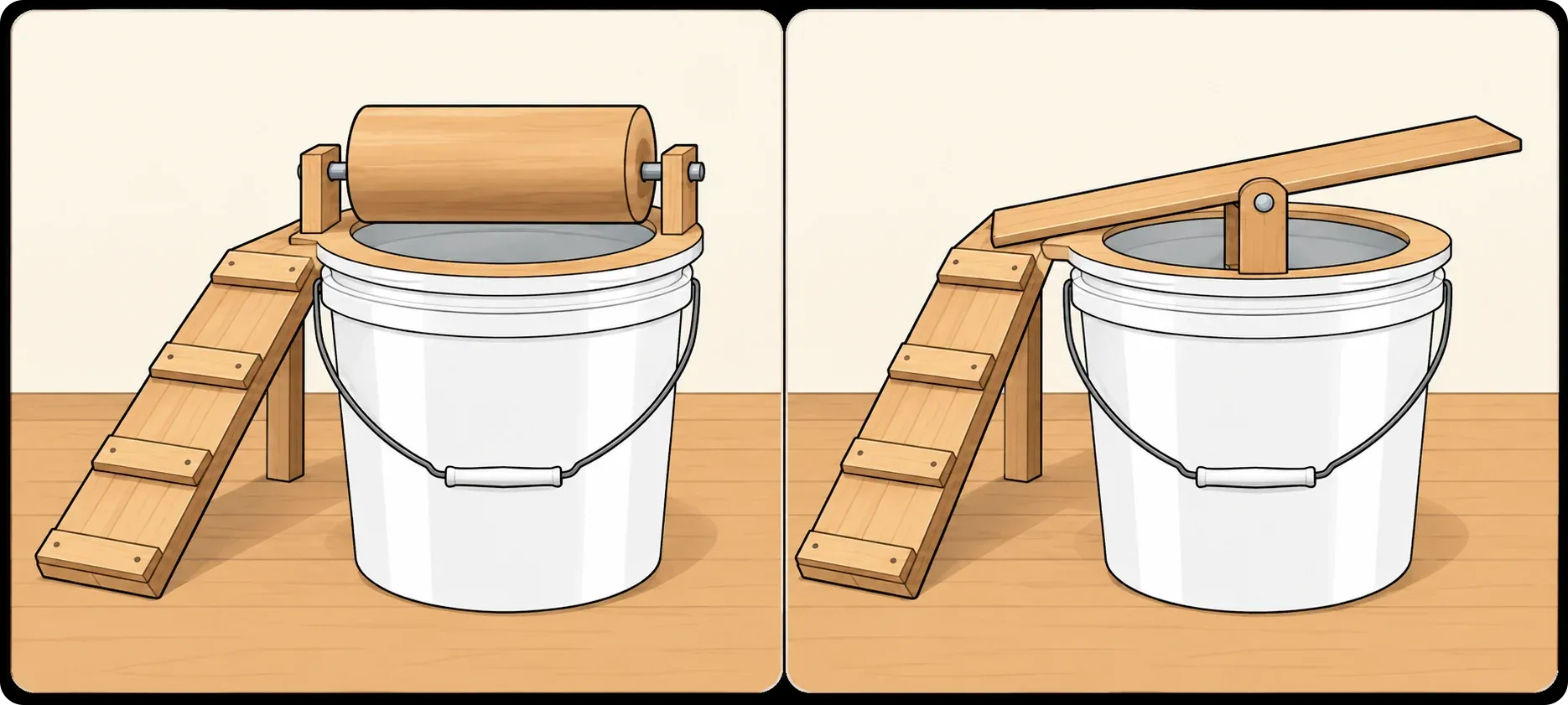
Illustration: a rotating drum on the left and a pivoting plank on the right.
Trying to catch rats instead? Start with how to get rid of rats in the house.
How to Build a Spinning-Can Bucket Trap
These steps follow a homemade design published by Bob Vila, with one change at the end: what to do with the mice you catch.
You’ll need: a 5-gallon bucket with smooth inside walls, an empty soup or soda can, straight steel wire longer than the bucket is wide (a straightened wire hanger works), a scrap plank for a ramp, and peanut butter.
Step 1: Make the axle holes in the can. For a soup can, remove the lid and drill a hole in the center of the other end. For a soda can, poke a hole in the center of the bottom with a Phillips screwdriver.
Step 2: Drill the bucket. About an inch below the rim, drill two holes directly across from each other.
Step 3: Hang the can. Feed the wire through one bucket hole, through the can and out the other hole, then slide the can to the middle. Spin it with a finger: it has to turn at the lightest touch, or mice walk across it.
Step 4: Add a ramp. Lean the plank against the bucket so it makes a low, easy climb to the rim.
Step 5: Bait the can. Spread peanut butter over the can and set the trap against a wall where droppings are fresh.
How deep is deep enough? House mice can jump about 12 inches onto a flat surface (UC IPM), so the drop from the rim should be well past that, not just close. The original design also suggests greasing the inside walls so mice can’t climb out.
Check the trap every morning; in a garage, the author suggests every few hours. The original article says to release caught mice far from home. Don’t: see what to do after a catch.
Why Your Bucket Mouse Trap Doesn’t Work
Most failures are mechanical. Check these before you give up on the design.
| What’s wrong | What to check |
|---|---|
| Mice never climb the ramp | The ramp may be too steep or too slick. Lean it at a gentle angle and give it a surface mice can grip. |
| Bait is gone but the bucket’s empty | The can or plank may be too stiff. It should turn or tip at a light touch, or a mouse can eat and walk off. |
| Mice get back out | The bucket may be too shallow for a mouse’s jump; measure it against the depth rule above. |
| Mice ignore it | Other food may be easier to reach. Seal food and garbage, and feed pets only what they eat at once. |
| No activity near the trap | It may be far from their route. Set it against a wall where droppings are fresh. |
“Auto-reset” on a label only means the can or plank swings back into position. It doesn’t tell you how many mice the trap will catch or whether they can get back out. Snap traps have their own fixes in mouse trap not working.
Should You Put Water in a Bucket Trap?
No. Some makers tell you to: one says about 3 inches of water keeps a mouse from jumping out, and another calls its trap a kill trap when filled with water. But UC IPM says drowning trapped mice isn’t considered humane, “although trap manufacturers sometimes suggest it.”
A dry bucket leaves you with live mice, sometimes several. A 2023 expert welfare assessment rated drowning inhumane and found multiple-capture live traps more likely to cause suffering than single-capture ones, so check a dry bucket every morning. If you’d rather not deal with live mice, see the main types of mouse traps.
If a Mouse Has Already Been Caught
- If it’s alive: keep children and pets away, and don’t release it in a park or the woods. In California it’s illegal to move house mice off the property where they were caught without a state permit, and UC IPM says live-caught mice should be humanely euthanized. Contact local animal control if you’re unsure how.
- If it’s dead: follow the CDC’s cleanup steps: wear gloves, spray the mouse and the area with disinfectant, and double-bag the mouse and any waste. Don’t sweep or vacuum droppings before disinfecting them (how to clean mouse droppings).
- Don’t add poison to a bucket. UC IPM says rodenticide baits belong in tamper-proof bait stations, out of reach of children, pets and wildlife. See why to avoid rat and mouse poison.
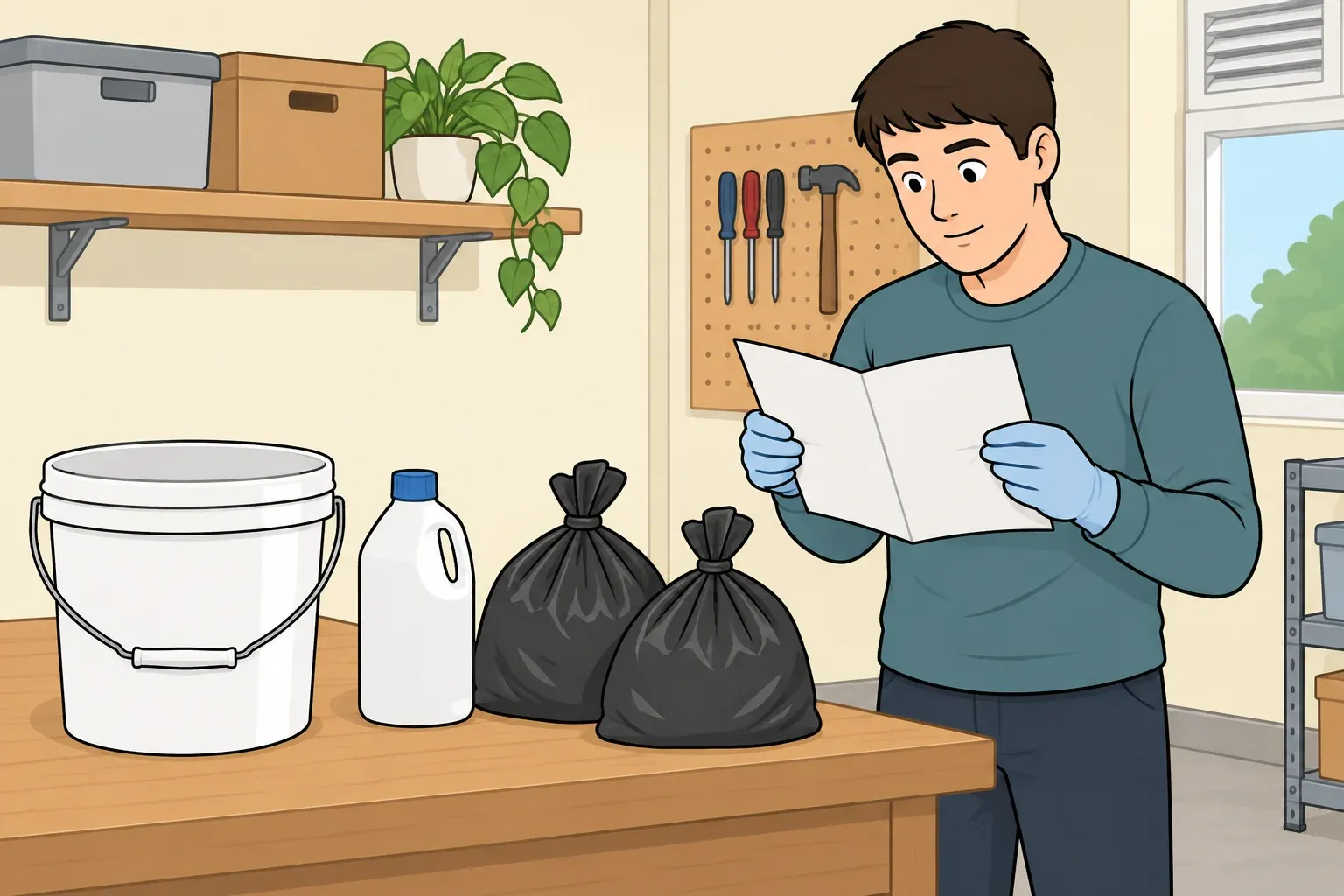
Illustration: a homeowner in protective gloves beside a closed bucket-trap lid.
Which Plan Fits Your Situation
| Your situation | Start with | Then |
|---|---|---|
| Mice indoors | Snap traps against the wall | You don’t need one |
| Garage, shed or outbuilding | A dry spinning-can bucket trap | Check every few hours |
| Kids or pets | Keep them away from the bucket and catches | Snap traps in out-of-reach spots |
| In California | No relocating live mice | Humane euthanasia or local animal control |
| Rats, not mice | The rat plan | Rat-size snap traps |
What It Might Still Cost
| Item | Typical cost |
|---|---|
| Wooden mouse snap traps, 2 | $2.29 |
| 12 wooden mouse snap traps | $13.74 |
| Pro trap-and-seal job, 53 shared quotes (middle half) | $1,400–$3,000 |
| Pro visit, price-guide range (usually no sealing) | $150–$655 |
Snap traps: Victor list price, October 1, 2026, before tax. Pro: the middle half of 53 trap-and-seal quotes homeowners shared on Reddit (see the quote table). Price-guide range: This Old House for mice (April 2026) and HomeAdvisor for rats (June 2026); it usually covers a trap-and-bait visit, with sealing extra. A homemade bucket trap uses a bucket, can, wire and plank you may already have.
Before You Start: A Quick Checklist
- Measure the bucket’s inside depth against a 12-inch jump.
- Spin the can with one finger before you bait it.
- Lean the ramp at a gentle angle with a grippy surface.
- Leave the bucket dry.
- Set it against a wall by fresh droppings.
- Check it every morning, and plan what to do with live mice.
When to Call a Pro
- Mice are still active after a few weeks of steady trapping; the CDC’s minimum is 15 days of checked, re-baited traps.
- You can’t find or reach where they get in.
Common questions
It can if the bucket isn’t deep enough. Nebraska Extension puts a house mouse’s jump at about 10 inches, a little lower than UC IPM’s 12, so use the larger number and check the bucket the next morning.
The name gets used for several designs: a pivoting plank, a rolling drum, and product-specific floating floors. Look at what moves on top of the bucket to know which one you have.
For most homes, no. The CDC recommends traditional snap traps around the home, and a bucket trap needs daily checks and a plan for live mice. Multiple-catch traps like this are most useful outdoors, to catch mice before they get into the house.
The Bottom Line
It works when the moving part turns freely, the ramp is easy to climb, the bucket is deep enough and there’s no easier food nearby. Leave out the water and check it every morning. For indoor mice, snap traps are simpler, and how to get rid of mice covers the full plan and when to call a pro.
Sources and further reading · 9
- UC IPM Pest Notes: House Mouse: jumping ability, drowning, relocation law, food and bait stations.
- Nebraska Extension G1105: Controlling House Mice: jumping ability, multiple-catch traps and release.
- Bob Vila: How to Build a Humane Mousetrap (Jennifer Noonan, updated 2018): the homemade spinning-can design the build steps follow.
- RinneTraps: Flip N Slide product information: the maker’s description of its pivoting-plank mechanism.
- Drop In The Bucket: About Our Trap: the maker’s description of its rotating-drum design.
- Kick The Bucket: FAQs: the maker’s description of its roller and floating-floor parts.
- CDC: How to Trap Up to Remove Rodents: home trapping, child and pet precautions, and daily checks.
- CDC: How to Clean Up After Rodents: cleanup for droppings and dead rodents.
- De Ruyver et al., Animal Welfare (2023): expert welfare assessment of 14 rodent-control and dispatch methods.