How Electronic Mouse Traps Work (and Do They Work?)
An electronic mouse trap kills with a high-voltage shock, powered by batteries, when a mouse steps across two metal plates inside; the maker of a typical model says it kills mice quickly. It works when the batteries are fresh, the bait is small and at the back, and the trap sits flat against a wall. At $25–$32 each, use one where you’d rather not handle a catch, with cheap snap traps everywhere else.
This guide explains how electric mouse traps work, compares them with smart traps, snap traps and plug-in repellers, and covers why they miss. We haven’t tested these traps ourselves. It rests on UC IPM and CDC guidance, a 2023 welfare study, and one maker’s specs, directions and list prices.
How We Compared These Options
We rated electronic traps and the alternatives on five things:
- Kill or catch: whether it removes a mouse that walks in, according to UC IPM and the maker.
- Price per trap: U.S. list prices from September and October 2026.
- Upkeep: batteries, cleaning and daily checks.
- Touching the catch: whether you have to see or handle the mouse.
- Humaneness: how much suffering it causes, from the 2023 welfare study.
Sources are listed at the end.
How Electronic Mouse Traps Work
How do electronic mouse traps work? The mouse walks into a tunnel toward the bait and steps across two metal plates. Its body closes the circuit, and the batteries deliver a high-voltage shock that kills it. A light then signals the catch, so you can empty the trap without seeing the mouse.
Electric and electronic mouse traps are the same thing: a battery-powered box, sometimes sold as a mouse zapper, that kills with a shock. Inside is a short tunnel with two metal plates on the floor. A mouse heading for the bait at the back has to step across both plates, which closes the circuit.
A light tells you what happened, but the codes aren’t standard. Victor’s M250B is a typical example: it runs on four AA batteries, holds one mouse per setting, flashes green when you switch it on, flashes green every 10 seconds after a catch, and flashes red every 10 seconds when the batteries are low. Keep the manual for yours.
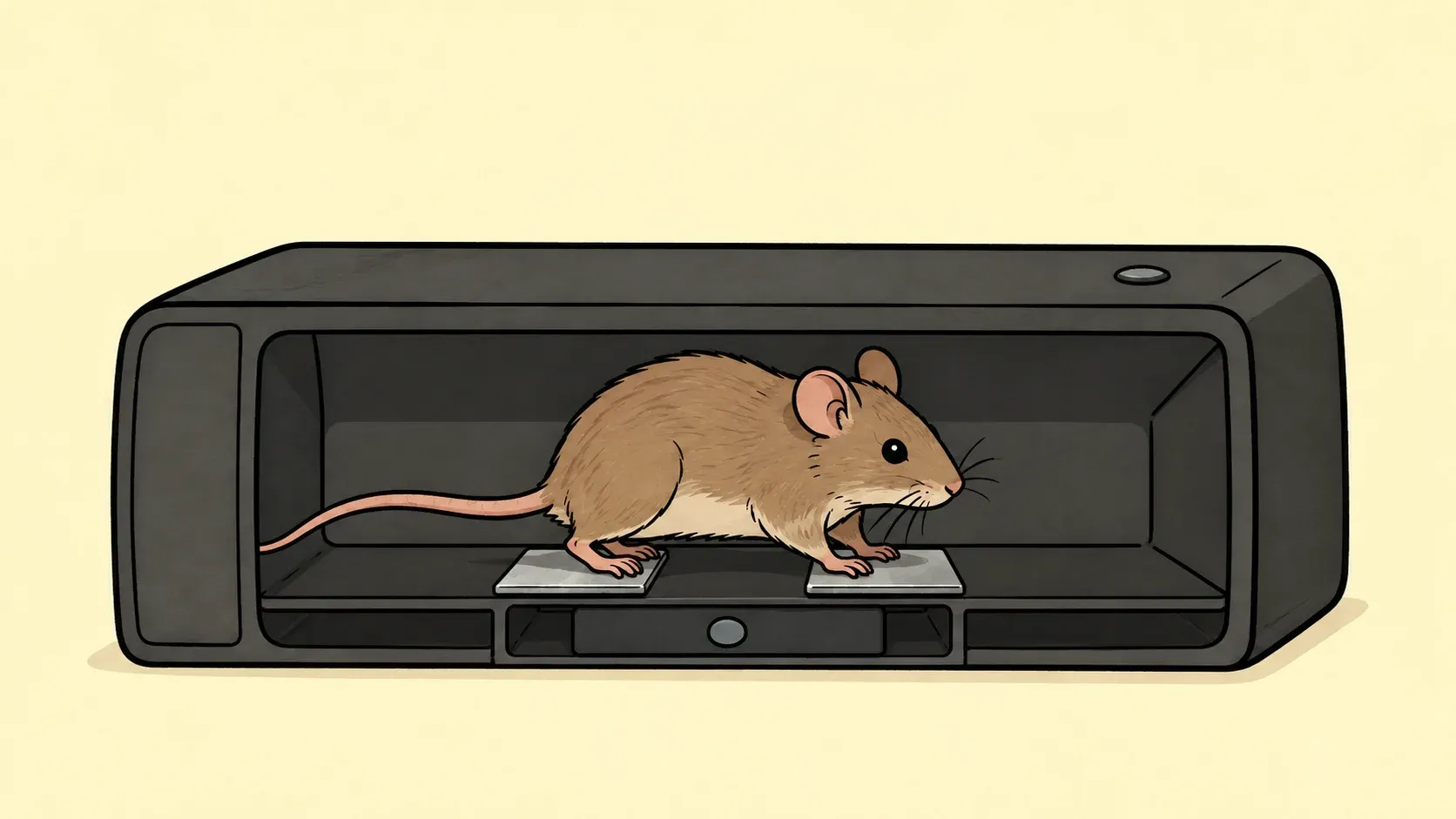
Illustration: a mouse inside the trap’s tunnel, one pair of feet on each metal plate.
Electronic Traps vs. Other Options at a Glance
| Option | Price | Best for and main drawback |
|---|---|---|
| Electronic trap | $24.99–$31.69 each | No-touch disposal. Guards one spot, needs batteries, costs about 20 snap traps. |
| Wi-Fi or smart trap | — | Remote spots like attics. Alerts depend on the app, batteries and your network. |
| Wooden snap trap | About $1.15 each | Covering every wall cheaply. Exposed trigger, and you handle the catch. |
| Plug-in ultrasonic repeller | — | Nothing; it isn’t a trap, and UC IPM says it doesn’t work on house mice. |
| Glue trap | — | Nothing; welfare experts rate it inhumane. |
Electronic and snap prices are the maker’s list prices (October and September 2026); the per-trap snap price is a $2.29 two-pack split in half, our math.
Electronic vs. Snap vs. Glue Traps
| Electronic trap | Snap trap | Glue trap | |
|---|---|---|---|
| Price | $24.99–$31.69 each | About $1.15 each | $5–$15 a pack |
| How humane | Least suffering of the methods rated (2023 welfare study) | Decent snap traps rated an adequate alternative | Rated inhumane |
| Reusable | Yes, one mouse per setting | Yes | No, it goes out with the mouse |
| Cleanup | Tip the catch into a bag without seeing it | You handle the catch | The mouse may still be alive |
Prices are list prices from September and October 2026; the glue range is from our glue trap guide. The CDC recommends snap traps and advises against glue traps.
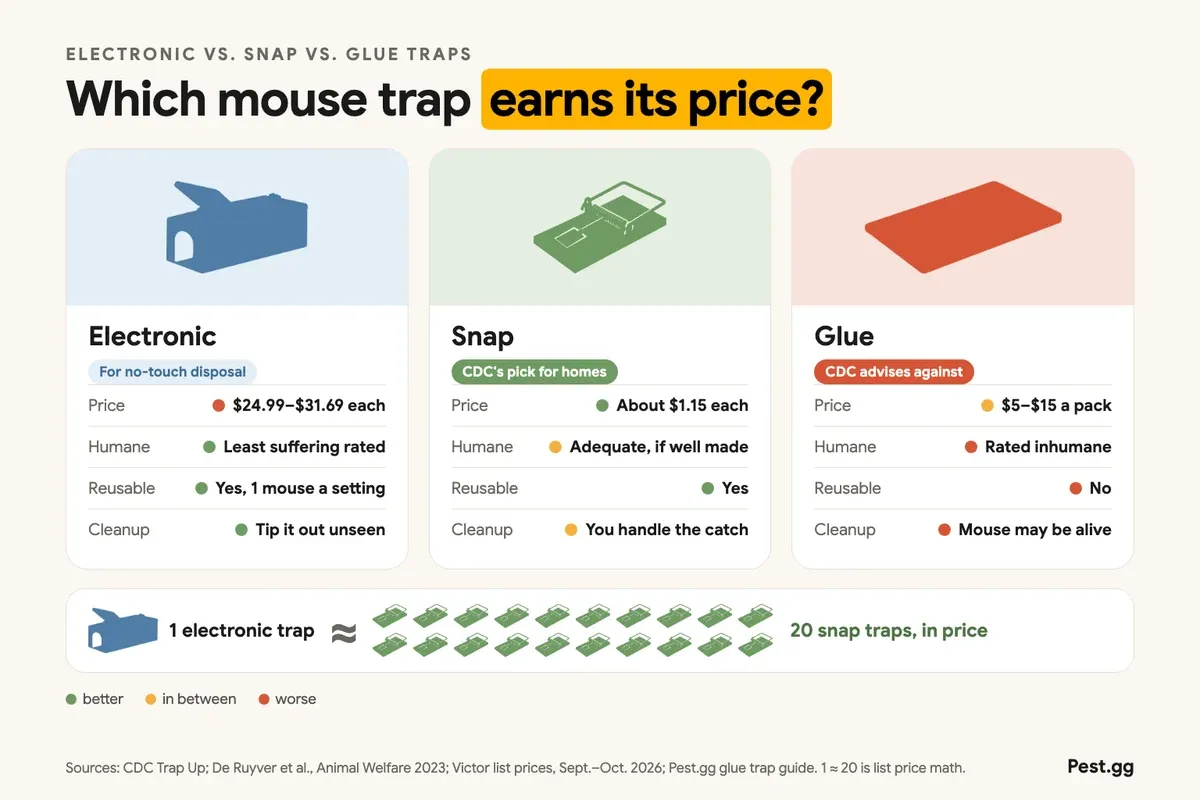
Infographic: price, humaneness, reuse and cleanup for each trap type. Sources: CDC, De Ruyver et al. 2023, Victor list prices.
Do Electronic Mouse Traps Work?
They can. An electronic trap kills a mouse that walks fully inside and touches the plates, and UC IPM says some homeowners and pest control companies have found them to provide good house-mouse control.
What they can’t do is cover ground. Each trap guards one spot, and one costs about as much as 20 snap traps. To compare every trap style, see the main types of mouse traps.
Standard Electronic Traps: A Clean Kill in One Spot
A standard enclosed trap is the best pick when touching a mouse is the dealbreaker. Many are sold with “no-see, no-touch” disposal: you tip the mouse out of the covered chamber without seeing it. That’s about handling, not maintenance; the CDC still advises checking traps daily and disposing of dead rodents right away.
Some models shut off when the lid is opened, and makers say columns inside the tunnel keep children and pets from the plates. That’s a maker’s claim, not an independent test, so keep these traps out of reach like any other.
Best for: a kitchen or bedroom where you’d rather not see or handle a catch.
Main limitation: $24.99–$31.69 per trap plus batteries, one mouse per setting, and still a daily check.
Wi-Fi and Smart Traps: An Alert, Not a Check
Some electronic traps, or separate sensors, send a phone alert after a catch. An alert tells you when to look; it doesn’t replace a daily check. It depends on the batteries, the app and your home network, and if the connection drops, you may not hear about a catch at all.
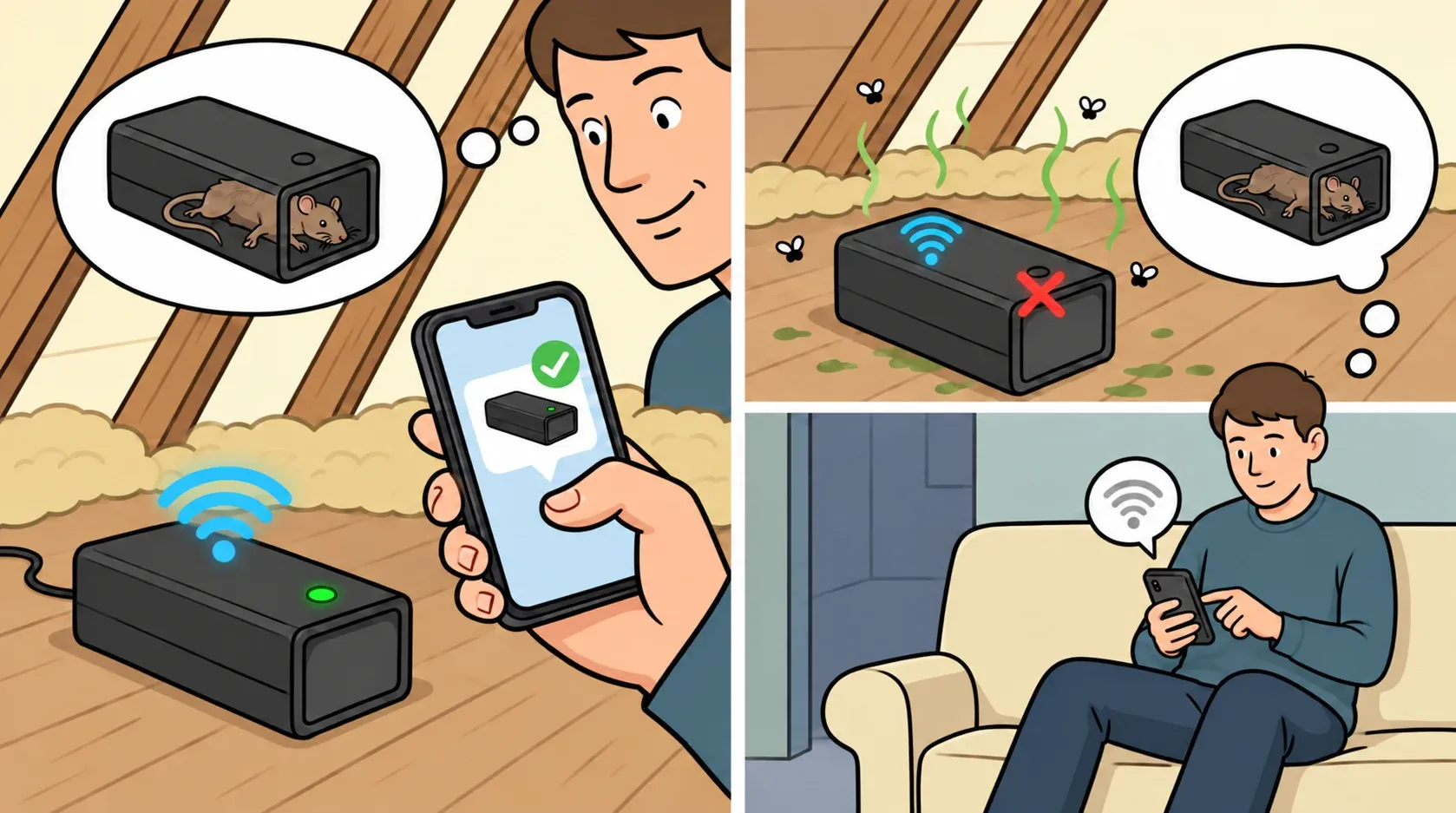
Illustration: one trap sends a catch alert to a phone; another has lost its signal, and its catch sits unnoticed in the attic.
Best for: spots you don’t pass every day, such as an attic.
Main limitation: a dropped connection can hide a catch for days.
Snap Traps: The Cheap Backup Along Every Wall
Snap traps cover the ground an electronic trap can’t. At about $1.15 each, you can set pairs along every wall with fresh droppings for the price of one electronic box. How to set a mouse trap covers placement.
Best for: most of the walls in a home, backing up one or two electronic traps.
Main limitation: the trigger is exposed, so it needs a spot kids and pets can’t reach, and you handle the catch.
Electronic Rat Traps: Same Idea, Bigger Box
How do electronic rat traps work? The same way: a rat steps across two plates in a tunnel and gets a high-voltage shock. The box is bigger and the shock stronger. Victor’s electronic rat trap, for example, runs on four AA batteries, kills up to 35 rats per set of batteries and is for indoor use only; one costs about $63 (list price, October 2026).
Two things differ from mice. Rats are wary of new objects, so a trap may sit untouched for days; the CDC suggests leaving rat traps baited but unset for a few days first, and rat neophobia explains why. And rats are heavier, so put the trap flat against a wall where a big rat can’t drag or tip it. For a rat problem, the rat removal plan covers traps, sealing and when you’re done.
Plug-In Electronic Repellers: Not a Trap
A plug-in “electronic repeller” is a different device that doesn’t catch anything. UC IPM says high-frequency devices aren’t effective for house mice; see whether ultrasonic pest repellers work.
Best for: nothing in a mouse plan.
Main limitation: it removes no mice, and mice get used to repeated sounds.
Why an Electronic Mouse Trap Takes the Bait but Doesn’t Kill
It’s the most common complaint in owner reviews: bait gone, droppings on the plates, no dead mouse. The maker’s replies and directions point to the same few checks.
| What you notice | What to check |
|---|---|
| Bait gone, no kill | Use a small amount at the back, placed with a toothpick, and keep it off the plates. |
| Red light flashing | On the example above, low batteries. Replace all of them; on other models, check what the light means. |
| No light after switching on | Close the lid until it clicks. Traps with a safety switch stay off while the lid is open. |
| Droppings or dirt on the plates | Switch it off and remove the batteries, then clean and dry the plates. Dirty contacts can stop the shock. |
| Mice walk past it | Set it flat against a wall on their route, near fresh droppings, rather than in the open. |
| Still failing after all of that | Contact the maker about the warranty. The example above carries a one-year warranty. |
Bait fixes that apply to every trap, such as using less and pressing it in, are in bait gone but no mouse. If no trap is catching anything, see why mouse traps don’t work.
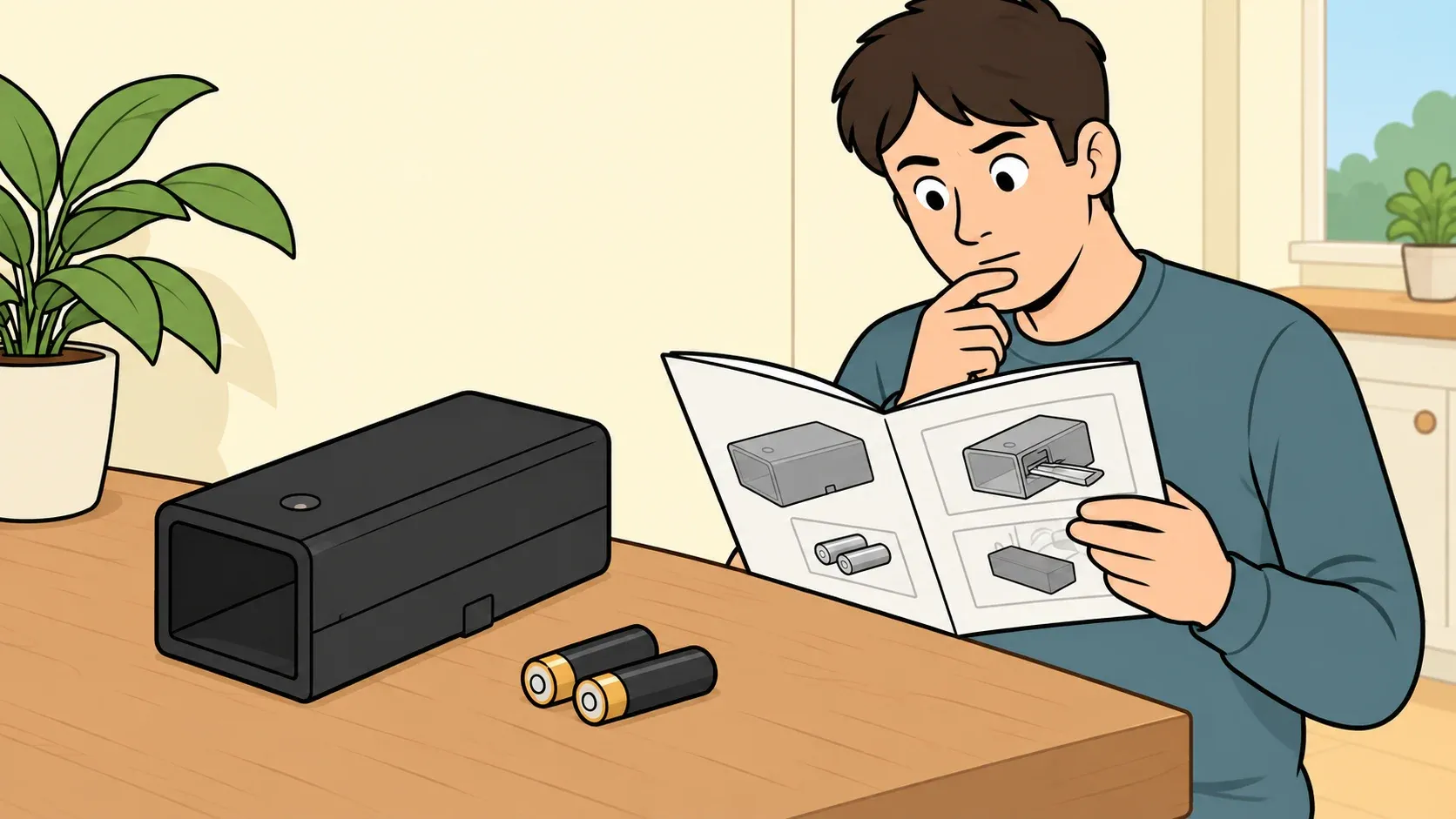
Illustration: a man reads an electronic trap’s manual, with the trap and two AA batteries on the table.
Are Electric Mouse Traps Humane?
Among control methods, they rate well. In a 2023 Belgian study, a panel of eight experts scored 14 ways of controlling or killing house mice and rats. They judged electrocution traps and captive-bolt traps to cause the least suffering, with decent snap traps among the adequate alternatives. The experts called glue traps inhumane, and judged anticoagulant poisons to cause considerable suffering (De Ruyver et al., Animal Welfare, 2023).
Two limits: the panel noted that electrocution likely causes more suffering than the other trap types during the killing itself, and it scored methods, not products, assuming each was used as prescribed.
How to Use an Electronic Mouse Trap
Step 1: Fit fresh batteries and read the manual. Confirm the trap is sized for mice, not rats, and learn what its lights mean.
Step 2: Bait small, at the back. Put a small amount in the rear bait area with a toothpick, without touching the plates.
Step 3: Place it flat against a wall where mice travel. Put it near fresh droppings, not in the open middle of the floor.
Step 4: Keep it out of reach and check it daily. The CDC advises both for all household traps, whatever the label says about safety.
Step 5: Empty and clean it as directed. Switch it off and remove the batteries, then tip the catch into a bag and clean and dry the plates.
Which Trap Fits Your Situation
| Situation | What to use | Why |
|---|---|---|
| You’d rather not touch a mouse | One or two electronic traps | You tip the catch into a bag without seeing it. |
| Mice along several walls | Snap traps in pairs, plus an electronic trap if wanted | One electronic trap guards one spot; snap traps cover the rest. |
| Attic or a room you rarely visit | Wi-Fi trap, still checked on a schedule | The alert tells you when to look, if the connection holds. |
| Kids or pets at home | Any trap, placed behind appliances | The CDC says every trap belongs out of their reach. |
| Garage or outdoors | Check the label first | The example model is labeled for indoor use only. |
| Rats, not mice | A rat-size trap | See how to get rid of rats in the house. |
What It Might Still Cost
The trap is only part of the bill. Plan for these too:
| Item | Price |
|---|---|
| Electronic mouse trap | $24.99–$31.69 each, plus 4 AA batteries |
| Snap traps for the other walls | $2.29 a two-pack |
| Nitrile gloves, 50 count | $8.49 |
| Bleach for cleanup, 81 oz | $6.39 |
| Copper mesh for sealing, 20 ft | $28.80 |
| Pro trap-and-seal job, 53 shared quotes (middle half) | $1,400–$3,000 |
| Pro visit, price-guide range (usually no sealing) | $150–$655 |
A snap-trap plan with the same supplies comes to about $57–71, as in our mouse plan. Prices are U.S. list prices from September and October 2026, before tax and shipping; the pro range is on the exterminator vs. DIY cost page.
Before You Buy: A Quick Checklist
- Confirm the species on the box: mouse-size, not rat-size.
- Check the label for indoor or outdoor use.
- Fit fresh batteries and learn the light codes.
- Bait a small dab at the back, off the plates.
- Set it flat against a wall near fresh droppings.
- Back it up with snap traps along the other walls.
- Check it every morning, even if it sends alerts.
Common questions
Yes, when a mouse walks fully inside and touches both plates. UC IPM says some homeowners and pest control companies have found them to provide good house-mouse control. Each one guards a single spot, so back it up with snap traps along other walls.
The maker of the typical model above doesn’t publish a battery life for its mouse trap. It runs on four AA batteries and flashes red every 10 seconds when they’re low, and the maker says not to use rechargeable batteries. Its rat trap is rated for up to 35 rats per set of batteries.
It depends on the model. On the example above, a green flash right after switching on means the trap is enabled, and a green flash every 10 seconds means a catch. Check the manual for yours.
Safety varies by model. An enclosure doesn’t make a trap child- or pet-proof, so follow the product warnings and keep it where children and pets can’t reach it.
No. The CDC doesn’t set a five-day rule for any trap. Its household trapping guidance is to keep trapping until a week passes with no catches and no new signs.
The Bottom Line
An electric mouse trap works by shock, and it works when the batteries are fresh, the bait is small and at the back, and the trap sits flat against a wall where mice run. Experts rate it among the most humane options, but it’s expensive per trap, so put one where you’d hate to handle a snapped mouse and use cheap snap traps everywhere else.
Trapping doesn’t stop new mice from getting in. If mice are still active after weeks of steady trapping, seal the gaps with steel wool or copper mesh and consider a pro.
Sources and further reading · 4
- Centers for Disease Control and Prevention, How to Trap Up to Remove Rodents.
- UC Statewide Integrated Pest Management Program, Pest Notes: House Mouse.
- De Ruyver et al., Assessing animal welfare impact of fourteen control and dispatch methods, Animal Welfare, 2023.
- Victor store pages: the electronic rat trap (four AA batteries, up to 35 rats per set, indoor use, $62.89 list price, October 2026), the electronic mouse trap (specs, light codes, battery warning, directions, warranty; $24.99–$31.69 list price, October 2026; rechecked October 10, 2026) and a two-pack of wooden snap traps ($2.29 list price, September 2026).