How to Clean Mouse Droppings Safely (Don’t Vacuum)
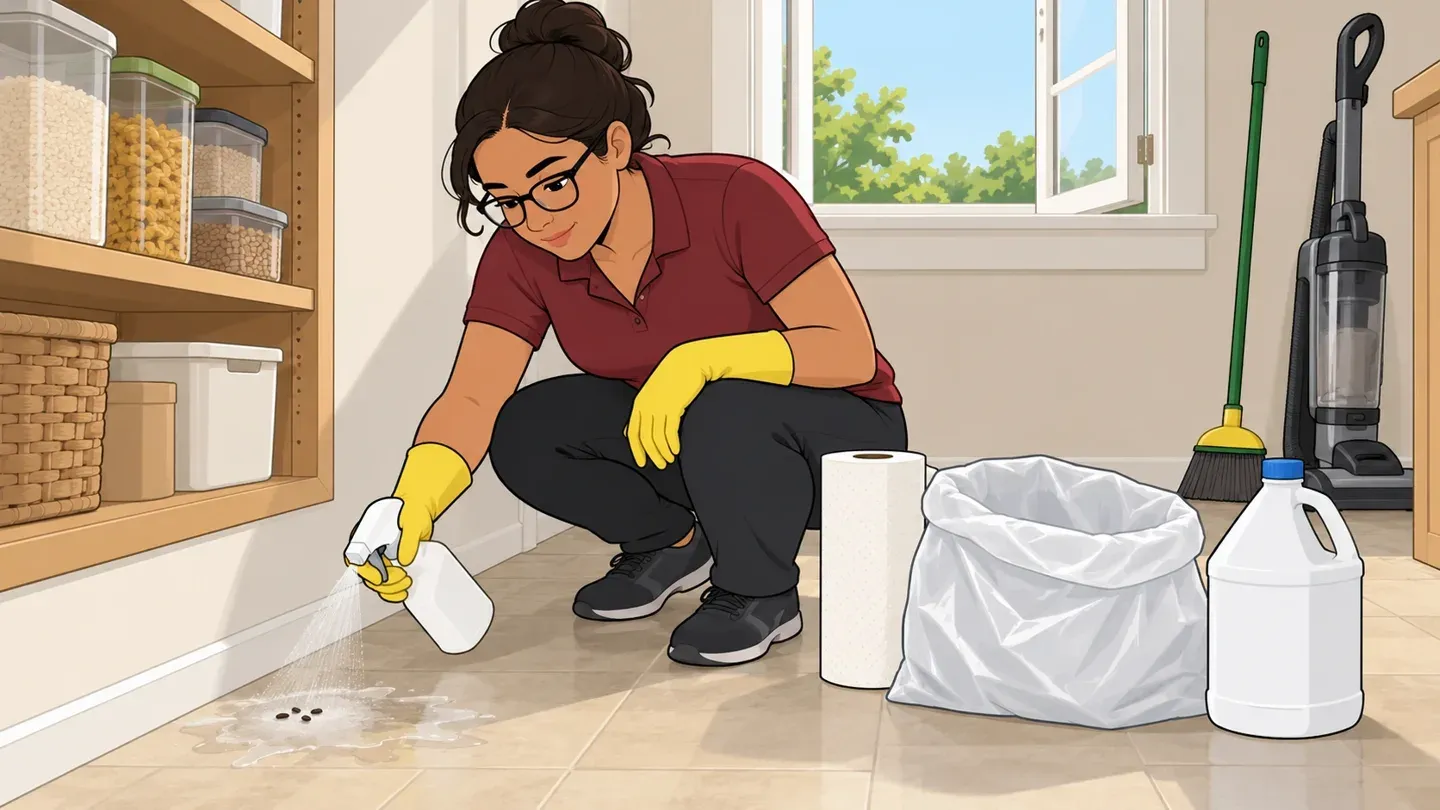
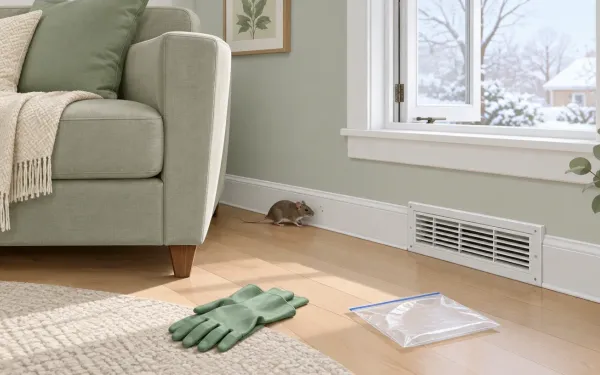
Illustration: window open, gloves on, and the droppings soaked before anything touches them.
To clean mouse droppings, air the room for 30 minutes, put on rubber or plastic gloves, and soak the droppings with disinfectant or bleach solution (3 tablespoons of bleach in a 16 oz spray bottle of water, same strength as 1.5 cups per gallon). Wait 5 minutes, wipe up with paper towels, bag them and mop. Never sweep or vacuum.
Cost: about $15 in supplies. Difficulty: easy. Call a pro if droppings cover a large area or a long-empty building, rodents got into your heating or cooling ducts, or you’re pregnant or have a weakened immune system and no one else can do it.
This guide covers the CDC’s soak-and-wipe method, nests, what to do if you already vacuumed, and fabrics, books and boxes. We haven’t tested these methods ourselves; this rests on CDC, EPA, FDA and state health department guidance and September 2026 list prices. Cleaning only helps if the mice are gone too, so pair it with how to get rid of mice.
Found mouse droppings tonight? No bleach? Any household spray whose label says “disinfectant” works. Keep kids and pets out while you clean. Throw out food in paper or plastic packages mice could have reached, and set snap traps against the wall, out of reach of kids and pets. Renting? Tell your landlord in writing.
What Works and What Doesn’t for Mouse Droppings
| Method | Works? | Cost | Main limitation |
|---|---|---|---|
| Bleach solution: soak 5 minutes, wipe | Yes, the CDC’s method | About $15 | Never mix with ammonia or other cleaners |
| EPA-registered disinfectant spray | Yes | Varies | Use the contact time on its label |
| Vacuum or broom | No | — | Puts virus-carrying droplets in the air |
| Soapy water, “natural” cleaners, vinegar | No | — | Don’t destroy hantavirus; vinegar isn’t checked |
| A quick grab with a disinfectant wipe | No | — | Skips the soak |
| Enzyme cleaner | For odor only | — | Doesn’t disinfect |
| Pro attic cleanup | For heavy infestations | $150–$600 | Overkill for a few droppings |
Why You Shouldn’t Vacuum or Sweep Mouse Droppings
Neither a vacuum nor a broom is safe. The CDC says rodent diseases mainly reach people through the air, and vacuuming or sweeping urine, droppings or nests can put tiny droplets containing viruses into it. Soaking first sanitizes them without stirring them up.
Be careful, not panicked. The common house mouse is an unlikely hantavirus host; in the U.S., the hantavirus that makes people sick is mostly spread by deer mice. House mice can carry LCM, mainly a risk during pregnancy or for weakened immune systems. You can’t tell which mouse left the mess, so clean the wet way every time.
What’s the Best Disinfectant for Mouse Droppings?
Either diluted household bleach or an EPA-registered disinfectant, used for the contact time on its label. Mix bleach fresh: 3 tablespoons of regular unscented bleach in a 16 oz spray bottle topped up with water, or 6 for a 32 oz bottle. On a wood floor or stone counter, use the disinfectant spray and check its label for the surfaces it suits.
Skip vinegar: the EPA doesn’t check how well it kills viruses. Enzyme cleaners are for lingering urine odor after cleaning, not disinfecting.
How to Clean Mouse Droppings and Urine, Step by Step
This is the CDC’s method for any hard surface. Rubber or plastic gloves (latex, vinyl or nitrile) are the only gear an ordinary cleanup needs; fabric gloves let germs through.
Step 1: Air it out. Open doors and windows for 30 minutes and leave the room while it airs.
Step 2: Spray until very wet. With gloves on, soak droppings and urine spots with bleach solution or disinfectant.
Step 3: Wait 5 minutes, or as long as your disinfectant’s label says, not a quick spray-and-wipe.
Step 4: Wipe and bag. Wipe up with paper towels and throw them in a covered garbage can.
Step 5: Mop with disinfectant. Do the floors, countertops, cabinets and drawers.
Step 6: Wash twice. Wash your gloved hands with soap and water or disinfectant, take the gloves off, then wash your hands with soap and warm water.
In the kitchen: disinfect plastic, glass and metal containers the same way; cardboard with droppings or urine goes in the trash. Plates and utensils: wash in hot soapy water, rinse, sanitize in 1 tablespoon of bleach per gallon and air dry (CDC). Undamaged cans and sealed jars can stay once washed and sanitized; throw out any that are dented, bulging, cracked or have a broken seal (FDA).
Check your work afterward. New droppings on a clean floor mean mice are still active. Keep trapping until a week passes with no catches and no new signs.
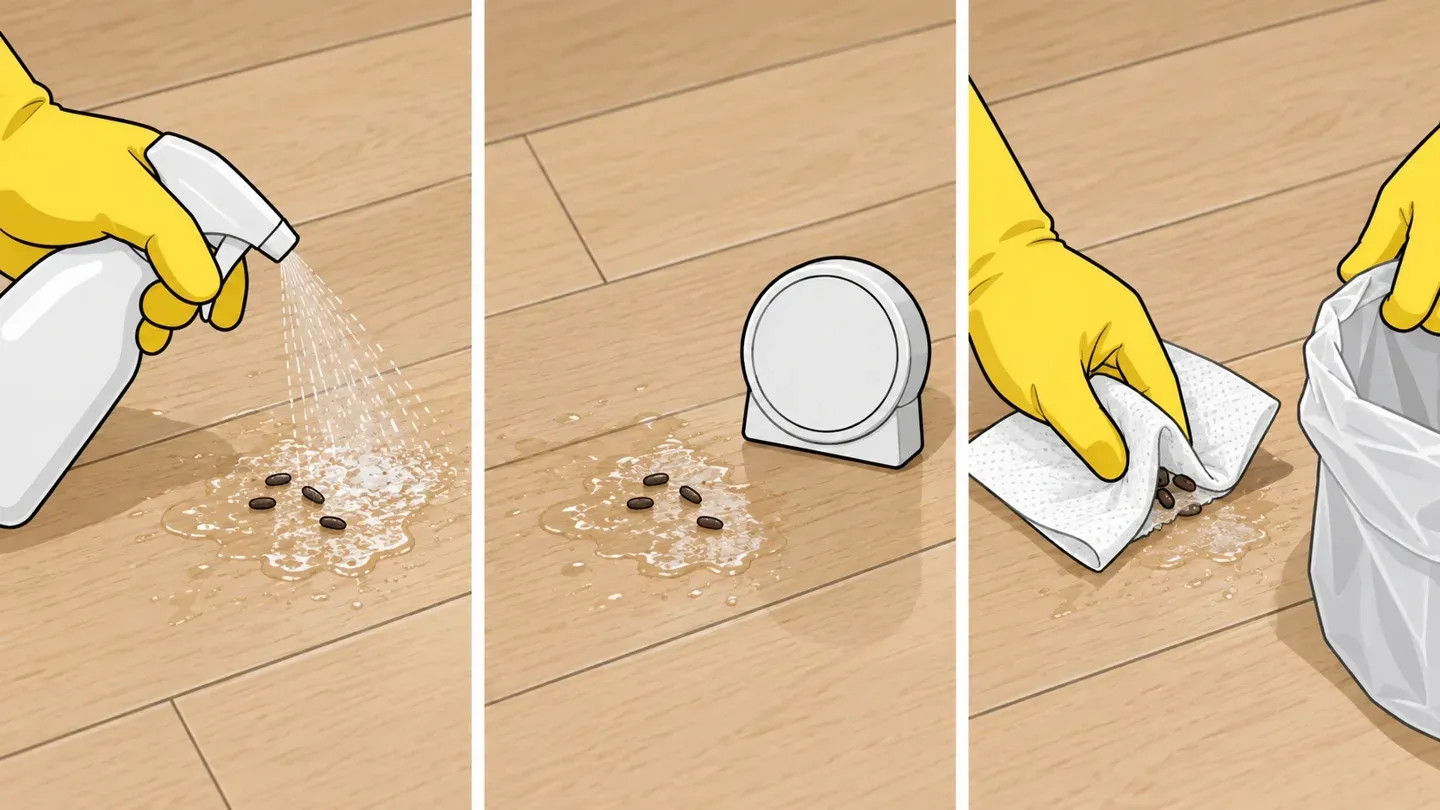
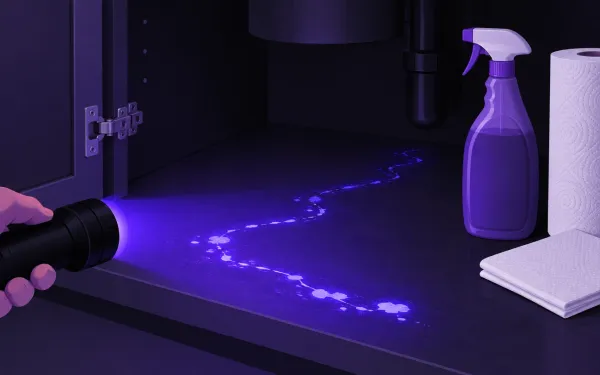
Illustration: spray until wet, wait, then wipe up and bag the paper towels.
How to Clean Up a Mouse Nest
Nests get the same soak, plus flea protection and double bagging.
Repel fleas first. They’re common on rodents, so the CDC suggests DEET or another EPA-registered insect repellent on your clothes, shoes and hands.
Soak the nest and the area around it, then bag the nesting material, knot the bag, put it in a second bag and knot that too. Throw it in a covered garbage can and wash up as in Step 6.
A dead mouse gets the same treatment, double-bagged with the trap; if you can smell one but can’t see it, follow the smell to find it.
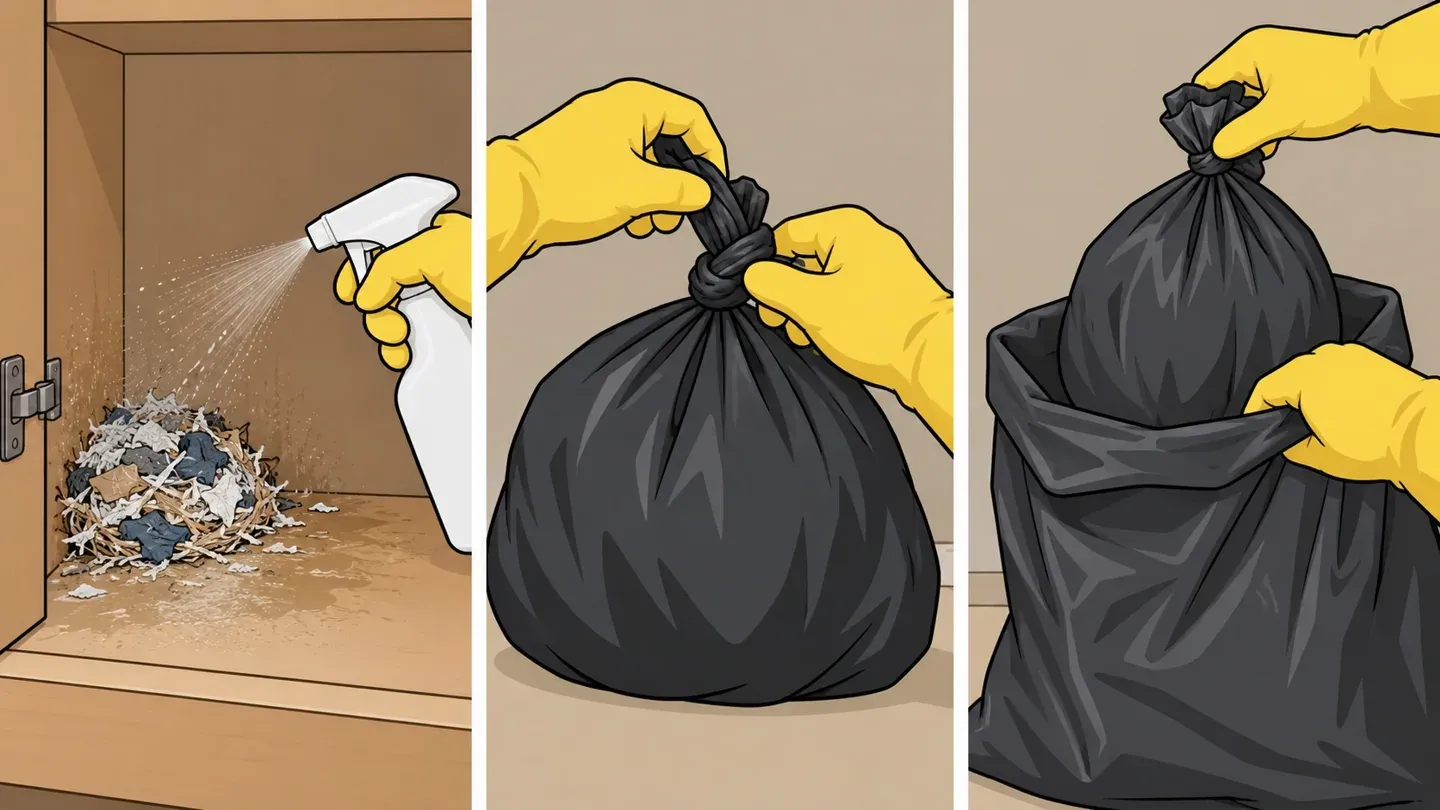
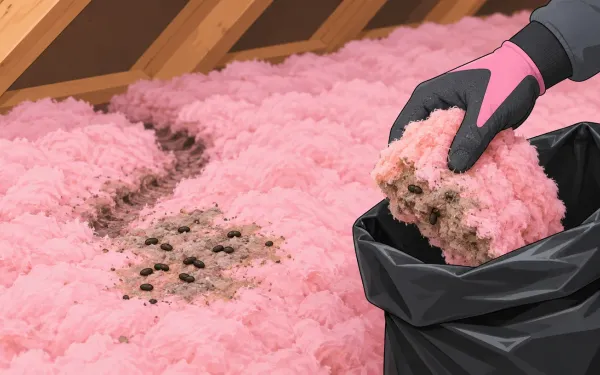
Illustration: soak the nest, knot the bag, then bag it again.
I Accidentally Vacuumed Mouse Droppings: Now What?
Don’t panic, and don’t keep vacuuming. “I freaked out and vacuumed it up,” one Reddit poster wrote. “It says I’m supposed to clean the vacuum, but it’s a Dyson.” The CDC’s advice is simply to follow its cleanup steps: air the room, then spray and wipe where the droppings were.
No agency we checked explains how to clean the vacuum itself. Applying the same CDC rules, our suggestion: take it outside, stand upwind, put on gloves, and spray the canister or bag contents until wet before emptying them into a plastic bag. Double-bag it, then wipe the canister and brush head with disinfectant, following the maker’s instructions for washable parts.
Serious illness is rare: the CDC counts 890 U.S. hantavirus cases from 1993 through 2023, 94% of them west of the Mississippi River. Symptoms usually start 1 to 8 weeks after contact, with fatigue, fever and muscle aches; if they appear, see a doctor and mention the rodent exposure.
Cleaning Bedding, Carpet, Books and Boxes
These come after the droppings themselves are soaked and removed:
- Bedding, clothes and stuffed animals: hot water and detergent, then a hot dryer or the sun.
- Carpets and upholstery: shampoo with a commercial disinfectant or a commercial-grade steam cleaner.
- Books and papers: several hours in the sun outdoors, or at least three weeks somewhere indoors that mice can’t reach.
- Storage boxes: sort them outside in a ventilated, sunny spot; throw out soiled cardboard.
- Attic insulation: bag soiled insulation before you decide about replacing the rest.
Old, dried droppings get the same wet cleanup. New York’s health department says hantaviruses survive a few hours or days, longer in shaded dust or nests, and you can’t know when an infected rodent was last there.
Cleaning Rat Poop
The method is the same: the CDC’s cleanup guidance covers rats and mice alike. Rat droppings are bigger, but they get the same soak-first treatment. New droppings after a week of trapping may mean rats, which need a plan for getting rid of rats in your house.
Which Plan Fits Your Situation
| Your situation | Start with | Then |
|---|---|---|
| A few droppings in a cabinet | Air out, soak 5 minutes, wipe | Toss exposed food; set traps |
| A nest | Insect repellent, then soak | Double-bag it |
| Already vacuumed | Stop; air the room | Spray and wipe the spot; clean the vacuum outside |
| Pregnant or immune-compromised | Someone else cleans | Avoid contact with wild mice (CDC) |
| Heavy infestation, ducts or a long-empty building | Stay out | A pro with a HEPA respirator |
What It Might Still Cost
| Item | Typical cost |
|---|---|
| Nitrile gloves (50) | $8.49 |
| Bleach, 81 oz | $6.39 |
| DIY total | About $15 |
| Pro mouse droppings removal (attic cleanup) | $150–$600 |
| Pro trap-and-seal job, 53 shared quotes (middle half) | $1,400–$3,000 |
| Pro visit, price-guide range (usually no sealing) | $150–$655 |
DIY: Target list prices, September 30, 2026, before tax. Pro cleanup: HomeGuide (April 2024; depends on rodent type, amount, debris and damage). Pro: the middle half of 53 trap-and-seal quotes homeowners shared on Reddit (see the quote table). Price-guide range: This Old House for mice (April 2026) and HomeAdvisor for rats (June 2026); it usually covers a trap-and-bait visit, with sealing extra. A few droppings in a cabinet don’t need a cleaning crew.
Before You Start: A Quick Checklist
- Buy rubber or plastic gloves, not fabric.
- Mix bleach fresh: 3 tablespoons per 16 oz spray bottle.
- Use bleach alone; never mix it with ammonia or other cleaners.
- Open doors and windows 30 minutes before you start.
- Keep kids and pets out of the room.
- Have paper towels, two plastic bags and a covered trash can ready.
When to Call a Pro
- Heavy infestations and long-empty buildings. The CDC’s special precautions call for a HEPA respirator, fit-tested under local and state rules.
- Heating or cooling ducts. The CDC says to call a professional rodent service.
- Pregnancy or a weak immune system, with no one else to clean.
Common questions
Not from hantavirus. Washington State’s health department says dogs and cats can be infected but don’t get sick, and can’t pass it directly to people. Keep them out while you clean.
This guide covers cleanup only. For roach, bat and other droppings, see our pest droppings guide; the cleanup method is the same for rats and mice.
Not for a few droppings. The CDC’s list for an ordinary cleanup stops at gloves, because wetting the droppings keeps dust out of the air, and a dust mask doesn’t protect against viruses anyway. Heavy infestations, closed sheds and cabins call for more protection.
Not on its own. The CDC’s method is to spray droppings until very wet and let them soak before wiping; a quick grab with a wipe skips that soak.
Sources and further reading · 8
- CDC: How to Clean Up After Rodents, Trap Up, Controlling Wild Rodent Infestations and Cleaning With Bleach.
- CDC: About Hantavirus, Reported Cases of Hantavirus Disease, Hantavirus Prevention and About LCM.
- Washington State Department of Health: Hantavirus.
- New York State Department of Health: Hantavirus Fact Sheet.
- University of Arizona Cooperative Extension: Hantavirus and Disease Prevention.
- EPA: Can I use common household substances to kill the novel coronavirus?
- FDA: How to Handle Food Products That Have Been Exposed to Filth.
- HomeGuide: Attic Cleaning Cost and This Old House: Mice Exterminator Cost.