Steel Wool for Mice: Does It Keep Them Out?
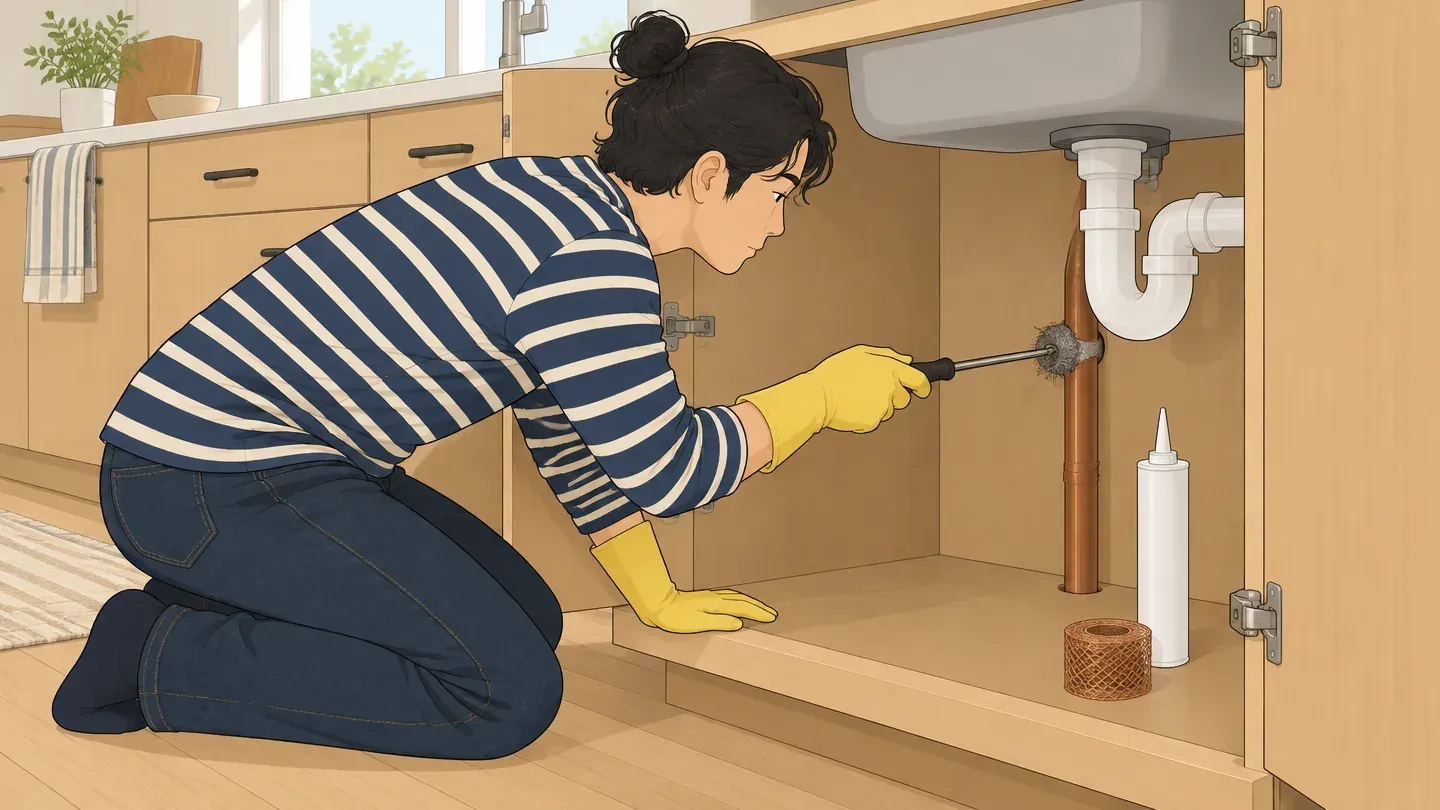
Illustration: steel wool pushed into the gap around a pipe under the kitchen sink, with a tube of caulk ready beside it.
Yes, steel wool keeps mice out, but only packed tight and caulked over: mice can’t chew through coarse steel wool, yet they push past a loose wad, and it rusts on its own. Mice don’t hate it as a smell; it works as a plug for small holes, about $11 with the caulk. Where it stays damp, use copper mesh instead, and skip spray foam on its own: mice chew through it.
Cost: about $11 in supplies. Difficulty: moderate. Call a pro if the gaps are on the roofline or anywhere you can’t reach safely from a stable ladder, a hole needs sheet metal or concrete work you can’t do, or new droppings keep turning up after 15 days of trapping.
This guide compares steel wool with copper mesh, caulk, foam and sheet metal, then shows how to seal a mouse hole and what it costs. We haven’t tested these materials ourselves. It rests on CDC, UC IPM, Nebraska Extension and National Park Service guidance, plus store list prices.
Saw a mouse tonight? Kitchen steel wool scouring pads make a good temporary plug. Push them hard into every pencil-width gap, starting around the pipes under the sink, and put a few snap traps behind the stove or fridge, away from kids and pets.
Sealing is half the job; trapping the mice already inside is the other half, covered in our plan for getting rid of mice.
How We Compared These Materials
We rated each sealing material on five things:
- Chew resistance: whether mice and rats can gnaw through it.
- Durability: whether it rusts, cracks or breaks down outdoors.
- Hole size: which gaps it suits, from pencil-width to foundation cracks.
- Safety: where it shouldn’t go, such as around wires.
- Cost: U.S. list prices from September 30 and October 1, 2026.
Sources are listed at the end.
Steel Wool vs. Copper Mesh, Caulk and Foam
The best seal combines a metal filler mice can’t chew with a sealant that holds it in.
| Material | Price | Verdict |
|---|---|---|
| Coarse steel wool | $5.26 for 12 pads | Chew-proof but rusts; cheap plug for dry spots |
| Copper mesh | $28.80 for 20 ft | Doesn’t rust; best for damp spots |
| Silicone caulk alone | $5.29 for 2.8 oz | Fine for thin cracks; rats chew it |
| Expanding foam alone | — | Won’t stop mice; only holds metal in place |
| Hardware cloth, sheet metal, cement | — | For holes too big to stuff |
Does Steel Wool Keep Mice Out?
Yes, if it’s packed tight and held in place. The CDC’s advice for small holes: fill them with steel wool and put caulk around it to keep it in place. Coarse steel wool is one of the materials mice can’t chew through, but UC IPM calls steel wool scouring pads “good temporary plugs” that “may rust over time.”
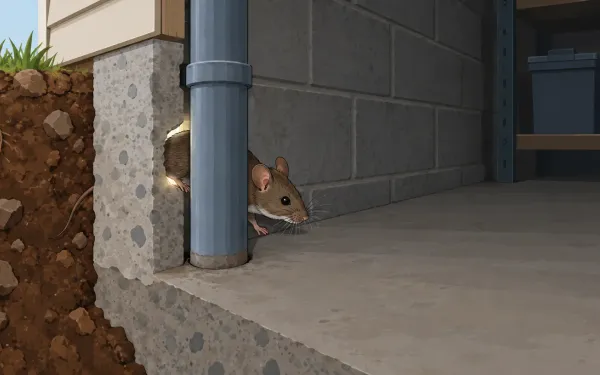
Which gaps count? Any a pencil fits into, about ¼ inch. Here’s how mice get in the house and where to look with a flashlight. Check high as well as low: mice climb walls and reach gaps at the eaves.
Buy coarse, labeled grade 3 on the pack priced here. The National Park Service’s rodent exclusion manual names 00 instead, and says to caulk over steel wool whichever you use.
Best for: pencil-size holes and pipe gaps that stay dry.
Main limitation: it rusts, and mice work their way around a loose wad.
Copper Mesh: Best Where It’s Damp
Nebraska Extension recommends copper woven-wire mesh or stainless steel fibers for gaps around pipes wider than ½ inch. Neither rusts, and both wedge into cracks with a flat-head screwdriver. Finish with sealant or mortar, since rodents can push loose mesh aside too.
Best for: under sinks, outdoors and anywhere a steel wool plug would rust, such as the pipes in a kitchen with mice.
Main limitation: about $34 with caulk, roughly three times the cost of steel wool (our math).
Caulk: The Lock, Not the Plug
Caulk fills thin cracks and locks metal fillers in place, but on its own it isn’t chew-proof. The NPS manual says silicone sealants cure quickly, stick well to most materials and last up to 20 years, against about 3 to 10 for latex.
Best for: sealing over every steel wool or mesh plug.
Main limitation: rats gnaw through caulk alone.
Can Mice Eat Through Spray Foam?
Yes. UC IPM lists insulating (expanding) foam with plastic screening, rubber, vinyl and wood as ineffective for plugging mouse holes. Foam is only useful for holding steel wool in place, and outdoors it breaks down in sunlight unless trimmed and painted. Already finding chewed foam in the walls? See mice in insulation.
Best for: holding a metal plug in place, nothing more.
Main limitation: mice chew straight through it.
Hardware Cloth, Sheet Metal and Cement: For Big Holes
For holes too big to stuff solid, or with a hollow space behind, the CDC lists hardware cloth, metal sheeting or cement. Screw hardware cloth or galvanized sheet metal down, and patch foundation cracks with concrete or mortar, a common job in a basement with mice.
Best for: large openings and foundation cracks.
Main limitation: more tools and work; some jobs are for a pro.
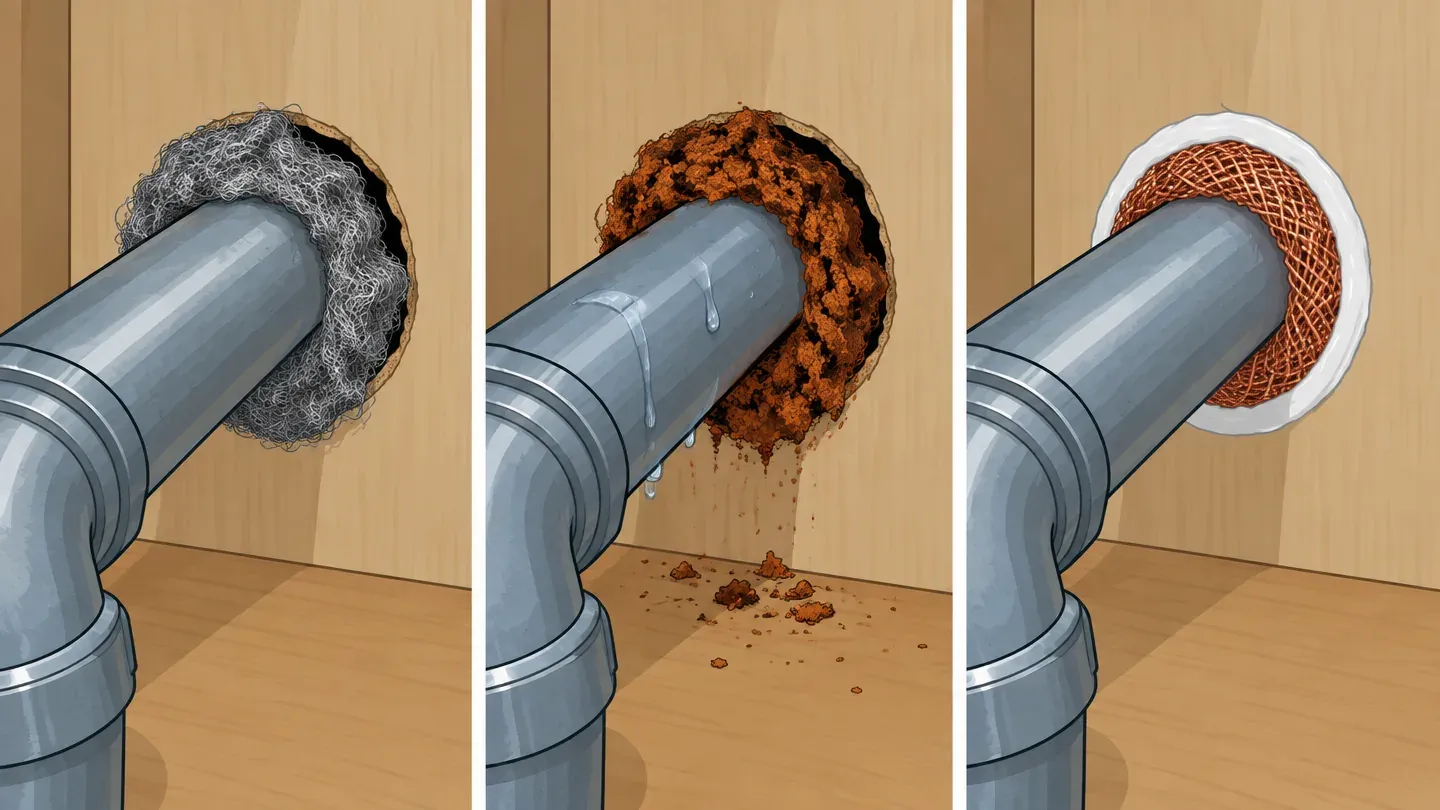
Illustration: a loose wad with gaps at the edges, a rusted wad under a damp pipe, and a hole packed with copper mesh and caulked over.
Why Mice Get Through Steel Wool
Usually because the plug is loose or rusted, not because they chewed it. One Reddit poster said mice “keep getting through my steel wool hole” under a kitchen sink. The NPS manual explains it: steel wool rusts, and rodents often work their way between the wool and the edges of the opening.
- Pack it tighter, working it into the edges with a screwdriver.
- Caulk over it. Caulk locks the wool in and shows when rodents break the seal.
- Swap rusted plugs for copper mesh under damp sinks.
- Look for the next hole. If the seal is intact and mice still show up, they’re using another gap.
How to Use Steel Wool in Mouse Holes
Wear gloves; steel wool and cut mesh have sharp ends. Renting? Tell your landlord about the gaps in writing, with photos, before you drill, patch or work outside.
Step 1: Match the material to the hole. Use coarse steel wool for dry pencil-size gaps, copper mesh where it’s damp, and hardware cloth for bigger holes. Steel wool is flammable, so around wires and gas lines the NPS manual lists caulk, hardware cloth, cement or sheet metal instead.
Step 2: Pack the steel wool in tight. Pull off a piece bigger than the hole and push it in with a screwdriver until it’s hard against every edge. Around a pipe, wrap it all the way around.
Step 3: Caulk over the steel wool. Run a bead of silicone caulk around and over the plug so it’s locked in and airtight.
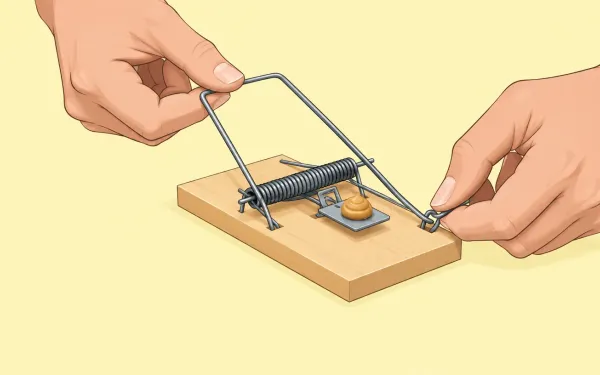
Step 4: Trap the same day. Set snap traps against walls and behind appliances, out of reach of children and pets, as the CDC advises; how to set a mouse trap covers the rest.
Step 5: Check the seals with the traps. Fresh gnaw marks, a torn caulk bead or droppings beside a plug mean that spot needs more metal. Don’t sweep droppings; clean mouse droppings with bleach solution and paper towels.
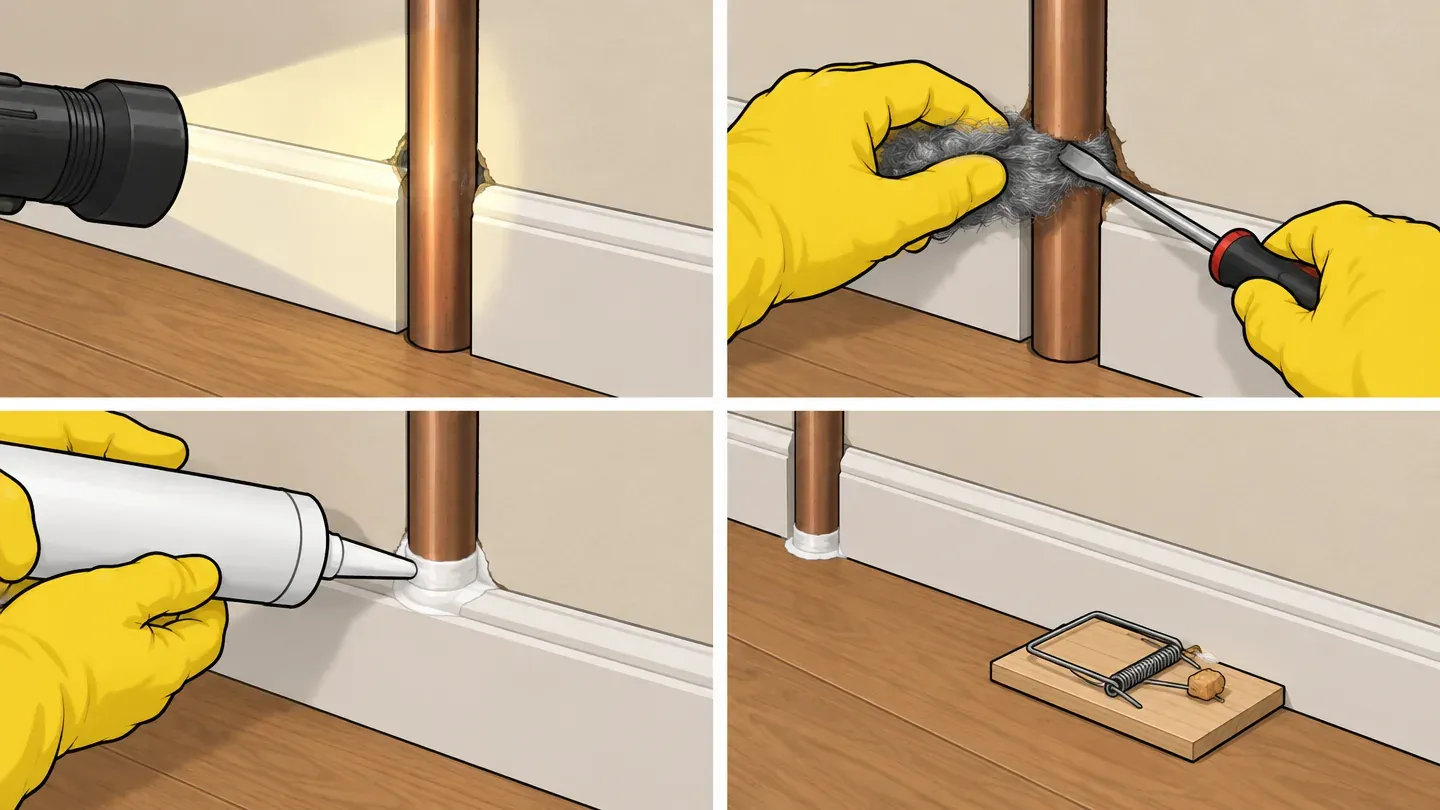
Illustration: a gap by a pipe, steel wool packed in with a screwdriver, caulk run over it, and a snap trap set against the wall.
What Can Mice and Rats Chew Through?
Many household materials, yes: a house mouse gnaws on wiring and insulation.
Plastic, wood and rubber: yes. Nebraska Extension calls latex, plastic, rubber and boards less than ½ inch thick unsuitable for plugging mouse holes.
Metal: soft metal, yes. The NPS says mice and rats can easily gnaw through aluminum; use galvanized sheet metal or ¼-inch hardware cloth instead.
Concrete: rats can gnaw concrete block, but usually need an exposed edge to start on. Patch with a rich concrete mortar, which resists gnawing.
Steel Wool for Rats
It works the same way, but rats chew through more. Steel wool is still on UC IPM’s list of rat-proofing materials, with wire screen and sheet metal, for any opening over ¼ inch. For a rat’s larger holes, hardware cloth or sheet metal beats a wad of wool; the rest of the plan is in how to get rid of rats in the house.
Which Material Fits Your Situation
| Situation | What to use | Why |
|---|---|---|
| Dry gap around a pipe | Coarse steel wool plus silicone caulk | Chew-proof and the cheapest seal, about $11. |
| Under a sink or anywhere damp | Copper mesh plus caulk | It doesn’t rust. |
| Outdoors | Copper mesh, sealed over | Steel wool rusts; foam breaks down in sunlight. |
| Around wires or gas lines | Caulk, hardware cloth, cement or sheet metal | Steel wool is flammable. |
| Hole bigger than you can stuff | Hardware cloth or sheet metal, screwed down | Wool alone won’t fill it solid. |
| You rent (mice in an apartment) | Temporary plugs, plus a written note | Outside repairs are usually the landlord’s job. |
What It Might Still Cost
| Item | Typical cost |
|---|---|
| Coarse steel wool (grade 3), 12 pads | $5.26 |
| Indoor silicone caulk, 2.8 oz | $5.29 |
| Steel wool plus caulk | About $11 |
| Copper mesh, 20 ft roll | $28.80 |
| Copper mesh plus caulk | About $34 |
| Pro sealing (exclusion), 53 shared quotes (middle half) | $1,400–$3,000 |
| Pro sealing, price-guide range | $200–$600 |
DIY: U.S. list prices from Walmart, DoMyOwn and Target, September 30 and October 1, 2026, before tax and shipping; the totals are our math. Pro: the middle half of 53 trap-and-seal quotes homeowners shared on Reddit (see the quote table). Price-guide range: This Old House for mice (April 2026) and HomeAdvisor for rats (June 2026); it usually covers a trap-and-bait visit, with sealing extra. A full DIY mouse kit, with copper mesh, snap traps, gloves and bleach, runs about $57–71; the exterminator vs. DIY cost page compares it with a quote. Hiring out? Ask what goes into each hole and whether it’s caulked over.
Before You Seal: A Quick Checklist
- Find every pencil-width gap with a flashlight, inside and out.
- Buy coarse steel wool, not fine polishing grades.
- Use copper mesh wherever it stays damp.
- Pack each plug hard with a screwdriver.
- Caulk over every plug with silicone.
- Keep steel wool away from wires and gas lines.
- Set snap traps the same day, and check seals each morning.
When to Call a Pro
Call one if the openings are on the roofline, chimney or gables beyond a stable ladder, if a hole needs sheet metal, concrete or framing work, or if new droppings still appear after 15 days of baited traps, when the CDC suggests professional help.
Common questions
Steel wool isn’t a scent or a repellent, just a filler mice can’t chew through. A loose wad won’t stop them. Smells are a separate question, covered in what smells mice hate.
Don’t count on the finest grades. Ultra-fine 0000 polishing wool isn’t what any rodent guide we checked recommends; buy coarse, pack it tight and caulk over it.
Not if the wool is packed hard and the caulk bead is unbroken. If mice keep appearing, check for torn caulk or rust, then look for a second gap.
The Bottom Line
Steel wool keeps mice out when it’s coarse, packed tight and caulked over. Where it’s damp, copper mesh lasts longer, and foam or caulk alone won’t stop them. Seal every pencil-width gap, trap the mice already inside the same day, and check the seals each morning until a week passes with no new droppings.
Sources and further reading · 6
- CDC: Seal Up to Prevent Rodents, Trap Up to Remove Rodents and Clean Up After Rodents.
- UC IPM: House Mouse (coarse steel wool, scouring pads, rusting, foam and other ineffective materials) and Rats (what rats chew through).
- Nebraska Extension: Controlling House Mice (G1105): copper mesh and stainless steel fibers, unsuitable materials.
- National Park Service: Rodent Exclusion Manual (2019): steel wool grade, caulking over fillers, sealing around utility lines, caulk and sealant types, foam, aluminum, hardware cloth, what rats gnaw.
- Internet Center for Wildlife Damage Management (ICWDM): House Mouse Control and Norway Rat Control.
- Prices: Walmart coarse steel wool, DoMyOwn copper mesh, Target silicone caulk and HomeAdvisor.