Mouse Traps Not Working? Why Mice Avoid Traps and How to Fix
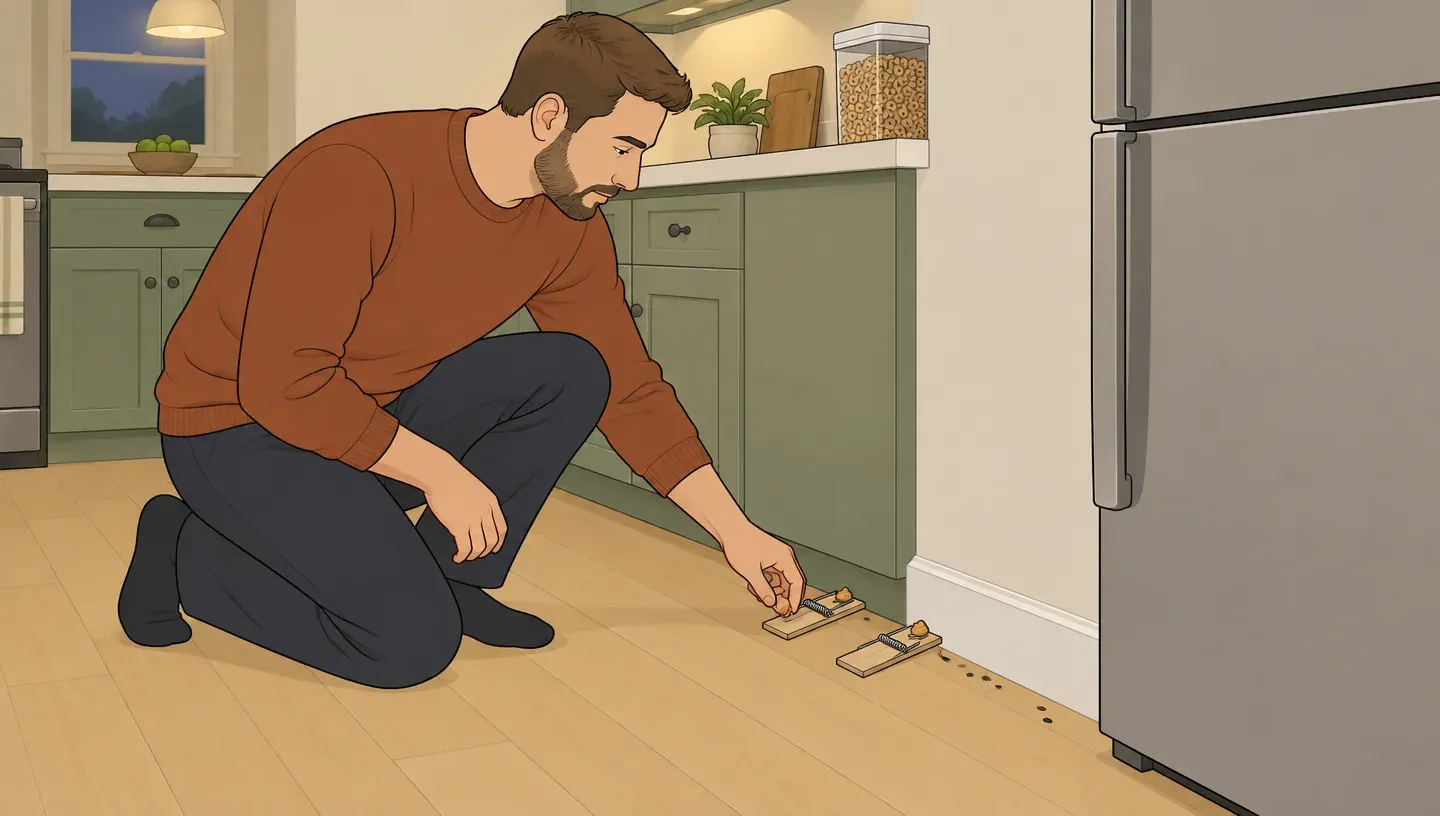
Illustration: a man sets a pair of snap traps against a kitchen baseboard, beside mouse droppings.
Mouse traps not working usually means a setup problem, not a genius mouse: too much bait, a stiff trigger, traps out in the open, too few traps, or easier food nearby. Use a pea-sized dab, set the trigger light, and place traps in pairs against the wall by droppings. A week with no catches or new droppings means you’re done.
Cost: about $14–27 in supplies. Difficulty: moderate. Call a pro if you’ve fixed the bait, trigger and placement, kept trapping and re-baiting for at least 15 days, and still find fresh droppings or gnawing, or mice keep turning up in more rooms.
This guide matches what you’re seeing to the fix, then walks through bait, trigger, placement, trap numbers and food. We haven’t tested these fixes ourselves; this rests on CDC, University of California and Nebraska Extension guidance and October 2026 list prices. For the whole job, including sealing, follow our plan to get rid of mice.
Saw a mouse tonight? Start with the traps you already have. Scrape the bait to a pea-sized dab pressed into the trigger, and set two traps side by side against the wall by the droppings, trigger ends touching the baseboard. Put cereal and pet food in lidded containers. Don’t sweep or vacuum droppings.
Why Are My Mouse Traps Not Working?
Match what you see to the first fix:
| What you see | What to fix first |
|---|---|
| Bait gone, trap still set | Less bait, pressed into the trigger; lighter trigger (Steps 1–2) |
| Trap snapped, no mouse | Trigger end against the wall; set a second trap beside it (Steps 3–4) |
| Bait untouched, droppings elsewhere | Move the trap to the fresh droppings (Step 3) |
| Mouse walks right past the trap | Put it in the mouse’s path, trigger end to the wall (Step 3) |
| Caught a few, then nothing, signs continue | Add clean traps in new spots |
| No catches and no new droppings for a week | The mice may be gone |
What Works and What Doesn’t for Stubborn Mice
| Fix | Works? | Cost | Main limitation |
|---|---|---|---|
| Pea-sized bait, pressed in or tied on | Yes | Free | Replace it when it dries out |
| Lighter or enlarged trigger | Yes | Free (cardboard) | Bar must still close over the square |
| Traps against the wall at droppings | Yes | Free | Last few mice may not hug the wall |
| More traps, in pairs | Yes | $13.74 for 12 | Daily checks |
| Pre-baiting unset | Yes, for trap-shy mice | Free | Adds a night or two |
| Glue boards | No | — | Adult mice spot the glue; CDC advises against |
| Plug-in ultrasonic repellers | No | — | Not effective (University of California) |
Are Mice Smart Enough to Avoid Traps?
Mostly no. The CDC says house mice are less cautious than rats and may be trapped more quickly, so avoidance is almost always one of the five setup problems below. Some do learn: a mouse that sets off a trap and escapes can become trap-shy.
Step 1: Stop Mice Eating the Bait Off the Trap
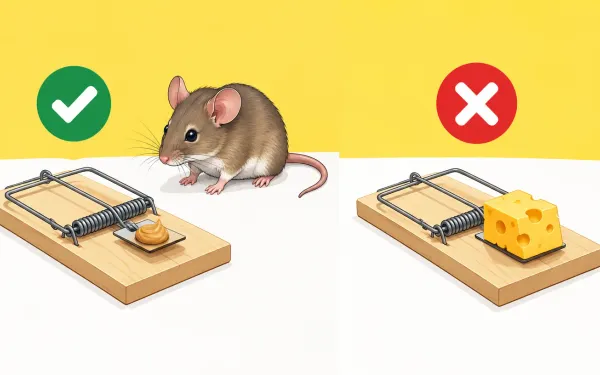
Too much bait is the usual culprit. A big glob lets a mouse feed around the rim while the trigger never moves, which is why so many peanut butter traps fail.
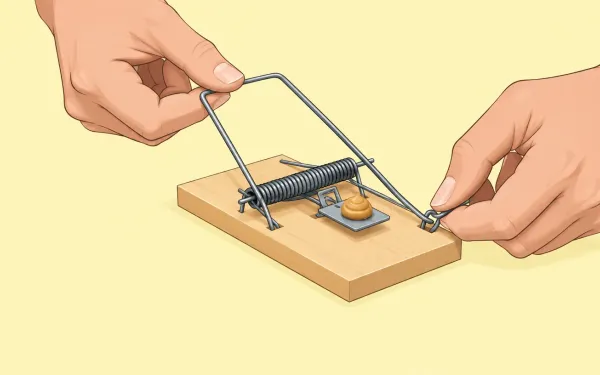
Use a pea-sized amount, not a glob, pressed into the grooves of the trigger rather than smeared on top. Replace it when it dries out.
Tie it on. Tie a scrap of cloth, cotton or dental floss to the trigger; the mouse has to tug at it to eat or carry it off for a nest.
Peanut butter itself is fine: University of California experts call it very attractive to house mice, though it’s an allergy risk for some people. Bait that vanishes without a catch can be insects, so never spray insecticide on traps. More foods to try: best bait for mouse traps.
Gloves or not? None of the guides behind this page lists human scent as a reason traps fail. Wear gloves to handle a caught mouse, and wash your hands after handling traps.
Step 2: Set a Lighter, Bigger Trigger
A stiff trigger lets a mouse eat without firing it. Set it as light as your trap allows; if bait keeps vanishing, Nebraska Extension says to reset with a lighter “hair trigger” or move the trap.
Can’t adjust it? Enlarge it. Wider triggers catch more mice. Cut a square of cardboard or wire screen just small enough to fit inside the snapping bar, tape it onto the trigger plate, and check that the bar still closes over it.
Check the size too: you won’t catch a mouse with a rat trap. Arming one step by step: how to set a mouse trap. The best spots in each room: where to put mouse traps.
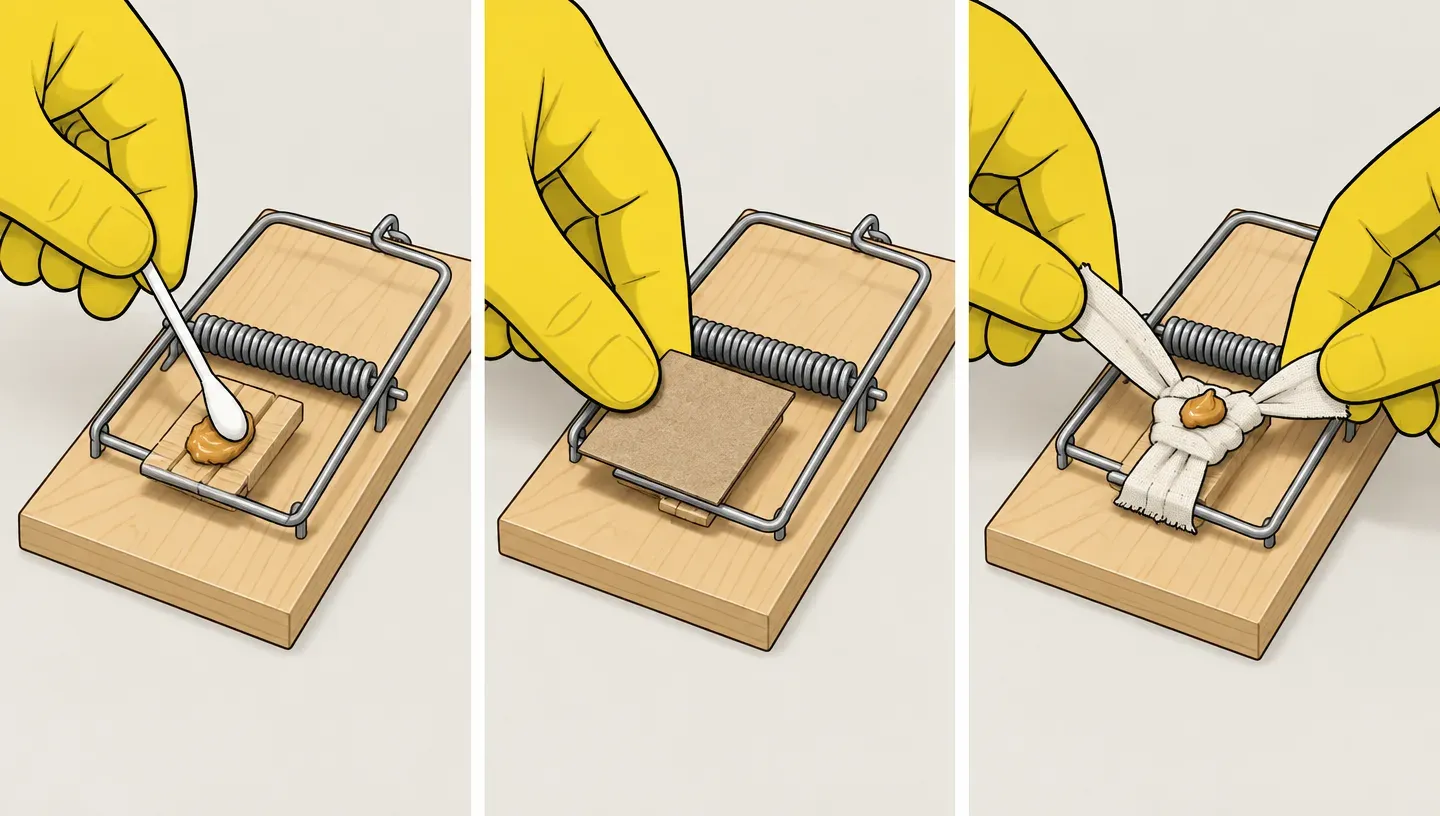
Illustration: a pea-sized dab pressed into the trigger, a cardboard square that enlarges it, and a scrap of cloth tied on.
Step 3: Move Traps to Where Mice Run
A trap out in the open is easy to walk around. Point each trap straight out from the wall with the trigger end touching the baseboard, so a mouse running along the wall crosses the trigger.
Put traps next to fresh droppings, gnaw marks or nibbled food, behind the stove and refrigerator, and in dark corners behind boxes. Down to the last few? Try a trap beside a pipe or on a ledge with droppings.
Kids or pets at home? Behind the fridge or stove, not in low cabinets a toddler can open; ledges where mice travel but children rarely go also work.
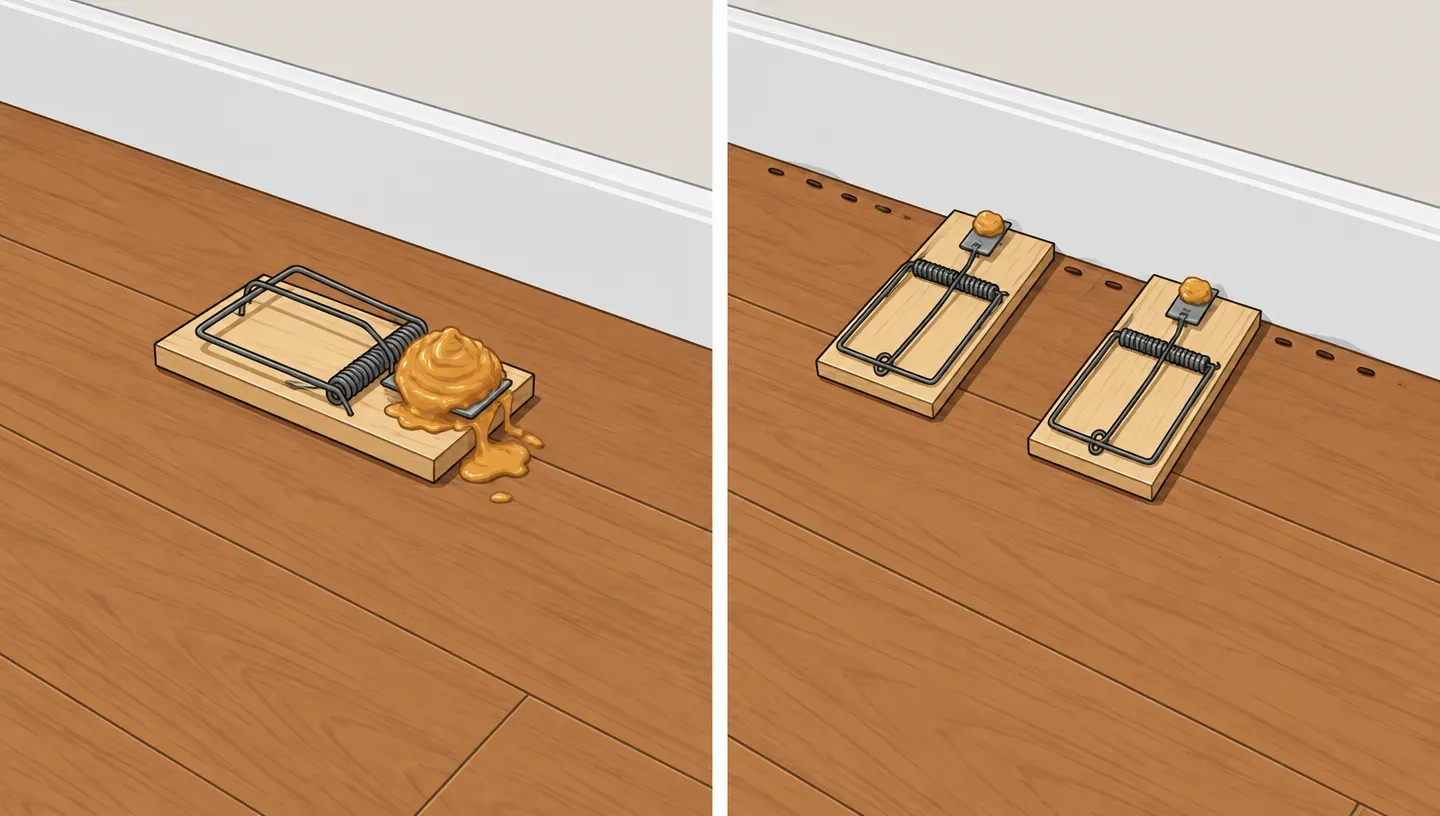
Illustration: left, one trap out in the open with too much bait; right, two traps side by side with their triggers against the wall.
Step 4: Use More Traps, Set in Pairs
A pair catches mice that jump over a single trap. Set two side by side, 1 to 2 inches apart, both triggers to the wall, and keep pairs no more than about 10 feet apart where mice are active (University of California).
For a new infestation in a 1,500-square-foot home, Nebraska Extension suggests about 24 snap traps. Check traps first thing each morning; mice move most before dawn and after dusk. Caught one? Gloves on, bag the mouse and wash your hands; what to do with a dead mouse covers disinfecting the trap.
Step 5: Take Away Competing Food
House mice eat about 200 small meals a night (University of California), so crumbs, an open cereal box or pet food can keep them fed without going near a trap. Tonight, put cereal, snacks and pet food in lidded containers, feed pets only what they eat in one sitting, and wipe up crumbs right away (what attracts mice).
How to Catch a Mouse That Avoids Traps
Pre-bait. Leave traps baited but unset until the bait has been taken at least once, then set them. This cuts the chance a mouse sets one off, escapes and turns trap-shy.
Add fresh traps in new spots, closer to the newest droppings, and scrub used plastic and metal traps with hot water and a stiff brush.
Skip glue boards. Adult mice often spot the glue, and the CDC advises against glue and live traps, since a trapped mouse urinates in fear (why glue traps backfire). Dealing with rats instead? They’re far warier; see why rats avoid traps.
Why You Keep Catching Mice but Signs Continue
Mice are probably still getting in. The CDC says they fit through a hole about ¼ inch wide, so check under the sink, behind appliances and around pipes, and fill small gaps with steel wool held in with caulk (how mice get in). Renting? Tell your landlord about gaps in writing before sealing anything.
Which Plan Fits Your Situation
| Your situation | Start with | Then |
|---|---|---|
| Only two traps tonight | One pair at the freshest droppings | Buy more in the morning |
| Apartment or small home | A pair wherever you find fresh droppings | Seal gaps; tell your landlord |
| Whole house | About 24 traps | Pairs within 10 feet of each other |
| Kids or pets | Traps behind appliances or on ledges | Never poison in reach |
| One trap-shy mouse | Pre-bait unset | Fresh traps in new spots |
What It Might Still Cost
| Item | Typical cost |
|---|---|
| 12 wooden snap traps | $13.74 |
| 24 wooden snap traps | $27.48 |
| Pro trap-and-seal job, 53 shared quotes (middle half) | $1,400–$3,000 |
| Pro visit, price-guide range (usually no sealing) | $150–$655 |
DIY: Victor metal-pedal mouse traps at $2.29 per 2-pack (victorpest.com list price, October 1, 2026, before tax and shipping). Pro: the middle half of 53 trap-and-seal quotes homeowners shared on Reddit (see the quote table). Price-guide range: This Old House for mice (April 2026) and HomeAdvisor for rats (June 2026); it usually covers a trap-and-bait visit, with sealing extra.
Before You Start: A Quick Checklist
- Scrape every trap’s bait down to a pea-sized dab.
- Test each trigger; set it light or tape on a cardboard square.
- Move traps to the freshest droppings, trigger end to the wall.
- Pair every trap with a second one beside it.
- Lid the cereal, snacks and pet food.
- Check traps first thing each morning.
When to Call a Pro
Keep checking and re-baiting for at least 15 days, longer if you still have mice, before turning to professional help (CDC). Call if:
- you still find fresh droppings after 15 days of steady trapping with the fixes above;
- mice turn up in more rooms even as you catch them;
- you can’t reach where they live, such as inside walls or ducts.
Common questions
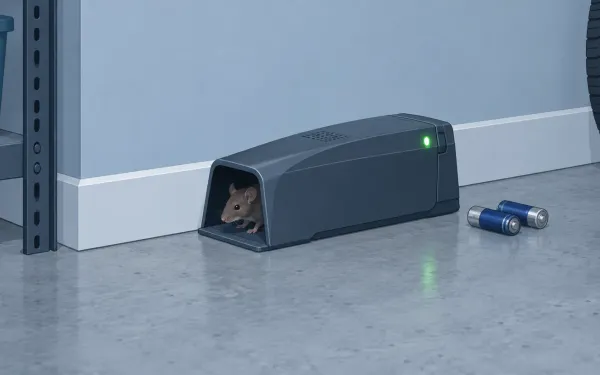
Electronic mouse traps cost considerably more, but University of California experts say some homeowners get good control with them when they use enough traps.
Poison baits are slow on purpose. Nebraska Extension says mice that eat a lethal dose begin dying in five days, and rats on anticoagulant bait also take days. With children or pets at home, keep any bait in a tamper-resistant station; if a child may have eaten bait, call Poison Control at 1-800-222-1222.
Sources and further reading · 7
- CDC: How to Trap Up to Remove Rodents, How to Seal Up to Prevent Rodents and How to Clean Up After Rodents.
- UC IPM: House Mouse (Pest Notes).
- UC ANR: Rats and Mice, How to Manage Using Snap Traps.
- Nebraska Extension: Controlling House Mice (G1105).
- ICWDM: House Mouse Damage Prevention and Control Methods.
- ICWDM: Norway Rat Damage Prevention and Control Methods.
- Poison Control: Mouse and Rat Poisons.