Mice or Rats in the Attic? How to Get Rid of Them Yourself
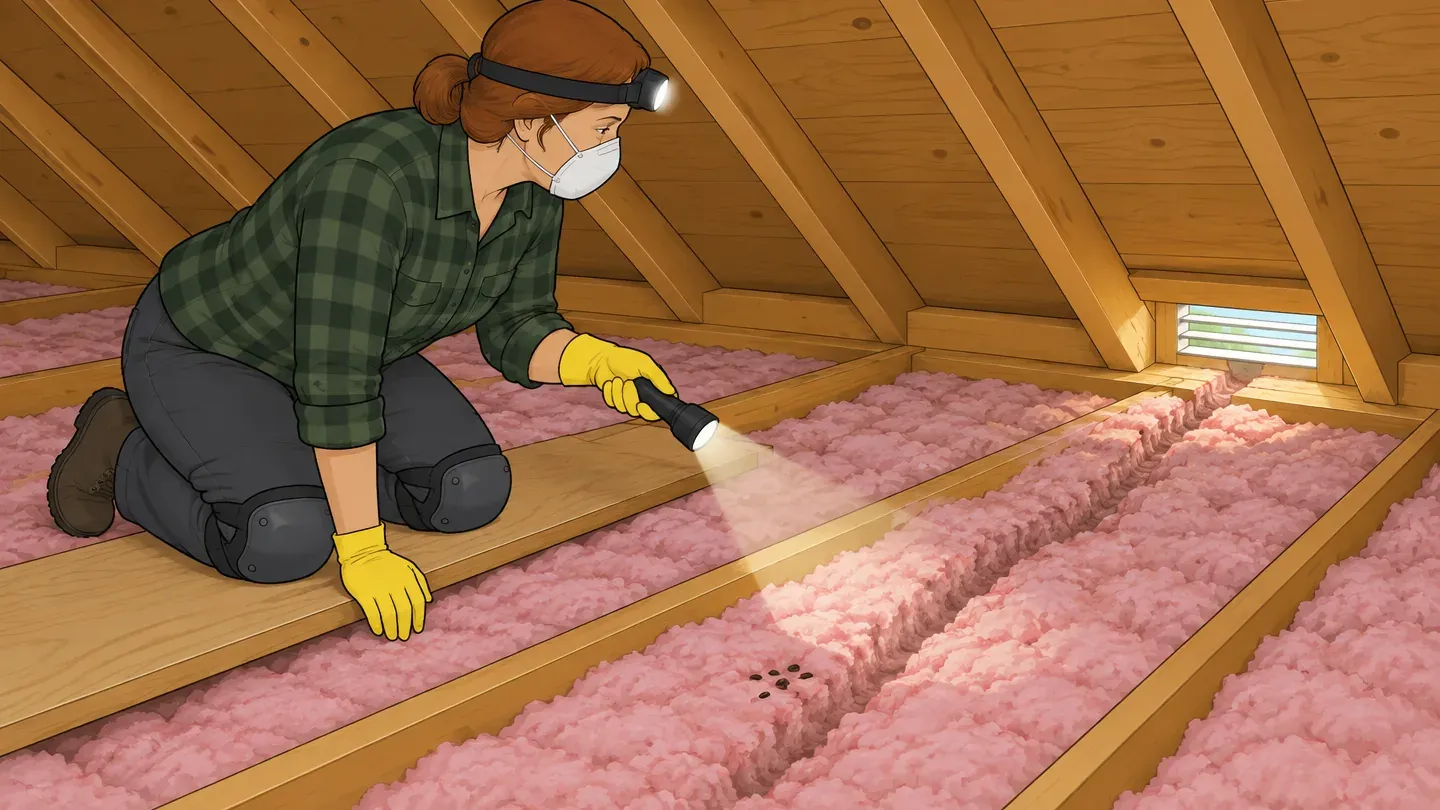
Illustration: checking the insulation along the eaves with a headlamp and flashlight.
You can get rid of mice in the attic yourself: confirm it’s mice, not rats or squirrels, then set snap traps along the eaves, joists and insulation trails where you find droppings, and seal roofline gaps with metal, not foam. Skip poison and sound devices. You’re done after a week with no catches and no new signs (CDC).
Cost: about $57–71 in supplies. Difficulty: hard. Call a pro if your attic has vermiculite insulation, you find chewed wiring, droppings cover a large area, or the entry points are on a roof you can’t safely reach.
Rats, not mice? See how to get rid of rats in the attic.
This guide covers telling mice from other attic animals, staying safe up there, trapping, sealing, cleanup and what to do about soiled insulation. We haven’t tested these methods ourselves; this rests on CDC, UC IPM, Nebraska Extension, ICWDM and EPA guidance and September 2026 list prices.
Hearing mice in the attic tonight? Don’t crawl around up there in the dark. Note where and when the noise is, keep the attic hatch shut, and plan a daylight check for droppings before you set traps. For mice in the rest of the house, see how to get rid of mice.
What Works and What Doesn’t in the Attic
| Method | Works? | Cost | Main limitation |
|---|---|---|---|
| Snap traps along eaves and joists | Yes, the CDC’s pick | Part of the $57–71 kit | Rats need rat-size traps, fastened down |
| Copper mesh, ¼-inch wire mesh, flashing | Yes, for sealing | Part of the kit | Roofline gaps can be beyond a safe ladder reach |
| Expanding foam, plastic or wood alone | No (UC IPM) | — | Mice chew through |
| Poison | Skip | — | Mice die under the insulation |
| Sound devices, mothballs | No | — | Little evidence they drive mice out |
| Glue and live traps | No | — | Scared rodents urinate more |
Mice, Rats or Squirrels? Sounds and Signs in the Attic
Timing is a better clue than the sound itself. The Internet Center for Wildlife Damage Management (ICWDM) warns that noises can’t reliably identify an animal, because insulation changes what you hear (what mice sound like).
| What you notice | Most likely |
|---|---|
| Light scratching after dark or before dawn | Mice or rats |
| Running overhead during the day | Squirrels |
| Heavy walking | Raccoon or opossum |
| Animals flying out of a gap at dusk or dawn | Bats |
Then go up in daylight and look for proof:
- Mouse droppings: ⅛ to ¼ inch (3–6 mm) with pointed ends (Nebraska Extension).
- Rat droppings: about ½ inch (13 mm) for roof rats (ICWDM); more in rat poop vs. mouse poop.
- Trails through the insulation, nests of shredded paper or insulation, smudge marks on rafters and gnawed wire sheathing.
Roof rats favor attics, wall voids and false ceilings, while Norway rats usually stay lower but also turn up in ceiling voids (UC IPM). The steps below work for both, with rat-size traps; for rats elsewhere, see rats in the house.
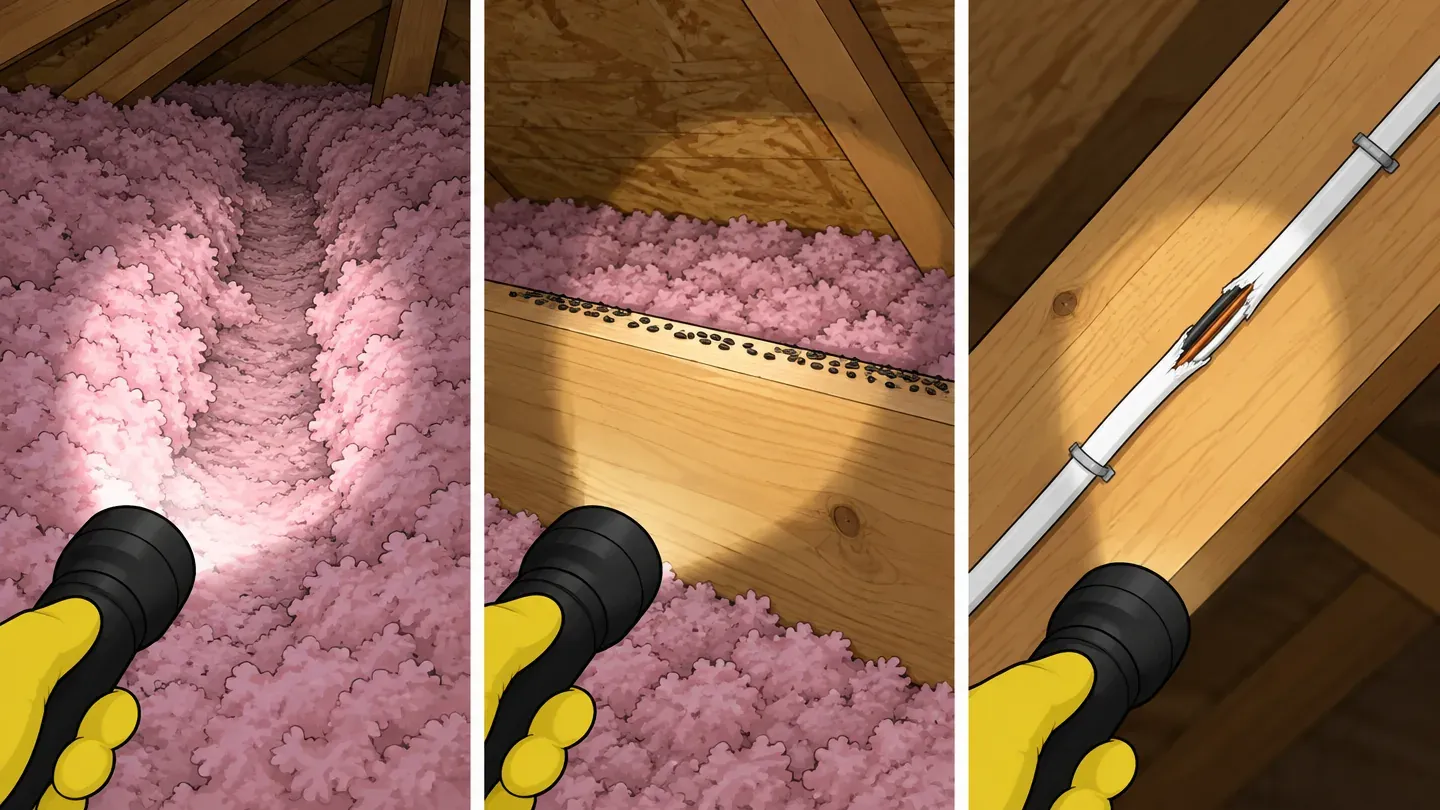
Illustration: trails in the insulation, droppings along a joist and gnawed wire sheathing.
Before You Go Up: Attic Safety
Step only on joists, not the insulation between them, and go up early on hot days, ENERGY STAR advises. Wear a particulate respirator or double-strap dust mask, gloves and knee pads, drink plenty of water, and watch for nails through the roof deck.
Safety: Check the insulation first. The EPA says pebble-like insulation that is gray-brown or silver-gold is likely vermiculite, which may contain asbestos. Don’t disturb it or remove it yourself, keep trips into that attic short, and hire an asbestos professional for any work that would disturb it.
Don’t handle chewed wires. UC IPM notes that rodents gnawing wires can start fires; have an electrician check them.
Step 1: Find How Mice Get Into the Attic
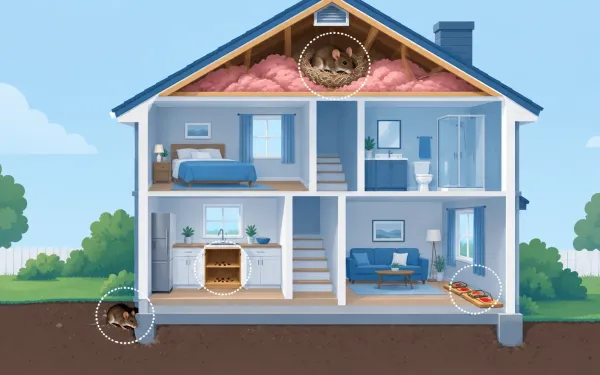
Attic gaps are often high up, because mice climb rough walls and run along wires. The CDC says to check the rafters, gables, eaves and soffits, attic vents, and holes for electrical, plumbing, cable and gas lines.
Inside, look along the eaves and around vents and pipes for droppings, rub marks and daylight. Outside, cut branches back 3 to 6 feet from the roof (UC IPM). To test whether a hole is in use, stuff a loose wad of newspaper in it: an animal inside will push it out.
Step 2: Trap Along the Edges
Rodents run beside walls and objects for safety (CDC), so set traps along the eaves, the tops of walls, and joists and beams.
Use snap traps. The CDC recommends them over glue and live traps. Match the trap to the animal: mouse traps for mice, rat traps for rats.
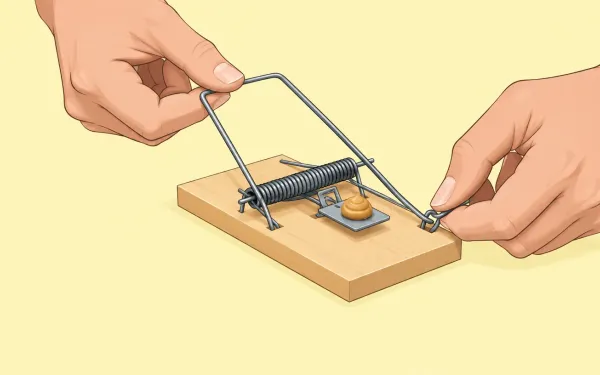
Set them at the signs. Put them beside trails, droppings and entry points, at a right angle with the baited end touching the wall or joist (the CDC’s “T”).
Use plenty. Space mouse traps no more than about 10 feet apart and rat traps 10 to 20 feet apart (UC IPM); about two dozen traps handle a new mouse infestation in a 1,500-square-foot house (Nebraska Extension).
Fasten rat traps down. The ICWDM says rafters near the activity are the best sites for roof rats, and traps can be nailed to beams. Rats avoid new objects, so leave traps baited but unset until the bait disappears (why rats avoid traps).
Bait lightly and check daily. A pea-sized dab of peanut butter, not a spoonful (UC IPM). More in how to set a mouse trap and the best mouse trap bait.
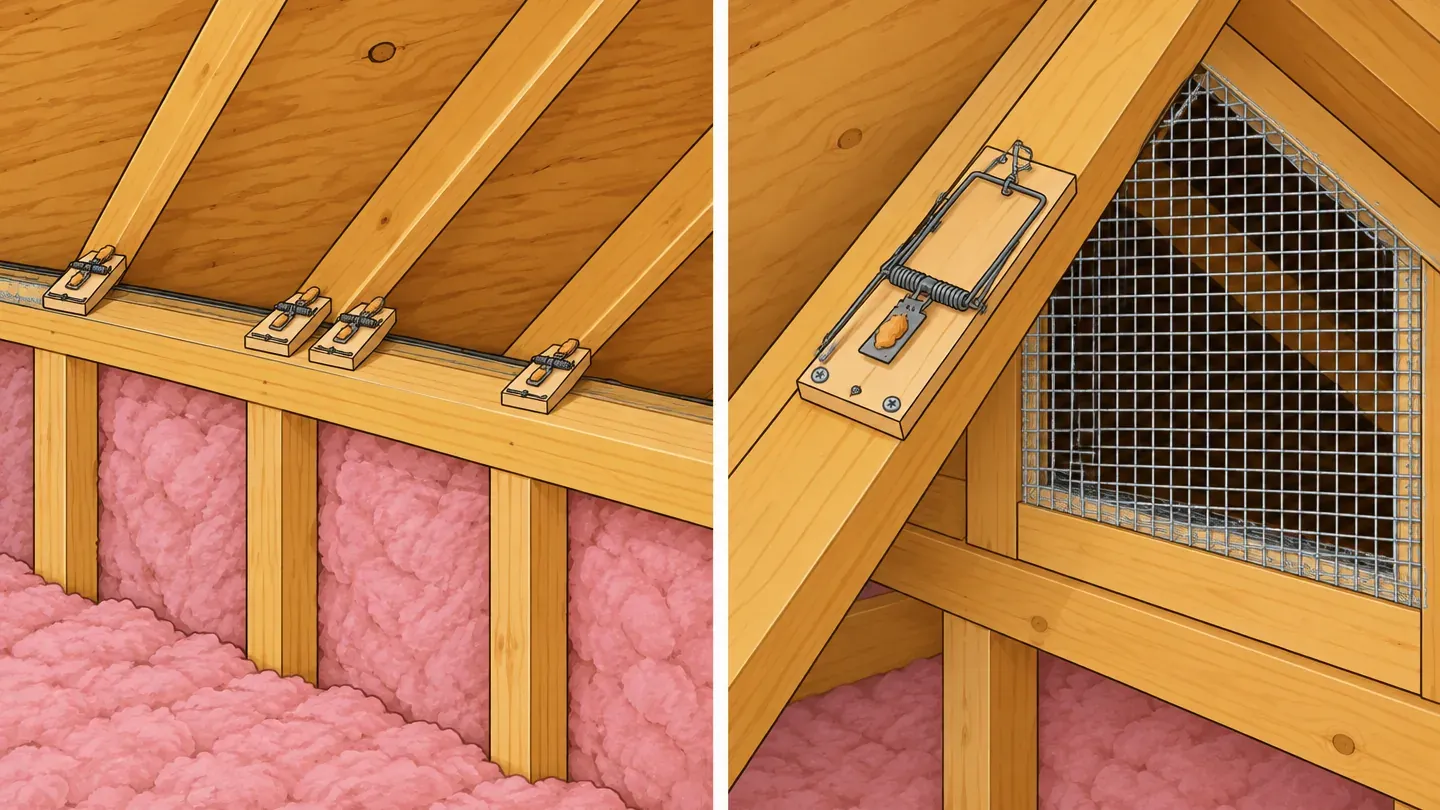
Illustration: mouse traps along the top plate at the eaves (left), and a rat trap fastened to a rafter near a screened vent (right).
Poison, Mothballs and Gadgets: Skip Them
Poison backfires in an attic. House mice seldom go more than 30 feet from their nest, so poisoned mice often die inside the building (UC IPM), where a carcass under insulation is hard to find (rat and mouse poison dangers). Mothballs aren’t a fix either (do mothballs keep mice away?), and UC IPM finds little evidence that sound devices drive established mice out.
Step 3: Seal the Roofline and Vents
Trap and seal in the same week. Close each gap once you’ve confirmed it, and keep traps set for at least a week after the last one so anything shut inside ends up in a trap.
- Size: mice fit through a hole the width of a pencil, about ¼ inch (6 mm), says the CDC.
- Small gaps: copper mesh or stainless steel fiber, then seal over it, not steel wool, which may rust (Nebraska Extension).
- Vents and larger holes: ¼-inch wire mesh, sheet metal or aluminum flashing (Nebraska Extension).
Renting? Tell your landlord in writing about the gaps before you seal anything on the roofline.
Found bats? Don’t seal their openings. The ICWDM advises against evicting bats between May 15 and August 15, when flightless young may be inside. Ask your state wildlife agency first.
Step 4: Clean Up Droppings Safely
When the trapping is done, clean up wet, not dry; the CDC says sweeping or vacuuming can put virus particles into the air.
Air it out. Ventilate for 30 minutes and stay out while it airs, then put on rubber or plastic gloves.
Soak. Spray droppings, urine and nests with disinfectant or bleach solution (1.5 cups of bleach per gallon of water) until very wet, and let it soak 5 minutes.
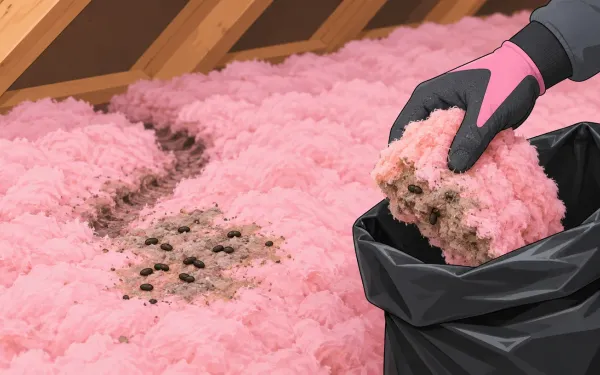
Wipe and bag. Wipe up with paper towels, and bag everything, including any insulation soiled with urine and droppings. Full method: how to clean mouse droppings.
Hantavirus: in the U.S., the most common hantavirus that causes hantavirus pulmonary syndrome is spread by the deer mouse (CDC). Few people can tell the species apart, so be careful in every attic. For heavy infestations, the CDC calls for coveralls, goggles and a half-mask respirator with HEPA filters.
What About the Insulation?
Bag and remove insulation soiled with urine and droppings, says the CDC, which doesn’t automatically mean the whole attic.
HomeAdvisor’s often-quoted $600–$1,200 is for an attic of about 600 square feet; removal alone runs $1–$2 per square foot. Full replacement quotes reported on Reddit run into the thousands (one example). Trap and seal first, then decide whether you need to replace attic insulation after mice from photos and an itemized quote.
Which Plan Fits Your Situation
| Your situation | Start with | Then |
|---|---|---|
| Renting | Traps along the eaves | Written note to your landlord before sealing |
| Roof rats, not mice | Rat traps fastened to rafters, 10–20 feet apart | Leave unset until the bait is taken |
| Vermiculite insulation | Don’t disturb it | Asbestos professional |
| Bats flying out at dusk | Don’t seal, May 15 to August 15 | State wildlife agency |
| Droppings everywhere or in ducts | A pro | HEPA respirator for any cleanup (CDC) |
What It Might Still Cost
| Item | Typical cost |
|---|---|
| DIY: 12–24 snap traps, copper mesh, gloves, bleach | About $57–71 |
| Pro trap-and-seal job, 53 shared quotes (middle half) | $1,400–$3,000 |
| Pro visit, price-guide range (usually no sealing) | $150–$655 |
| Pro attic insulation cleanup, if upsold | $7,500–$14,000 |
DIY figures are U.S. list prices checked September 30, 2026, before tax and shipping. Pro: the middle half of 53 trap-and-seal quotes homeowners shared on Reddit (see the quote table). Price-guide range: This Old House for mice (April 2026) and HomeAdvisor for rats (June 2026); it usually covers a trap-and-bait visit, with sealing extra. Attic cleanup: the middle half of 35 shared quotes that included new insulation.
Before You Start: A Quick Checklist
- Check the insulation for vermiculite before you touch anything.
- Pack a respirator or double-strap dust mask, gloves, knee pads and a flashlight.
- Confirm mice or rats from droppings, not sounds.
- Buy about two dozen traps of the right size.
- Line up copper mesh and ¼-inch wire mesh for the gaps you find.
- Plan to keep trapping for a week after the last catch.
When to Call a Pro
- The attic has vermiculite insulation (asbestos contractor) or chewed wiring (electrician).
- The entry points are on a roof you can’t safely reach from a ladder.
- Droppings cover a large area, or rodents are in your heating and cooling ducts, which the CDC says need a professional.
- Fresh droppings keep appearing after 15 days of steady trapping and re-baiting.
Ask what they will seal and with what, how many visits the price covers, and whether insulation work is quoted separately.
Common questions
Not while they have shelter and food. UC IPM says house mice can breed year-round when resources are plentiful, so trapping and sealing is what ends it (will mice leave on their own?).
The CDC’s rule: nothing caught for a week and no new signs. Clear old droppings so new ones stand out. Traps can stay set indefinitely in attics where rats have been a problem.
Sources and further reading · 7
- CDC: Trap Up, Seal Up and Clean Up — trapping, where to seal, clean-up and insulation.
- CDC: About Hantavirus and Prevention — which rodents spread it.
- UC IPM: House Mouse, Rats and Tree Squirrels — behavior, trapping and sealing.
- Nebraska Extension: Controlling House Mice (G1105) — droppings, trap numbers and sealing materials.
- ICWDM: Noises, Inspection, Roof Rats, Roof Rat Control and Bats.
- ENERGY STAR: Tips for Working in the Attic and EPA: Vermiculite Insulation — attic safety.
- HomeAdvisor: Attic Insulation Removal Cost — platform price estimate.