How to Set a Mouse Trap and Catch the Mouse, Step by Step
To set a mouse trap, dab a pea-sized bit of peanut butter on the pedal, pull the kill bar back and hold it with your thumb, latch the arm bar over it onto the pedal, then ease your thumb off. Place the trap against a wall where you’ve found fresh droppings, bait end touching the wall. Set several, in pairs.
Cost: about $14–27 in supplies. Difficulty: easy. Call a pro if you keep catching mice after 15 days of trapping and sealing every gap you can find, or you can’t reach where they get in.
That’s how to set a mousetrap of the classic wooden kind, the CDC’s first choice for homes; plastic press-to-set and wide yellow-pedal traps set differently, and each has its own steps below. We haven’t tested these traps ourselves; this rests on CDC, UC IPM and Nebraska Extension guidance, the makers’ instructions and October 2026 list prices.
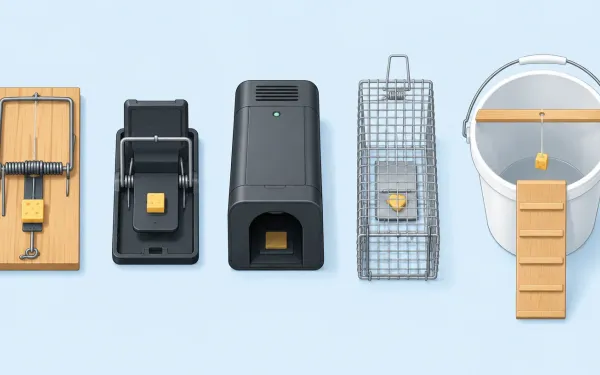
What Works and What Doesn’t: Trap Types
| Trap | Works? | Cost | Main limitation |
|---|---|---|---|
| Wooden metal-pedal snap trap | Yes, the CDC’s pick | $2.29 for two | Fiddly to set; keep fingers clear |
| Wooden wide-pedal snap trap | Yes, catches more (UC IPM) | — | Firm setting trips less easily |
| Plastic press-to-set trap | Yes | — | Bait well must face the wall |
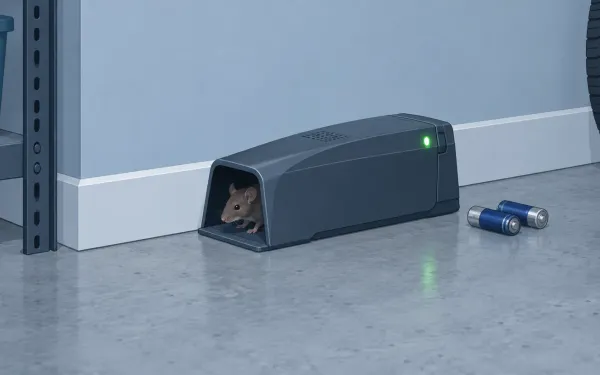
| Electronic trap | Yes | Considerably more | Price (UC IPM) |
| Bucket trap | Can catch several | Homemade | Bigger setup; see the bucket guide |
| Live traps and glue boards | No (CDC) | — | Scared mice urinate, raising your risk |
Step 1: Find Where the Mouse Is Running
Traps go where mice already travel: along walls and behind objects. Look for:
- Fresh droppings along baseboards, under the sink and inside cabinets. The densest spots are the busiest runs.
- Gnawed packages and nesting material, such as shredded paper or fabric, near food.
- Dark rub marks along edges and around gaps.
Big droppings, about ½ inch? That’s likely a rat, which needs rat-size traps; rat poop vs. mouse poop shows the difference. Trapping is one part of the plan to get rid of mice in your house, along with sealing gaps.
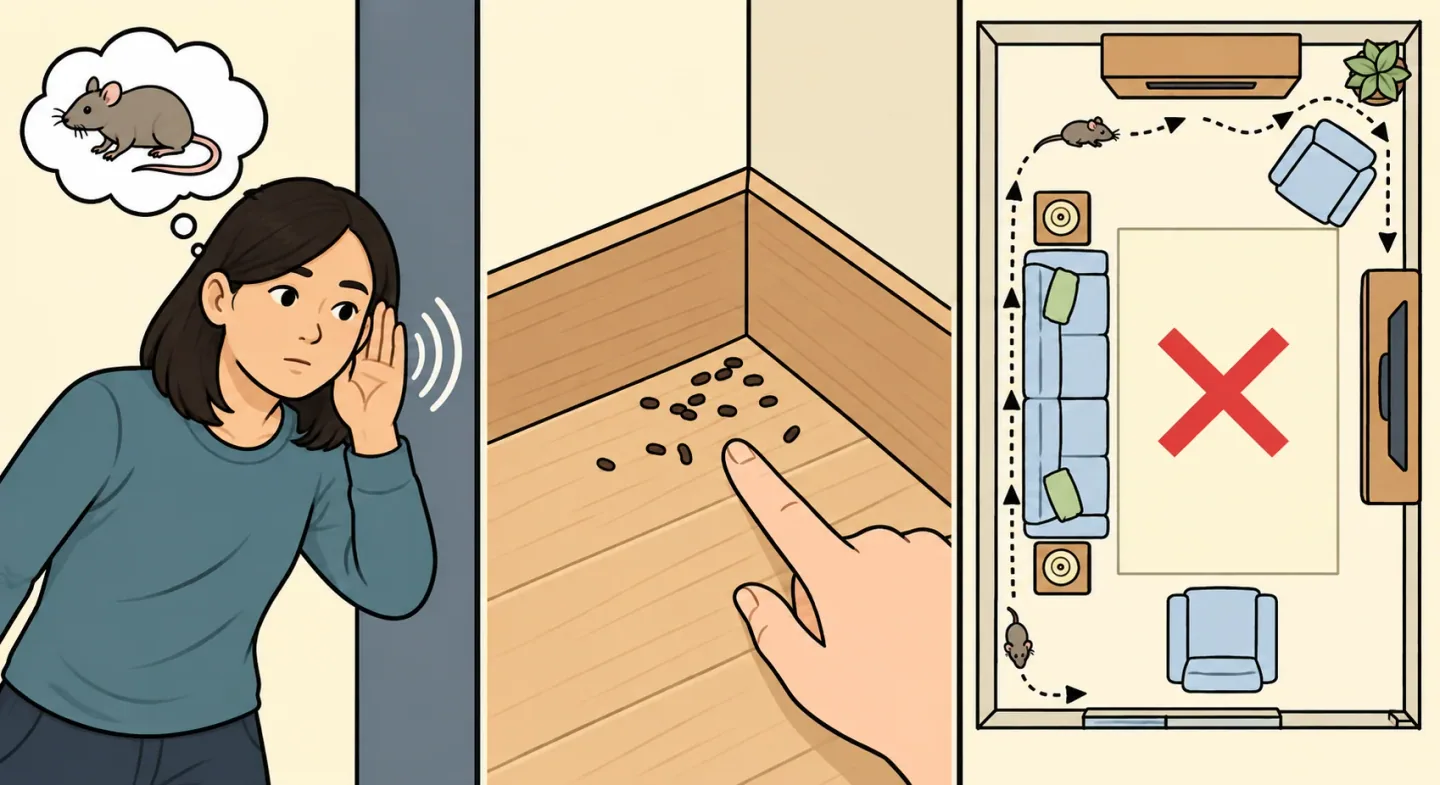
Illustration: listening for sounds, spotting droppings and tracing a likely route along the edges of a room.
Step 2: Bait the Mouse Trap (Pea-Sized Is Enough)
Put a pea-sized dab of peanut butter on the pedal with a cotton swab or toothpick, so less of your scent gets on the trap. More is worse: UC IPM warns that with too much bait, a mouse may lick it off without triggering the trap.
If mice keep licking the pedal clean, press the bait into the pedal’s grooves, or tie on a bit of cotton ball or dental floss, which nesting mice go for. Peanut allergy at home? Nebraska Extension also lists caramel and chocolate. More in mouse trap bait.
Step 3: Set the Trap for Your Type
Bait and position the trap first, and set it last, right where it will sit. Most traps sold in U.S. stores come in three styles: the classic wooden mousetrap, a plastic snap trap, and a covered (enclosed) trap. Each is set a little differently.
How to Set a Wooden (Victor-Style) Snap Trap
The classic wooden snap trap is cheap and the CDC’s first choice for homes. These are the maker’s steps for the metal-pedal version.
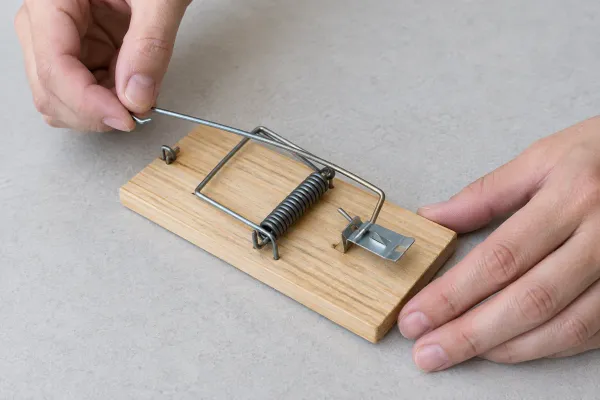 Free the arm barUnhook the thin arm bar from the staple and swing it over the far end of the board.
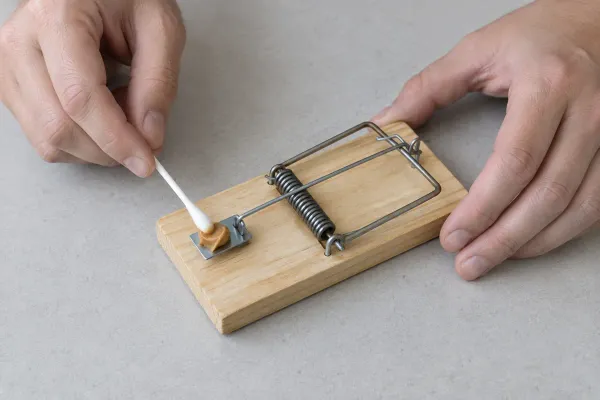 Bait the pedalDab a pea-sized bit of peanut butter on the metal pedal with a cotton swab.
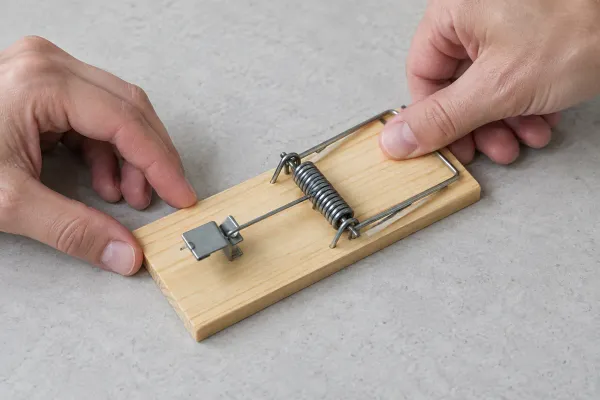 Hold the kill bar backPull the U-shaped kill bar back and hold it down with your thumb, fingers clear of its path.
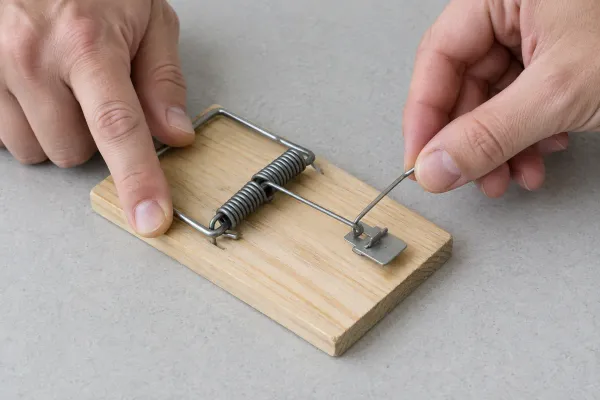 Latch the arm barLay the arm bar over the kill bar and hook its tip under the catch on the pedal. Ease your thumb off slowly.
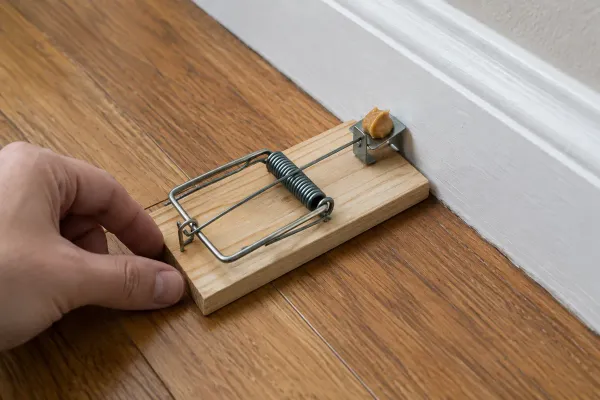 Place it against the wallSet it at a right angle to the wall, pedal end touching the baseboard, where you found fresh droppings.
These are the maker’s steps for the classic metal-pedal trap (photo instructions, PDF).
Video: “Victor Metal Pedal Mouse Trap Instructional Video” by the trap’s maker, Victor (YouTube). It shows the same metal-pedal setup described above; we’re not recommending a brand.
Wide yellow pedal? Traps like the Victor Easy Set work the same way, except the arm bar tucks under the plastic pedal. The maker says it’s easier to set on the firm side but doesn’t trip as easily, and harder to set on the sensitive side but trips very easily. Use sensitive once you’re comfortable: UC IPM says wide trigger plates catch more mice, and triggers should be set lightly.
How to Set a Plastic Snap Trap
Plastic snap traps, such as the Victor Quick-Kill, have no bar to latch: a covered bait cup sits between toothed jaws, and the maker’s directions are to fill the bait trough, pull back the kill bar until it clicks, and place it against a wall.
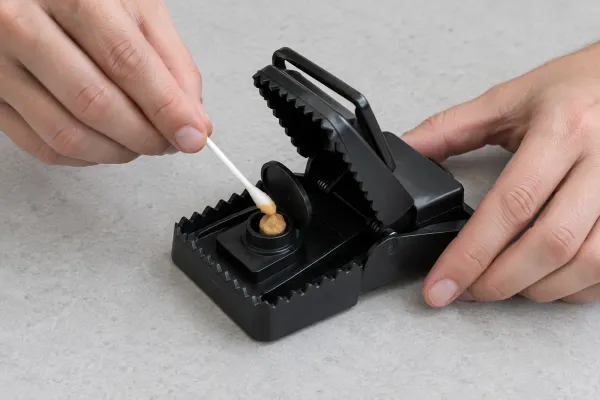 Bait the cupPress a pea-sized dab of peanut butter into the bait cup between the jaws.
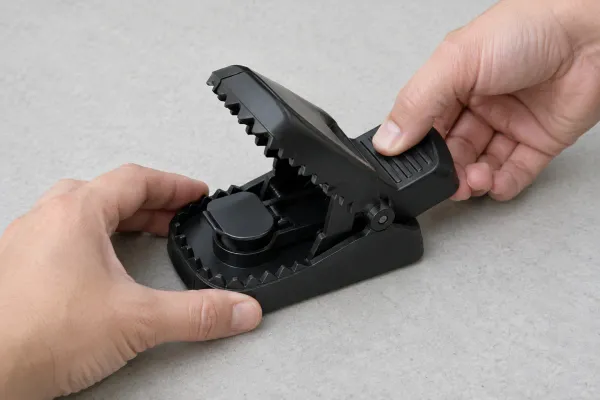 Press until it clicksSqueeze the back of the trap down until the jaws open and lock with a click.
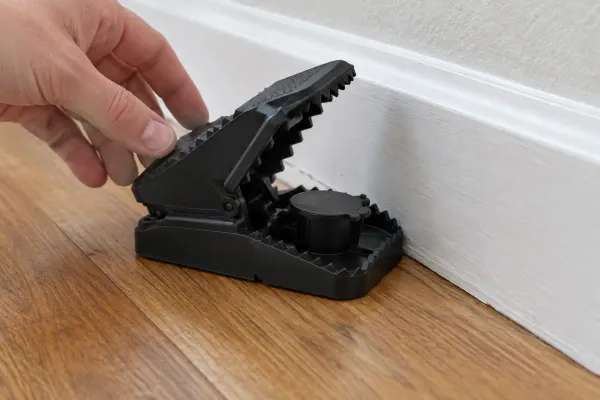 Place it against the wallPut it flat against the wall, bait end toward the wall, on the mouse’s route.
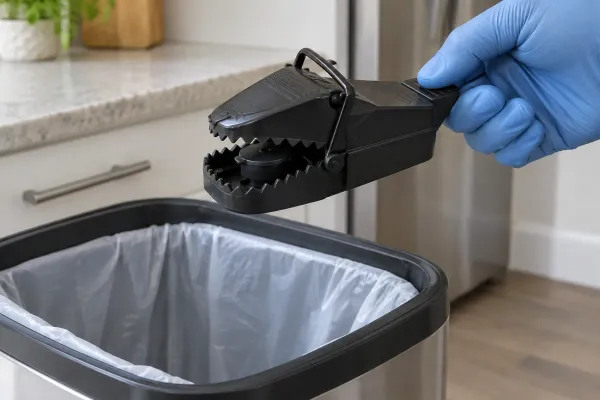 Empty it without touchingWear gloves, hold it by the back over the trash and press to open the jaws.
How to Set a Covered Mouse Trap
Covered (enclosed) traps hide the kill bar inside a box, which keeps fingers and pets away from it. For the Victor Safe-Set, the maker says to bait the cup through a hatch on the bottom, squeeze the trap until it clicks, and place it where you’ve seen activity.
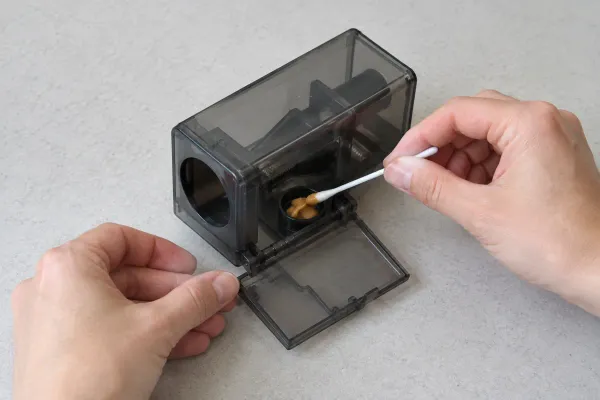 Bait through the hatchOpen the hatch on the bottom, put a pea-sized dab of peanut butter in the bait cup and click it shut.
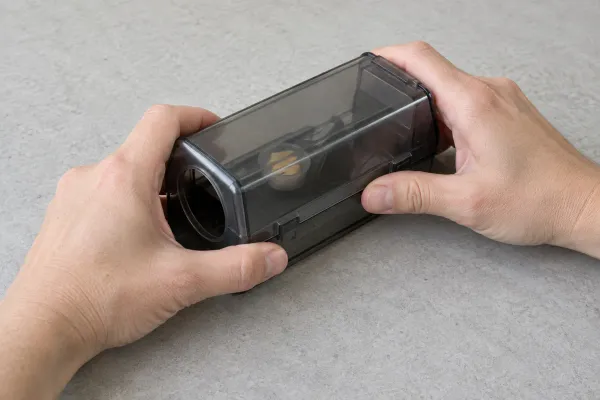 Squeeze to setSqueeze the trap until it clicks into place. The mechanism stays inside, out of reach of fingers and paws.
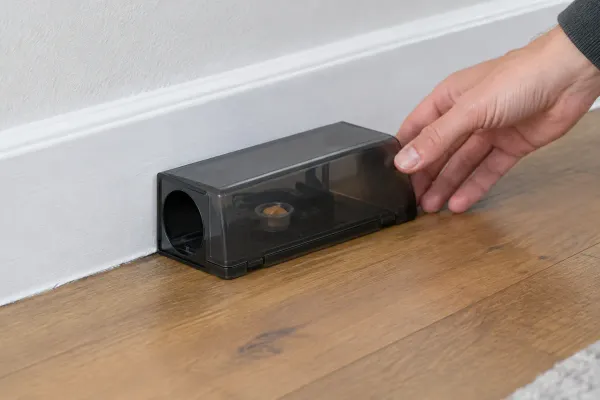 Place the entry along the wallSet it along a wall where you’ve seen droppings, with the entry hole facing the way mice run.
Step 4: Where to Put Mouse Traps
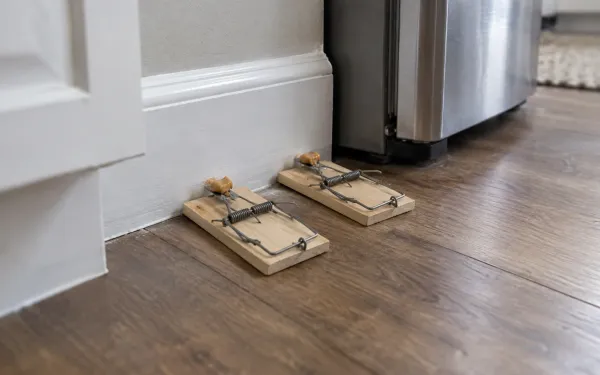
Put each snap trap at a right angle to the wall with the bait end touching it, so the trap makes a “T” (CDC); a mouse running along the wall then crosses the pedal. Set traps in pairs, 1 to 2 inches apart, no more than about 10 feet apart, where you found fresh droppings (UC IPM). Behind the fridge and stove and under the sink are the usual best spots, out of reach of kids and pets. Where to put mouse traps goes room by room, from the kitchen to the attic.
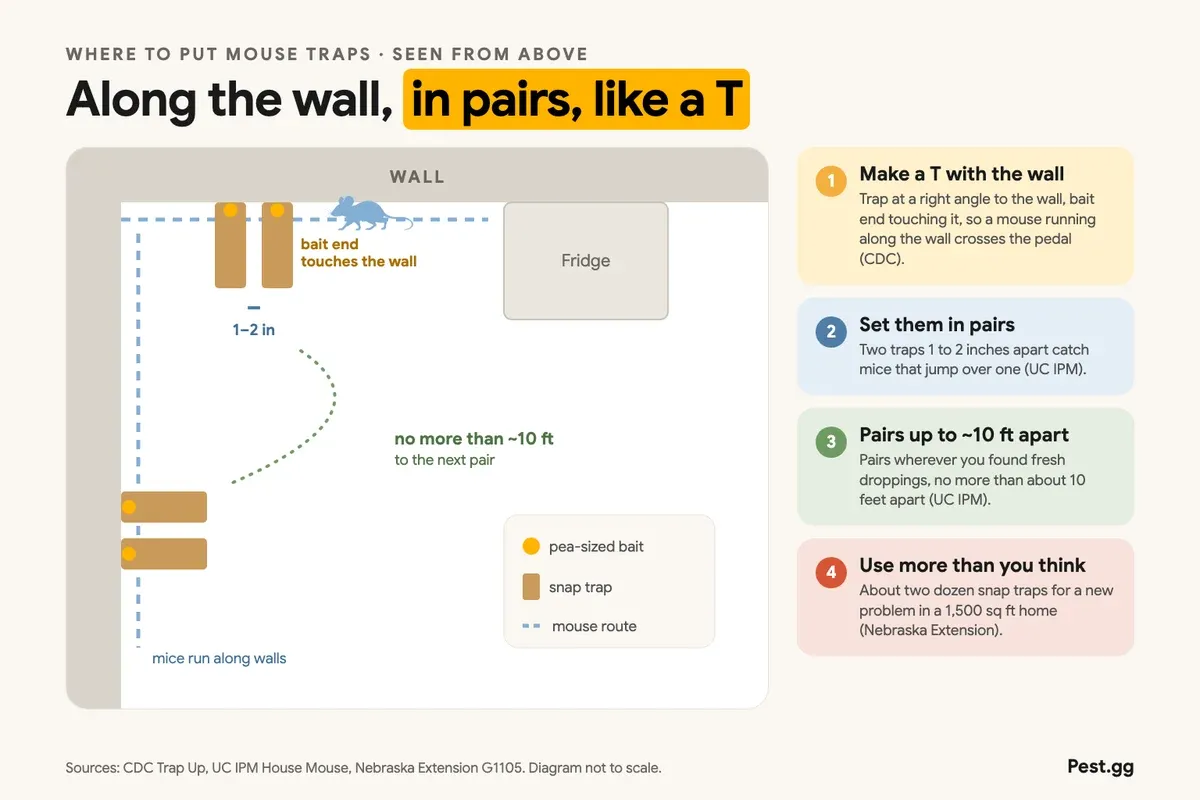
Diagram: pairs of traps in a T against the wall, along the route mice run. Sources: CDC, UC IPM, Nebraska Extension.
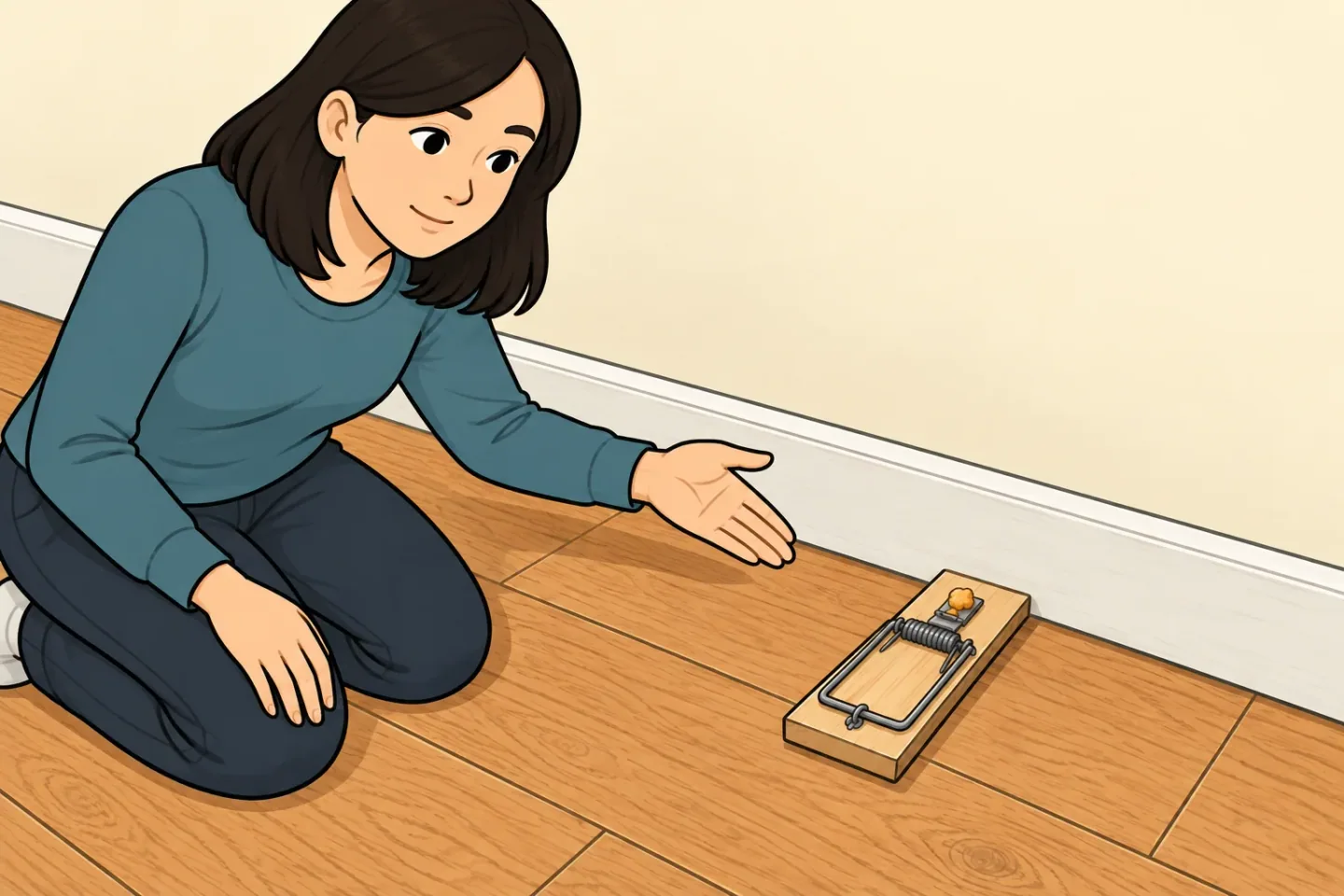
Illustration: a wooden snap trap set at a right angle to the baseboard, its baited end against the wall.
How Many Mouse Traps Should You Set?
More than one. Nebraska Extension’s rough guide is two dozen well-placed snap traps for a new mouse problem in a 1,500-square-foot home. Start with two or three pairs wherever you found fresh droppings, then add traps in every room that shows new signs. UC IPM advises enough traps to make trapping “short and decisive.”
Step 5: Check Traps Every Morning
Mice are most active after dusk and before dawn, so check traps first thing each morning; the CDC says to check daily.
Glove up for catches. Bag the mouse and put it in the outdoor trash. Clean droppings wet, never by sweeping (cleaning mouse droppings).
Rebait and reset in the same spot. A trap that caught one mouse is on a working route. The classic wooden trap can be thrown away with the mouse or reused, its maker says.
Stop after a quiet week. Keep trapping until a week passes with no catches and no new droppings (CDC), then seal the gaps they used to get in.
Mouse Trap Not Working? Quick Fixes
| What you see | Fix |
|---|---|
| Bait gone, trap didn’t snap | Use less bait, press it into the pedal; switch to the sensitive setting |
| Mouse runs past the trap | Push the trap flush to the wall on the route; add a second trap beside it |
| Nothing after several nights | Move traps to the freshest droppings |
| Big droppings, traps untouched | Likely a rat; rats avoid new objects, so see how to catch a smart rat |
Trigger sensitivity, trap shyness and the floss trick are covered in full in mouse traps not working.
How to Catch a Mouse Without a Snap Trap
Electronic traps kill with a shock but cost considerably more (UC IPM); here’s how electronic mouse traps work. The CDC advises against live traps and glue boards at home, and releasing a live mouse off your property is illegal in California without a state permit (UC IPM). Bucket mouse traps can catch several at once. All of them are compared in types of mouse traps.
Which Plan Fits Your Situation
| Your situation | Start with | Then |
|---|---|---|
| One room with droppings | Two or three pairs along that wall | Add traps where new signs appear |
| Whole house | About two dozen traps | Check every morning |
| Kids or pets | Traps behind appliances or inside cabinets | Plastic press-to-set for no-touch emptying |
| Peanut allergy at home | Caramel, chocolate or cotton | Same placement |
| Droppings about ½ inch | Rat-size traps, not mouse traps | The rat guide |
What It Might Still Cost
| Item | Typical cost |
|---|---|
| Wooden snap traps, two-pack | $2.29 |
| 12 wooden snap traps | About $14 |
| 24 wooden snap traps | About $27 |
| Pro trap-and-seal job, 53 shared quotes (middle half) | $1,400–$3,000 |
| Pro visit, price-guide range (usually no sealing) | $150–$655 |
DIY: Victor two-pack list price, October 1, 2026, before tax; 12 and 24 are our math. Add peanut butter, a cotton swab and disposable gloves. Pro: the middle half of 53 trap-and-seal quotes homeowners shared on Reddit (see the quote table). Price-guide range: This Old House for mice (April 2026) and HomeAdvisor for rats (June 2026); it usually covers a trap-and-bait visit, with sealing extra.
Before You Start: A Quick Checklist
- Find fresh droppings before you buy anything.
- Buy enough traps for pairs in every active room, up to two dozen.
- Bait with a pea-sized dab, using a swab, not your fingers.
- Set each trap last, right where it will sit.
- Point the bait end at the wall.
- Keep gloves and bags ready for the morning check.
When to Call a Pro
- You keep catching mice after 15 days of trapping and sealing every gap you can find.
- You can’t reach where they get in, such as the roofline (how mice get in).
Common questions
Bait end against the wall, trap at a right angle to it, in the CDC’s “T.” For a plastic press-to-set trap, the bait well faces the wall.
Not always. Nebraska Extension says traps set across a mouse’s runway “can be baited or not,” because mice run straight over the pedal. Bait helps when you can’t find the exact route.
No. The CDC gives no five-day cutoff: check traps daily, and stop when a week passes with no catches and no new droppings. More in the 5-day mouse rule.
Sources and further reading · 7
- CDC: Trap Up, Clean Up and Seal Up.
- UC IPM: House Mouse (Pest Notes 7483): bait amount, paired traps, spacing, wide trigger plates, electronic traps, relocation.
- Nebraska Extension: Controlling House Mice (G1105): two dozen traps, unbaited runway sets, activity times.
- Victor: metal-pedal trap instructions (PDF) and wide-pedal trap (firm and sensitive settings).
- Victor: Quick-Kill plastic trap and Safe-Set covered trap: baiting, setting and placement directions.
- Tomcat Press ‘N Set mouse trap: setting and disposal.
- Price: Victor two-pack list price $2.29, checked October 1, 2026, before tax.