Glue Traps for Mice: Do They Work, and Are They Cruel?
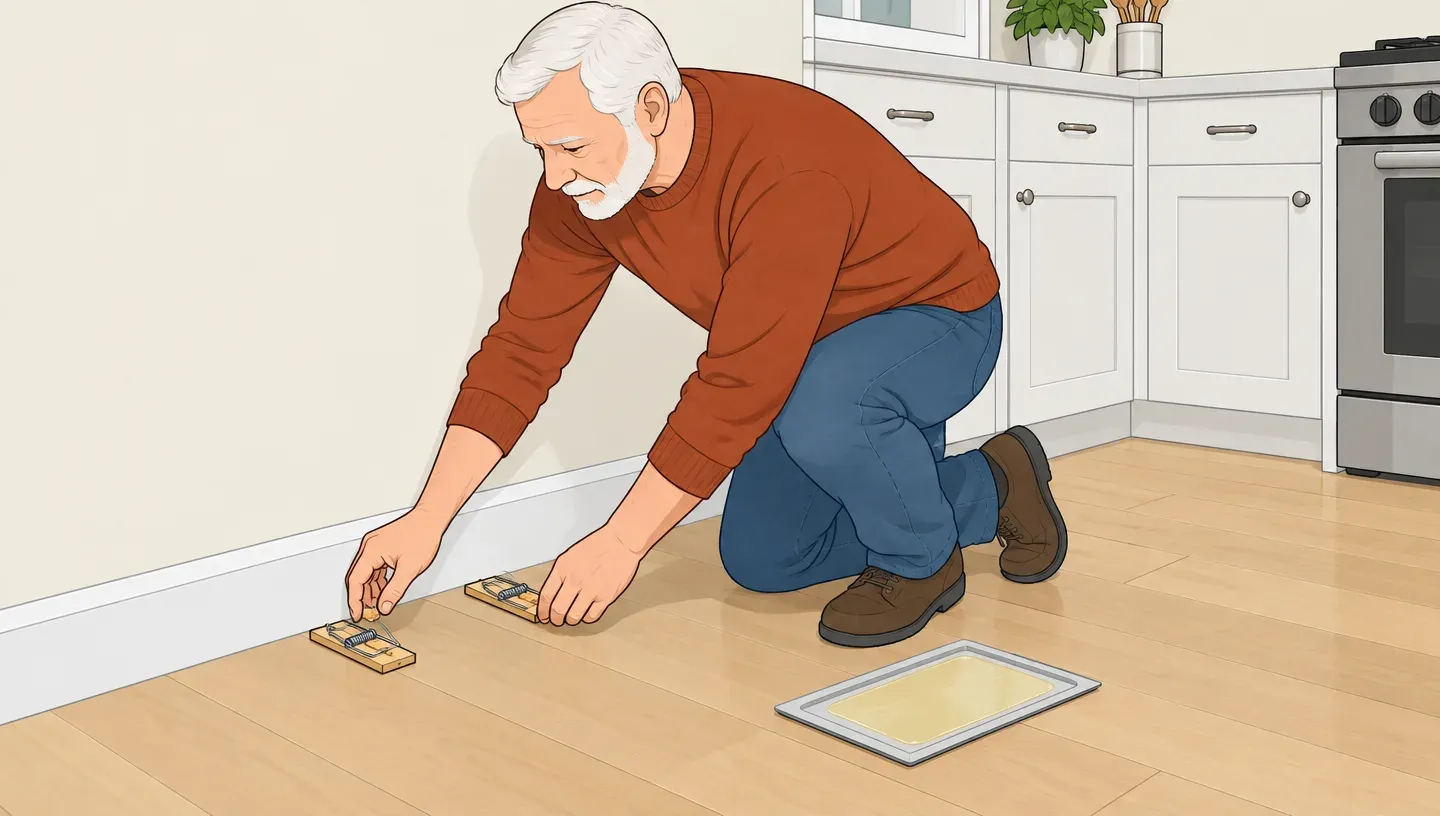
Illustration: two snap traps set against the baseboard, with an unused glue trap set aside on the floor.
Glue traps for mice catch some mice, but skip them. The CDC advises against them because a stuck mouse panics and urinates, raising your risk of disease. Adult mice often avoid the glue, rats pull free, and pets and birds get caught. A dozen snap traps costs about $14 and works better; use stations where kids or pets roam.
Cost: about $14–27 in supplies. Difficulty: moderate. Call a pro if you’ve trapped and re-baited for at least 15 days and still find fresh droppings, or the mice are nesting somewhere you can’t reach.
This guide compares glue boards with the traps that replace them, then covers freeing a stuck pet, dealing with a live catch and where glue traps are banned. We haven’t tested these traps ourselves. It rests on CDC, UC IPM, university extension and veterinary guidance, plus store list prices.
Already set boards? Keep them where kids, pets and birds can’t reach, and check them first thing in the morning. If a pet or child gets stuck, don’t pull: vegetable oil loosens the glue.
How We Compared These Traps
We rated glue traps and their alternatives on five things:
- Catch rate: how well it catches adult house mice, per UC IPM and the ICWDM.
- Health risk: what the CDC says about the catch.
- Safety for pets, kids and birds: what happens when the wrong animal touches it.
- Humaneness: whether it kills quickly, per the AVMA and UC IPM.
- Cost: store list prices from April and September 2026.
Sources are listed at the end.
Glue Traps vs. Other Mouse Traps at a Glance
| Trap | Price | Verdict |
|---|---|---|
| Glue trap | $5–$15 a pack | Skip. The CDC advises against it, and adults learn to avoid it. |
| Wooden snap trap | $13.74 for 12 | Best for most homes. The CDC’s recommended trap, and reusable. |
| Snap trap in a station | Station not priced | Best with kids or pets. A closed box hides the trigger. |
| Electronic trap | $24.99–$31.69 each | Fine if you won’t touch a catch. Costly per trap. |
| Live trap | $10–$30 | Skip at home. The CDC rejects it for the same reason as glue. |
Do Glue Traps Work on Mice?
Sometimes, but not as well as other traps. A mouse glue trap (also sold as sticky mouse traps or sticky pads) is a tray or card of strong adhesive that holds any mouse crossing it, like flypaper.
- Adults learn to avoid them. UC IPM says adult mice can often detect the glue and steer clear, so boards catch mostly juveniles.
- They catch fewer mice than other traps. The Internet Center for Wildlife Damage Management (ICWDM) says glue boards shouldn’t be your main tool.
If mice dodge every trap you set, the fixes for a mouse trap that isn’t working apply here too.
Why the CDC Says Not to Use Glue Traps
The CDC’s trapping page is blunt: “Do not use glue traps and live traps.” A trapped mouse is scared and urinates. Rodent germs reach people mainly through the air, when urine and droppings get stirred up, so a board holding a frightened mouse adds to that risk. The CDC recommends snap traps instead.
Glue Boards: Cheap, but They Catch the Wrong Mice
A glue board costs little and needs no setting, which is why so many people try it first. But it catches mostly young mice, holds the caught one alive, and goes out with the mouse after one use.
Best for: a spot near stored food where poison isn’t an option, per the ICWDM, and only out of reach of other animals.
Main limitation: adult mice avoid it, and a caught mouse may still be alive when you find it.
Snap Traps: The CDC’s Pick Instead
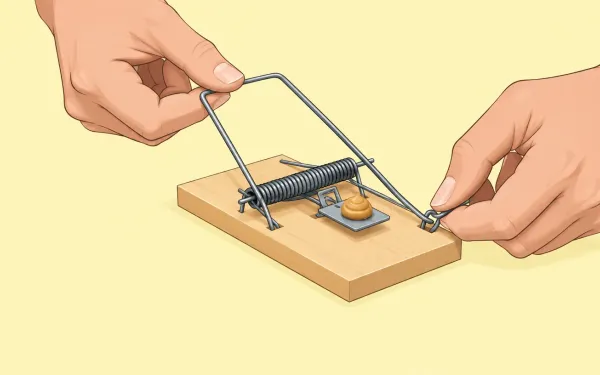
Snap traps are cheap, reusable and the trap the CDC recommends. Use a small amount of chunky peanut butter on the bait pan, and set each trap at a right angle to the wall, baited end touching it, in a “T.” For a new infestation in a 1,500-square-foot home, Nebraska Extension’s rough guide is two dozen traps. Placement is in how to set a mouse trap.
Best for: most homes, kitchens and garages.
Main limitation: an exposed trigger, so it needs a spot kids and pets can’t reach.
Snap Traps in a Station: For Homes With Kids or Pets
A station is a closed box with an entry hole at each end, and Nebraska Extension notes many are built to hold snap traps. Behind the stove or fridge works too.
Best for: homes with children, cats or dogs.
Main limitation: one more thing to buy, and you still check it every morning.
Electronic and Live Traps: One Yes, One No
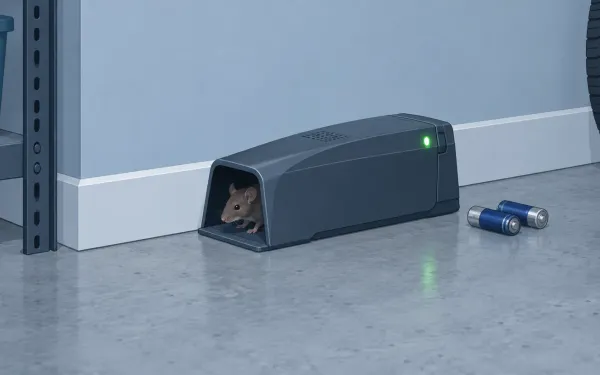
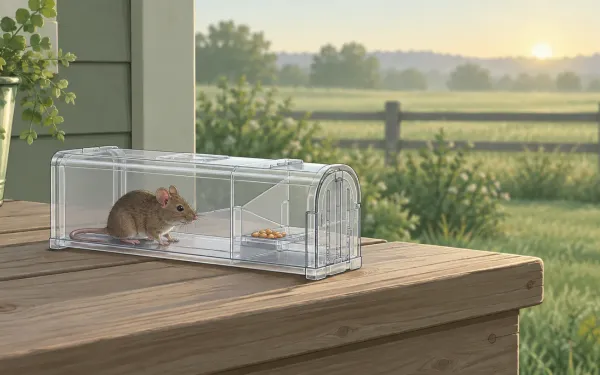
An electronic trap kills by shock, and a 2023 expert panel rated electrocution among the least harmful methods while calling glue traps inhumane; see how electronic mouse traps work. Live traps aren’t the answer: the CDC rejects them for the same urine risk, and released mice come back, the catch with most humane mouse traps.
Best for: electronic, if you’d rather not touch a catch.
Main limitation: electronic costs $25 or more per trap; live traps leave you with a live mouse.
Are Glue Traps Safe Around Pets, Kids and Birds?
Not if they can reach them. Rodent glue traps catch whatever steps on them, and extension guides say not to use them anywhere children, pets or desirable wildlife can contact them. Birds get caught too, often in garages: the Wildlife Center of North Georgia says small birds such as Carolina wrens wander into open garages and land on boards meant for mice.
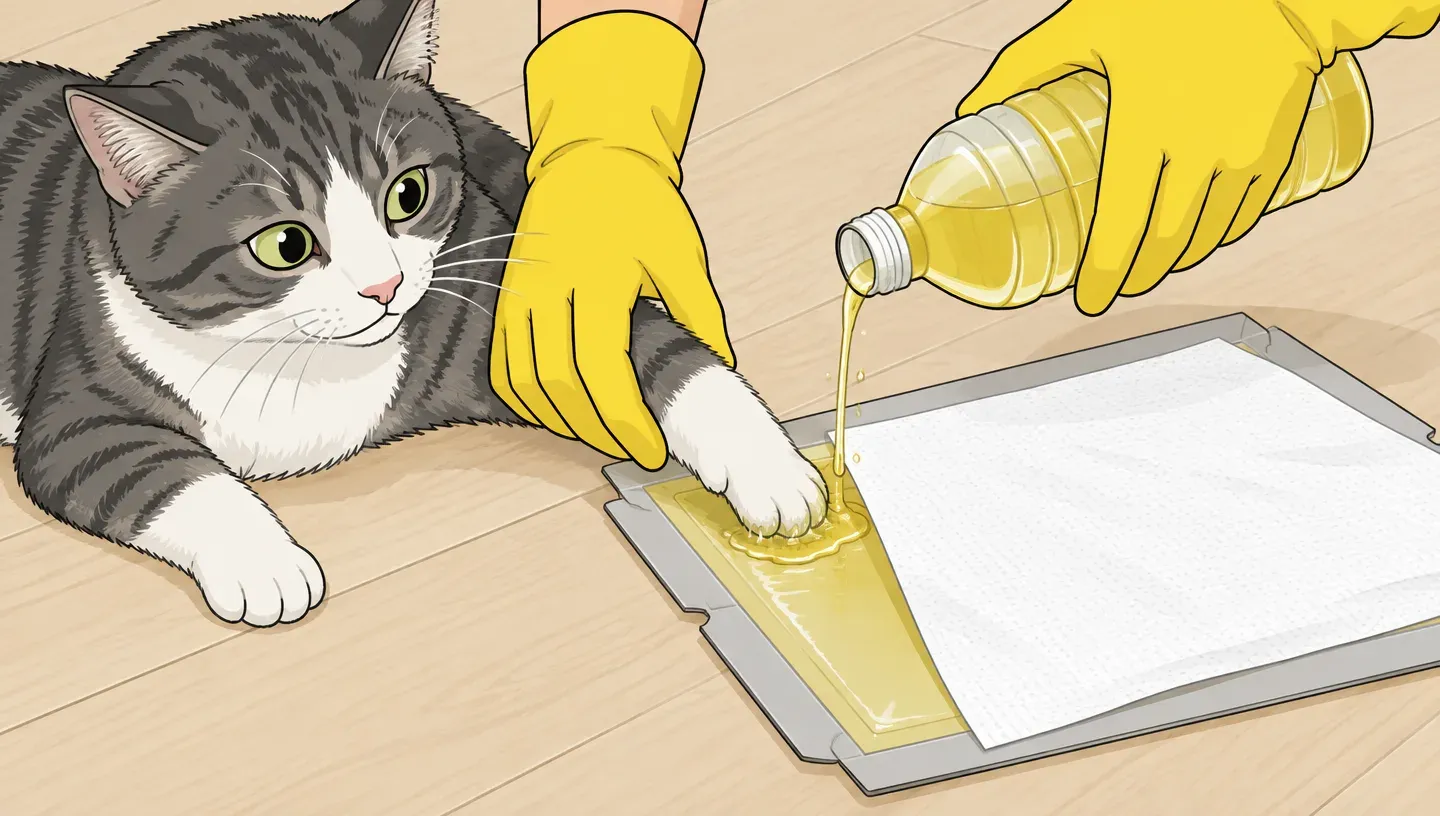
Illustration: gloved hands working vegetable oil into the glue around a cat’s paw, with a paper towel over the rest of the board.
How to Get Mouse Trap Glue Off Pets, Kids or Skin
Nebraska Extension says vegetable oil dissolves the glue.
Step 1: Don’t pull. Keep them as calm as you can.
Step 2: Cover the rest of the glue. Lay paper towels over every exposed patch.
Step 3: Work vegetable oil in. Add a little at a time where fur or skin meets the board, until it lets go.
Step 4: Wash off the oil. Call your vet if the skin is torn or glue is near the eyes, nose or mouth.
Bird stuck? Don’t treat it yourself. Cover exposed glue with paper towels, newspaper or cornmeal, put the bird and trap in a ventilated box somewhere dark and quiet, and call a wildlife rehabilitator right away.
If You Still Use Sticky Traps for Mice
Use them indoors only, along walls where mice travel, and nowhere a child, pet or bird can reach.
- Bait goes in a bottle cap in the middle of the board, not on the glue. Peanut butter or anything greasy dissolves it (Nebraska Extension).
- Lay a second board beside the first if mice jump over one.
- Cover them in dusty areas, and check every morning.
What to Do With a Mouse on a Glue Trap
If it’s alive, deal with it right away. Oregon State University Extension’s advice is a strong blow to the head, wearing gloves. Don’t drown it, even if the package suggests it; UC IPM doesn’t consider drowning humane. Don’t free it to let it go either: relocated house mice find their way back from half a mile away.
If it’s dead, glove up, spray the mouse and board with disinfectant or bleach solution (1.5 cups of bleach per gallon of water) and let it soak 5 minutes, the CDC’s method. Double-bag it for a covered trash can. Clean nearby droppings the same way, never by sweeping; here’s how to clean mouse droppings.
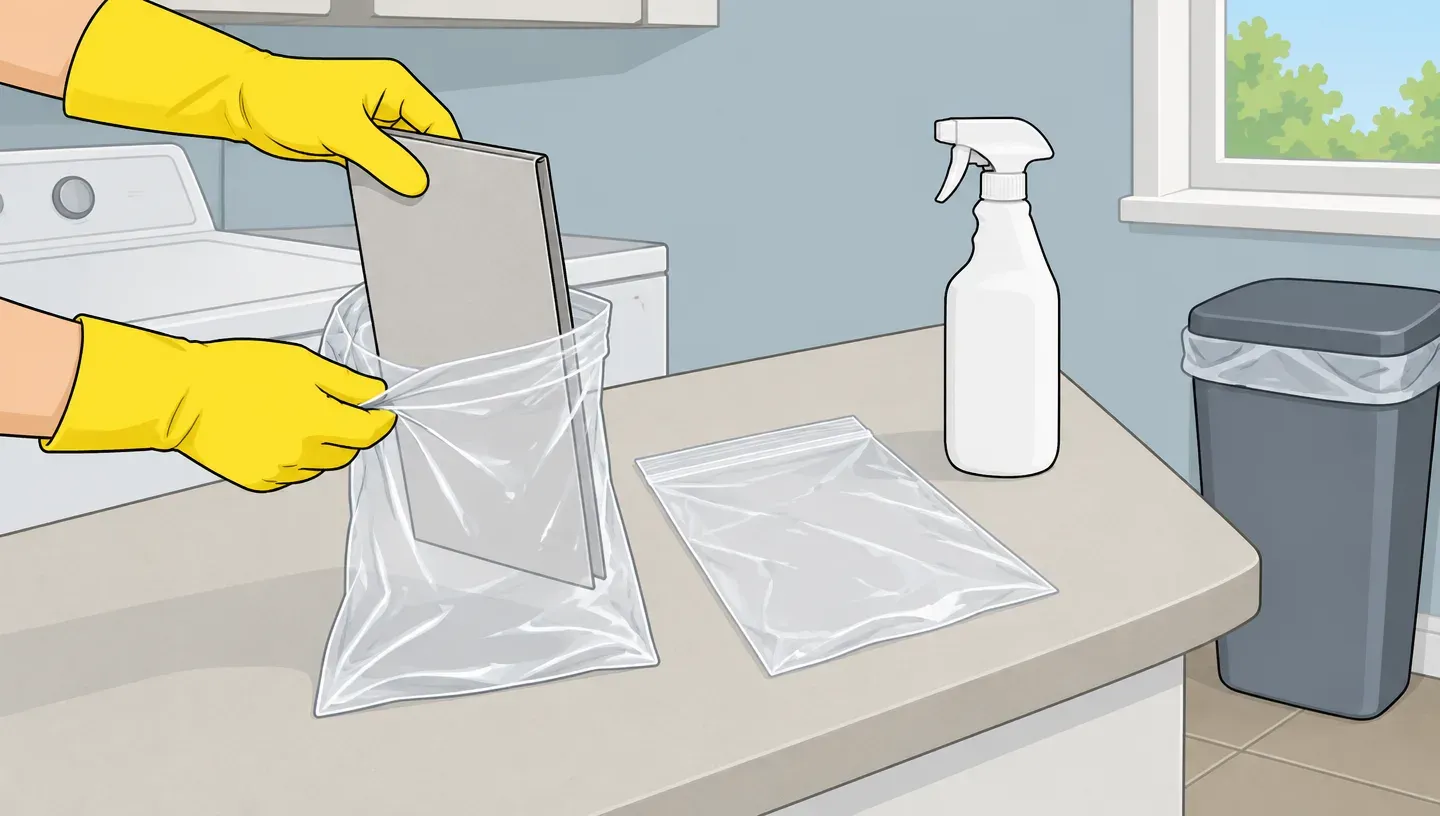
Illustration: gloved hands lowering a folded board into a plastic bag, with a second bag and a disinfectant spray bottle ready.
Are Glue Traps Inhumane?
Yes, by veterinary standards. A glue board doesn’t kill; it holds the mouse until you come, and UC IPM notes caught rodents might not die quickly. The American Veterinary Medical Association’s euthanasia guidelines say traps that hold a conscious animal in glue are not an acceptable way to kill it, though they may be required for pest control.
Do Glue Traps Work on Rats?
Worse than on mice. ICWDM says rats frequently pull themselves free, and UC IPM calls glue traps for rats difficult to use, not generally recommended for nonprofessionals, and never for outdoors. Rat-size snap traps work better; how to catch a rat covers pre-baiting.
Which Trap Fits Your Situation
| Situation | What to use | Why |
|---|---|---|
| Most homes | Snap traps in a “T” against the wall | The CDC’s recommended trap, and reusable. |
| Cats, dogs or small children | Snap traps inside stations, behind appliances | Glue catches paws and fur; stations hide the trigger. |
| Garage with open doors | Snap traps, never glue | Small birds land on boards meant for mice. |
| You won’t touch a mouse | Electronic trap | You tip the catch out without handling it. |
| Rats | Rat-size snap traps | Rats pull free of glue. |
| You rent | Snap traps, plus a written note to the landlord | Tell them before you plug holes. |
What It Might Still Cost
| Item | Typical cost |
|---|---|
| Glue traps at Lowe’s or Home Depot (count per pack varies) | $5–$15 |
| 12 wooden snap traps | $13.74 |
| 24 wooden snap traps | $27.48 |
| Full DIY mouse kit: snap traps, gloves, bleach, copper mesh to plug gaps | $57–71 |
| Pro trap-and-seal job, 53 shared quotes (middle half) | $1,400–$3,000 |
| Pro visit, price-guide range (usually no sealing) | $150–$655 |
Glue traps: This Old House, from store listings (April 2026). Pro: the middle half of 53 trap-and-seal quotes homeowners shared on Reddit (see the quote table). Price-guide range: This Old House for mice (April 2026) and HomeAdvisor for rats (June 2026); it usually covers a trap-and-bait visit, with sealing extra. Snap traps and kit: Victor, DoMyOwn and Target list prices, September 30, 2026, before tax; the exterminator vs. DIY cost page itemizes the kit. Copper mesh is for stuffing gaps around pipes; Nebraska Extension says it doesn’t rust, and steel wool vs. copper mesh compares the two.
Before You Trap: A Quick Checklist
- Swap glue boards for a dozen snap traps.
- Set each trap in a “T”, baited end against the wall.
- Use stations or spots behind appliances if kids or pets live there.
- Keep vegetable oil handy in case a pet gets stuck on an old board.
- Wear gloves and spray every catch before bagging it.
- Check traps every morning until a week passes with no catches.
- Call a pro if fresh droppings still appear after 15 days of trapping.
Common questions
Some do, especially when the board is dusty, very hot or cold, or smeared with greasy bait, all of which weaken the glue.
No agency gives a number. Oregon State University Extension says mice on glue boards “don’t die quickly and struggle to get free,” which is why a board needs checking every morning.
Wales banned their use in October 2023. Since July 31, 2024, England has allowed rodent glue traps only for licensed pest controllers when nothing else works, and Scotland made using, supplying or possessing them an offence from July 1, 2026. New Zealand bans their sale and use for rodents without a ministerial exemption. In the U.S., West Hollywood, California, banned their sale and use in 2023, including insect glue traps; ABC7 reported it as the first U.S. city to do so. Check your city’s rules.
The Bottom Line
Glue traps for mice are cheap, but they catch mostly young mice, leave you with a live catch, and put pets and birds at risk; the CDC says don’t use them. Set a dozen snap traps in a “T” against the wall instead, in stations if kids or pets are around. Trapping clears the mice inside; the plan to get rid of mice covers sealing them out.
Sources and further reading · 8
- CDC: How to Trap Up to Remove Rodents and How to Clean Up After Rodents.
- UC IPM: House Mouse and Rats.
- Nebraska Extension: Controlling House Mice (G1105) and Bait Stations for Controlling Rats and Mice (G1646).
- Oregon State University Extension: Mice.
- ICWDM: House Mouse Damage Prevention and Control and Norway Rat Damage Prevention and Control.
- AVMA Guidelines for the Euthanasia of Animals, 2020 Edition (section M3.9, Kill Traps).
- Wildlife Center of North Georgia: Bird Stuck on Glue Trap.
- Laws: Welsh Government, Glue Traps (Licensing) Regulations 2024, England, Scottish Government, New Zealand MPI City of West Hollywood, Ordinance 23-15 and ABC7 on West Hollywood.