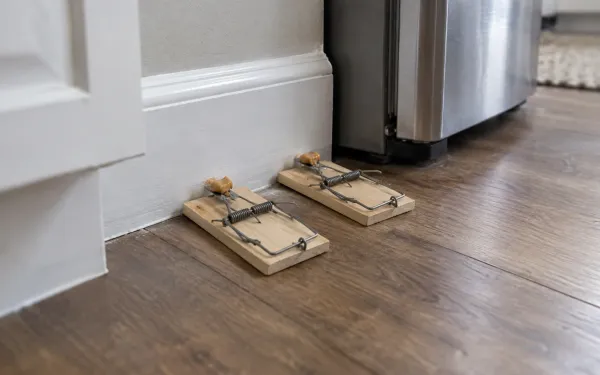
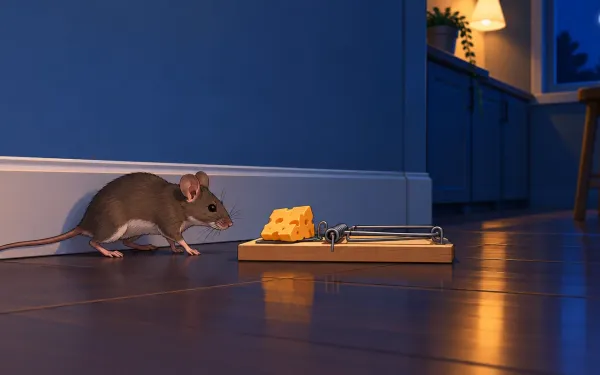
The 5-Day Mouse Rule: Is It Real?
The CDC’s number is a week, not five days. Here’s how to tell the mice are really gone.
There’s no official 5-day mouse rule. The rule the CDC actually gives is a week: if no rodents are caught for a week and there are no new signs, they’re gone. The CDC also says to keep checking traps and bait for at least 15 days. Stopping at day 5 risks missing a mouse that just hadn’t found a trap yet.
Difficulty: easy. Call a pro if you still find new droppings or catch mice after 15 days of trapping and sealing the gaps you can find.
The “5-day mouse rule” gets repeated online as “five straight days with no mice means you’re in the clear,” sometimes credited to the CDC. We checked CDC, UC IPM and Nebraska Extension guidance and couldn’t find a five-day cutoff in any of them. This page covers what the CDC says, where the number 5 may have come from, and how to tell for sure the mice are gone. We haven’t tested this ourselves; it rests on those three sources.
The 5-Day Rule vs. What the CDC Says
| Question | The “5-day rule” | The CDC |
|---|---|---|
| When are the mice gone? | 5 days with no catches | A week with no catches and no new signs |
| How long do traps stay out? | Until day 5 | At least 15 days, longer if you still have mice |
| What counts as a “sign”? | Usually just catches | New droppings, urine spots or gnawing |
| What if signs continue? | Not covered | Keep trapping; after a week, you may be dealing with rats |
In the CDC’s words: “If no rodents are captured for a week and there are no new signs of rodents, the rats are gone.” The same page says to “check the bait every week and re-fill or move it as needed for at least 15 days.”
Where the Number 5 May Come From
We couldn’t trace the rule to one source, but the number 5 shows up in mouse guidance in other places, and it’s easy to see how they get mixed up:
- Poison, not traps. Nebraska Extension says mice that eat a lethal dose of rodenticide begin dying in about five days. That’s how long poison takes, not how long to trap.
- Your health, not the mice. The same Nebraska guide says to see a doctor if you feel ill or get a fever within five days of handling mice or their droppings.
- Rounding. Online advice often says “5 to 7 days,” and the shorter number sticks.
None of these mean the mice are gone after five quiet days.
Why a Full Week (or Two) Is Safer
Mice breed fast. UC IPM says young are born 18 to 21 days after mating, and they’re mature in 5 to 6 weeks. One mouse you miss can restart the problem within a month.
A short quiet spell also doesn’t prove much. A mouse may be nesting in a part of the house where you haven’t set traps, or it may be eating somewhere else for a few days. House mice are less cautious than rats and are usually caught quickly (CDC), so a week with no catches and no new droppings is a much stronger sign than five days without a catch.
How to Tell the Mice Are Really Gone
- Clean up the old signs first. Wipe up old droppings so any new ones stand out. Use a disinfectant and paper towels, and wear gloves; don’t sweep or vacuum droppings dry. How to clean mouse droppings has the CDC’s steps.
- Keep traps set and check them every morning. Mice are most active before dawn and after dusk (Nebraska Extension).
- Look for new signs, not just catches. Fresh droppings, urine spots, new gnaw marks, shredded paper or fabric, and scratching in the walls at night all mean they’re still there.
- Count a full week from the last sign, not from the last catch.
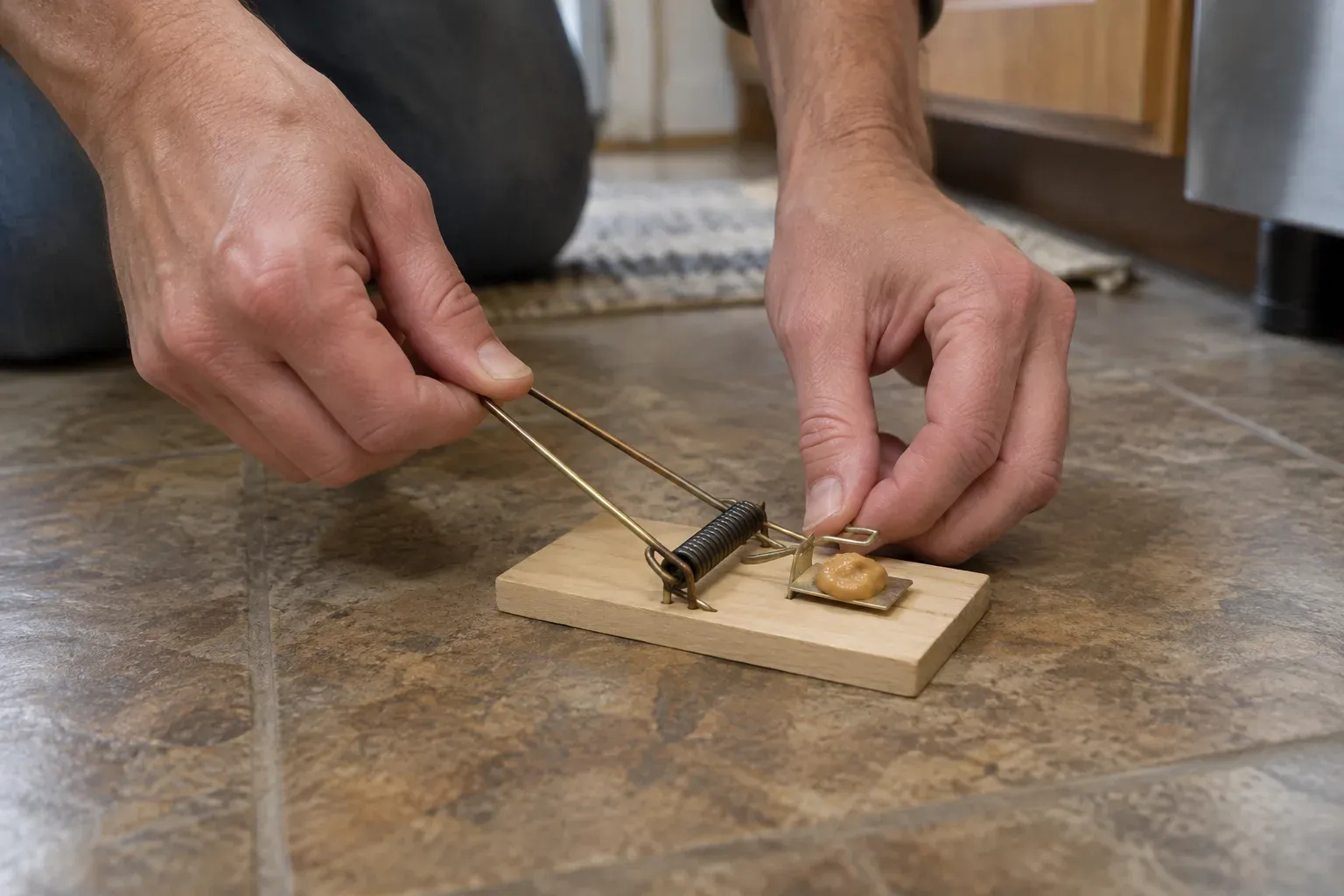
- Leave the traps out to day 15, as the CDC suggests, then pack them up.
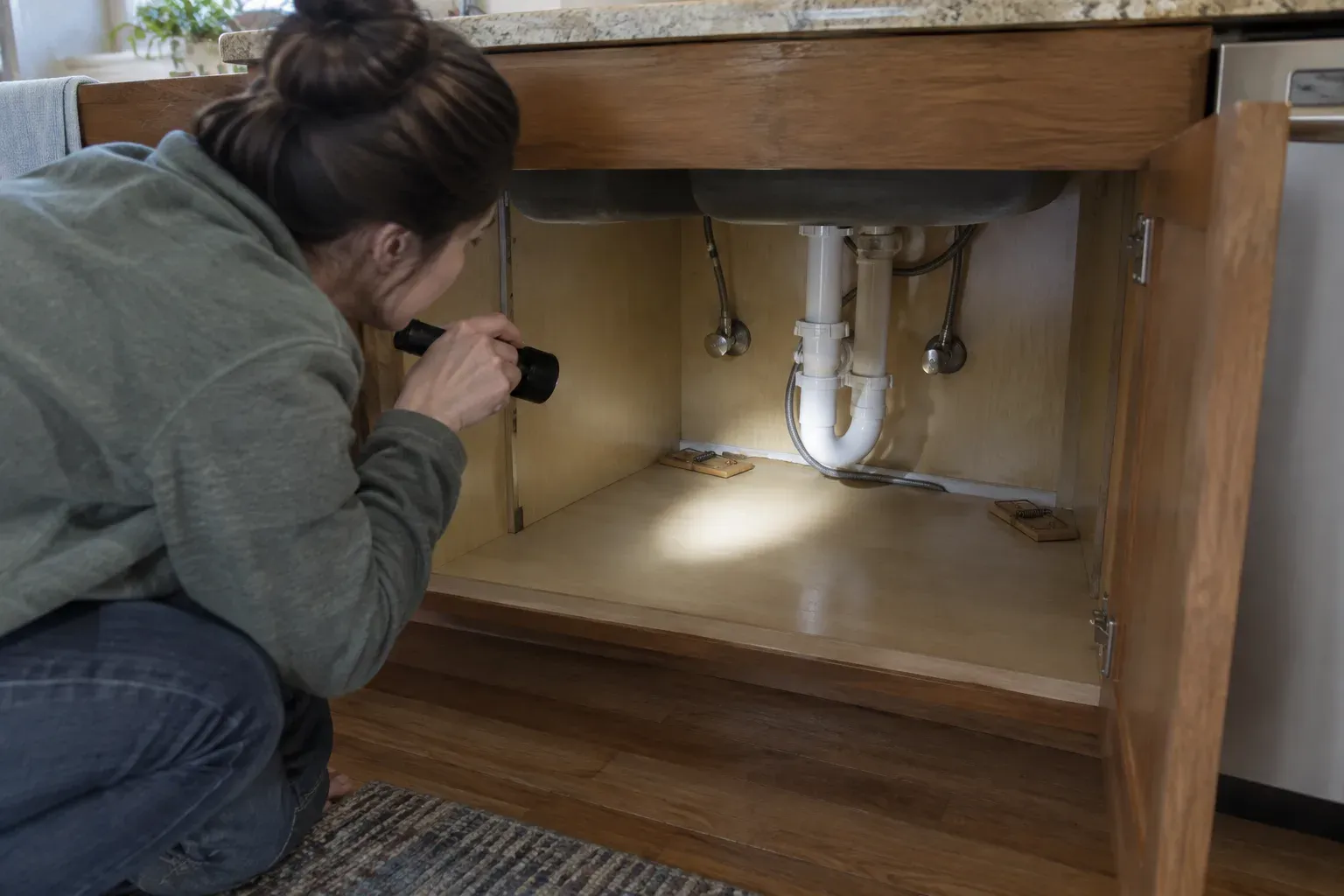

Caught One on Day 6? Reset the Clock
A new catch or new droppings starts the week over. Before you reset, ask why another one got in:
- Did you seal the gaps? Trapping clears the mice inside; sealing keeps new ones out. Mice squeeze through openings about ¼ inch across (UC IPM); how mice get in the house lists the gaps to check.
- Are traps in the right spots? If one room keeps showing droppings and the traps there stay empty, move them. Where to put mouse traps covers placement.
- Is the trap firing? If bait disappears and traps don’t snap, see mouse trap not working.
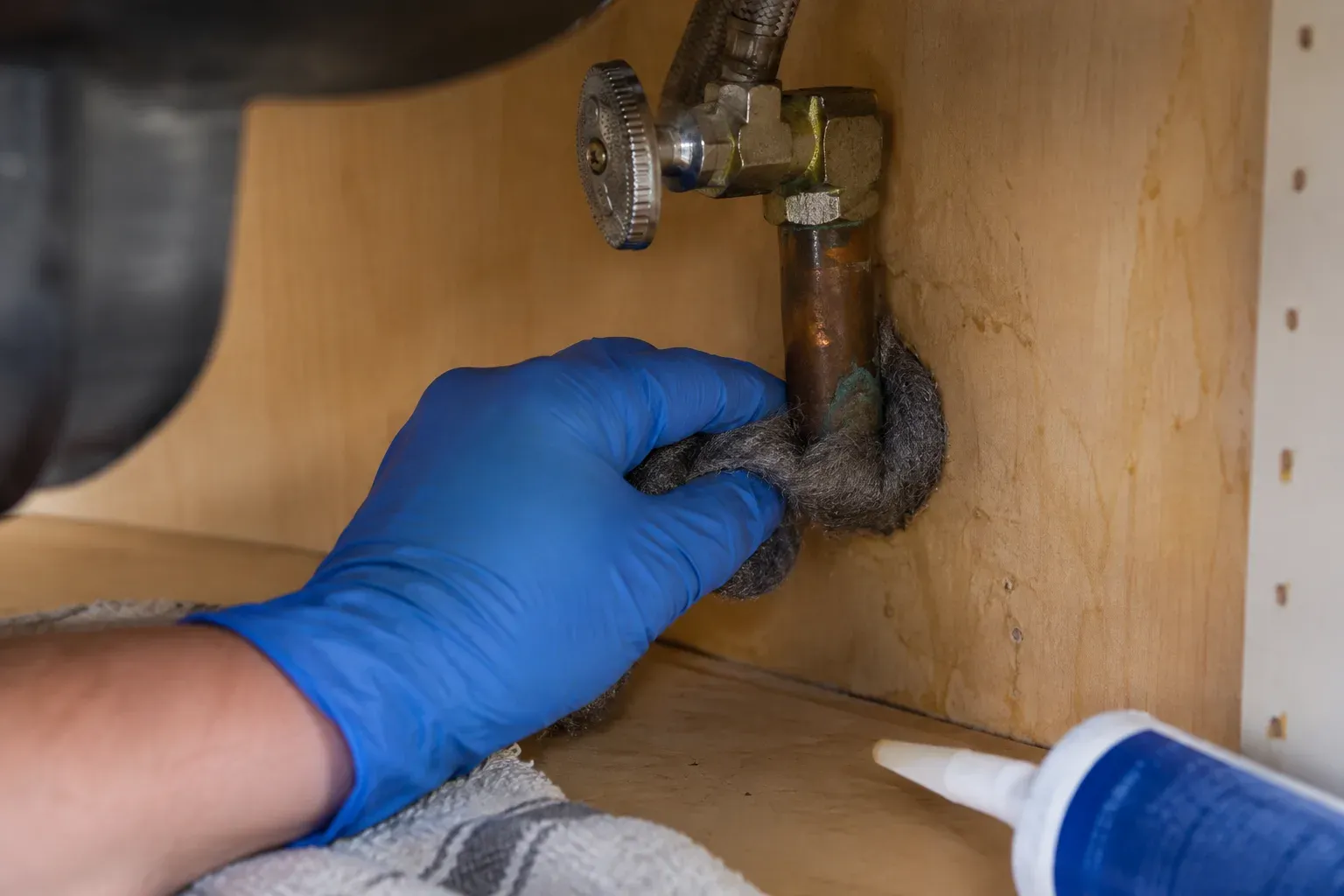
When It Keeps Going Past 15 Days
If you still have new droppings or catches after 15 days of trapping and you’ve sealed every gap you can find, the CDC suggests getting professional help. Also check what you’re dealing with: the CDC notes that droppings, urine spots or gnawing that continue past a week may mean rats, which are warier and need a different approach. Rat poop vs. mouse poop shows the difference.
Common questions
At least 15 days, the CDC says, checking them daily and keeping them out longer if you still have mice. Stop when a full week passes with no catches and no new signs.
A full week with no catches and no new droppings, urine spots or gnaw marks (CDC). Clean up old droppings first so you can tell new ones apart.
Often, yes. A single catch doesn’t mean it was the only one. Keep traps set and watch for new signs for a full week. See if you see one mouse for what one sighting usually means.
The Bottom Line
Forget five days. Clean up the old droppings, keep traps set and checked, and call it done only after a full week with no catches and no new signs, with traps out for at least 15 days. Any new sign resets the week.
Sources and further reading · 4
- CDC: How to Trap Up to Remove Rodents (April 8, 2024): one week with no captures and no new signs, 15 days of checking, mice vs. rats.
- CDC: Seal Up and Clean Up.
- UC IPM: House Mouse (Pest Notes 7483): breeding times.
- Nebraska Extension: Controlling House Mice (G1105): when poisoned mice die, when to see a doctor, when mice are most active.