Do Mothballs Keep Mice Away? What the Label Says
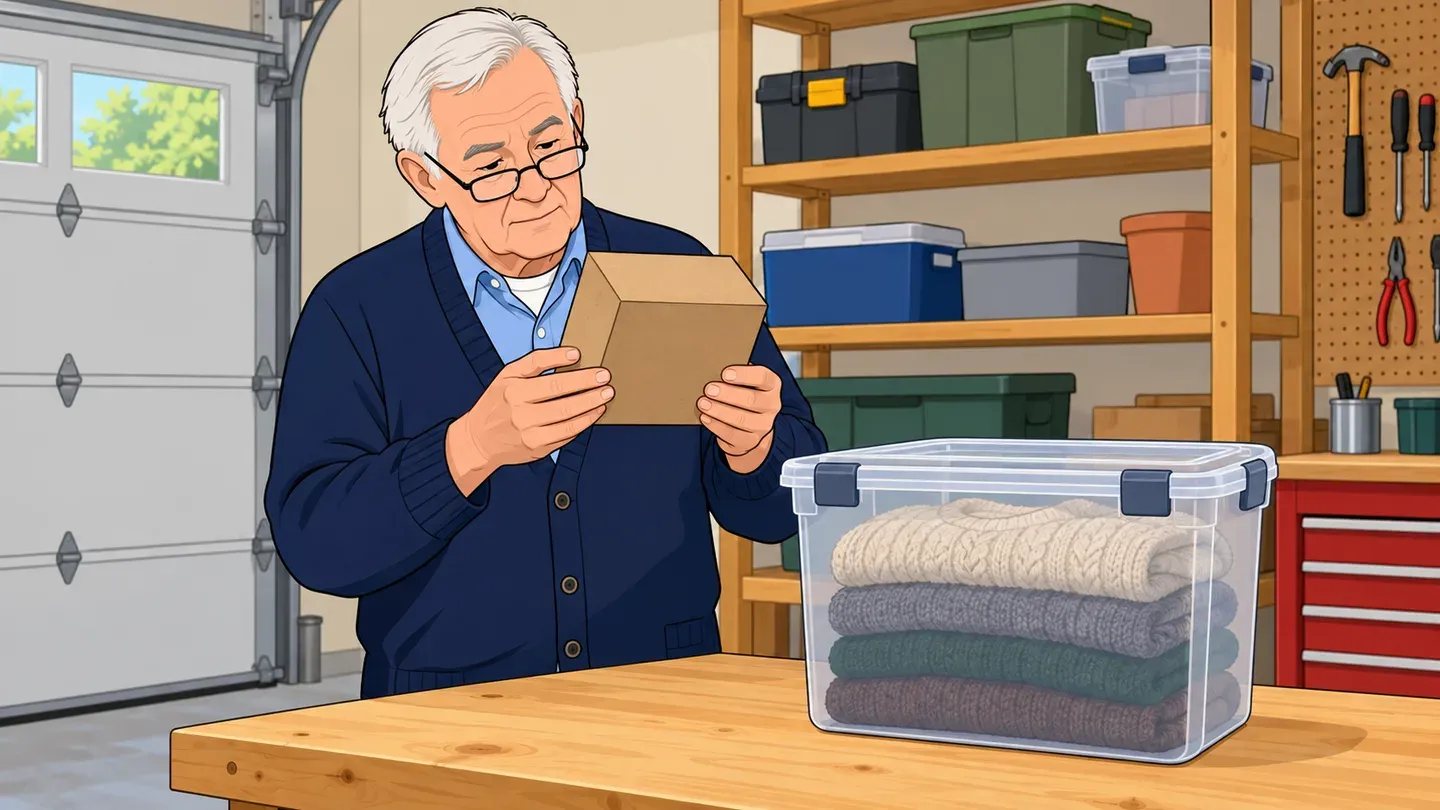
Illustration: reading the label on a box of mothballs in the garage, next to a sealed storage bin.
Mothballs don’t keep mice away. They’re pesticides for clothes moths in tightly closed containers, and the National Pesticide Information Center (NPIC) says they have little or no effect as repellents. Using them in attics, walls, cars or yards goes against the label, which is illegal, and exposes people and pets to toxic vapor. Seal gaps and trap instead.
This guide compares mothballs with the other smells and gadgets people try, explains the label and health risks, and shows what works instead. We haven’t tested mothballs or repellents ourselves. It rests on NPIC, EPA, Poison Control, Pet Poison Helpline, UC IPM and CDC guidance, plus store list prices.
How We Compared These Options
We judged mothballs and the alternatives on four things:
- Does it work on mice: what NPIC, UC IPM and the CDC say.
- Is it legal for this use: whether the label allows it.
- Health risk: to children, pets and the people breathing it.
- Cost: U.S. list prices from September and October 2026.
Sources are listed at the end.
Mothballs vs. What Works at a Glance
| Option | Works on mice? | Main limitation |
|---|---|---|
| Mothballs | No; little or no effect (NPIC) | Off-label and illegal for this use; toxic vapor |
| Camphor balls | No source recommends them | Same advice as mothballs: seal and trap |
| Peppermint and other smells | Briefly at most | No smell is proven to clear mice from a home |
| Sound or vibration devices | Little evidence (UC IPM) | Mice keep using the same gaps |
| Sealing gaps | Yes; keeps new mice out | Doesn’t remove mice already inside |
| Snap traps | Yes; removes the mice inside | Needs a daily check, out of reach of kids and pets |
Why Mothballs Don’t Keep Mice Away
The answer to “can I use mothballs to repel animals?” is short: no, not unless the label describes that use, and they have little or no effect as repellents anyway. The myth has a history: years ago, mothballs were sometimes made from different chemicals, and some older labels allowed repellent use. Today’s products aren’t sold for that.
The smell does travel. It just reaches you and your pets long before it does anything useful to a mouse.
Mothballs: What the Label Actually Says
Mothballs are registered pesticides, and every label says exactly where and how the product can be used. Labels typically direct you to put them in a tightly closed container with the items you’re protecting, where the vapor builds up and kills clothes moths. Using them any other way is illegal and can harm people, pets or the environment.
Two mistakes are common:
- Using a container that isn’t airtight. The vapor escapes into the room, and people breathe it for long periods.
- Using mothballs outdoors against insects, snakes or other wildlife. That can harm children, pets and other animals, and contaminate soil, plants and water.
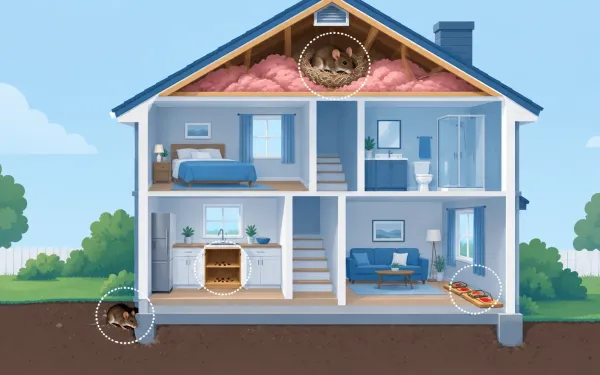
Scattering mothballs in an attic, a wall cavity, a car or a crawl space is the same mistake. Seeing moths in the kitchen instead? Those are pantry moths, and mothballs shouldn’t be used around food or food preparation areas.
Be wary of imported mothballs with unfamiliar packaging. The EPA lists mothballs among household pesticides that are sometimes sold illegally, and warns that illegal naphthalene mothballs are especially hazardous to young children.
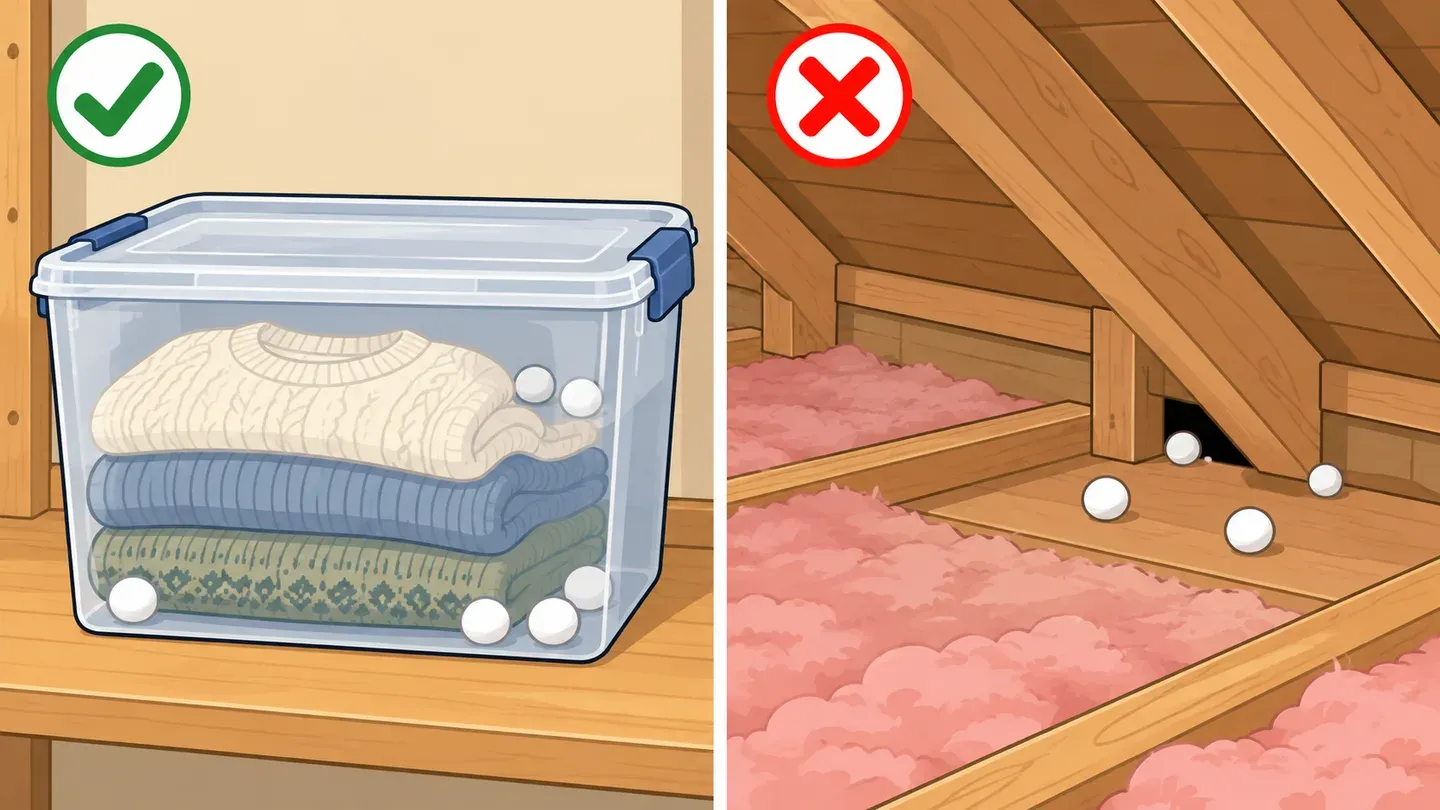
Illustration: wool sweaters and mothballs in a clipped-shut storage box, next to loose mothballs on an attic floor, crossed out.
Best for: wool clothes in a sealed storage box, as the label says.
Main limitation: no effect on mice, and off-label use is illegal.
Naphthalene vs. Paradichlorobenzene
U.S. mothballs are nearly 100% active ingredient, and that ingredient is one of two chemicals. Check the label to see which one you have.
| Ingredient | What to know |
|---|---|
| Naphthalene | The older type, and the more toxic one for pets. It can damage red blood cells, especially in people with G6PD deficiency. Banned in mothballs in the EU and UK. |
| Paradichlorobenzene | The most common ingredient in U.S. mothballs, also used in urinal cakes. Less toxic, but still harmful if swallowed or breathed in large amounts. |
Camphor Balls: No Better
“Camphor balls,” common in the UK, Australia and South Asia, are a different product. We couldn’t find any government or university source that recommends them for rodents, so the same advice applies.
Best for: nothing in a mouse plan.
Main limitation: no evidence they repel mice.
Peppermint and Plug-In Devices: Also Skip
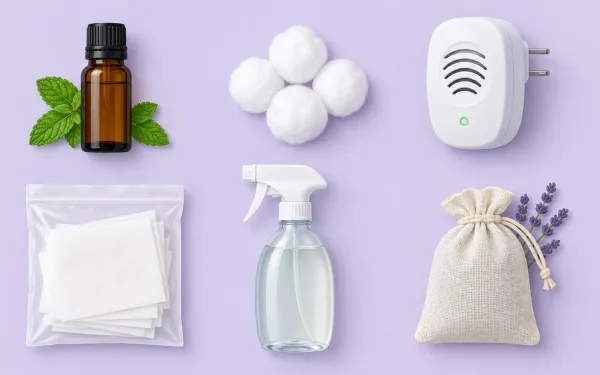
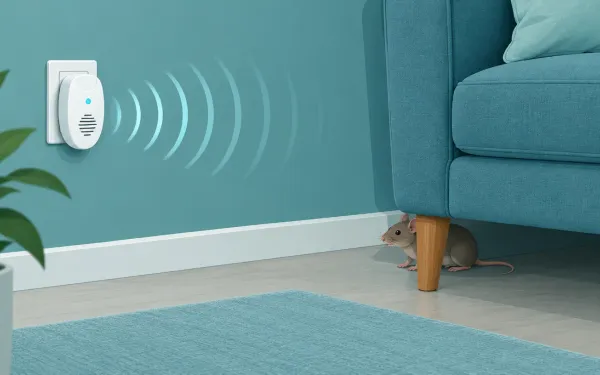
Swapping mothballs for another smell doesn’t fix the problem; we checked peppermint, dryer sheets and more in what smells mice hate. UC IPM finds little evidence that sound, magnetic or vibration devices drive established mice out, as our ultrasonic repeller review explains.
Best for: neither removes mice.
Main limitation: the gaps stay open, so mice keep coming in.
What Works Instead
Close the way in, then remove the mice already inside.
Step 1: Seal the gaps. Mice can get through openings as small as ¼ inch, according to UC IPM. Close them with wire screen or coarse steel wool mice can’t chew through, and cover larger gaps with ¼-inch wire mesh; steel wool for mice shows how.
Step 2: Take away food and shelter. Store food and pet food in sealed containers, clean up spills, and clear clutter where mice can nest.
Step 3: Trap the mice already inside. Snap traps along the walls where you’ve seen droppings work well for most homes; check them daily. How to set a mouse trap covers placement.
Best for: every home with mice.
Main limitation: sealing takes work, and traps need a daily check.
Are Mothballs Dangerous?
Yes, when they’re used in the open or swallowed. A rule of thumb: if you can smell mothballs, you’re breathing the pesticide.
Breathing the vapor can cause headaches, nausea, vomiting, diarrhea, eye and nose irritation and coughing, and longer exposure can damage the liver and kidneys.
Children may mistake mothballs for candy. Just one mothball can seriously harm a small child who eats it.
Pets are at risk too. Pet Poison Helpline says cats are more sensitive to mothballs, while dogs are more likely to eat them. Signs include vomiting, breath that smells of mothballs, pale or brown gums, weakness, trouble breathing, tremors and seizures.
If someone swallowed a mothball, call Poison Control at 1-800-222-1222 (U.S.) or use webPOISONCONTROL online. If a pet ate one, call your veterinarian, Pet Poison Helpline at 855-764-7661, or the ASPCA Animal Poison Control Center at 888-426-4435; a consultation fee may apply. Outside the U.S., call your local poison information service. Keep the package so you can read the ingredient to them.
Attics, Cars, Sheds and RVs: The Wrong Places
None of these is a closed container. Attics and crawl spaces aren’t sealed, so vapor drifts into the rooms below while mice keep using the same gaps; see mice in the attic. Cars and RVs are small spaces where people sit and breathe, and keeping mice out of a car works without pesticide. Sheds and yards are outdoor use, which can harm children, pets and wildlife and contaminate soil and water.
Already Put Mothballs Out? How to Remove Them and the Smell
Step 1: Air out the space. Open windows or doors first.
Step 2: Collect every piece. Put on gloves and pick up every mothball, flake or piece you can find.
Step 3: Seal and dispose. Bag them and dispose of them as household hazardous waste, as Poison Control advises. Don’t bury them or throw them outside.
Step 4: Wash stored fabrics. Wash clothing and bedding stored near loose mothballs before using them.
If some fell inside a wall you can’t reach, keep the area aired out, keep children and pets away, and call NPIC at 800-858-7378. If anyone has a headache, nausea or other symptoms, call Poison Control at 1-800-222-1222.
Which Option Fits Your Situation
| Situation | What to do | Why |
|---|---|---|
| Mothballs already in the attic | Remove them, then seal and trap | The vapor drifts into living space. |
| Small children or pets at home | Keep mothballs only in sealed bins, or skip them | One mothball can seriously harm a small child. |
| Mice in a car or RV | Seal entry points and trap | Mothballs expose whoever rides next. |
| Mice in the walls | Trap where they come out | Vapor won’t drive them out and seeps indoors. |
| You rent | Trap inside; report outside gaps in writing | Outside gaps are usually the landlord’s job. |
| Moths in the pantry | Treat pantry moths; no mothballs near food | The label bars use around food. |
What It Might Still Cost
| Item | Price |
|---|---|
| Coarse steel wool, 12 pads | $5.26 |
| Silicone caulk, 2.8 oz | $5.29 |
| Snap traps, two-pack | $2.29 |
| Copper mesh for damp spots, 20 ft | $28.80 |
| Full DIY mouse kit | $57–71 |
| Pro trap-and-seal job, 53 shared quotes (middle half) | $1,400–$3,000 |
| Pro visit, price-guide range (usually no sealing) | $150–$655 |
| Pro attic insulation cleanup, if upsold | $7,500–$14,000 |
U.S. list prices from September and October 2026, before tax; pro: the middle half of 53 trap-and-seal quotes homeowners shared on Reddit (see the quote table) and the price guides, as compared on the exterminator vs. DIY cost page. Attic cleanup: the middle half of 35 shared quotes that included new insulation.
Before You Reach for Mothballs: A Quick Checklist
- Read the label: mothballs are for clothes moths in closed containers.
- Remove any loose mothballs with gloves and bag them.
- Find gaps of ¼ inch or more inside and out.
- Seal them with steel wool or wire mesh.
- Store food and pet food in sealed containers.
- Set snap traps where you’ve seen droppings, and check them daily.
- Keep Poison Control’s number handy: 1-800-222-1222.
Common questions
No. The same labels and problems apply to rats, and NPIC says mothballs are not wildlife repellents. For rats, see how to get rid of rats in the house.
In the U.S., using any pesticide in a way its label doesn’t allow is illegal. Current mothball labels are for fabric pests in closed containers, so using them against mice in attics, walls or yards goes against the label.
Stop using it and check the label for the active ingredient and an EPA registration number. The EPA lists mothballs among household pesticides sometimes sold illegally.
The Bottom Line
Mothballs don’t keep mice away, and using them in attics, walls, cars or yards is illegal and puts kids and pets at risk. Bag any that are out, seal gaps of ¼ inch or more, and trap the mice inside. Our plan to get rid of mice walks through every step.
Sources and further reading · 11
- NPIC: Can I use mothballs to repel insects or animals? — why mothballs aren’t repellents, and symptoms of exposure.
- NPIC: Regulation, Proper Uses, and Alternatives of Mothballs — label rules, common mistakes, and keeping mothballs away from food.
- NPIC: Mothballs — mothballs are not wildlife repellents.
- NPIC: Mice FAQ — NPIC phone line.
- NPIC: Health Effects of Mothballs — active ingredients and risks to children.
- U.S. EPA: Avoid Illegal Household Pesticide Products — illegal mothball products.
- Poison Control: Mothballs can be poisonous — naphthalene vs paradichlorobenzene (the ingredient table), what to do if swallowed, disposal.
- Pet Poison Helpline: Mothballs — naphthalene vs paradichlorobenzene toxicity in pets, and signs of mothball poisoning.
- UC IPM: House Mouse and Rats — repellent devices, entry gaps and sealing.
- ICWDM: House Mouse Damage Prevention and Control — sealing openings with ¼-inch wire mesh.
- CDC: How to Trap Up to Remove Rodents — trap placement and checking traps daily.