Is There a Pet-Safe Rat Poison? Risks and Safer Options
There is no pet-safe rat poison. The National Pesticide Information Center (NPIC) says all rodenticides can be toxic to mammals and birds that eat them, and pets can also be poisoned by eating a poisoned rodent. Bait stations lower the risk but don’t remove it. Most homes don’t need poison at all: sealing gaps and snap traps do the job.
Possible ingestion? Get help now. If someone may have swallowed bait, contact local Poison Control or emergency services now; in the U.S., call Poison Control at 1-800-222-1222. If a pet may have eaten bait or a poisoned rodent, call a veterinarian or animal poison service immediately; in the U.S., the ASPCA Animal Poison Control Center is at 888-426-4435 (a consultation fee may apply). Keep the product label ready. Do not wait for symptoms or try home treatment.
Call a pro if rodents keep coming back after sealing and trapping, or you can't keep bait away from children and pets.
This guide covers how the poisons differ, how they harm pets and wildlife, what bait looks like, where poisoned mice die and what to use instead. It isn’t veterinary or medical advice, and we haven’t tested any product; it rests on NPIC, EPA, Poison Control, Cornell and UC IPM guidance.
Rat Poison Types: Check the Active Ingredient
“Rodenticide” covers several different poisons, so “rat poison” tells your vet very little. Find the active ingredient on the label and write it down.
| Type | Examples | How it acts | Sold to U.S. consumers? |
|---|---|---|---|
| First-generation anticoagulant | Chlorophacinone, diphacinone | Stops blood clotting; the animal must feed over several days | Yes, in ready-to-use bait stations |
| Second-generation anticoagulant | Brodifacoum | Stops blood clotting; one day’s feeding can be a toxic dose | No, professionals only |
| Non-anticoagulant | Bromethalin | Works another way | Yes, in ready-to-use bait stations |
| Non-anticoagulant | Cholecalciferol, zinc phosphide | Work other ways | Not among the consumer ingredients EPA lists |
In the U.S., consumer rodenticides come only as ready-to-use bait stations holding block or paste bait. Pellet baits are no longer allowed in consumer products; professional products can still be pellets, and their labels require tamper-resistant stations wherever children, pets or wildlife could reach the bait (EPA, updated September 8, 2026). Rules differ outside the U.S.
Can Rat Poison Kill a Dog or Cat?
Yes. Rodenticides have the same effect when eaten by any mammal, according to NPIC, and a single dose can cause serious harm. With anticoagulant baits, signs may not show for up to five days because the body first uses up its stored clotting factors, so a pet that seems fine is not in the clear.
If your dog or cat may have eaten bait or a poisoned rodent, call your veterinarian or the ASPCA line above now, even without symptoms, and bring the package or a photo of the bait.
Can Pets and Wildlife Be Poisoned by Eating a Poisoned Rodent?
Yes. Wildlife can eat the bait itself, or a predator or scavenger can eat a rodent that did. That second route is called secondary exposure, and a dog or cat that eats a poisoned mouse is exposed the same way. Some anticoagulants, especially second-generation products, persist in animal tissue (Cornell Wildlife Health Lab).
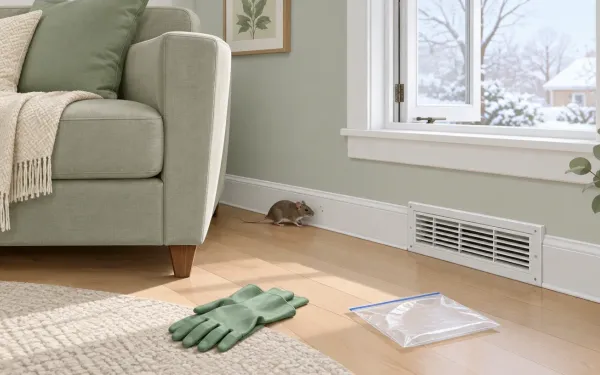
Keep bait where only rodents can reach it, and pick up dead rodents with gloves as soon as you find them. The EPA’s safe-use guidance says the same: follow the label, store bait securely and remove carcasses.
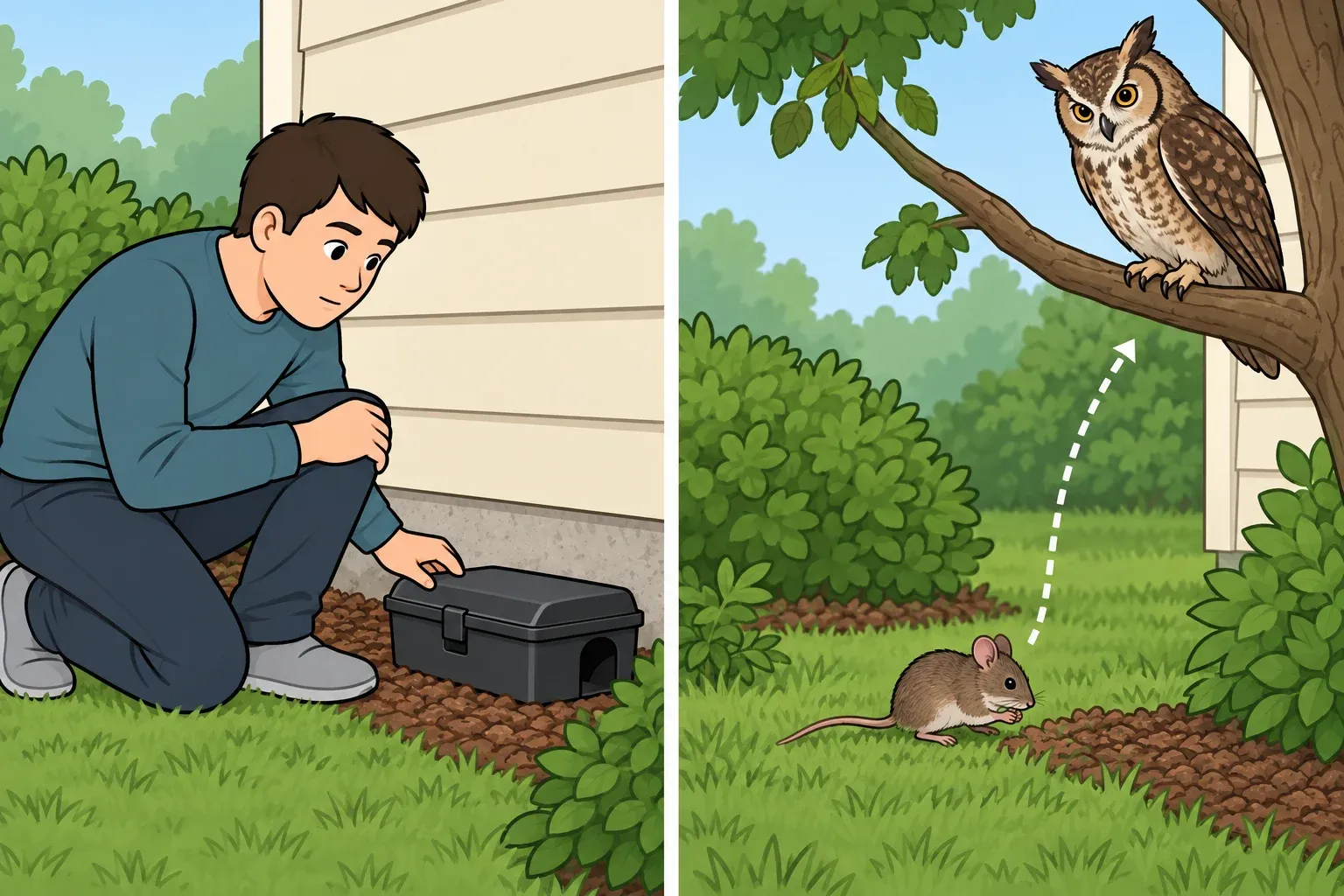
Illustration: a bait station by the house, and an owl hunting a mouse that may have fed from it.
What Does Rat Poison Look Like?
Consumer rat and mouse poison is a block or paste inside a plastic bait station. Loose pellets are usually a professional product. Anticoagulant baits must contain a bittering agent and a dye, according to Poison Control, which is why many are brightly colored, but you can’t tell the ingredient by color.
How Long Does Rat Poison Take to Work, and Where Do Mice Die?
It depends on the ingredient (see the table), but expect several days before the mice are under control (NPIC).
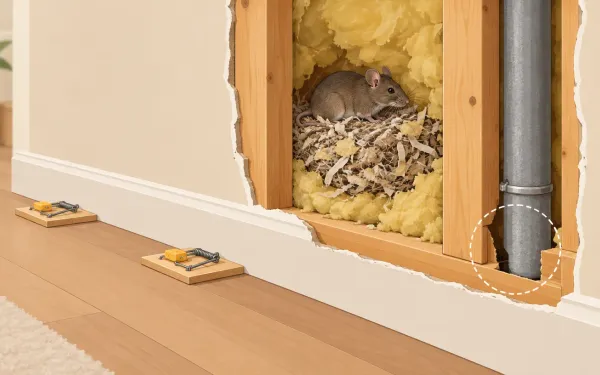
A poisoned mouse doesn’t head outside looking for water. House mice tend to stay within 30 feet of their nest (UC IPM), so poison used indoors often leaves dead mice in the walls or under a floor, where you can’t remove them or the odor that follows. If that’s a risk you can’t accept, trapping is the better choice.
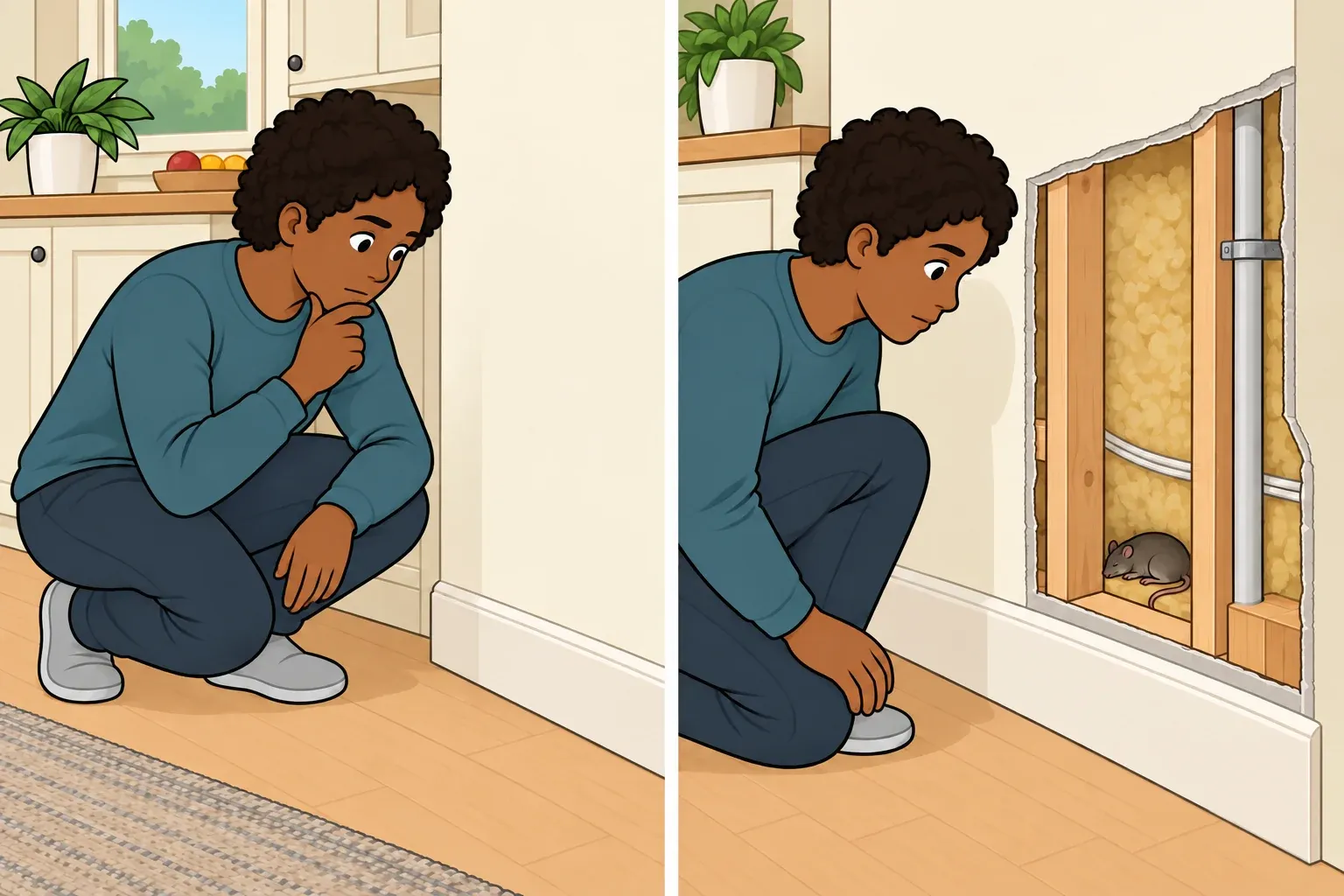
Illustration: a woman checks a wall while, in the cutaway, a dead mouse lies out of reach inside the cavity.
Bait Stations: Lower Risk, Not Safe
A bait station reduces access to the bait; it doesn’t make the bait safe. The EPA rates stations differently, and the label tells you which one you have and where it’s allowed: indoors, outdoors or both.
| EPA station rating | Where it belongs |
|---|---|
| Shown to resist young children and dogs | Where its label allows: indoors, outdoors or both |
| Resists children only | Only where pets can’t go |
| Never tested | Only where neither children nor pets can reach |
Not every station resists dogs, and NPIC notes that dogs may dig bait up and work hard to get at it because of its flavorings. If a rodenticide is in your home, keep unused product locked away and separate from food and pet food, use it only in the station and locations on its label, never in another container, and follow the label’s inspection, carcass-removal and disposal directions. Local rules may differ.
Already placed bait and want to stop? Don’t handle or throw it out by guesswork. Follow the label’s disposal directions, or contact the manufacturer or your local waste authority if the label is missing. For how stations compare, see rat bait stations.
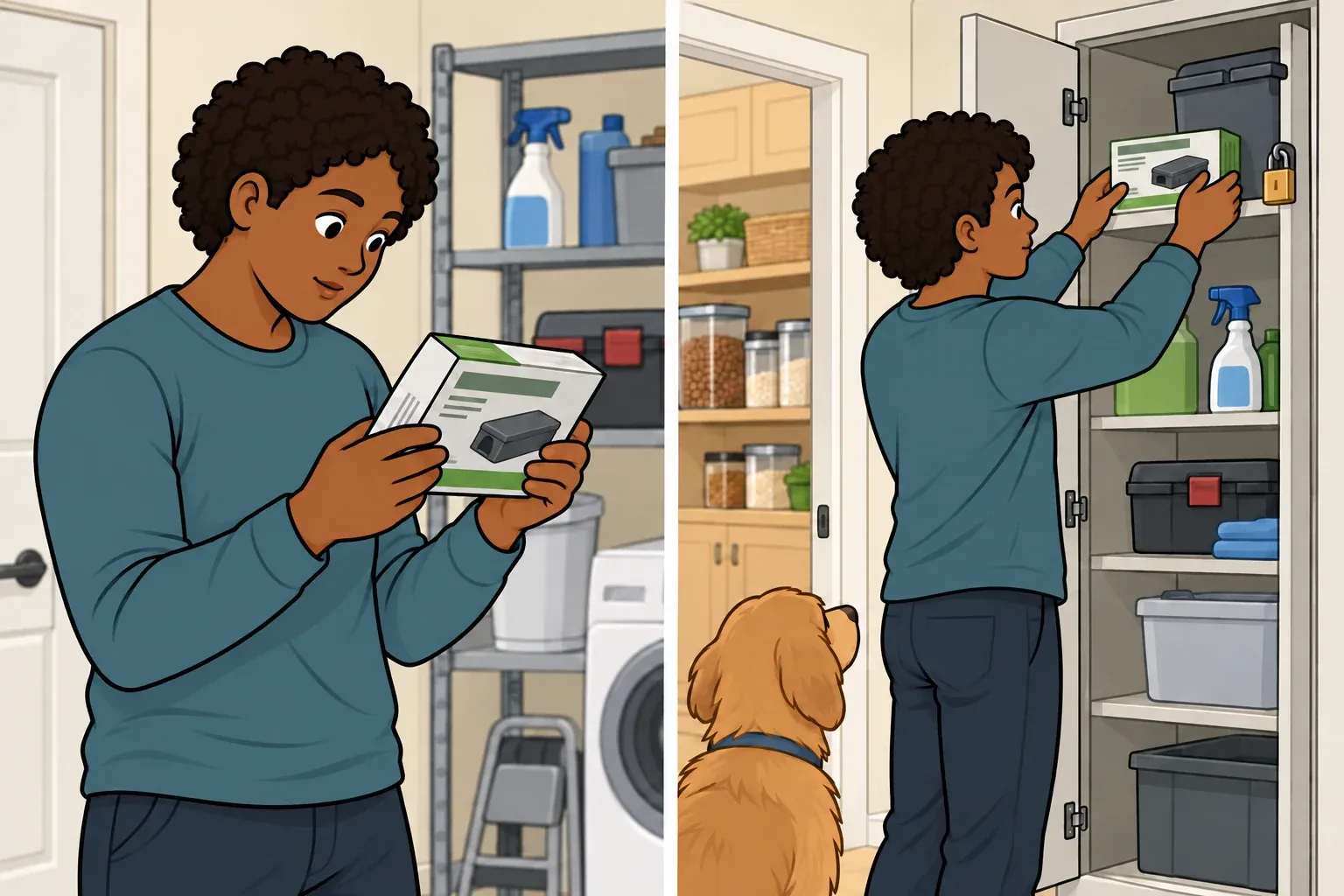
Illustration: a woman reads a rodenticide label and puts the closed package in a locked cabinet while her dog waits nearby.
How to Confirm What Was Eaten
Find the package or the station, keep it, and read the active ingredient off the label.
Photograph the bait if there’s no package; don’t guess from its color.
Check for a dead or dying rodent your pet may have eaten, and pick it up with gloves.
Then call Poison Control or your vet with that information, even if nobody has symptoms yet.
What to Do Next
Skip poison and start with the gaps. Mice fit through a hole about the width of a pencil, the CDC says; if you rent, report gaps in the outside walls to your landlord in writing. Then trap the mice already inside: see how to set a mouse trap and choosing a mouse trap. For rats, follow how to get rid of rats in your house, and for a full poison-free plan, how to get rid of mice without poison.
Doing it yourself costs about $57–71 in snap traps, copper mesh, gloves and bleach, the supply list in our mouse plan, versus a $2,000 median across 53 pro trap-and-seal quotes homeowners shared on Reddit (see the quote table), or $150–$550 for a trap-and-bait visit in price guides.
- Save the poison numbers: Poison Control 1-800-222-1222, ASPCA 888-426-4435.
- Lock away any rodenticide already in the house.
- Seal gaps the width of a pencil.
- Set snap traps where kids and pets can’t reach.
- Pick up dead rodents with gloves right away.
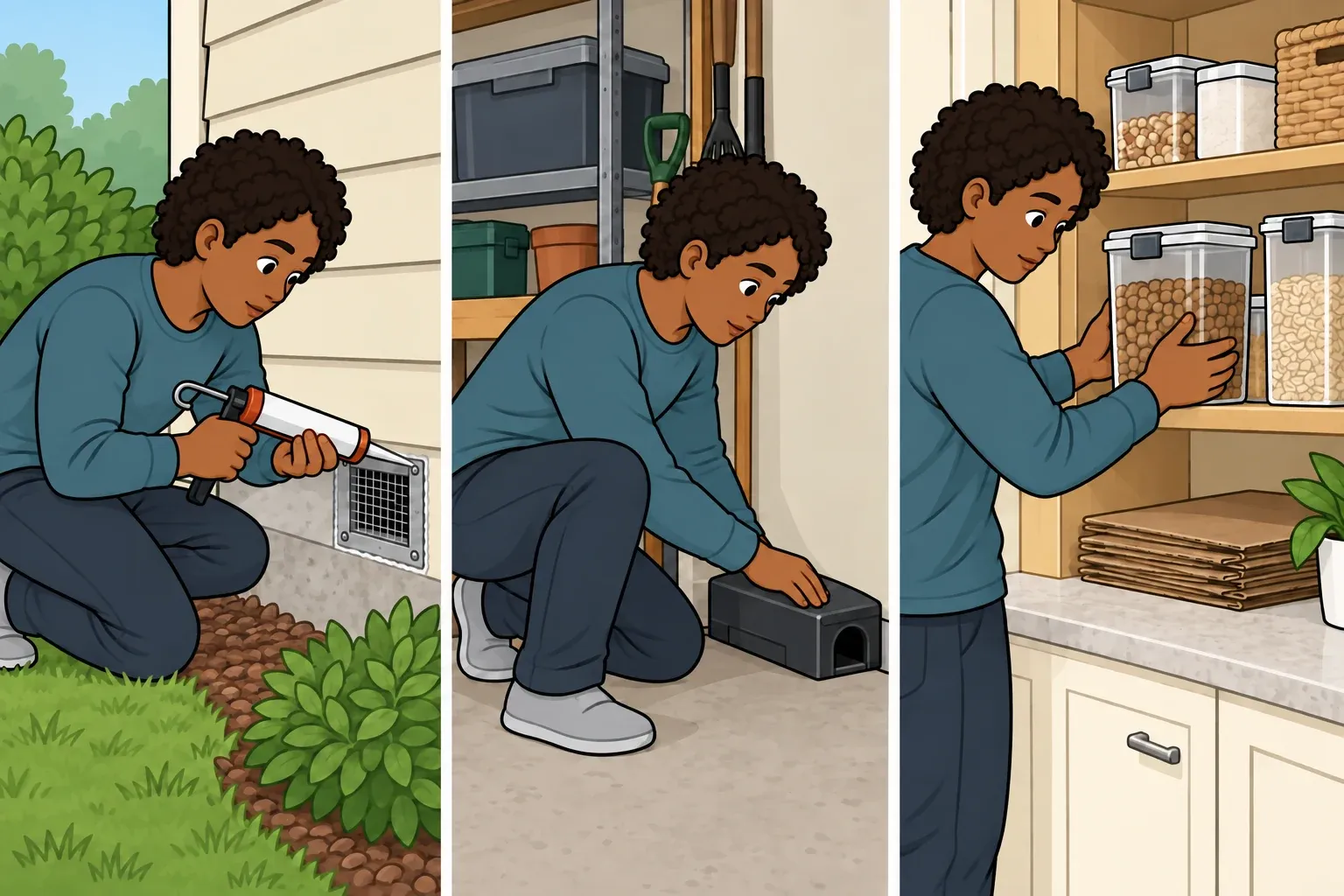
Illustration: sealing a gap, setting an enclosed trap and storing food in sealed containers.
Common questions
No. Not every station is rated to resist dogs, and a pet can also be poisoned by eating a mouse that fed from the station.
It can. NPIC lists secondary poisoning as a real route of exposure for pets and wildlife. Call your vet if your dog ate one, even if it seems fine.
Yes. Raccoons are among the wild mammals with reported rodenticide poisoning, from eating bait directly or eating an animal that did; the Pennsylvania Game Commission lists them among affected wildlife. If a raccoon may have gotten into bait, contact your local wildlife agency or a wildlife rehabilitator.
Sources and further reading · 12
- NPIC: Rodenticides fact sheet — effects on any mammal, delayed signs, secondary poisoning, single- vs multiple-dose baits.
- NPIC: Mice FAQ — all rodenticides can be toxic; bait stations; removing dead rodents.
- U.S. EPA: Restrictions on Rodenticide Products — consumer vs professional products, bait forms and ingredients.
- U.S. EPA: Safely Use Rodent Bait Products and Choosing a Bait Station — label use, storage, stations and carcass removal.
- Poison Control: Mouse and Rat Poisons — bittering agent and dye; what to do after a swallow.
- ASPCA Animal Poison Control Center — the U.S. pet poison line.
- UC IPM: House Mouse — how long bait takes and how far mice travel from the nest.
- Cornell Wildlife Health Lab: Rodenticide Toxicity — wildlife exposure routes and chemical differences.
- NC State Extension: Pest Problems After Storms—Rodents — carcasses and odor in hard-to-reach places after indoor baiting.
- Pennsylvania Game Commission: Rodenticide Toxicity — raccoons and other wildlife.
- CDC: Seal Up — gap size and sealing.
- This Old House: Mice Exterminator Cost — professional mouse removal prices.