- Scientific name
- Rattus norvegicus
- Also called
- brown rat, sewer rat, wharf rat
- Size
- Body 7–10 in, tail 6–8 in; up to about 1 lb
- Color
- Brown to gray, paler belly
- Found in
- Burrows by foundations, basements, ground floors, garages
- Harmful?
- Yes. Gnaws, contaminates food, spreads disease
- Active
- Year-round, mostly at night
- DIY cost
- $65–87 in suppliesSee the plan
- Pro quotes
- $1,400–$3,000 to trap and seal (53 shared quotes)See quotes
What to do
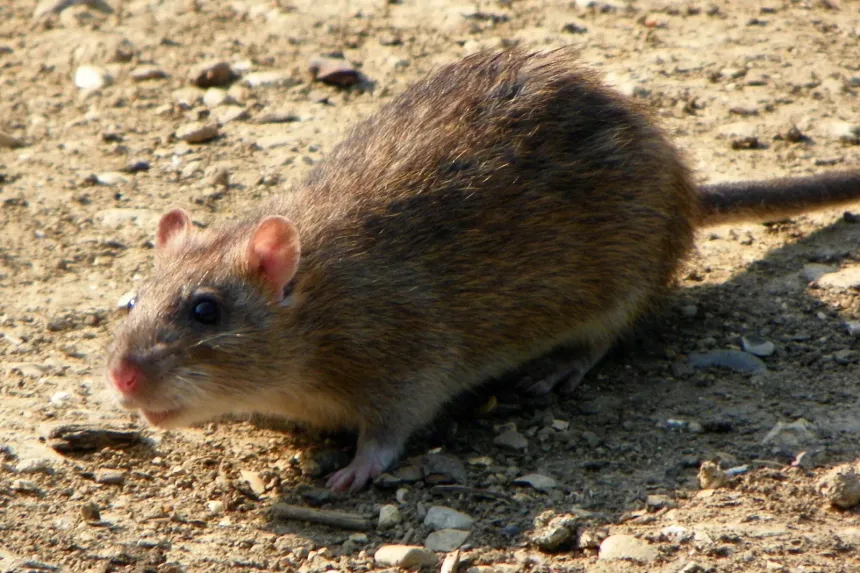
The Norway rat is the big, heavy brown rat of cities and suburbs that digs burrows along foundations and comes into homes at ground level: basements, crawl spaces and garages. It’s a serious pest that contaminates food, gnaws through wood, plastic and wiring, and can spread leptospirosis and rat-bite fever. The one thing to do: seal every gap of 1/2 inch or more with metal or mortar and set rat-size snap traps along the walls.
This page covers how to identify a Norway rat, tell it from a roof rat or a mouse, and where it lives. It rests on UC IPM, NC State Extension and CDC guidance.
How to Identify a Norway Rat: Stocky, Blunt Nose, Short Tail
- Large and robust: 7 to 18 ounces as an adult, so the big ones are close to a pound (UC IPM).
- Blunt muzzle and small ears that don’t reach the eyes when folded forward.
- Tail shorter than the head and body: pulled back over the body, it reaches only to the middle of the skull. It’s scaly, dark above and pale below.
- Coarse brown to gray fur, with a mostly gray belly.
- Droppings: about 3/4 inch, capsule-shaped with blunt ends.
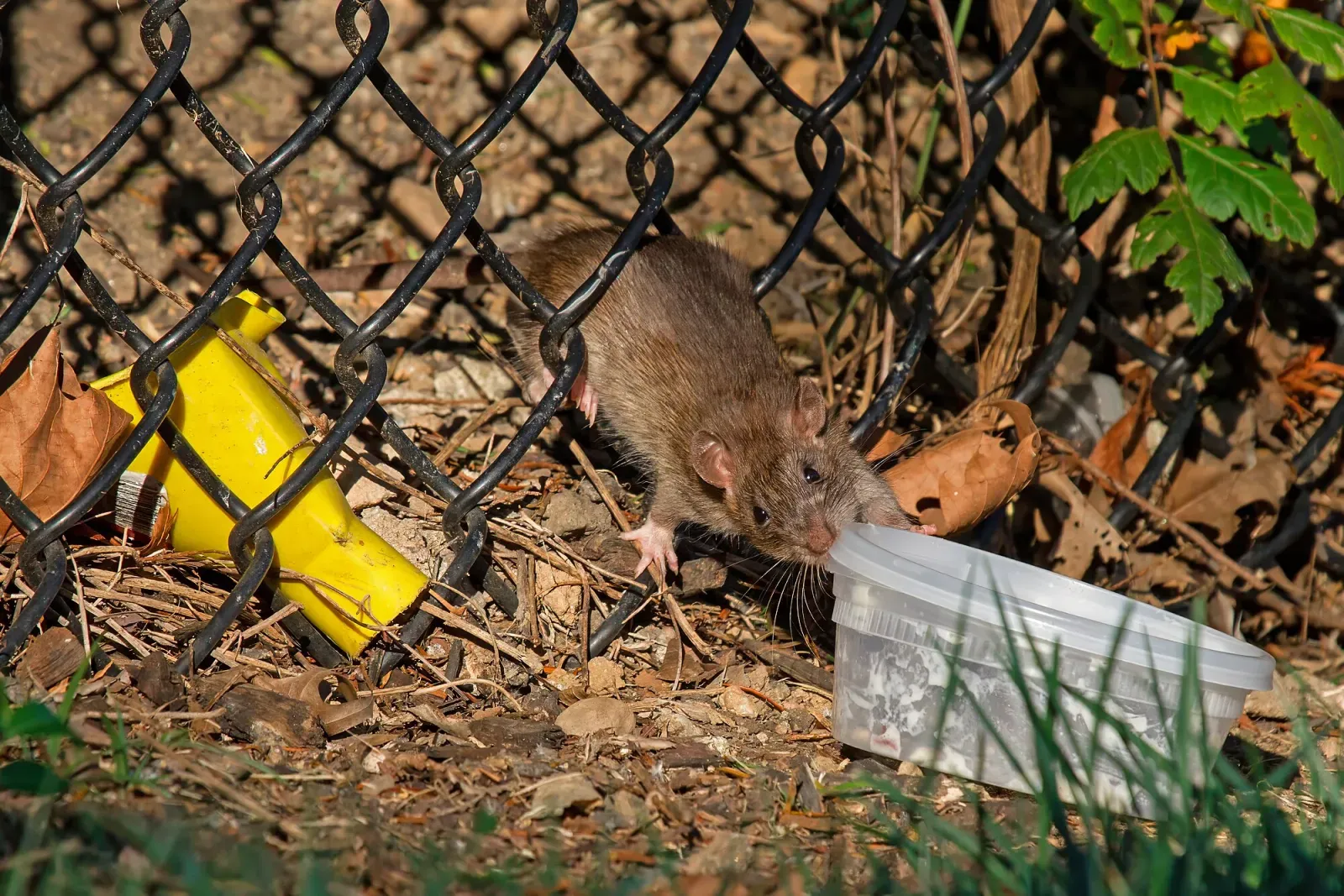
A Norway rat by a fence and trash, where they feed and burrow. Photo: Chuck Homler d/b/a Focus On Wildlife (CC BY-SA 4.0), via Wikimedia Commons.
Norway Rat vs. Look-Alikes: Tail and Ears
| Animal | How it differs | How to tell |
|---|---|---|
| Norway rat | Heavy, blunt nose, small ears | Tail shorter than body; droppings blunt-ended |
| Roof rat | Slender, pointed nose, big ears | Tail reaches past the snout; droppings 1/2 inch, pointed |
| House mouse | Far smaller, small head and feet | Droppings about 1/4 inch |
| Pack rat (woodrat) | Native rat of wild areas | Furry tail, not scaly |
A young Norway rat is the one most often mistaken for a mouse: it has a big head and big feet for its body (UC IPM). If you only have droppings, compare them in mouse poop vs. rat poop, or start with the mouse vs. rat guide.
Where Norway Rats Live: Burrows and Ground Floors
Outdoors they dig burrows along foundations, under slabs, decks, rubbish and woodpiles, and in gardens; active burrows are about 2 to 4 inches across and worn smooth. When they move indoors they usually stay in basements and on the ground floor, and when both species share a building, roof rats take the upper floors (UC IPM).
They prefer cereal grains, meat, fish and nuts but eat whatever is easy, so garbage, compost, pet food and bird seed draw them in. Nightly foraging runs 100 to 500 feet from the nest, less when food is close.
Are Norway Rats Harmful? Yes
They contaminate food and surfaces, gnaw wood, plastic and even soft metals like copper and lead, chew wiring and gas lines, and can undermine slabs and walkways with their burrows (UC IPM). The most common rat-borne diseases are typhus, leptospirosis, food-borne illness such as salmonella, and rat-bite fever; rats don’t carry rabies.
How to Confirm It’s a Norway Rat
- Measure droppings: about 3/4 inch with blunt ends; a rat leaves 30 to 50 a day (NC State).
- Look for burrows in soil next to the foundation, under bushes and beneath garbage cans or compost.
- Check walls and pipes for rub marks: dark, greasy smears left by oily fur along regular routes.
- Note where the noise is: at ground level or in the basement at night, not overhead. Droppings and rubs are covered on the pest droppings page.
What to Do: Seal Low, Trap Along Walls
Seal gaps of 1/2 inch or more with steel wool or copper mesh covered with caulk, hardware cloth, sheet metal or concrete; rats chew through foam, plastic and wood. Set rat-size snap traps, not mouse traps, close to walls, trigger end nearly touching the wall, about 10 to 20 feet apart, and expect rats to avoid new traps for several days. Keep any poison bait outdoors in tamper-resistant stations, where rules allow. The full plan, with costs, is in how to get rid of rats in the house. For other pests, browse all pest guides.
Often confused with
Sources
- Rats (UC IPM)
- Surveillance and Management of Common Structure-Invading Rats (NC State Extension)
- Rodent Control (CDC)
Last reviewed Oct 5, 2026.