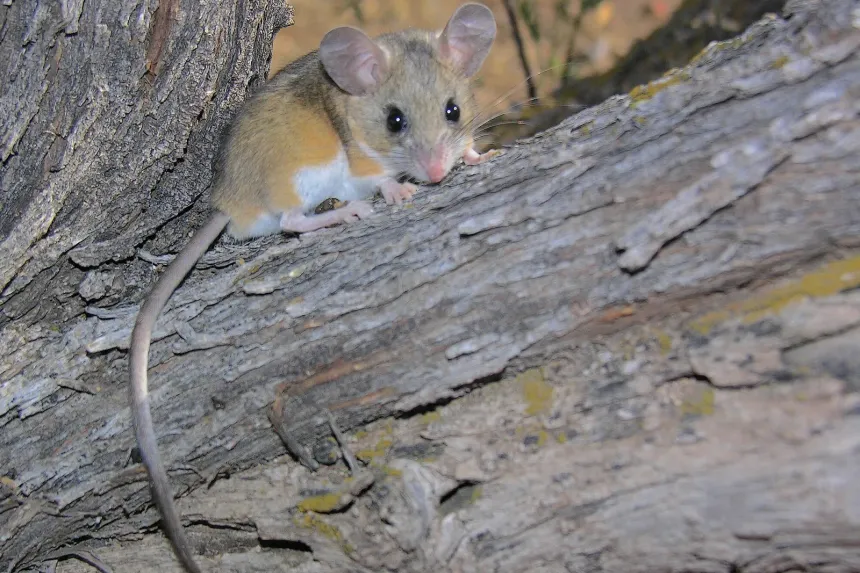
- Scientific name
- Peromyscus maniculatus
- Size
- Body about 3–4 in, plus a tail about as long
- Color
- Brown or gray back, bright white belly and feet
- Found in
- Cabins, sheds, garages, barns, rural and wooded homes
- Harmful?
- Yes. Main carrier of hantavirus (HPS)
- Active
- Moves indoors in fall and winter, at night
- DIY cost
- $57–71 in suppliesSee the plan
- Pro quotes
- $1,400–$3,000 to trap and seal (53 shared quotes)See quotes
What to do
The deer mouse is the big-eyed, white-bellied mouse that moves into cabins, sheds, garages and rural homes when the weather turns cold. It’s the riskiest mouse in North America because it’s the main carrier of Sin Nombre hantavirus, so cleaning up after it needs extra care. The one thing to do: seal gaps wider than 1/4 inch before fall, and never sweep or vacuum its droppings.
This page covers how to identify a deer mouse, tell it from a house mouse and clean up after it safely. It rests on UC IPM and CDC guidance.
How to Identify a Deer Mouse: White Belly, Two-Tone Tail
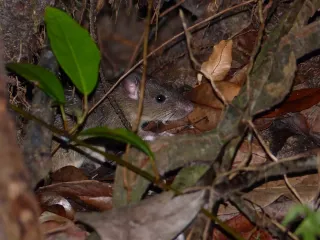
- Two-tone coat: brown to gray on the back, with a clean line to a bright white belly, legs and feet.
- Two-tone tail: dark on top, white underneath, with short hair. UC IPM calls the tail the easiest way to tell it from a house mouse.
Deer Mouse vs. Look-Alikes: Check the Tail
| Animal | How it differs | How to tell |
|---|---|---|
| Deer mouse | Sharp two-tone coat, big eyes and ears | Tail dark on top, white below, furred |
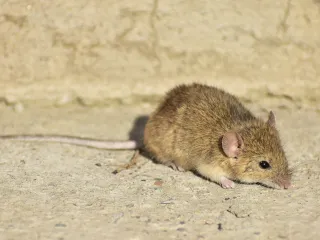
| House mouse | Gray-brown all over, belly only a little paler | One-color, nearly hairless tail; musky smell |
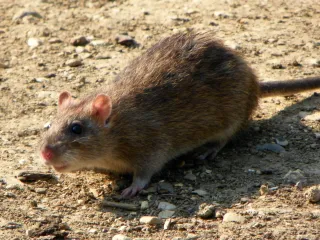
| Young Norway rat | Big head and feet for its body | Thicker tail; droppings 1/2 inch or longer |
Nests and droppings of deer mice and house mice look alike, so the tail and the food caches are the better clues. UC IPM notes a musky odor is typical of house mice. Not sure it’s a mouse at all? See the mouse vs. rat guide.
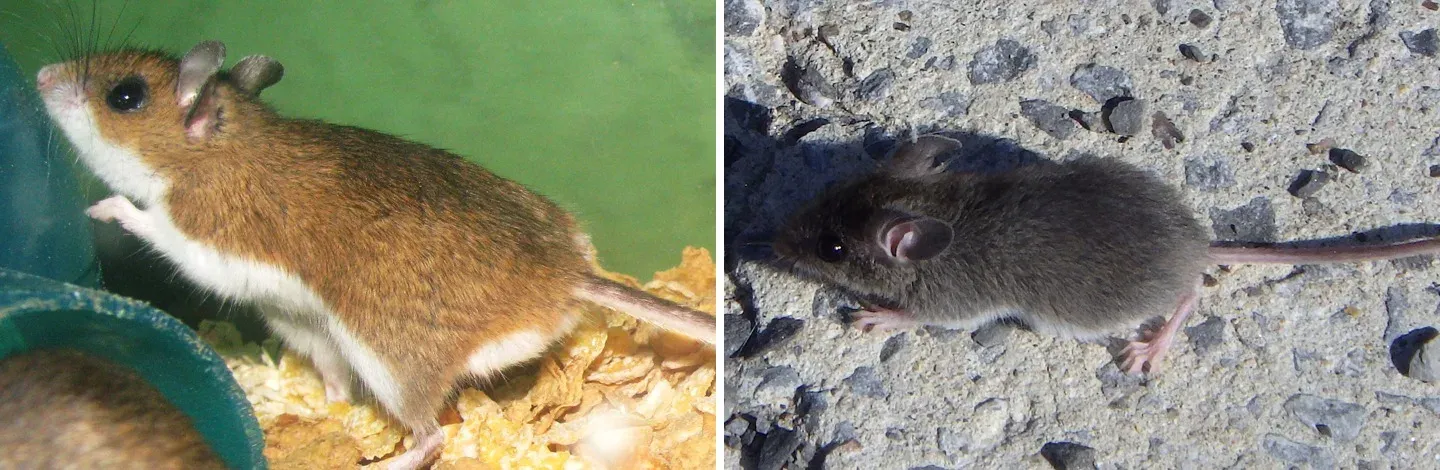
Left: deer mouse, photo by 6th Happiness (CC BY-SA 3.0). Right: house mouse, photo by Ahunt (CC0). Both via Wikimedia Commons.
Where Deer Mice Turn Up: Rural, Closed-Up Buildings
Deer mice prefer forests, grasslands and farm fields, and UC IPM says they aren’t normally found in towns unless fields, woods or large parks are nearby. They slip into vacated homes, seasonal cabins, sheds, barns, garages, campers and crawl spaces, especially buildings that sit closed for weeks. Inside they nest in stored furniture, boxes, drawers and insulation, and shred upholstery, mattresses and paper for nest material. They’re active at night and don’t hibernate.
Are Deer Mice Harmful? Yes, Because of Hantavirus
People catch hantavirus by breathing in dust from deer mouse droppings, urine or nests, usually while cleaning or disturbing them. It’s rare: the CDC counted 890 U.S. cases from 1993 through 2023, 94% of them west of the Mississippi River. But hantavirus pulmonary syndrome is serious, with a fatality rate of about 36% (UC IPM), and there’s no evidence the North American virus spreads from person to person.
Clean up wet, not dry. Air the space out for at least 30 minutes, wear rubber, latex, vinyl or nitrile gloves, and soak droppings and nests with disinfectant or 1 1/2 cups of bleach per gallon of water. Let it soak for 5 minutes, or as long as the disinfectant label says (CDC), then wipe up with paper towels and bag everything. The full method is in how to clean mouse droppings.
How to Confirm It’s a Deer Mouse
- Check the tail: two-tone and furred means deer mouse; one color and nearly bare means house mouse.
- Look at the belly and feet of a trapped mouse, without touching it bare-handed: bright white on a deer mouse.
- Look for caches of acorns, seeds or nut shells near nests; deer mice hoard far more than house mice (UC IPM).
- Consider the setting: a rural home or a cabin that sat closed points to deer mice; a city apartment points to house mice. Compare droppings on the pest droppings page.
What to Do: Seal, Snap-Trap, Clean Wet
Seal openings wider than 1/4 inch with metal or concrete; steel wool works as a temporary plug, while plastic, rubber and foam get chewed through (UC IPM). Set snap traps baited with peanut butter, no more than about 10 feet apart along walls, trigger toward the wall; a large population may need a dozen or more. Skip glue boards and live-catch traps: trapped deer mice urinate and defecate as they struggle, which raises hantavirus exposure. The full plan is in how to get rid of mice. For other pests, browse all pest guides.
Often confused with
Sources
Last reviewed Oct 5, 2026.
_(15722414288).jpg)