How to Keep Mice Out of Your Car and Engine Bay
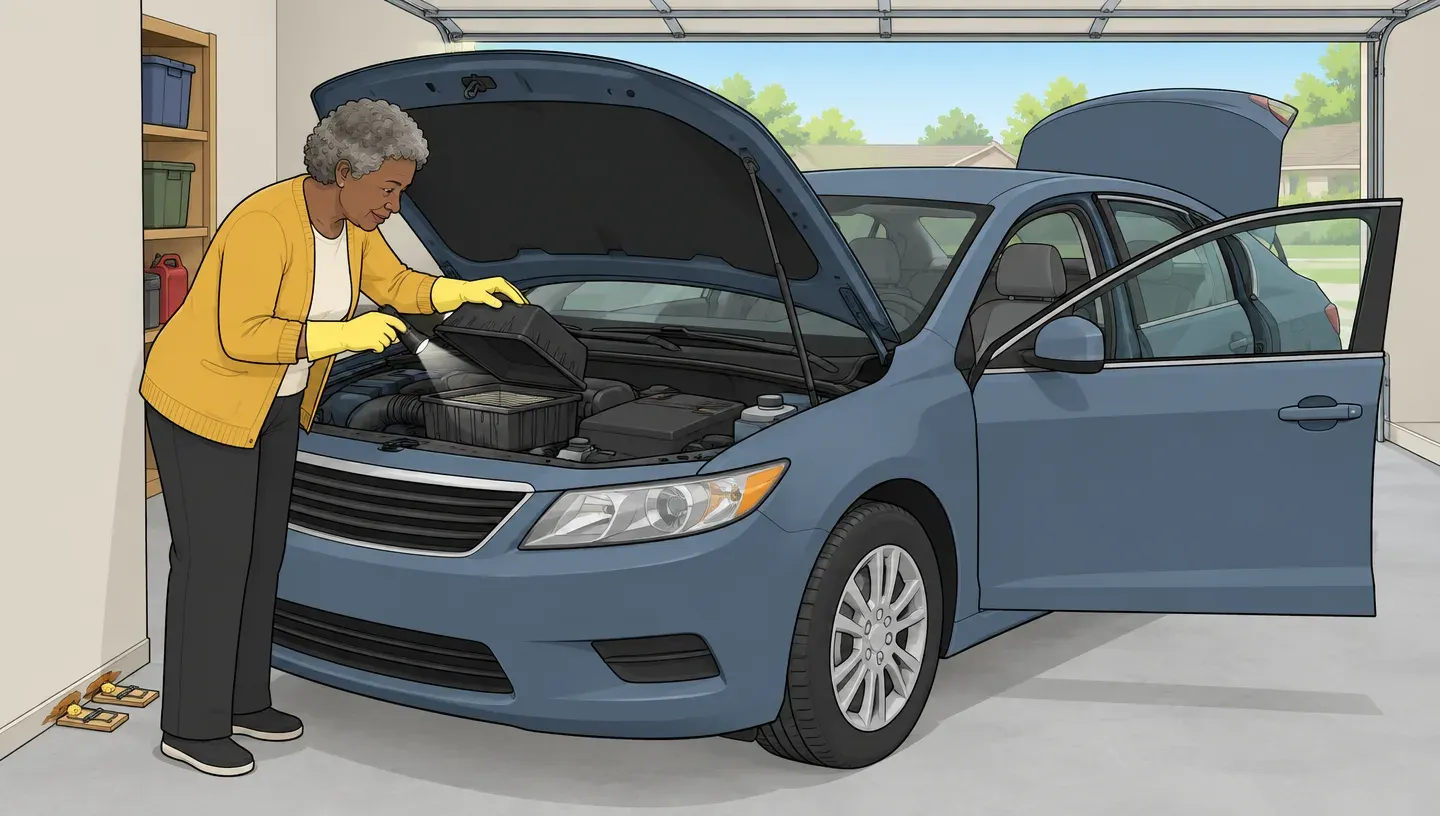
Illustration: the car aired out with the air filter box open, and two snap traps against the wall beside the front tire.
To keep mice out of your car, take away what draws them: food and wrappers in the cabin, and trash, birdseed or clutter near where you park. Drive it often, set snap traps around it, and check the air filter when it’s been sitting. Mothballs and ultrasonic gadgets aren’t reliable fixes.
Cost: about $14–27 in supplies. Difficulty: moderate. Call a pro if mice have chewed wires down to bare metal, a warning light comes on after you find signs of them, or nests fill the heater ducts or blower fan.
This guide covers the car: whether it’s safe to drive, trapping, cleanup, prevention and what chewed wires cost. We haven’t tested these methods ourselves; this rests on CDC, Consumer Reports, AAA and University of California guidance and September 2026 list prices. Signs in the house too? Start with how to get rid of mice.
Saw a mouse or droppings in your car tonight? Take out all food and wrappers, then open the doors, trunk and hood for 20 minutes. Don’t vacuum or sweep. With gloves on, soak droppings with a spray labeled “disinfectant” (not bleach on seats or carpet), wait 5 minutes and wipe up with paper towels. Keep the fan off until you’ve checked the cabin air filter, usually behind the glovebox.
Rodent Repellent for Cars: What Actually Works?
On its own, not much. Traps and a clean parking spot do the real work; everything else is a backup at best.
| Method | Works? | Cost | Main limitation |
|---|---|---|---|
| Snap traps around the tires | Yes | $13.74 for 12 | Move any trap by a tire before you drive |
| Driving the car often | Yes | Free | Mice move into cars that sit (Changlu Wang, via Consumer Reports) |
| Peppermint pouches or sprays | Backup at best | — | Scent wears off; peppermint oil can poison cats (Pet Poison Helpline) |
| Mothballs | Skip | — | Weak, label-only use, smell lingers in a closed cabin (NPIC) |
| Ultrasonic repellers | Skip | — | Little evidence they drive mice out (University of California) |
| Capsaicin rodent tape | Claimed, not proven | About $57 | Not tested for whether it stops chewing (Consumer Reports) |
| Leaving the hood up, lights under the car | Claimed, not proven | Free | No health agency, university guide or study we found backs them |
| Dryer sheets, soap, predator urine | Skip | — | Rodents get used to the smell |
More in do mouse repellents actually work and do mothballs keep mice away.
Is It Safe to Drive a Car With Mice in It?
Usually, yes, if three checks come back clean:
- No bare wires. Shiny copper strands where the coating was chewed off mean the car might not be safe to drive (Consumer Reports).
- A clean engine air filter. After a car has sat, the CDC says to inspect air intakes and filters before starting it. A nest there can keep it from starting or make it run poorly.
- A clean cabin air filter. It’s usually behind the glovebox; check it before you run the fan, so you don’t blow dust from droppings into the cabin.
Hantavirus? It’s rare: the CDC counts 890 U.S. cases from 1993 through 2023, and the main carrier is the deer mouse, common where cars park near fields and woods. House mice aren’t known carriers, but soak, then wipe either way.
Why Mice Chew Some Cars More Than Others
“The longer you park a car without driving it, the more likely rodents move in,” rodent researcher Changlu Wang told Consumer Reports, so a stored second car is the classic target. Crumbs in the cabin and birdseed or trash near the spot give mice a reason to stay. Soy-based wire insulation is often blamed, but in a study Consumer Reports describes, soybean oil made no meaningful difference.
Where Do Mice Nest in a Car?
The engine bay is the most common spot: beside the battery, near the wiper motors, under the air intake hoses, in the air filter box and in the hood insulation. Also check the ducts, spare tire well, ceiling lining, glovebox and seats.
They get in through rust holes, cable openings, side vents and ducting. Signs: droppings, chewed wires or hoses, shredded paper or leaves in ducts, a musky smell, and warning lights or rough running.
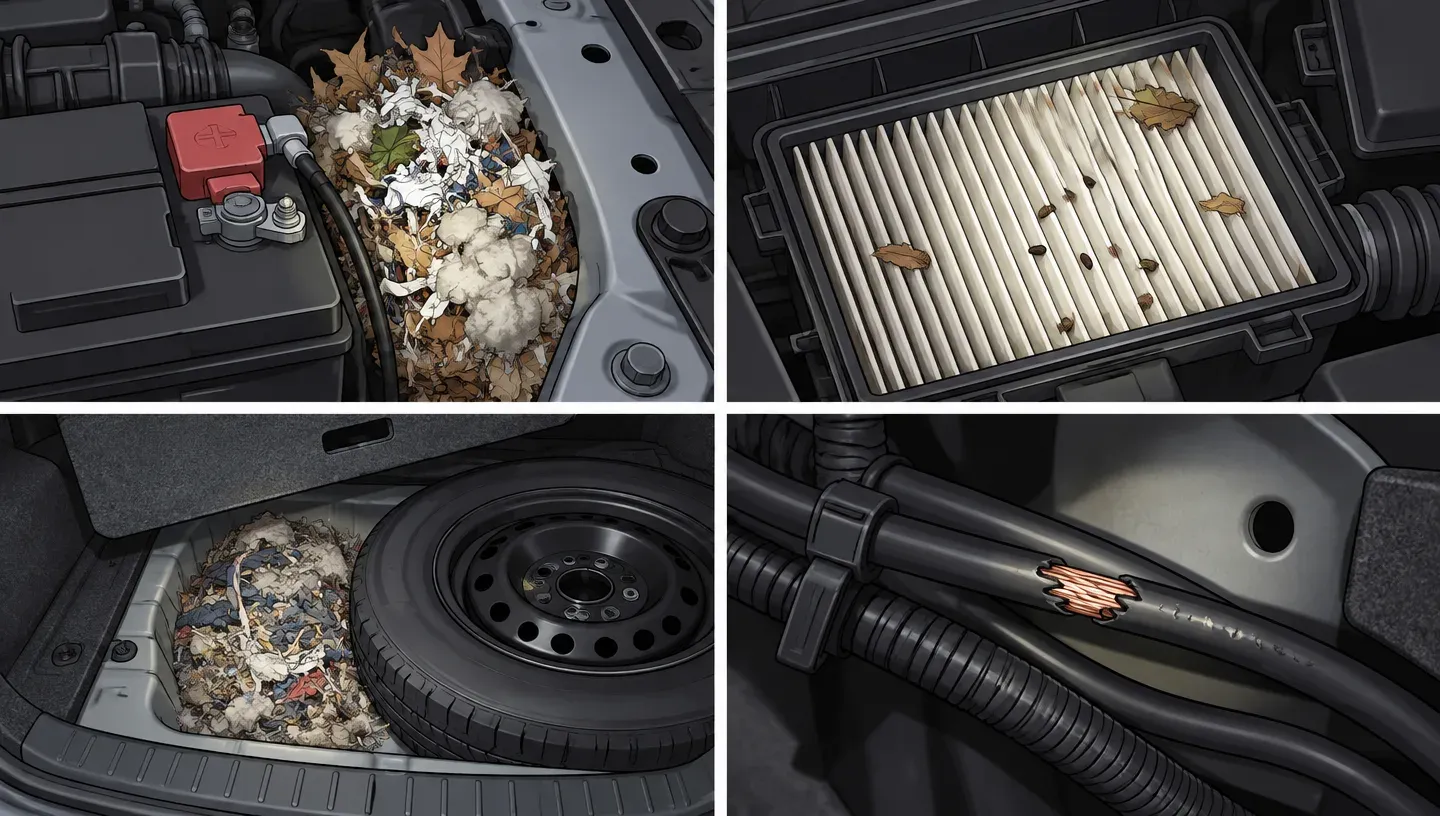
Illustration: a nest beside the battery, droppings on the air filter, a nest in the spare tire well and a chewed wire.
Step 1: Air Out the Car and Inspect It
Air it out for 20 minutes in open air, then put on gloves and a long-sleeved shirt.
Look, don’t reach. With a flashlight, check the spots above without reaching in. Photograph any chewing; a mechanic or insurer will want it.
Disconnect the battery before reaching into the engine bay (CDC): engine off, black (−) cable off first, then red (+); red goes back on first. Not comfortable with a wrench? Leave the engine bay to a mechanic.
Step 2: Set Snap Traps Around the Car
Snap traps in the garage or around the car are the easiest, most effective way to stop mice before they reach it, Consumer Reports says.
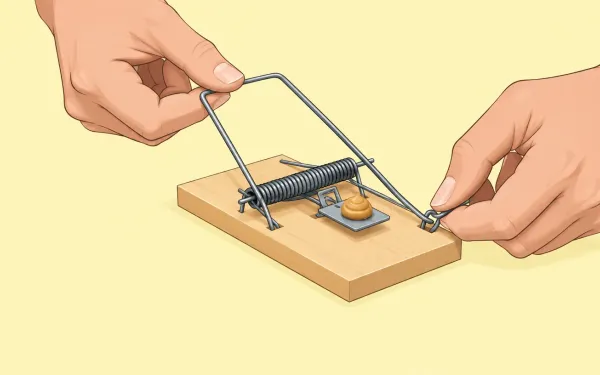
Set pairs by the tires. Each trap at a right angle to a wall or tire, bait end touching it, two side by side 1 to 2 inches apart. A pair by a front tire and a pair by a rear tire is four traps.
Bait small. A small dab of chunky peanut butter, not glue or live traps, which scare rodents into urinating.
Count them. Keep traps out of reach of kids and pets, and move any by a tire before you drive. Check daily for at least 15 days (CDC); a week with no catches or new signs means they’re gone. Setup details: how to set a mouse trap.
Skip poison. Poisoned mice often die inside the structure (University of California), and one dead inside a door panel or duct is hard to reach (why we skip poison).
No Garage? Parking Outside or in a Shared Lot
Traps work outdoors too. With kids, pets or neighbors nearby, set them in the locked car’s footwell or trunk instead. Close the windows all the way; AAA says even a crack lets mice in. A car cover that seals around the bottom helps. Renting? Tell the property manager in writing about overflowing bins near your spot.
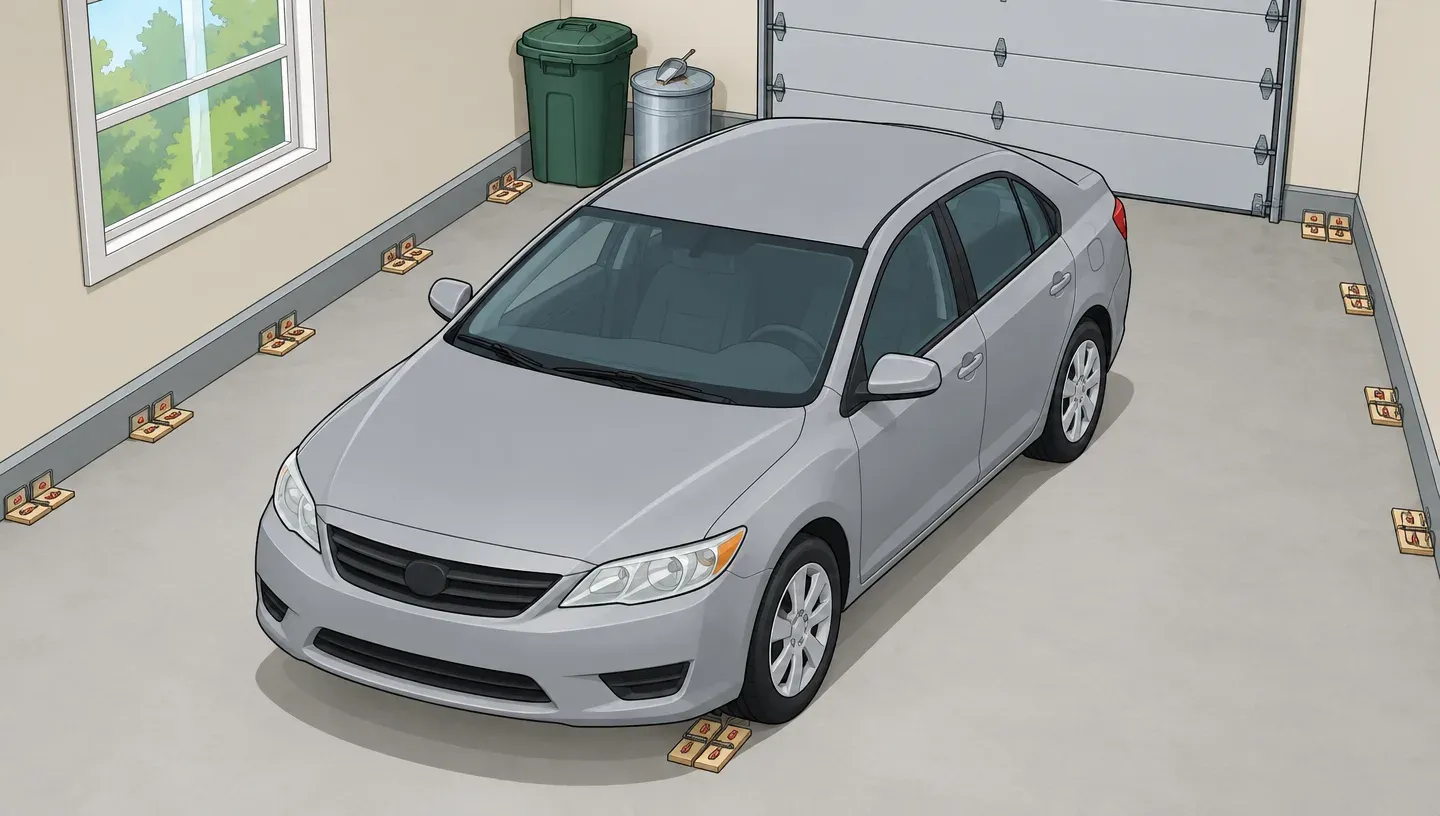
Illustration: snap traps in pairs along the wall by the tires, a lidded trash can and birdseed in a metal bin.
Step 3: Clean Out Nests and Droppings
Use the soak-then-wipe method for every nest, dropping and urine spot, and no vacuum, broom or pressure washer until everything is disinfected.
Disinfectant, not bleach, on upholstery. Bleach can ruin seats and damage car parts, so pick one labeled safe for fabric or plastic. Gloves are the must; Consumer Reports also suggests a mask.
Replace a nested filter. If the air intake has nest material, throw out the nest and the filter. Nests in hoses, ducts or blower fans are a mechanic’s job; mention hantavirus.
Finish up. Bag nests and paper towels, disinfect again, wash your hands and reconnect the battery. Full method: cleaning mouse droppings. A lingering urine smell means soaked spots remain (mouse urine smell).
How to Keep Mice Out of Your Car for Good
Clean up where you park. Park away from trash cans, gardens, woods and piles of cardboard; keep birdseed in the house and animal feed in metal or thick plastic bins with tight lids. Clear snack wrappers from around kids’ seats every few days (what attracts mice).
Seal the garage. Steel wool and caulk for small holes, hardware cloth or metal sheeting for bigger ones, not foam or plastic alone (CDC). Keep the door closed and check its seals.
Protect the engine bay. Move the car regularly, and honk before you start it to scare off a mouse under the hood. Ask a mechanic about metal mesh around the wiring and intake openings, clear of moving parts and the exhaust.
Which Plan Fits Your Situation
| Your situation | Start with | Then |
|---|---|---|
| Car sits for weeks | Drive it often; check filters before starting | Traps by the tires |
| No garage, shared lot | Traps inside the locked car | Windows fully closed, sealed car cover |
| Kids or pets around | Traps in the trunk or footwell | Count and remove them before driving |
| Bare wires or a warning light | Have it checked before driving | A mechanic |
What Chewed Wires Cost, and Will Insurance Pay?
Replacing a chewed engine wiring harness can cost thousands of dollars in the worst case, Consumer Reports says. Ask for a written estimate that notes the rodent damage, with photos. Comprehensive coverage usually pays for rodent damage minus your deductible; GEICO says liability-only policies don’t, and slow damage that upkeep could have prevented usually isn’t covered.
| Item | Typical cost |
|---|---|
| 12 or 24 wooden snap traps | $13.74 or $27.48 |
| Starting kit: 12 traps and 50 gloves | About $22 |
| Cabin air filter, swap it yourself | $15–$40 |
| Cabin air filter, shop swap | About $50 more |
| Capsaicin rodent tape, 20 m | About $57 |
| New engine wiring harness | Can run thousands |
Traps and gloves: Victor and Target list prices, September 30, 2026, before tax. Filter: Allstate, citing CARFAX. Tape and wiring: Consumer Reports (August 2026).
Before You Start: A Quick Checklist
- Clear every wrapper and crumb out of the cabin.
- Open the doors, trunk and hood for 20 minutes before you touch anything.
- Check both air filters before starting the car or running the fan.
- Photograph chewed wires for a mechanic or insurer.
- Set two pairs of snap traps by the tires, and count them.
- Move trash, birdseed and pet food away from where you park.
When to Call a Mechanic or a Pro
- Bare wires, warning lights or rough running: chewed wiring needs a professional check.
- Nests in ducts, hoses or the blower fan: parts may need replacing.
- Cleanup feels like too much: Consumer Reports suggests a local detailer.
- Mice in the house too, or still catching after 15 days of trapping: the CDC suggests professional help.
Common questions
Remove reachable nests (soaked first, battery off), replace a nested air filter, set traps by the front tires and drive daily for a week or two.
They can ride along; house mice often reach businesses in delivery vehicles, University of California experts note. Keep trapping until you’ve gone a week with no catches.
A foul, musty odor in the trunk or under the seats can mean a mouse died inside (AAA). Soak it with disinfectant for 5 minutes, then bag it with gloves on. Can’t find it? Follow our dead mouse smell steps.
Sources and further reading · 10
- CDC: Clean Up, Trap Up, Seal Up and About Hantavirus.
- Public Health – Seattle & King County: Cleaning Rodent-Infested Vehicles.
- UC IPM: House Mouse and UC ANR: Debunking Pest Myths.
- NPIC: Mothballs FAQ and Regulation.
- Pet Poison Helpline: Essential Oils and Cats.
- Consumer Reports: How to Protect Your Car From Rodents.
- GEICO: Does Car Insurance Cover Rodent Damage?
- AAA: How to Keep Mice Out of Your Car and AAA Club Alliance: A Guide to Removing Your Car Battery.
- Allstate: Car Cabin Air Filter.
- CDC: Hantavirus Cases. Nebraska Extension: House Mice.