- Size
- Faint in one cupboard to a whole room
- Looks like
- Musty, ammonia-like, oily, rotten or sharp
- Where you find it
- Cabinets, walls, attics, basements, closets
- Harmful?
- The smell itself is not dangerous; its source may be
- When
- Often worse in warm, humid weather
What to do
A musky, ammonia-like smell in cabinets usually means mouse or rat urine, and a sweet, rotten smell that grows for days often means a rodent died in a wall. An oily, musty kitchen smell points to a large cockroach infestation. The one thing to do: follow the smell to its strongest spot, then look for droppings there.
This page matches common pest smells to their likely source and says how to find it. Smell only narrows it down; the sources here are the CDC, the University of Kentucky, NC State and UC IPM.
What’s That Smell? Match the Smell and the Spot
| Main clue (smell) | Where it’s strongest | Likely source | Next step |
|---|---|---|---|
| Musky, stale, ammonia-like | Inside cabinets, drawers, along baseboards | Mouse or rat urine | Mouse urine smell |
| Sweet, rotten, getting stronger for days | One spot on a wall or ceiling | A dead rodent in a wall, attic or crawl space | Find and remove it; see below |
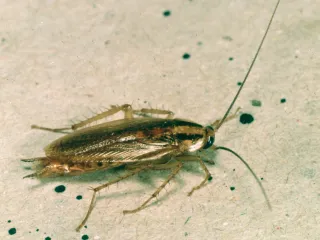
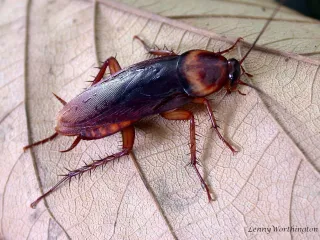
| Oily, musty, “dirty” | Kitchens, behind appliances, under sinks | Heavy cockroach infestation | What roaches smell like |
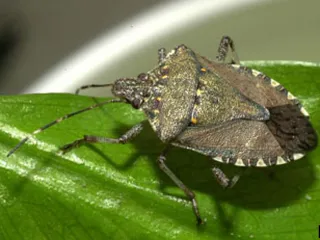
| Sharp, cilantro-like | Where a bug was crushed or disturbed | Stink bugs | Vacuum them gently instead of crushing |
| Strong ammonia | Attic, walls under the roofline | Bat droppings and urine under a roost | Don’t disturb it; see below |
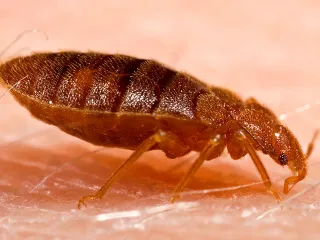
| Sweet, musty (“buggy”) | Bedroom, mattress | Only very heavy bed bug infestations | Inspect the bed, don’t rely on smell |
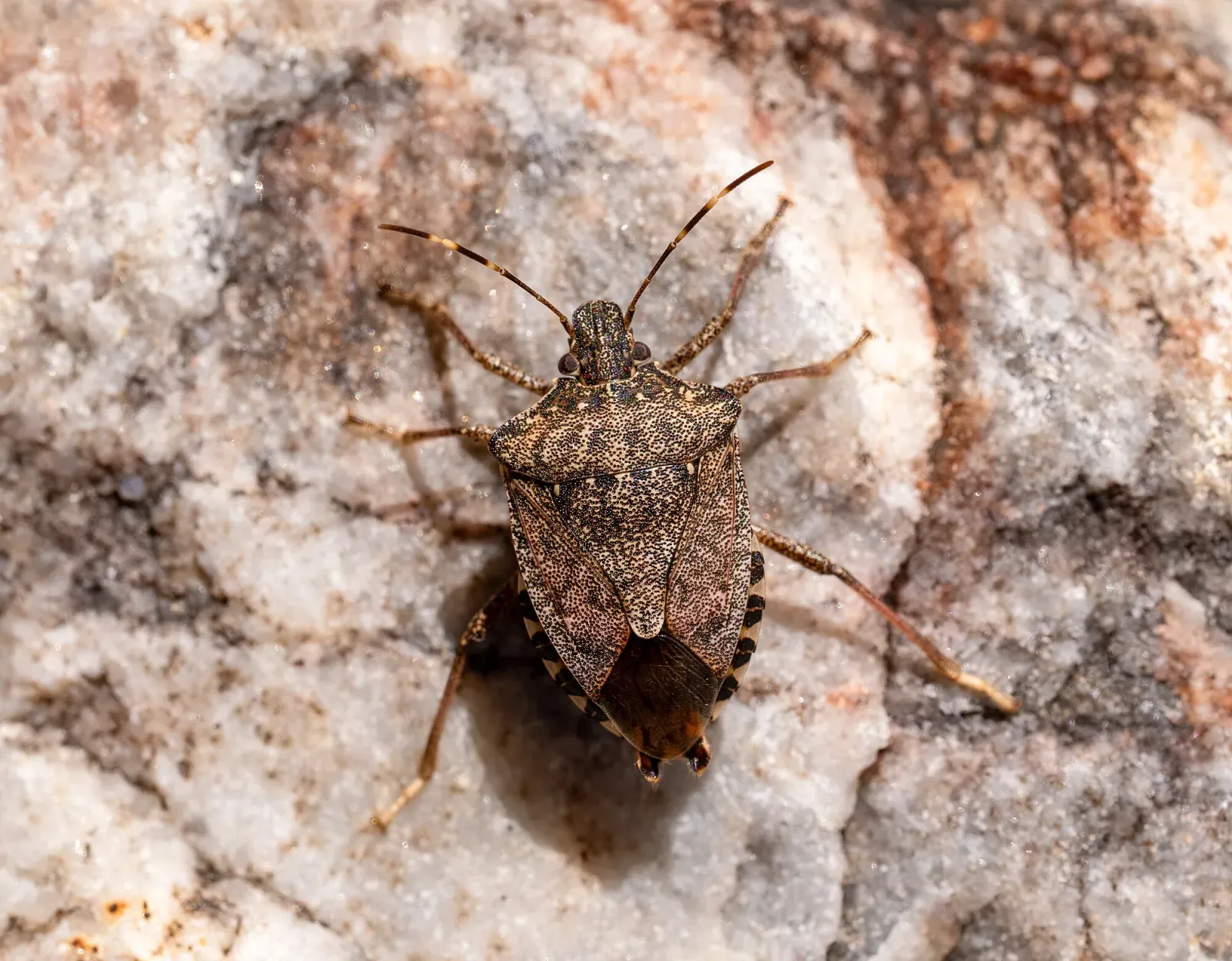
A brown marmorated stink bug. Crushed or startled, it gives off the sharp, cilantro-like smell. Photo: Rhododendrites (CC BY-SA 4.0), via Wikimedia Commons.
Rodent Urine Smell: Strongest in Closed Cabinets
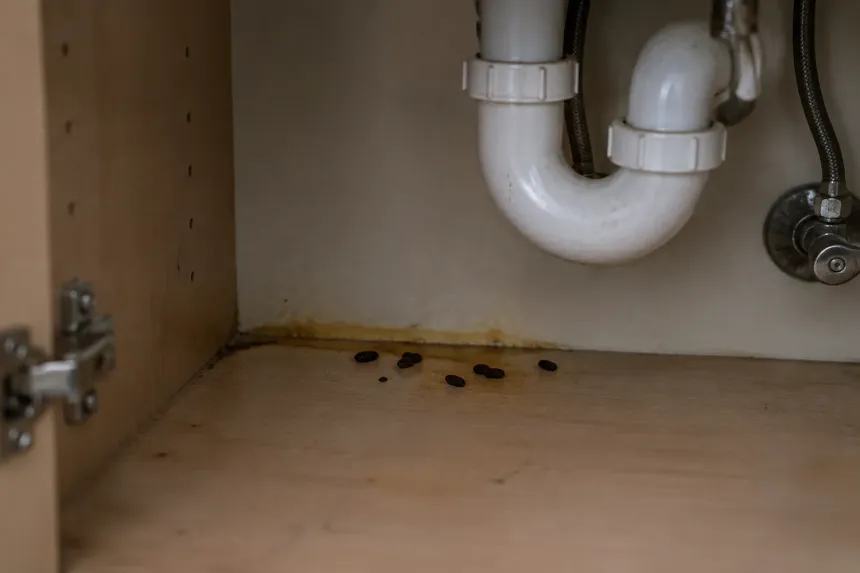
Mice and rats mark their runways with urine, so the smell builds up in closed spaces: inside lower cabinets, under sinks, in drawers and in the insulation they travel through. It’s usually strongest where you also find droppings. Clean soiled areas the way the CDC advises: gloves, disinfectant or bleach solution, and no dry sweeping or vacuuming.
Main clue: a musky, ammonia-like smell strongest inside closed cabinets, with droppings nearby.
Dead Animal Smell in a Wall: Sweet, Rotten, Then Fades
A rodent that dies inside a wall, ceiling or crawl space gives off a sweet, rotten smell that builds over several days and fades as the body dries out. Flies gathering at one spot, or a stain on the drywall, can show where it is. Snap traps, which hold the catch where you can find it, avoid this problem better than poison baits; dead mouse smell covers removal.
Main clue: a sweet, rotten smell at one spot that grows for days, sometimes with flies gathering there.
Cockroach Smell: Oily and Musty Means Many
Cockroaches leave an unpleasant odor where many of them live, according to the University of Kentucky. It’s oily and musty and gets stronger as the infestation grows, so a noticeable roach smell usually means many hiding nearby.
Main clue: an oily, musty smell in the kitchen, behind appliances or under sinks.
Stink Bugs and Bats: Sharp Smell, Strong Ammonia
Stink bugs release a foul-smelling chemical when alarmed or crushed, and many disturbed bugs in a closed room can be overwhelming (NC State Extension). Bat droppings and urine that build up under a roost create odors too; UC IPM warns not to handle bats or breathe dust from their droppings.
Main clue: a sharp, cilantro-like smell where a bug was crushed means stink bugs; strong ammonia under the roofline means a bat roost.
Can You Smell Bed Bugs? Rarely
The University of Kentucky notes that the “buggy” odor is seldom noticeable except in extreme infestations and shouldn’t be relied on. Look for the bugs, dark spots and shed skins instead.
Main clue: none you can rely on. Look for bugs, dark spots and shed skins along mattress seams.
How to Confirm the Source
- Follow the smell to where it’s strongest: cabinets, under appliances, closets and the attic.
- Look nearby for droppings, grease marks and gnawed holes.
- Watch for flies collecting at one spot on a wall, which can mark a dead animal.
- Rule out non-pest causes: a dry drain trap, a leak and mold, or gas (leave the house and call the gas company if you smell gas).
What to Do Next: Clean the Spot, Then Deal With the Pest
Once you know the source, open its page in the table above. For rodents, the plan to get rid of mice covers trapping and sealing so the smell doesn’t come back.
What could have caused it
Sources
- Clean Up After Rodents (CDC)
- Cockroach Elimination in Homes and Apartments (University of Kentucky Entomology, EF614)
- Bed Bugs (University of Kentucky Entomology, EF636)
- FAQs: Brown Marmorated Stink Bug (NC State Extension)
- Bats (UC IPM)
Last reviewed Oct 4, 2026.