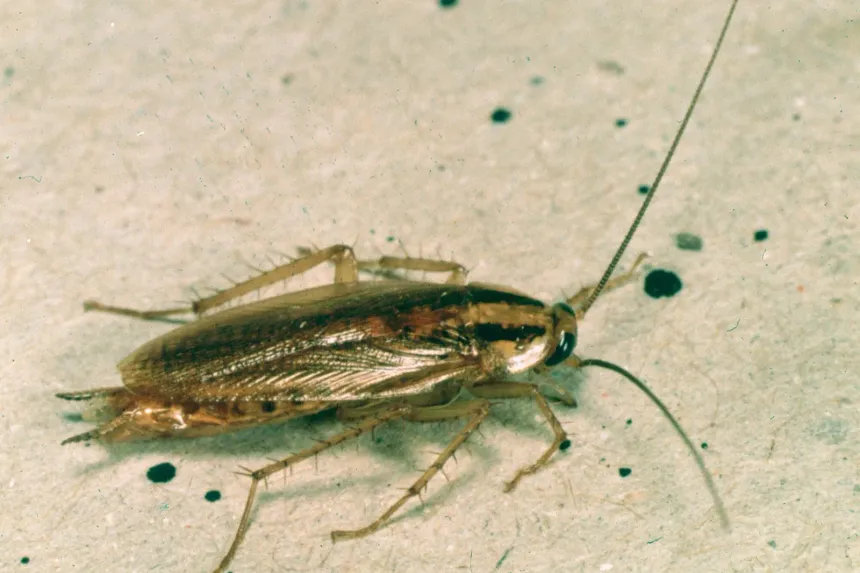
- Scientific name
- Blattella germanica
- Also called
- German roach, croton bug
- Size
- About 1/2 inch (13 mm)
- Color
- Light brown to tan, two dark stripes on the shield behind the head
- Found in
- Kitchens and bathrooms, near warmth, water and food
- Harmful?
- Yes. Allergens trigger asthma; can contaminate food
- Active
- Year-round indoors, mostly at night
- DIY cost
- $24–54 in suppliesSee the plan
- Pro quotes
- $450–$1,500 for a full treatment
What to do
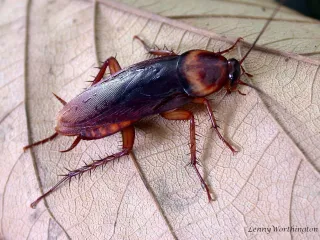
The German cockroach is the small tan roach with two dark stripes behind its head, and it’s the one most people find in a kitchen. It lives its whole life indoors and breeds faster than any other pest roach, so one sighting usually means many more hiding nearby, and its droppings and shed skins are a leading asthma trigger in children. The one thing to do: put many pea-size dabs of gel bait into the cracks where they hide, and skip sprays and bug bombs.
This page covers how to identify a German cockroach, tell it from other small roaches, and why it spreads so fast. It rests on University of Kentucky, NC State Extension and UC IPM guidance.
How to Identify a German Cockroach: Two Dark Stripes
- Two dark stripes run lengthwise on the shield behind the head. This is the fastest way to tell it from other small roaches.
- Small: adults are about 1/2 inch long, light brown to tan, with wings that cover the body. They rarely fly; they run.
- Nymphs are smaller, wingless and darker, with a tan stripe down the middle of the back; more on them in baby cockroach.
- Egg case: the female carries a light beige, purse-shaped case about 1/4 inch long sticking out of her abdomen until a day or two before it hatches (UC IPM).
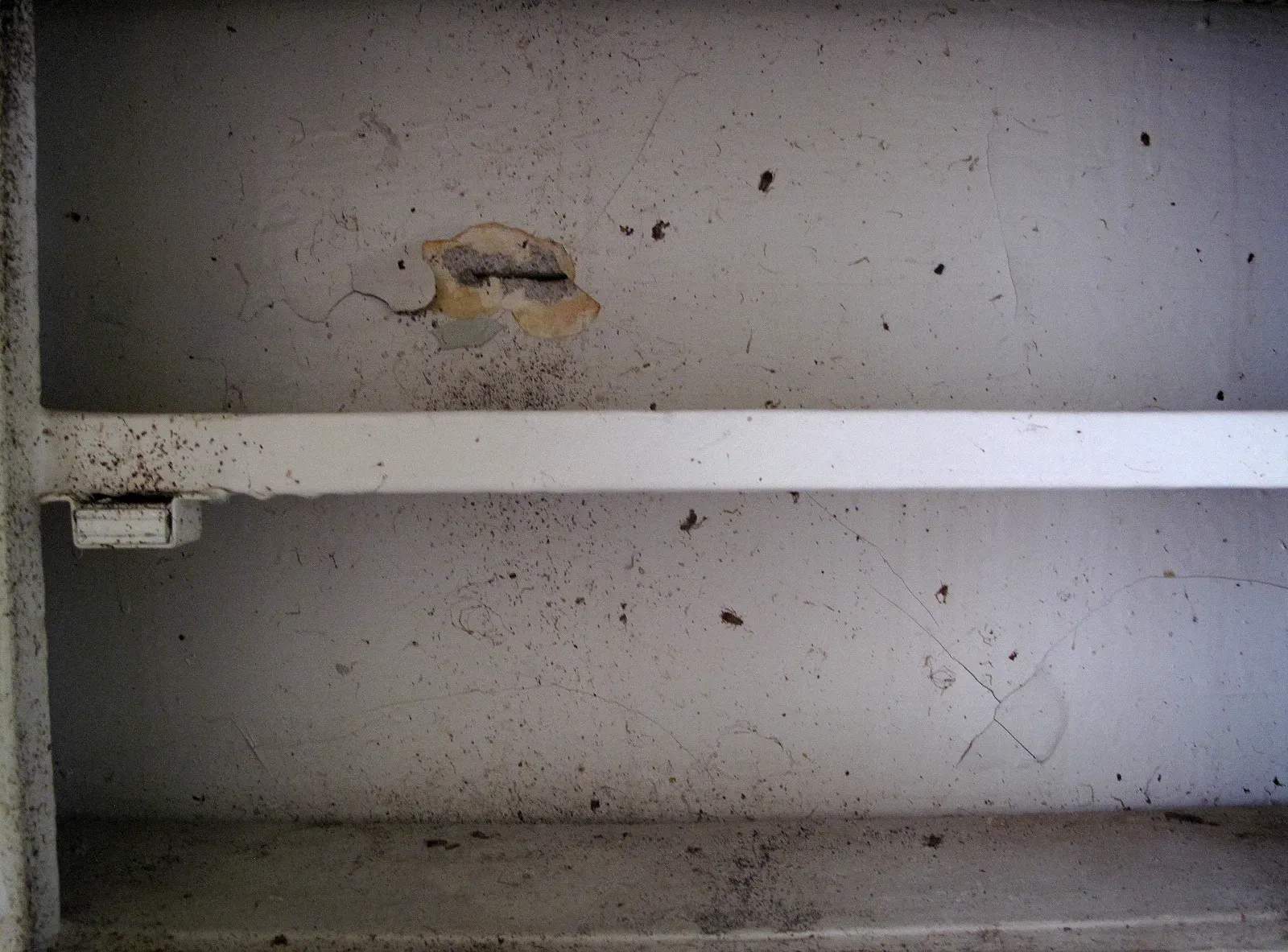
Pepper-like droppings and roaches around a wall hole inside a kitchen cabinet. Photo: Downtowngal (CC BY-SA 4.0), via Wikimedia Commons.
German Cockroach vs. Look-Alikes: Stripes or Bands
| Insect | How it differs | How to tell |
|---|---|---|
| German cockroach | About 1/2 in, tan, kitchens and baths | Two dark lengthwise stripes behind the head |
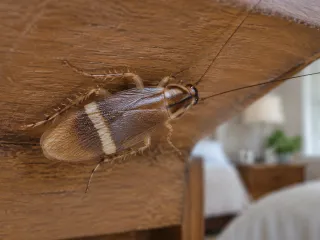
| Brown-banded cockroach | Same size, bedrooms and furniture | Two pale bands across the wings, no stripes |
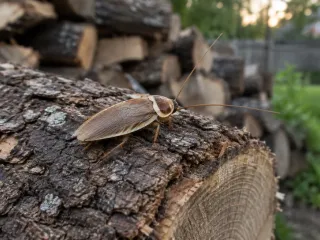
| Wood cockroach | About 1 in, comes in from outside | Pale edge on the shield; dies indoors |
| American cockroach | About 1 1/2 in, reddish brown | Pale band around the shield; basements and drains |
| Field cockroach | Outdoor roach of warm, dry areas | Black stripe between the eyes as well |
UC IPM notes the field cockroach is often mistaken for the German cockroach; it lives in leaf litter and only wanders in when it’s hot or dry outside.
Where German Cockroaches Hide: Warm, Damp Cracks Near Food
They want warmth, moisture and food within a short run of a crack. Check under sinks and toilets; behind and under the refrigerator, dishwasher and stove; near trash cans; inside cabinets and pantries; and inside heat-producing appliances such as toaster ovens, coffee makers and clocks (University of Kentucky). An adult can hide in a crack 1/16 inch wide, and nymphs squeeze into even smaller ones (UC IPM).
They come out mainly at night. Roaches out in daylight usually mean a large population. When numbers are high or food is scarce, they spread to bedrooms and closets.
Why They Spread So Fast: Groceries, Walls and Egg Cases
German cockroaches don’t live outdoors. They usually arrive in grocery bags, beverage cartons or second-hand furniture, and in apartments they travel between units through shared walls, ceilings, pipes and wiring, so even clean homes get them (University of Kentucky).
Each egg case holds about 30 young, a female can make a new one every few weeks, and a single female and her offspring can produce over 30,000 roaches in a year (UC IPM). Because the female carries the case until it hatches, the eggs are protected from most treatments. NC State adds that German cockroaches have developed resistance to every class of insecticide used against them since the 1950s.
Are German Cockroaches Harmful? Yes, Mainly Through Allergens
Their droppings, saliva and shed skins carry allergens that cause sneezing and congestion and can trigger asthma, especially in children in crowded housing (University of Kentucky, NC State). They walk from drains and garbage onto counters and food and can carry bacteria such as Salmonella. They don’t bite people in normal circumstances. A heavy infestation also leaves a musty odor; see what roaches smell like.
How to Confirm It’s German Cockroaches
- Look for the two stripes on a roach caught in a sticky trap.
- Check for droppings: clusters of brown to black, pepper-like specks in hinges, corners and under sinks; see cockroach poop.
- Look for an egg case carried by a female, or empty cases and shed skins nearby.
- Set sticky traps along walls under the sink and behind appliances for a few nights; nymphs of several sizes mean an established population. More clues are in signs of roaches.
What to Do: Bait the Cracks, Not the Counters
Clean up crumbs, grease, dirty dishes and standing water so the bait has less competition. Then put many small, pea-size placements of gel bait into cracks, corners and edges where roaches hide; more than a dozen may be needed under one kitchen sink. Don’t spray near bait, since sprays repel roaches, and skip foggers, which don’t reach their hiding spots (do roach bombs work?). Expect a clear drop within a few weeks. The step-by-step plan is in how to get rid of German roaches. For other pests, browse all pest guides.
Often confused with
Sources
- Cockroach Elimination in Homes and Apartments (University of Kentucky Entomology, EF614)
- German Cockroach Surveillance and Management (NC State Extension)
- Cockroaches (UC IPM)
Last reviewed Oct 5, 2026.