- Size
- From a few cells to bigger than a basketball
- Looks like
- Gray paper, brown paper or dried mud
- Where you find it
- Eaves, porch ceilings, trees, shrubs, the ground, wall voids
- Harmful?
- Social wasps defend nests and sting; mud daubers rarely do
- When
- Spring to fall; most paper nests are abandoned after a hard frost
Whether the nest is open or covered, and what it’s made of, tells you who built it. An open umbrella-shaped paper comb is a paper wasp, a closed gray paper ball is a bald-faced hornet, a busy hole in the ground or a wall is yellowjackets, and mud tubes are mud daubers. The one thing to do: watch from a distance on a warm afternoon to see if it’s active.
This page matches nests to their builder and risk, and says when to leave it to a professional. It rests on University of Kentucky and Clemson Extension guidance.
Which Wasp Built This Nest? Open, Covered or Mud
| Main clue (nest) | Material and shape | Where | Builder | Risk |
|---|---|---|---|---|
| Open comb, cells visible from below, hangs from one stalk | Gray paper | Eaves, porch ceilings, railings, grills | Paper wasp | Stings if disturbed |
| Hidden; only an entrance hole with heavy traffic | Covered paper nest inside | Ground holes, wall voids, attics | Yellowjacket | Aggressive near the nest |
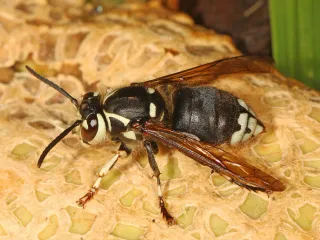
| Football or teardrop-shaped ball with layered, swirled walls, one hole near the bottom | Gray paper | Tree branches, shrubs, eaves | Bald-faced hornet | Aggressive near the nest |
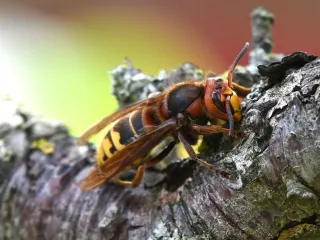
| Brown paper nest inside a cavity | Brown, brittle paper | Hollow trees, wall voids, barns | European hornet | Stings if disturbed |
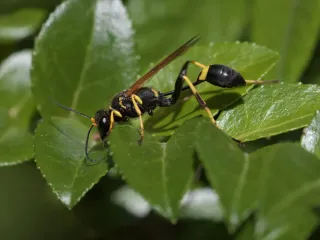
| Mud tubes side by side, or mud clumps | Dried mud | Eaves, sheds, garages, attics | Mud dauber | Rarely stings |
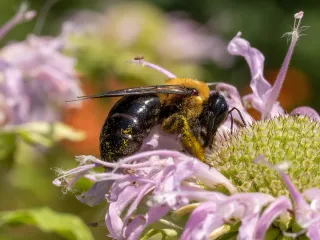
| Perfectly round 1/2-inch holes with sawdust below | Holes in wood, no paper | Fascia, decks, railings | Carpenter bee | Males can’t sting |
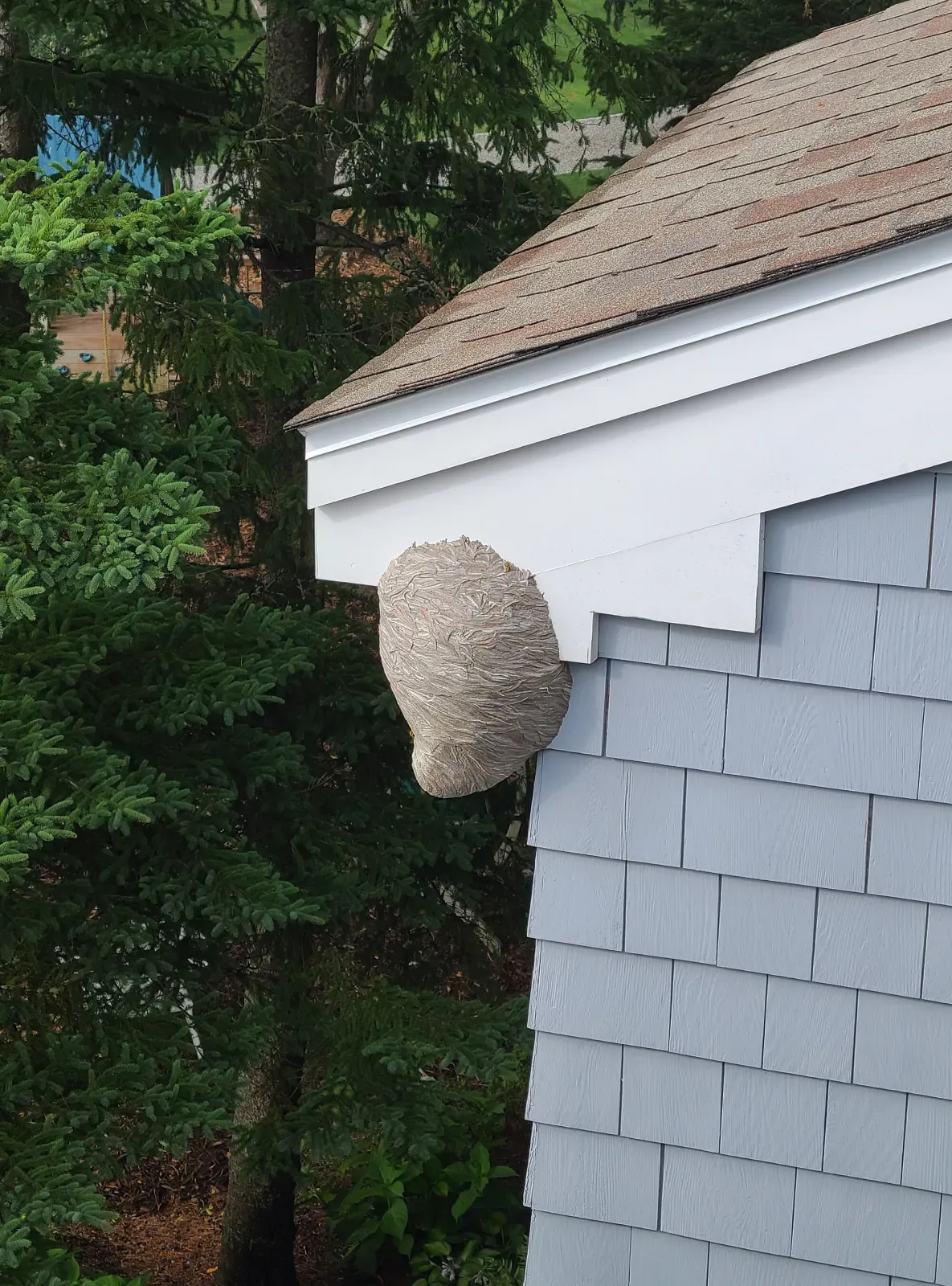
A covered yellowjacket nest under a roof eave in Maine, a common spot near houses. Photo: Bigmacthealmanac (CC BY-SA 4.0), via Wikimedia Commons.
Paper Wasp Nest vs. Hornet Nest: Open Comb or Paper Ball
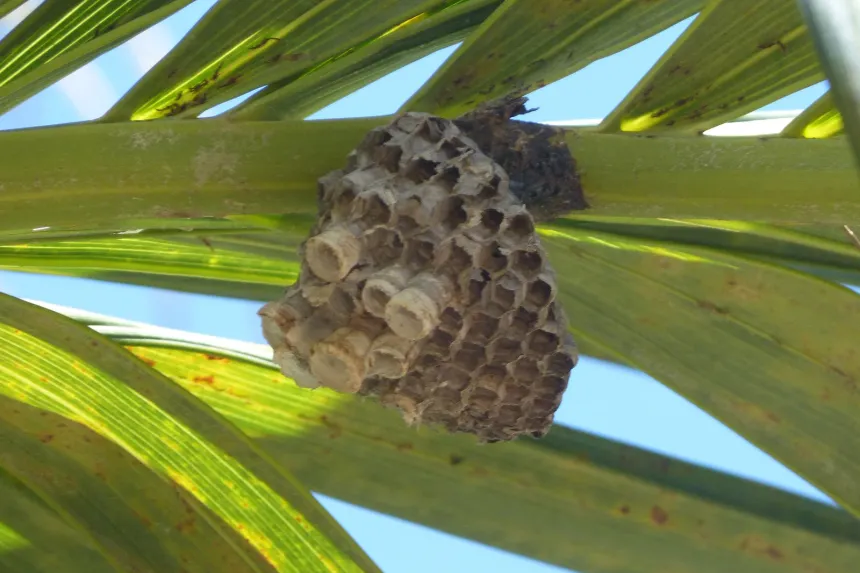
A paper wasp nest is a single comb with no cover, so you can see the cells, and it rarely gets bigger than a dinner plate. A bald-faced hornet nest is completely enclosed in gray paper, with one opening, and can grow bigger than a basketball by late summer. Both are made of chewed wood fiber.
Main clue: cells visible from below on a comb hanging from one stalk mean paper wasps; a closed gray ball with one hole near the bottom means bald-faced hornets.
Mud Dauber Nests: One Female, No Colony to Defend
Mud daubers build nests out of mud, either long tubes side by side like organ pipes or lumpy clumps of cells. Clemson Extension notes that each nest is built and stocked by one female, so there’s no colony to defend. Old nests with round exit holes are empty and can be scraped off.
Main clue: dried mud tubes side by side, or mud clumps, under eaves or in a shed or garage.
Yellowjackets and European Hornets: Nests You Can’t See
Some nests are hidden. Yellowjackets build covered paper nests in ground holes, wall voids and attics, and are aggressive near the nest. European hornets build brown, brittle paper nests inside hollow trees, wall voids and barns.
Main clue: heavy traffic at one entrance hole, with no nest in sight, means yellowjackets; brown paper inside a cavity means European hornets.
How to Confirm the Nest Is Active
- Watch it from a safe distance for a few minutes on a warm afternoon: wasps flying in and out mean it’s active.
- Check the season: social wasp colonies die off in late fall and the nests aren’t reused, according to the University of Kentucky, so last year’s paper nest is usually empty.
- Mark ground holes with wasps flying straight in and out as active yellowjacket nests, and don’t mow over them.
When to Call a Professional: Walls, Ground, Heights, Allergies
Nests in walls, in the ground near play areas, high in trees, or anywhere near someone allergic to stings are best handled by a professional. Never seal the entrance of a nest inside a wall while it’s active; the wasps can chew their way into the house. For the nests you can safely treat yourself, see how to remove a wasp nest.
What to Do Next: Check the Builder’s Page
Open the builder’s Library page in the table for its risk and what to do. Round holes in wood with no paper aren’t wasps at all; see holes in wood.
What could have caused it
Sources
- Controlling Wasps, Hornets, and Yellowjackets (University of Kentucky Entomology, EF620)
- European Hornet in Kentucky (University of Kentucky Entomology, EF600)
- Mud Daubers (Clemson Cooperative Extension)
- Yellowjackets and Other Social Wasps (UC IPM)
- Carpenter Bees (University of Kentucky Entomology, EF611)
Last reviewed Oct 4, 2026.