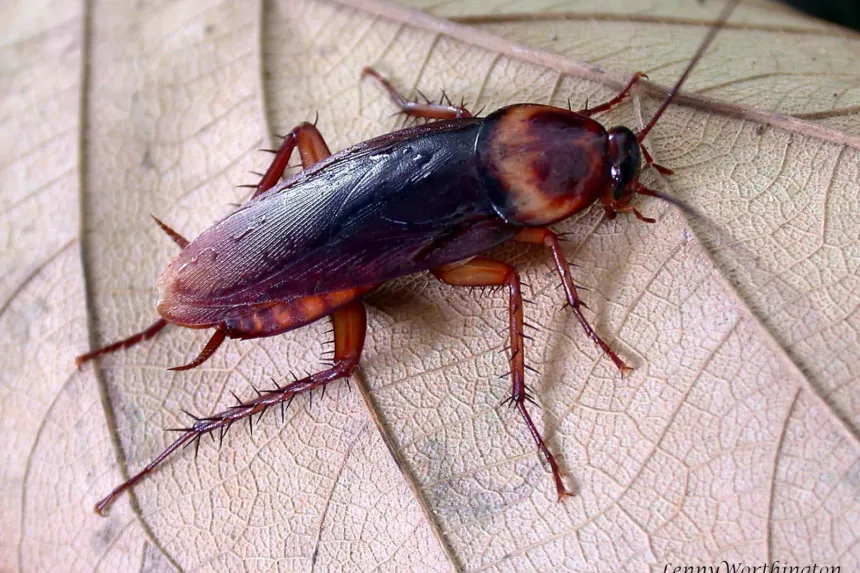
- Scientific name
- Periplaneta americana
- Also called
- palmetto bug, water bug, sewer roach
- Size
- About 1 1/2 in, sometimes 2 in
- Color
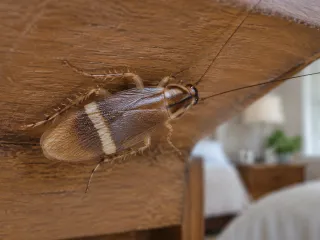
- Reddish brown, pale yellow band around the shield behind the head
- Found in
- Basements, drains, crawl spaces, boiler rooms; outdoors in the South
- Harmful?
- Contaminates food; allergens
- Active
- Warm months, at night; can glide or fly short distances
- DIY cost
- $24–54 in suppliesSee the plan
- Pro quotes
- $450–$1,500 for a full treatment
What to do
The American cockroach is the big reddish-brown roach people call a palmetto bug, water bug or sewer roach, the largest cockroach common in homes. It lives mainly in sewers, drains and damp basements and wanders indoors from there; it doesn’t bite, but it carries bacteria onto food and adds to indoor allergens. The one thing to do: keep drain traps full or capped and seal gaps around pipes and doors.
This page covers how to identify an American cockroach, tell it from other big roaches and find where it comes in. It rests on UC IPM, University of Georgia and University of Arizona guidance.
How to Identify an American Cockroach: Big, Reddish, Pale-Edged Shield
- Big: about 1 1/2 inches, up to about 2 inches (University of Arizona, UC IPM).
- Reddish brown and shiny, with a yellowish or tan border around the shield behind the head.
- Antennae long and slender, often longer than the body.
- Wings: both males and females have full wings and can fly, especially in warm months, though they mostly run.
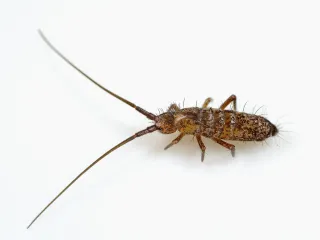
- Nymphs look like small, wingless adults.
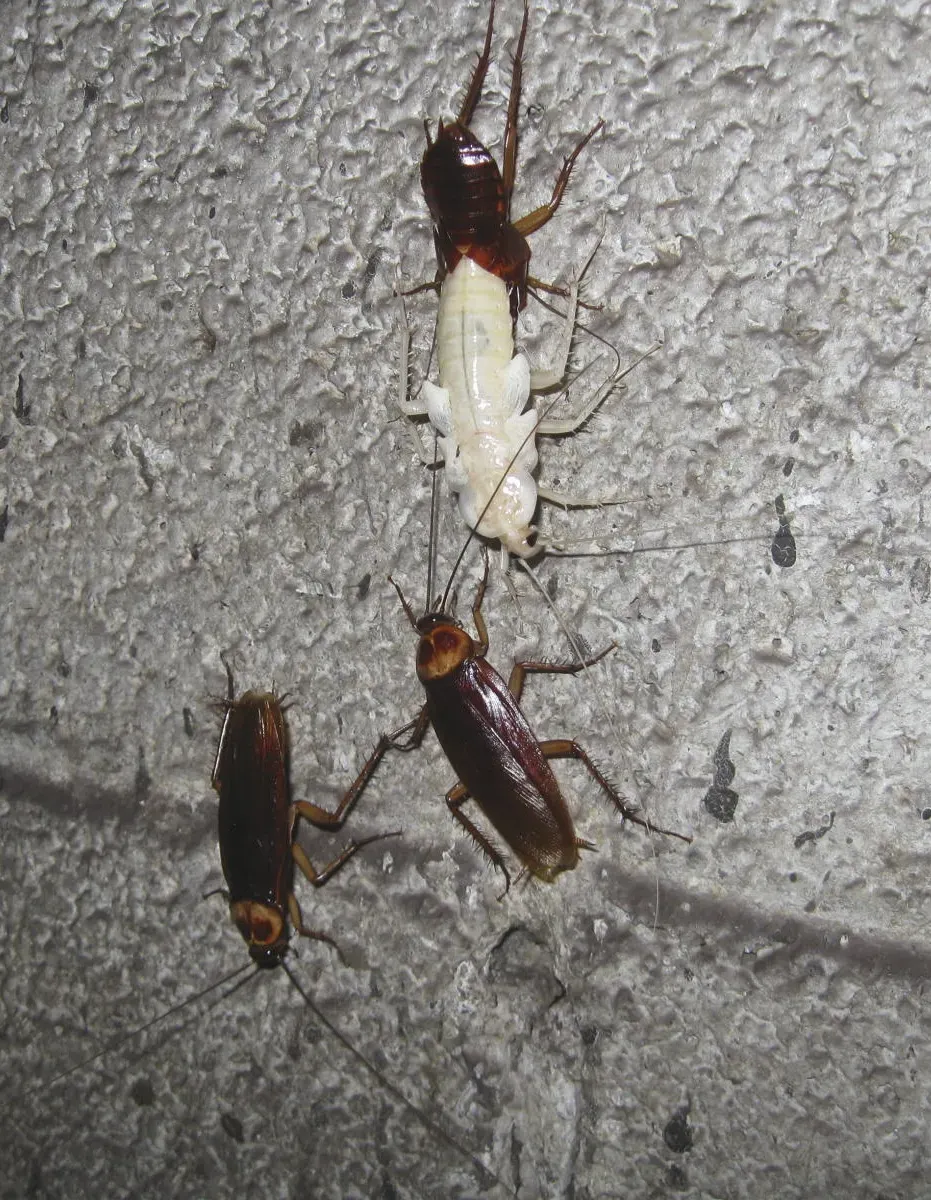
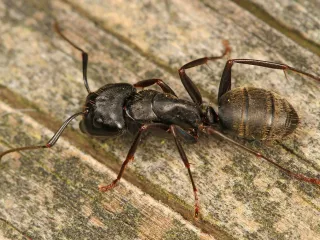
American cockroaches gathered on a wall; the white one has just shed its skin. Photo: NY State IPM Program at Cornell University (CC BY 2.0), via Wikimedia Commons.
American Cockroach vs. Look-Alikes: Check the Shield Edge
| Insect | How it differs | How to tell |
|---|---|---|
| American cockroach | About 1 1/2 in, reddish brown | Pale band around the shield behind the head |
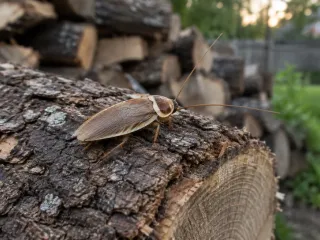
| Smokybrown cockroach | About 1 1/4 to 1 1/2 in, dark mahogany | Evenly dark, no pale band |
| Oriental cockroach | About 1 to 1 1/4 in, nearly black | Short or stubby wings; can’t fly |
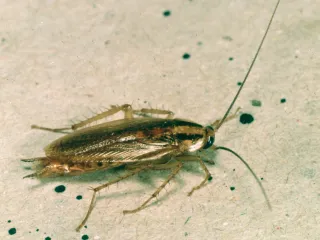
| German cockroach | About 1/2 in, light brown | Two dark stripes behind the head |
| Giant water bug | Lives in ponds, not drains | Thick grabbing front legs, short antennae |
“Palmetto bug” is a regional name for several big roaches, including the smokybrown and oriental, so the name alone doesn’t tell you the species (University of Georgia). The full side-by-side is in water bug vs. cockroach.
Where American Cockroaches Come From: Sewers and Drains
They’re essentially outdoor roaches that prefer warm, humid places above about 82°F (UC IPM). They’re common in sewers, storm drains, steam tunnels and water meter boxes, and outdoors in warm areas under rocks, debris and mulch. They get indoors through sewer lines, broken drain pipes, dried-out drain traps, missing screens and gaps under doors, and they often move in when outside temperatures cool.
Indoors they settle in warm, damp spots: basements, bathrooms, kitchens and under sinks. They like tight spaces that touch them above and below, such as cardboard box flaps and gaps behind wall fixtures (University of Arizona).
Are American Cockroaches Harmful? Mostly a Hygiene Problem
Because they travel through sewers and pet droppings, they can carry bacteria that cause food poisoning, such as Salmonella and Shigella, onto food and counters (UC IPM). Their droppings, shed skins and secretions also produce allergens that can cause severe reactions in sensitive people. They breed far more slowly than German cockroaches, so large indoor infestations are less common.
How to Confirm It’s an American Cockroach
- Check the shield behind the head for a pale yellowish border.
- Measure it: about 1 1/2 inches or more.
- Look for droppings: pellets about 1/4 inch with flat ends and ridged sides, unlike a mouse dropping’s pointed ends; see cockroach poop.
- Look for egg cases about 3/8 inch, brown turning black, glued in protected spots; see cockroach eggs.
What to Do: Block the Drains, Then Bait
Keep floor-drain traps full of water or capped, fix leaks, and seal gaps around pipes, doors and foundations. If you’re seeing many indoors, baits placed where they hide and forage work better than sprays, which scatter roaches without killing many; expect baits to take several weeks (University of Arizona). The full plan is in how to get rid of roaches. For other pests, browse all pest guides.
Often confused with
Sources
- Cockroaches (UC IPM Pest Notes)
- Is That a Roach or a Palmetto Bug? (University of Georgia)
- The American Cockroach (University of Arizona)
Last reviewed Oct 5, 2026.
_American_Cockroach_(24516346287).jpg)