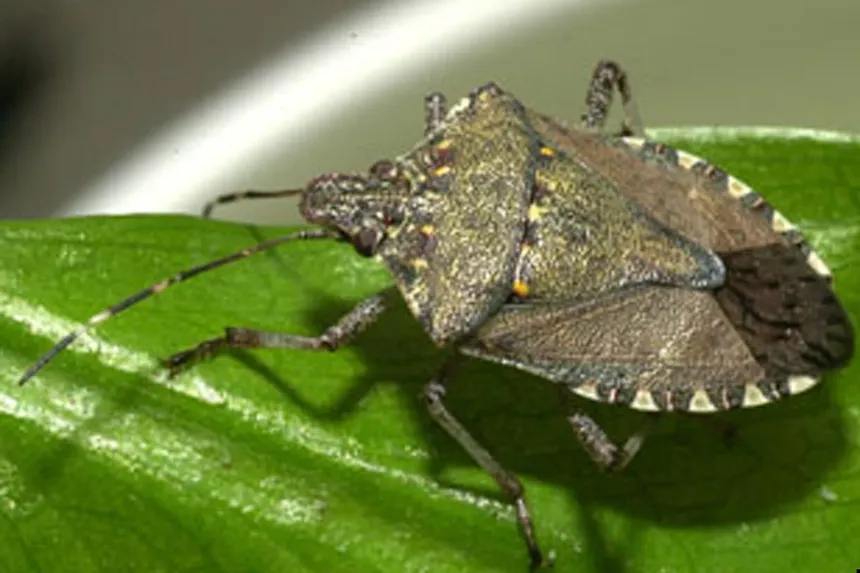
- Scientific name
- Halyomorpha halys
- Also called
- stink bug, BMSB, shield bug
- Size
- About 5/8 in
- Color
- Mottled brown-gray; light bands on the antennae and the edges of the body
- Found in
- Walls, attics, window and door frames; gardens and orchards
- Harmful?
- No. Smells when crushed; damages fruit and vegetables
- Active
- Comes in during fall; sluggish indoors through winter and spring
What to do
The brown marmorated stink bug is the shield-shaped brown bug that crawls out of window frames and walls in fall and winter. It’s harmless to people and pets: it doesn’t bite, sting or breed indoors, but it smells when disturbed. The one thing to do: seal gaps around windows, siding and attic vents in summer, before the bugs move in.
This page covers how to identify the brown marmorated stink bug, tell it from look-alikes, and why it comes inside. It rests on University of Kentucky, UC IPM and NC State Extension guidance.
How to Identify a Stink Bug: Shield Shape, Banded Edges
- Shield-shaped, about 5/8 inch long, larger than most other stink bugs.
- Mottled brown and gray; “marmorated” means marbled or streaked.
- White and dark bands on the antennae, the legs and around the edge of the abdomen. These bands are the mark of this species.
- Smell: a pungent, cilantro-like odor from glands on the middle of the body when it’s picked up or disturbed.
- Nymphs are reddish and black at first, turning brown, with the same banded legs and antennae (University of Kentucky).
It’s native to China, Taiwan, Japan and Korea, was first noticed entering homes in Pennsylvania in the mid-1990s, and is now in at least 46 states.
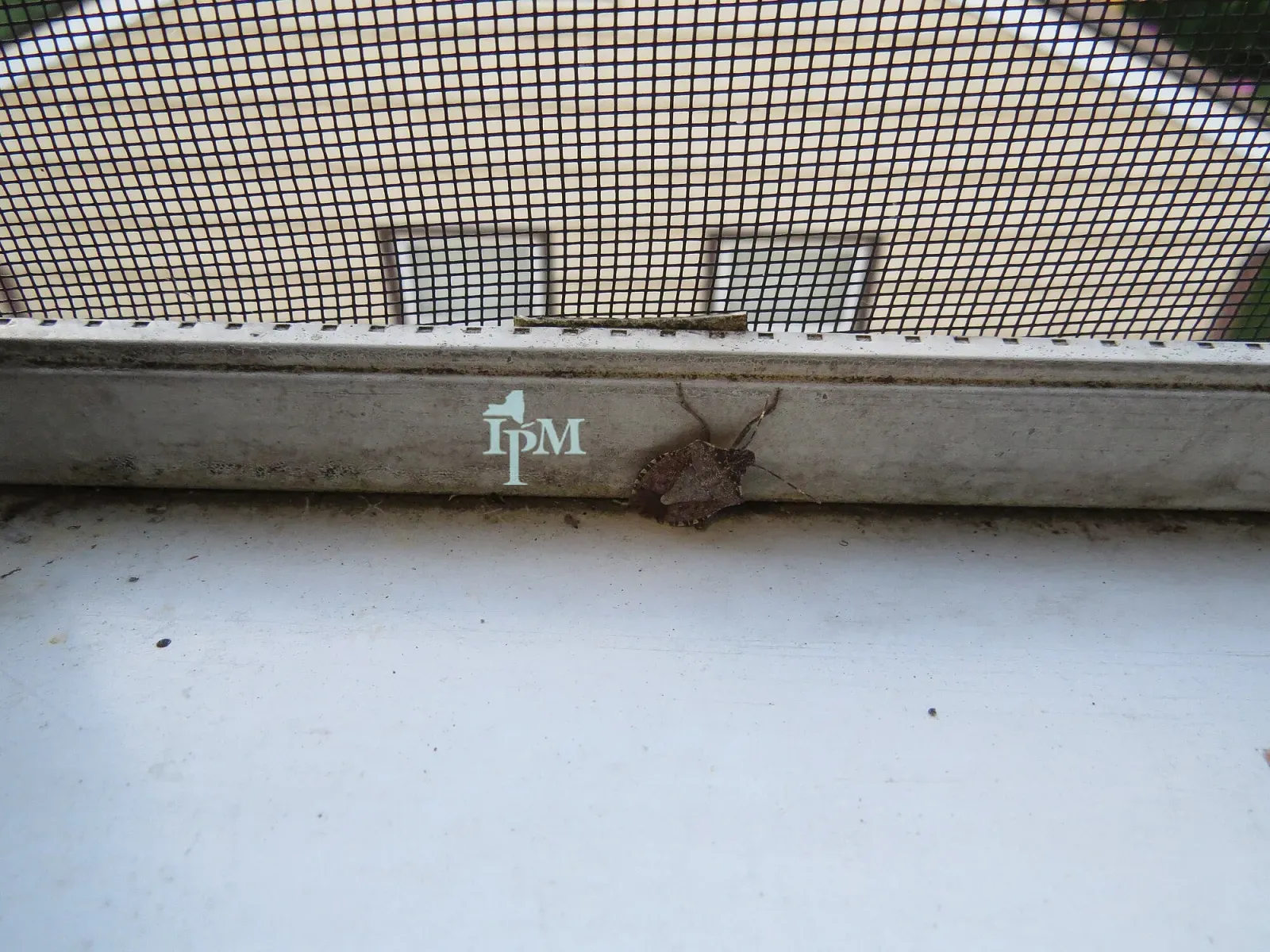
A stink bug on a windowsill in fall, where most people find them indoors. Photo: New York State IPM Program at Cornell University (CC BY 2.0), via Wikimedia Commons.
Stink Bug vs. Look-Alikes: Check the Bands
| Insect | How it differs | How to tell |
|---|---|---|
| Brown marmorated stink bug | Wide shield shape, mottled brown | Light and dark bands on antennae, legs and body edge |
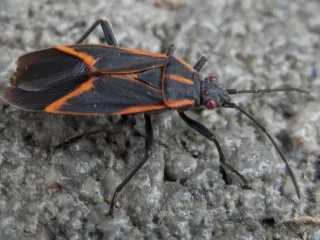
| Boxelder bug | Narrower, black with red lines | Red markings, no banded edge |
| Western conifer seed bug | A leaf-footed bug that also comes in for winter | Flattened, leaf-like widening on the hind legs |
| Native stink bugs | Green, gray or brown shield | No white-and-dark banding |
| Kissing bug | Long cone-shaped head, feeds on blood | Short head on a stink bug; cone head on a kissing bug |
Boxelder bugs and the western conifer seed bug also come indoors in fall, so check the bands before deciding (University of Kentucky).
Why Stink Bugs Come Inside: Looking for a Cool, Dry Winter Spot
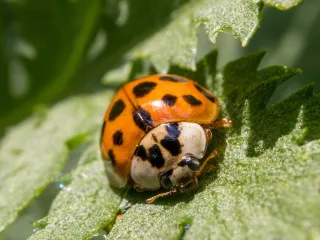
Shorter days and cooler temperatures trigger the urge to overwinter. On warm, sunny afternoons in September and October, adults fly to buildings and look for cracks around windows, doors, roof flashing, vents, window air conditioners, fascia and siding. They prefer high spots, so they often get in through attics and chimneys. Unheated attics are the main winter site; basements and crawl spaces are much less favored. Houses near woods and farmland get the most, as they do with Asian lady beetles.
When You’ll See Them: Fall Entry, Winter Wandering
In Kentucky, stink bugs start coming in during early to mid September, weeks before lady beetles. On warm winter days they wake up and wander into living areas through cracks, vents and fireplaces, and they buzz around lamps in the evening. They leave for the outdoors from March to May. They don’t mate or breed indoors, so the bugs you see in winter are the same ones that came in the fall (University of Kentucky).
Are Stink Bugs Harmful? Not to People
They feed only on plants and don’t bite people or pets; more on that in do stink bugs bite?. When handled or crushed they can release chemicals that irritate skin, so pick them up with a tissue and keep your hands away from your eyes. The University of Kentucky notes they may also be an airborne allergen: people with many stink bugs indoors who get eye or nose irritation should talk to a doctor. The odor is one of the smells that mean pests.
Outdoors they’re a serious crop and garden pest, feeding on fruit, vegetables and many landscape trees.
How to Confirm It’s a Brown Marmorated Stink Bug
- Look for the banding on the antennae and around the body edge.
- Measure it: about 5/8 inch and shield-shaped.
- Check the timing: groups on sunny walls in September and October, or slow bugs indoors on warm winter days.
What to Do: Vacuum Them, Seal in Summer
Pick them up with a tissue, knock them into soapy water, or vacuum them; a nylon stocking in the vacuum tube holds them and limits the smell. Sealing is the most permanent fix, and summer is the time to do it. Caulk gaps around windows, doors, soffits, fascia, pipes and wires, repair screens, and seal or remove window air conditioners in fall. Attic vent screens need mesh of 1/6 inch or smaller: in University of Kentucky trials, all the bugs passed through 1/2-inch mesh and half through 1/4-inch mesh.
Indoor insecticides aren’t warranted. Killing bugs inside walls rarely works and the dead bugs can feed carpet beetles. The full plan is in how to get rid of stink bugs. For other pests, browse all pest guides.
Often confused with
Sources
- Stink Bug Infestation of Dwellings (University of Kentucky Entomology, EF654)
- Brown Marmorated Stink Bug (UC IPM)
- FAQs: Brown Marmorated Stink Bug (NC State Extension)
Last reviewed Oct 4, 2026.