How to Get Rid of Spiders in Your House
No whole-house spraying: vacuum, trap, declutter and seal the gaps, for about $26 in supplies.
To get rid of spiders in your house, vacuum the spiders, webs and egg sacs, set sticky traps flat along the walls to find where they’re coming from, clear the clutter they hide in, and seal gaps around doors and windows. Spraying the whole house doesn’t last; sprays only kill the spider you actually hit.
Cost: about $26 in supplies. Time: about 2–4 weeks. Difficulty: easy. Call a pro if you find brown recluses or black widows indoors more than once, or sticky traps keep catching spiders 4 weeks after you cleaned and sealed.
This guide covers telling the harmless house spiders from the two that matter, the six steps to clear them out and keep them out, and when a pro is worth it. We haven’t tested these methods ourselves. It rests on UC IPM and University of Kentucky entomology guidance, a HomeAdvisor price guide and store list prices.
Saw a spider tonight? Vacuum it, web and all, or trap it under a jar and put it outside. Most spiders you see in the open are harmless hunters. If it was shiny black with a red hourglass, or plain brown with a dark violin mark and you live in the central or southern U.S., check the black widow and brown recluse pages before you touch it.
What Works and What Doesn’t Against Spiders
| Method | Works? | Cost | Main limitation |
|---|---|---|---|
| Vacuuming spiders, webs and egg sacs | Yes, the fastest way to cut numbers | Free with your vacuum | Spiders keep wandering in until gaps are sealed |
| Sticky traps along walls | Yes, to find hot spots and catch wanderers | $10.49 for 12 | Some hidden spiders, often females, never cross them |
| Clearing clutter, sealed bins | Yes, removes hiding places | Bins you likely own | Takes an afternoon per room |
| Sealing cracks, screens, door sweeps | Yes, the lasting fix | $4.99 caulk, $10.43 sweep | Older houses have many small gaps |
| Yellow or sodium porch bulbs | Yes, fewer insects means less food | A bulb swap | Helps only near lit doors |
| Indoor bug spray | Only on the spider you hit | Varies | No lasting effect without cleanup (UC IPM) |
Which Spider Is It? Most Are Harmless
Nearly every spider you’ll find indoors is harmless and eats other insects. UC IPM says the spiders seen out in the open during the day are unlikely to bite, and that even the ones that can hurt people mostly stay hidden in woodpiles and garage clutter.
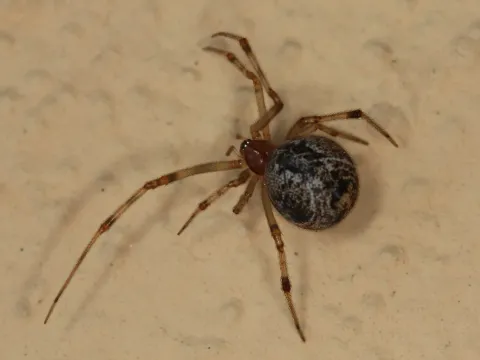 HarmlessCommon house spiderMakes the dusty cobwebs in corners and window frames.
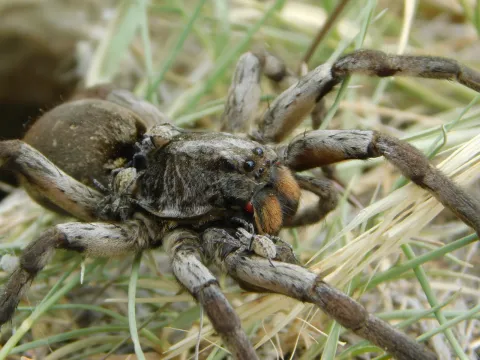 HarmlessWolf spiderBig, hairy, fast. Hunts on the floor; no web.
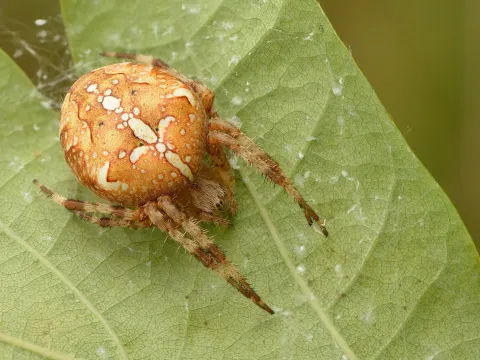 HarmlessOrb weaverRound wheel webs on porches and shrubs, outdoors.
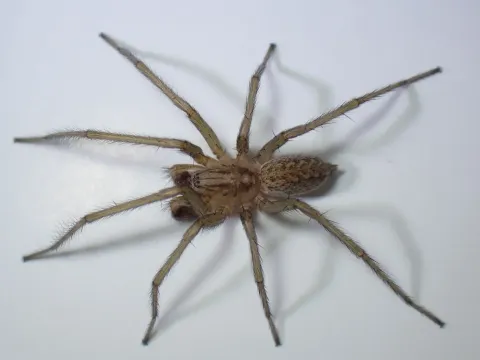 HarmlessHobo spiderPacific Northwest funnel-web spider; once feared, not shown to harm people.
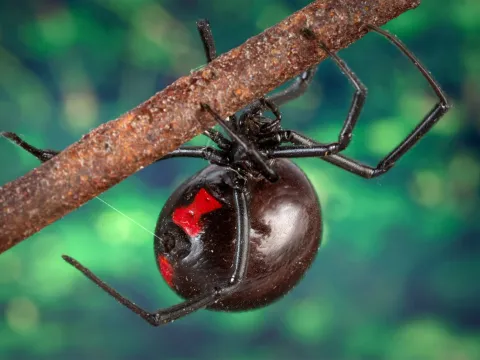 Bite needs a doctorBlack widowShiny black, red hourglass underneath. Woodpiles, garages.
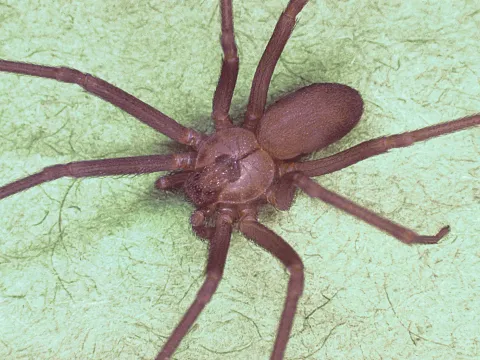 Bite needs a doctorBrown reclusePlain tan, dark violin mark, six eyes. Central and southern U.S.
Many harmless brown spiders get mistaken for the brown recluse, which has six eyes in pairs rather than eight. The University of Kentucky suggests having a suspected recluse confirmed by an entomologist or a knowledgeable pest control firm before treating for it.
Step 1: Vacuum Spiders, Webs and Egg Sacs
Step 1: Vacuum every corner, window frame, closet floor and basement ceiling you can reach, using the crevice tool. Soft-bodied spiders usually don’t survive the trip through the hose (UC IPM), and each egg sac you remove can hold hundreds of young spiders (University of Kentucky).
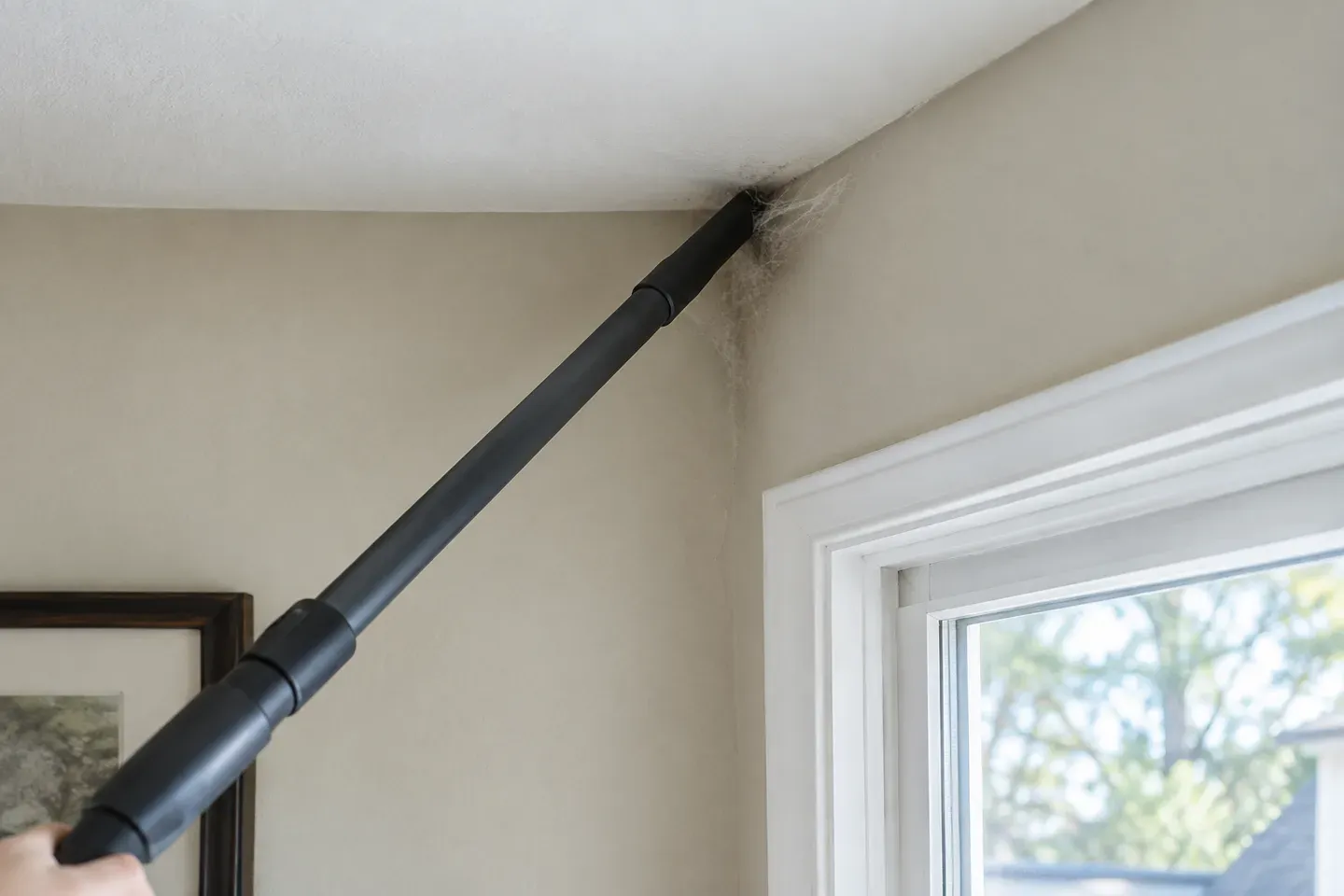
A dusty web is an old one: spiders keep the webs they use clean, so dust means nobody’s home (UC IPM). Empty the vacuum bag or canister outside when you’re done.
Step 2: Set Sticky Traps Along the Walls
Step 2: Put flat sticky traps flush against the walls and in room corners, a dozen spread through the house, and check them weekly. The University of Kentucky recommends flat glue traps without a raised edge to find hidden spiders and catch wandering ones, and placing them before any spraying.
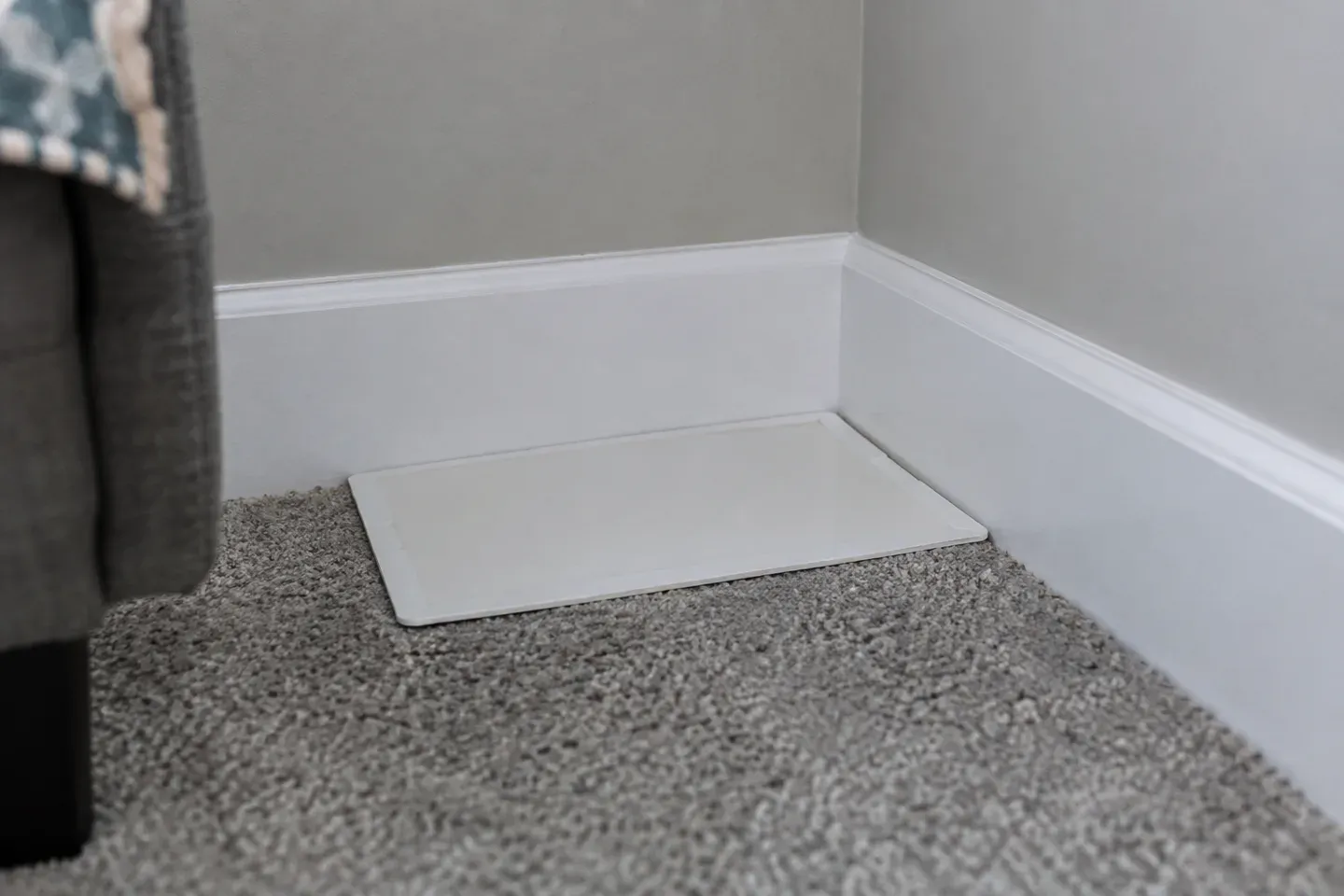
Where traps fill fastest is where to clean and seal first. Keep them behind furniture or inside closets, where kids and pets can’t reach them (UC IPM).
Step 3: Clear Clutter and Store Things Sealed
Step 3: Clear boxes, piles of clothes and papers off closet, basement and garage floors, and move what you keep into plastic bins with tight lids. Spiders favor quiet, undisturbed spots, and less clutter means fewer places to hide (University of Kentucky).
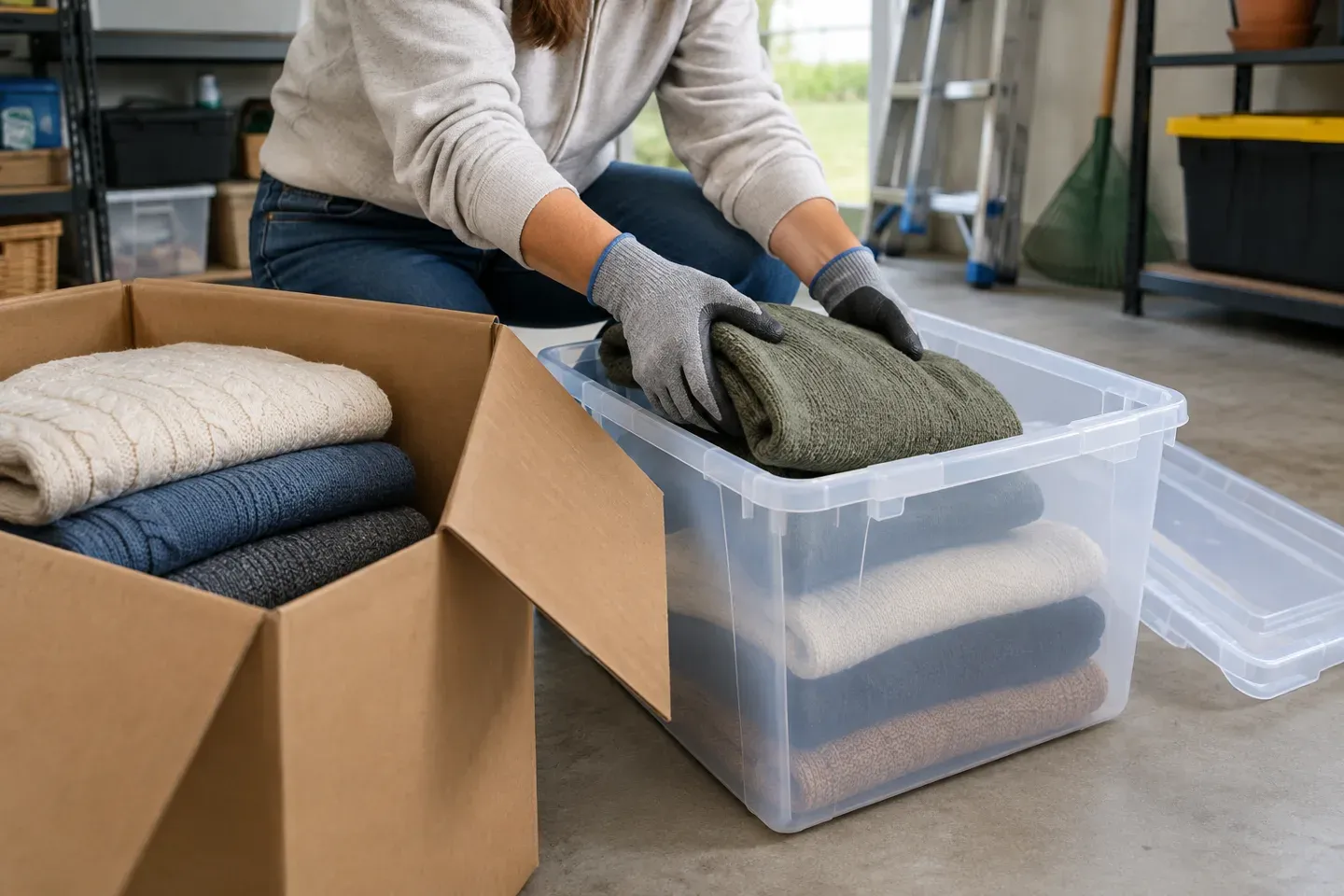
Wear gloves and long sleeves while you sort, since that’s when a hidden spider can get pressed against skin (UC IPM). Taping cardboard boxes shut also keeps spiders out of them.
Step 4: Seal the Gaps They Walk In Through
Step 4: Caulk cracks in the foundation and gaps around windows, doors and pipes, fix torn screens, and add door sweeps where you can see daylight under a door. Most spiders indoors are accidental invaders that came in around doors and windows (University of Kentucky).
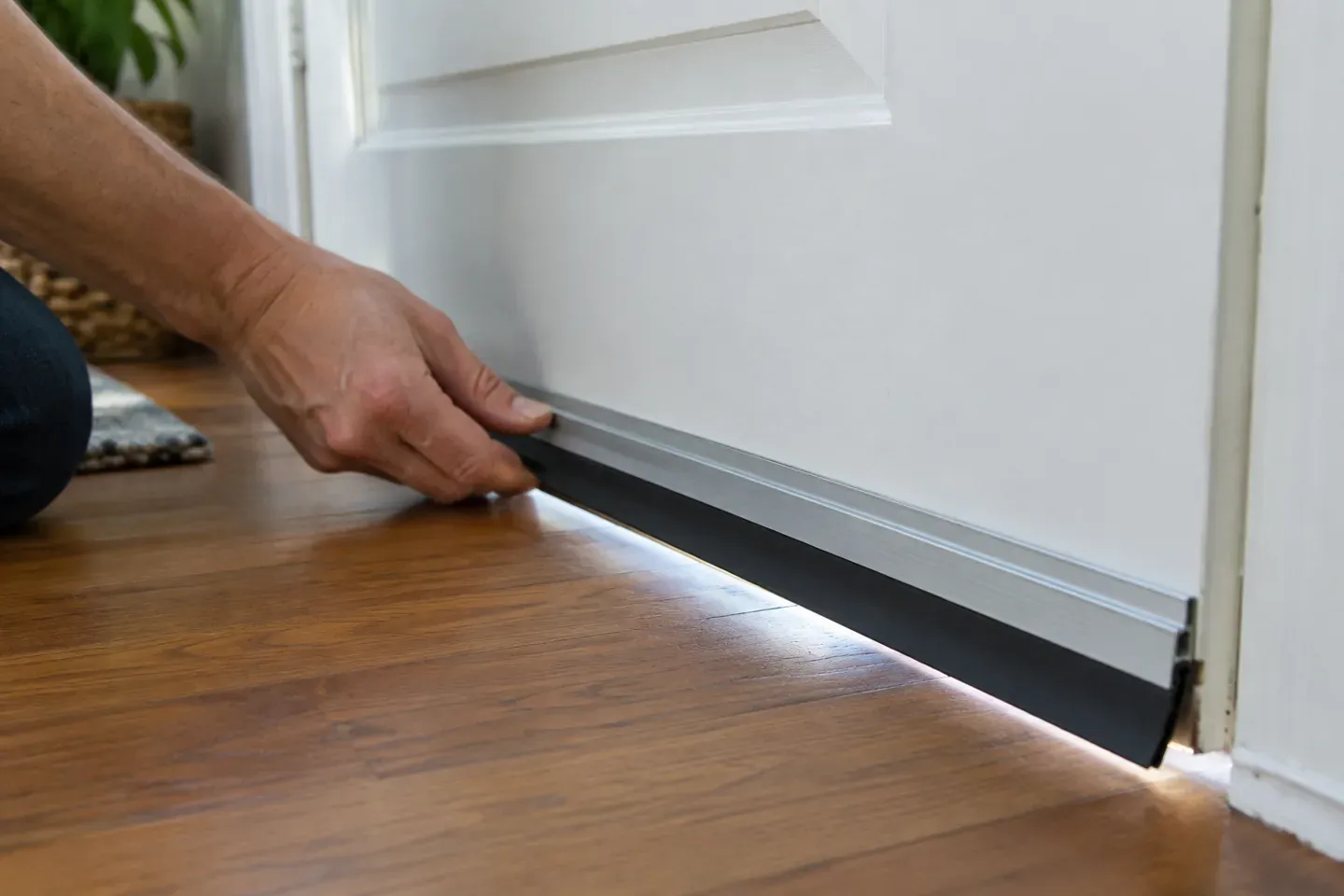
Good screens do double duty: they keep out spiders and the insects spiders follow in (UC IPM). The same seal also stops fall invaders like stink bugs and cluster flies.
Step 5: Cut the Outdoor Lights and Clear the Foundation
Step 5: Switch the bulbs at outside doors to yellow or sodium-vapor lights, keep lights off walls near windows where you can, and clear leaves, mulch piles and woodpiles from the foundation. Outdoor lights draw night-flying insects, which draw spiders (UC IPM, University of Kentucky).

Trim shrubs back from the walls and knock webs off the outside with a broom or a hose. Spiders also ride in on firewood, potted plants and boxes, so check those before you bring them inside (UC IPM).
Step 6: Spray Only the Spider You Can See
Step 6: If you spray, spray the spider itself; a shoe or the vacuum works just as well and is less toxic, according to UC IPM. It says insecticides won’t give long-term control and that spraying is temporary unless you also clean up.
If spiders keep coming in from outside, the University of Kentucky describes a perimeter barrier spray around door thresholds, foundation vents and the bottom edge of siding, reapplied monthly or every two months in warm weather. That’s a job many people hand to a pro.
How to Tell It’s Working
Count what’s on your sticky traps each week. Fewer catches after 2 to 4 weeks, and no new webs in corners you vacuumed, mean it’s working. A few spiders in fall is normal; a steady stream in one room points to a gap you haven’t found yet. If they keep turning up in a damp basement, drying it out helps cut the insects they feed on; see dehumidifier for bugs.
Black Widows and Brown Recluses: Different Rules
For these two, gloves and care matter more than speed. The University of Kentucky says brown recluse treatment is best done by professionals, because they hide in dark crevices, wall voids and stored items that are hard to reach.
While you deal with them, pull beds away from walls, remove bed skirts that touch the floor, and shake out shoes and clothes before you put them on (University of Kentucky). Bites are rare even in homes with many recluses.
If you’re bitten by a black widow or think a brown recluse bit you, get medical care; UC IPM says many black widow symptoms can be eased with prompt treatment. The bug bites guide helps you tell what bit you, but it doesn’t replace a doctor.
Which Plan Fits Your Situation
| Situation | Plan | Why |
|---|---|---|
| A few spiders in fall | Vacuum, sticky traps, door sweeps | Most are wanderers from outside |
| Lots of webs in the basement | Vacuum weekly, trap, seal gaps, dry it out | Quiet, cluttered spaces are where they settle (UKY) |
| You rent | Vacuum and trap inside; ask the landlord in writing to fix screens and sweeps | Exterior sealing is usually the owner’s job |
| Kids or pets at home | Traps behind furniture, no spray | Keep traps where they can’t be touched (UC IPM) |
| Brown recluses or black widows indoors | Traps to confirm, then a pro | Recluse treatment is best done by professionals (UKY) |
What It Might Still Cost
| Item | Price |
|---|---|
| Insect glue boards, 12-pack | $10.49 |
| 100% silicone caulk, 2.8 oz tube | $4.99 |
| Aluminum door sweep, 36 in. | $10.43 |
| DIY total | About $26 |
| Pro spider treatment | $100–$500 |
| Pro, severe infestation in a large home | Over $1,200 |
Store prices are U.S. list prices checked in October 2026, before tax. Pro prices are from HomeAdvisor (updated June 19, 2026); see what 5,315 real exterminator quotes show for how quotes compare with price guides.
Before You Start: A Quick Checklist
- Vacuum corners, window frames and closet floors, egg sacs included.
- Place a dozen flat sticky traps flush against walls and in corners.
- Pack boxes and clothes off the floor into lidded plastic bins.
- Caulk foundation cracks and gaps around windows, doors and pipes.
- Install door sweeps where daylight shows under a door.
- Swap porch bulbs for yellow lights and clear the foundation strip.
- Wear gloves when moving stored items in a garage or basement.
When to Call a Pro
Call one if you find brown recluses or black widows indoors more than once, if traps keep catching spiders 4 weeks after cleaning and sealing, or if you’d rather have a perimeter treatment done for you. Ask what they’ll treat, whether follow-ups are included, and how they’ll confirm the species. What an exterminator does covers the questions to ask.
Common questions
Most are accidental invaders that came in around doors, windows and other openings (University of Kentucky), and big hunters like wolf spiders are easy to notice on the floor. Sealing those gaps is what cuts the numbers.
You don’t have to. UC IPM points out that spiders eat a large number of nuisance insects. Vacuum or catch and release the ones you don’t want; a web-free house mostly comes from fewer insects and fewer gaps.
Not for long. UC IPM says insecticides won’t give long-term control and that spraying is only temporary unless you also clean up. Sticky traps and sealing do more.
The Bottom Line
Vacuum, trap, declutter and seal: that clears most spiders for about $26. Save sprays for the spider in front of you, and bring in a pro for recluses or widows that keep showing up.
Sources and further reading · 4
- UC IPM: Spiders: harmless vs. harmful spiders, vacuuming, webs, sealing, lighting, sticky traps, insecticides, black widow bites.
- University of Kentucky Entomology: Spiders (EF622), Eliminating Spiders Around Homes and Buildings (EF623) and Brown Recluse Spider (EF631): egg sacs, glue traps, clutter, yellow bulbs, barrier sprays, recluse identification and precautions.
- HomeAdvisor: Spider Extermination Cost (updated June 19, 2026).
- Store prices: glue boards, silicone caulk and a 36-inch door sweep at U.S. list prices, checked October 2026.