How to Get Rid of Crickets in the House: Traps, Dry Air and Sealed Gaps
To get rid of crickets in your house, put sticky traps in corners and behind appliances, dry out the basement or crawl space, switch outdoor lights to yellow bulbs and seal the cracks around doors, windows, the foundation and dryer vents. Vacuum the ones you see. Skip bug bombs: Missouri Extension calls spraying the air mostly ineffective.
Cost: about $21–$26 in supplies. Time: about 1 afternoon + a few weeks of traps. Difficulty: easy. Call a pro if crickets keep coming in by the hundreds after you have sealed the gaps and dried the basement, or you want a cricket bait applied in cracks and crevices and aren’t comfortable doing it yourself.
Which cricket you have changes the fix. House and field crickets chirp and are drawn to lights; camel crickets are silent, humpbacked and live in damp basements. This guide covers telling them apart, the five steps, what works and what doesn’t, and how to find a chirping cricket at night. We haven’t tested these methods ourselves; it rests on University of Missouri, NC State, Clemson, University of Maryland and University of Arizona Extension guidance.
Which Crickets Are in Your House?
| Cricket | What it looks like | Chirps? | Drawn to light? | Where you’ll find it |
|---|---|---|---|---|
| House cricket | Light yellowish brown, three dark bands across the head, ¾ to 1 inch (Missouri) | Yes, adult males | Yes | Kitchens, living areas, basements |
| Field cricket | Usually black, ½ to 1¼ inches (Missouri) | Yes, adult males | Yes | Comes in from the yard in fall |
| Camel cricket | Light tan to brown, often banded, humpbacked, wingless, ½ to 1½ inches (Missouri, NC State) | No | No | Damp basements, crawl spaces, garages |
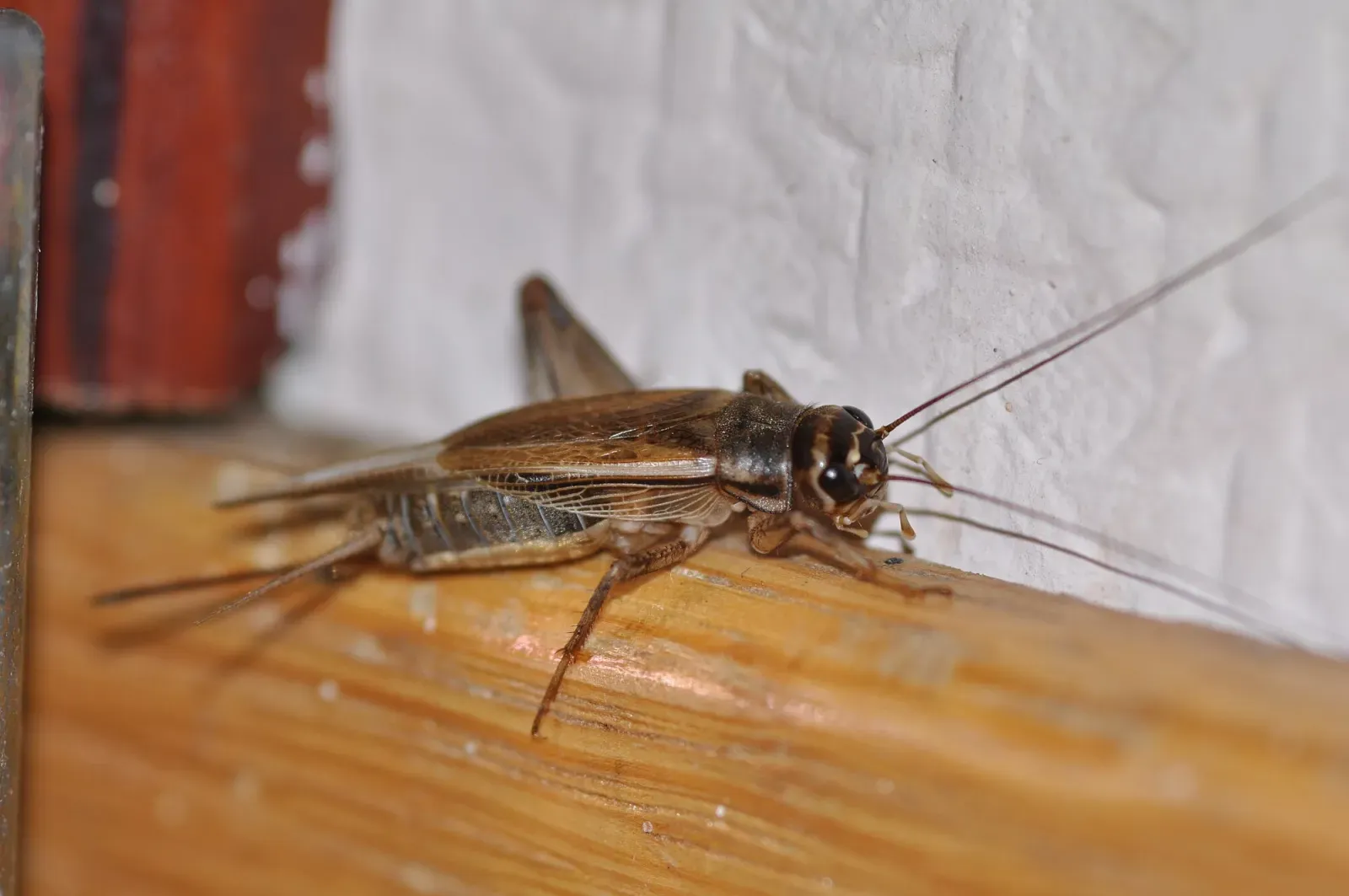
A house cricket. Photo: Aiwok (CC BY-SA 3.0), via Wikimedia Commons.
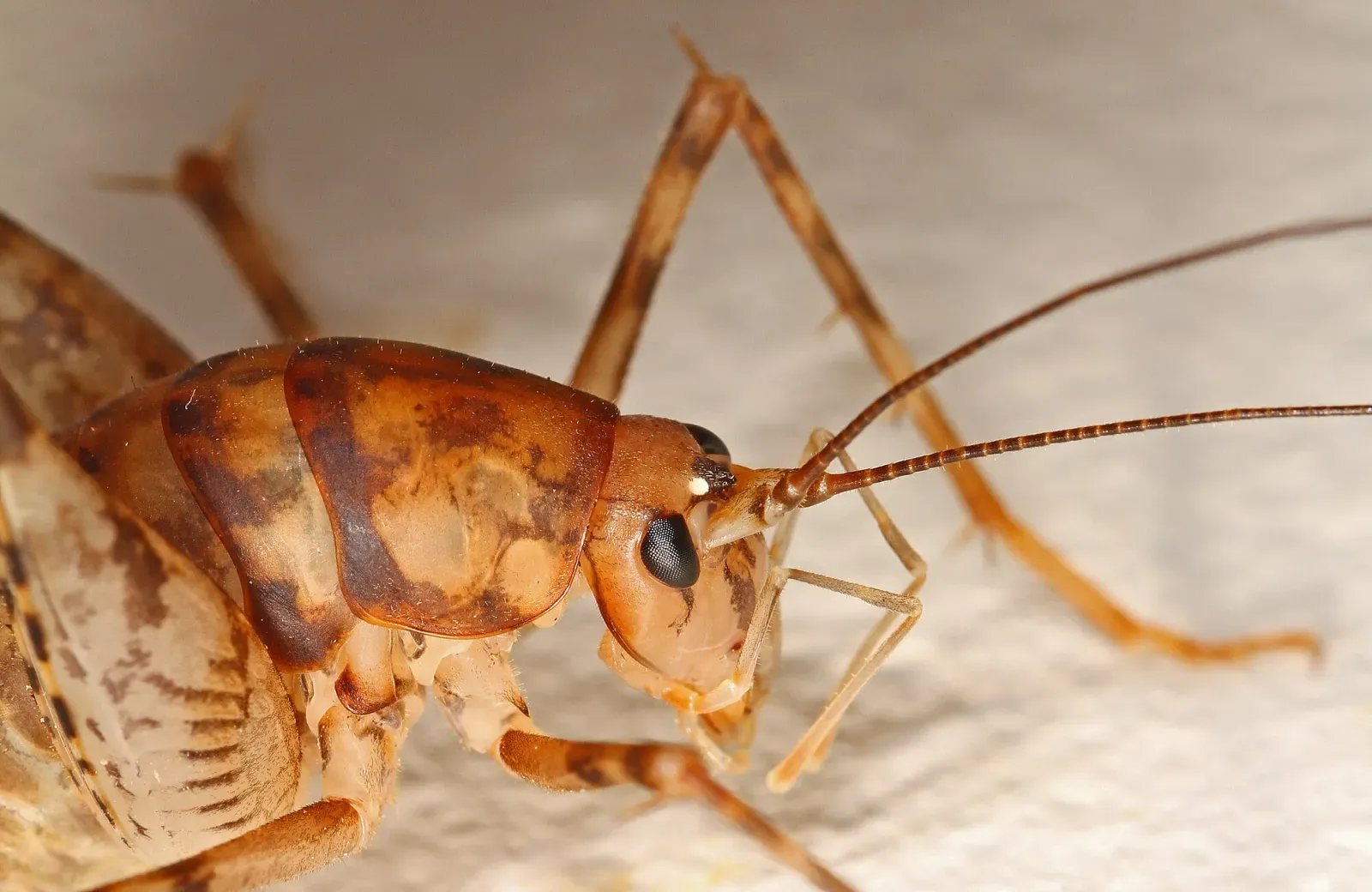
A camel cricket: humped back, no wings, very long legs. Photo: Judy Gallagher (CC BY 2.0), via Wikimedia Commons.
If you hear chirping indoors, it’s a house or field cricket, not a camel cricket (NC State). If you’re seeing silent, jumping crickets in a damp basement, it’s camel crickets, and moisture is the main fix.
Why Are Crickets in My House?
Field and house crickets come in most often in fall, driven by cooler night temperatures, and camel crickets come in looking for a place to spend the winter (Missouri). Crickets also favor cool, damp, dark places, so a wet basement or crawl space holds them (Missouri, Clemson). Outdoor lights near doors draw house and field crickets to the house in the first place.
What Works and What Doesn’t Against Crickets
| Method | Works? | Main limitation |
|---|---|---|
| Sticky traps in corners | Yes, especially for camel crickets (Missouri) | Only catches what walks across them |
| Drying out the basement | Yes, the main fix for camel crickets (Maryland) | Needs a dehumidifier or a fixed leak |
| Yellow outdoor bulbs, fewer lights | Yes, for house and field crickets (Missouri, Clemson) | Doesn’t help with camel crickets |
| Sealing gaps and door sweeps | Yes (NC State, Missouri) | Upper gaps may need a ladder |
| Vacuuming | Yes, for the ones you see (Clemson) | Empty the bag outside afterward |
| Molasses-and-water jar traps | No good evidence; no extension guide we found tests it | Popular online, unproven |
| Bug bombs and sprays into the air | No: “undesirable and mostly ineffective” (Missouri) | Puts pesticide on exposed surfaces |
Step 1: Set Sticky Traps
Place sticky boards, the kind sold for cockroaches and mice, in corners and behind appliances (NC State). Missouri Extension says they’ve been used successfully, especially against camel crickets. Check them every few days; a full board in one corner tells you where they’re getting in.
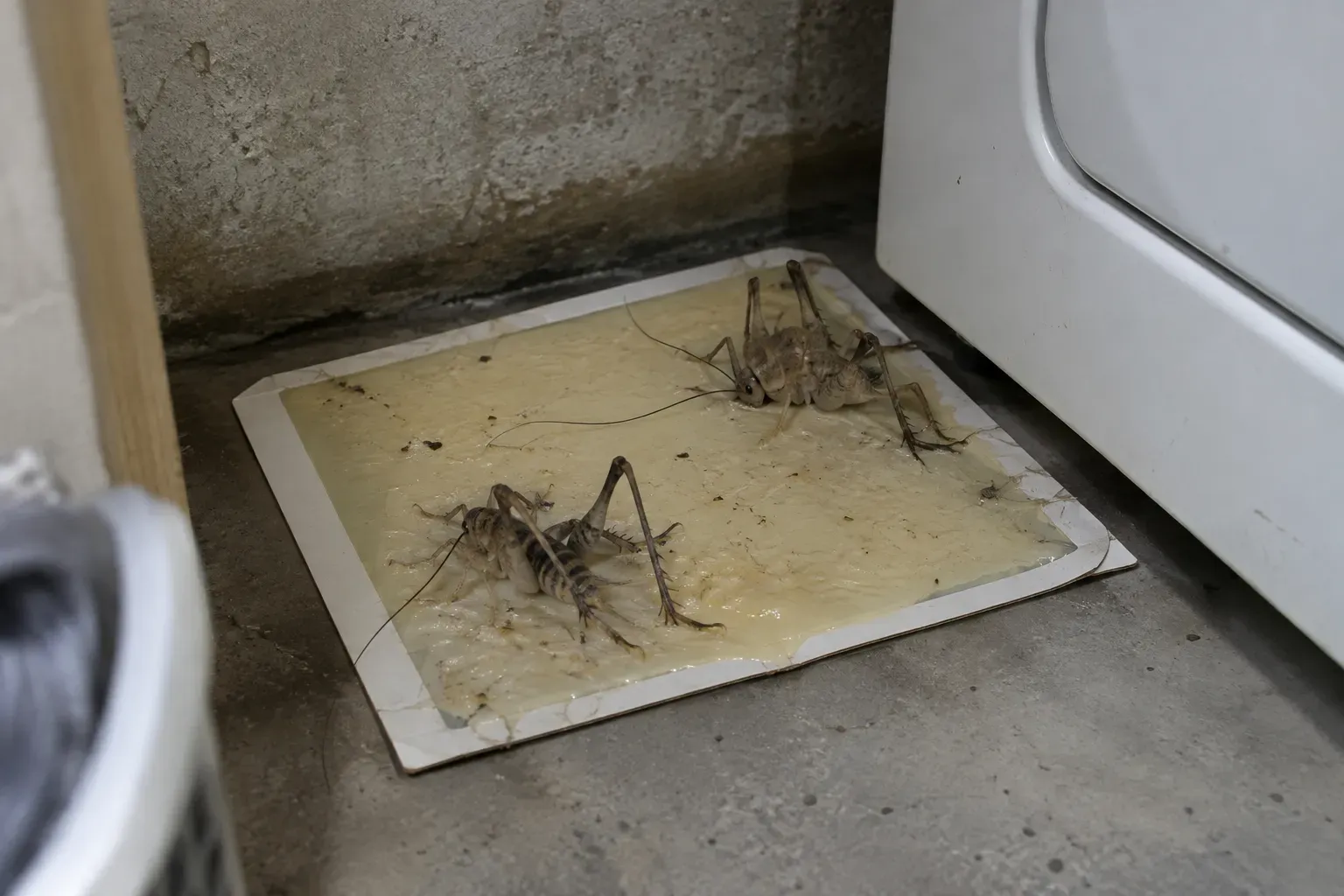
Illustration: a sticky board behind the dryer, the kind of corner crickets favor.
Step 2: Dry Out the Basement or Crawl Space
The University of Maryland says solving high moisture problems in a basement will greatly reduce or eliminate camel crickets: fix leaks, dehumidify and use sticky traps. Rutgers also suggests dehumidifying basements where practical. Dehumidifiers for bugs covers what size to buy.
Step 3: Cut the Light That Draws Them
House and field crickets are strongly attracted to lights. Missouri Extension suggests limiting outdoor lighting or using yellow bulbs, which are less attractive to insects than white, neon or mercury vapor lights; Clemson suggests yellow or sodium vapor lights around doors and windows. Camel crickets aren’t drawn to light, so skip this step if that’s all you have.
Step 4: Seal the Way In
Caulk or seal gaps around window frames, doors, the foundation, dryer vents and crawl space access doors (NC State), and keep window screens in good repair (Clemson). Fit a door sweep or weather stripping so the bottom of each exterior door meets the threshold.
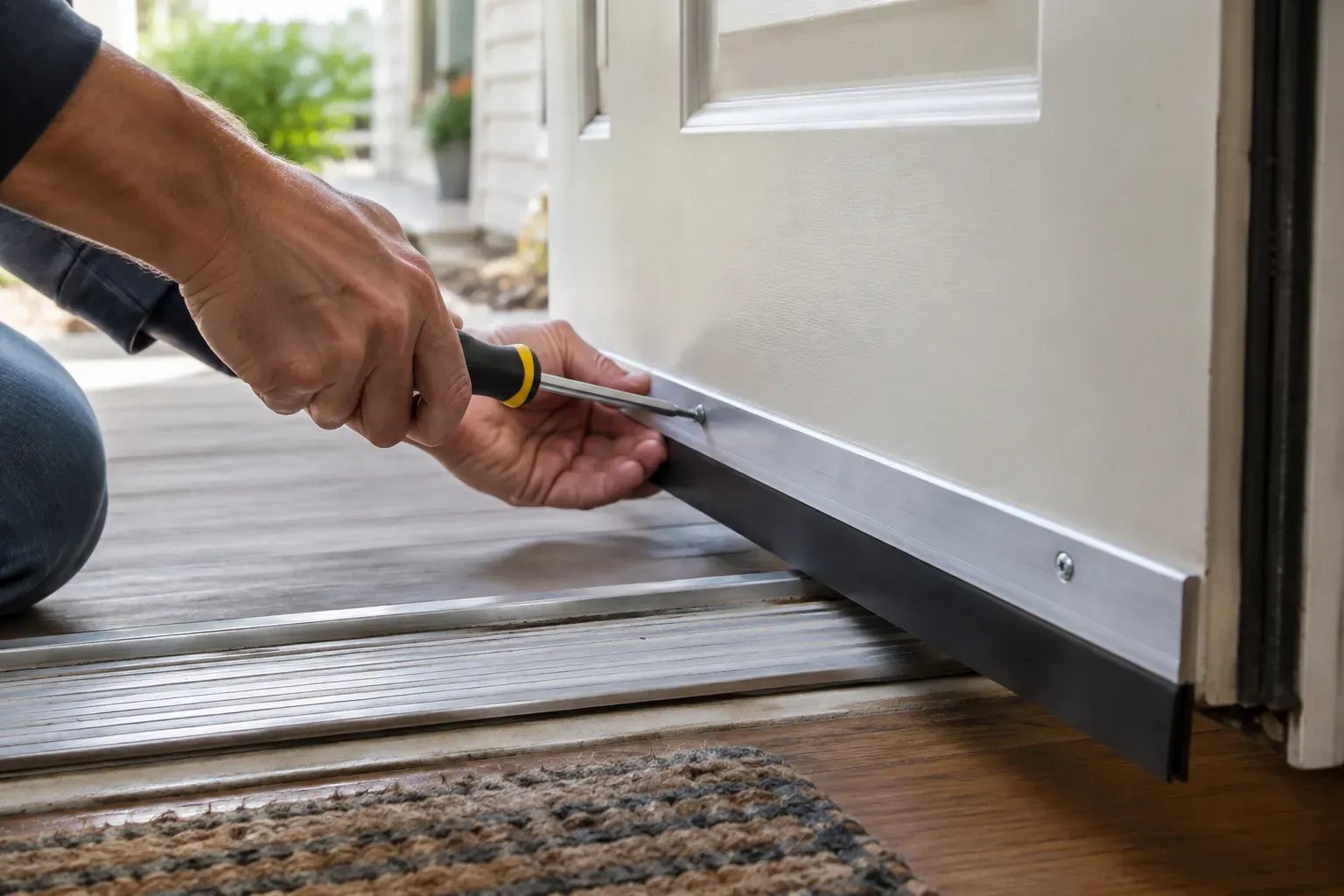
Illustration: fitting a door sweep so the door meets the threshold.
Step 5: Clean Up Around the House
Keep ground cover and mulch at least 12 inches from the foundation (NC State), and move firewood, stones and debris away from the walls, since camel crickets shelter under them outdoors.
If crickets still come in large numbers after all five steps, Missouri Extension says cricket baits work particularly well indoors; use one labeled for crickets, only in cracks and crevices where they hide, and treat it as a temporary fix.
How to Find a Chirping Cricket at Night
Only adult males chirp, by rubbing their wings together (Missouri). The sound can be hard to place, so find it step by step:
- Turn off the TV and fans and stand still in the room where it’s loudest.
- Move slowly toward the sound. It stops when you get close; wait, and it starts again.
- Check low and dark spots: behind appliances, under furniture, in closets and along baseboards.
- Use a flashlight, then vacuum it up or catch it under a cup.
What It Costs
| Item | Typical cost |
|---|---|
| Glue boards, 12-pack | $10.49 |
| Aluminum door sweep, 36 in. | $10.43 |
| Silicone caulk, 2.8 oz | $5.29 |
| DIY total | About $21, or $26 with caulk |
| Portable dehumidifier, if the basement is damp | $130–150 |
Glue boards and caulk: October 1, 2026 list prices from our roach guide. Door sweep: Home Depot list price, October 2026, from our lady beetle guide. Dehumidifier: Target, October 1, 2026, from our dehumidifier guide. Before tax.
When to Call a Pro
If crickets keep coming in by the hundreds after you’ve sealed the gaps and dried the basement, or you want a cricket bait applied in cracks and crevices and aren’t comfortable doing it yourself. Crickets are one of several fall invaders handled the same way: seal before they arrive.
Common questions
Cooler nights in fall drive field and house crickets indoors, and camel crickets come in looking for a damp place to spend the winter (Missouri). Outdoor lights and a wet basement make a house more inviting.
No. The University of Arizona Extension says none of the common crickets bite or spread disease; they’re a nuisance mainly because of the chirping.
They can. Missouri Extension says field crickets indoors feed on cotton, linen, wool, silk and fur, and items soiled with perspiration or food are more likely to be damaged. Camel crickets seldom damage anything, though NC State notes they can damage garments and linens packed in boxes in a damp garage or basement.
None of the extension guides we checked gives a number. Indoors, crickets need moisture and food; drying out the room and trapping them is faster than waiting.
The Bottom Line
Sticky traps in corners, a dry basement, yellow outdoor bulbs and sealed gaps handle most cricket problems. Check which cricket you have first: lights matter for house and field crickets, moisture matters for camel crickets.
Sources and further reading · 7
- University of Missouri Extension: House-Invading Crickets (G7366): identification, why they come in, fabric damage, lights, sticky traps, sealing, baits and sprays.
- NC State Extension: Camel Crickets: identification, chirping, sticky boards, sealing, mulch distance, moisture.
- Clemson HGIC: House and Field Crickets: fabric damage, lights, screening, vacuuming, sticky traps, moisture.
- University of Maryland Extension: Crickets: moisture and camel crickets.
- Rutgers NJAES: Cave Crickets (Camel Crickets) (FS1129): dehumidifying basements.
- University of Arizona Cooperative Extension: Crickets: crickets don’t bite or spread disease.
- Prices: glue board, caulk, door sweep and dehumidifier list prices from October 2026, as cited in the linked Pest.gg guides.