Dehumidifier for Silverfish: Does It Work, and What Size to Buy
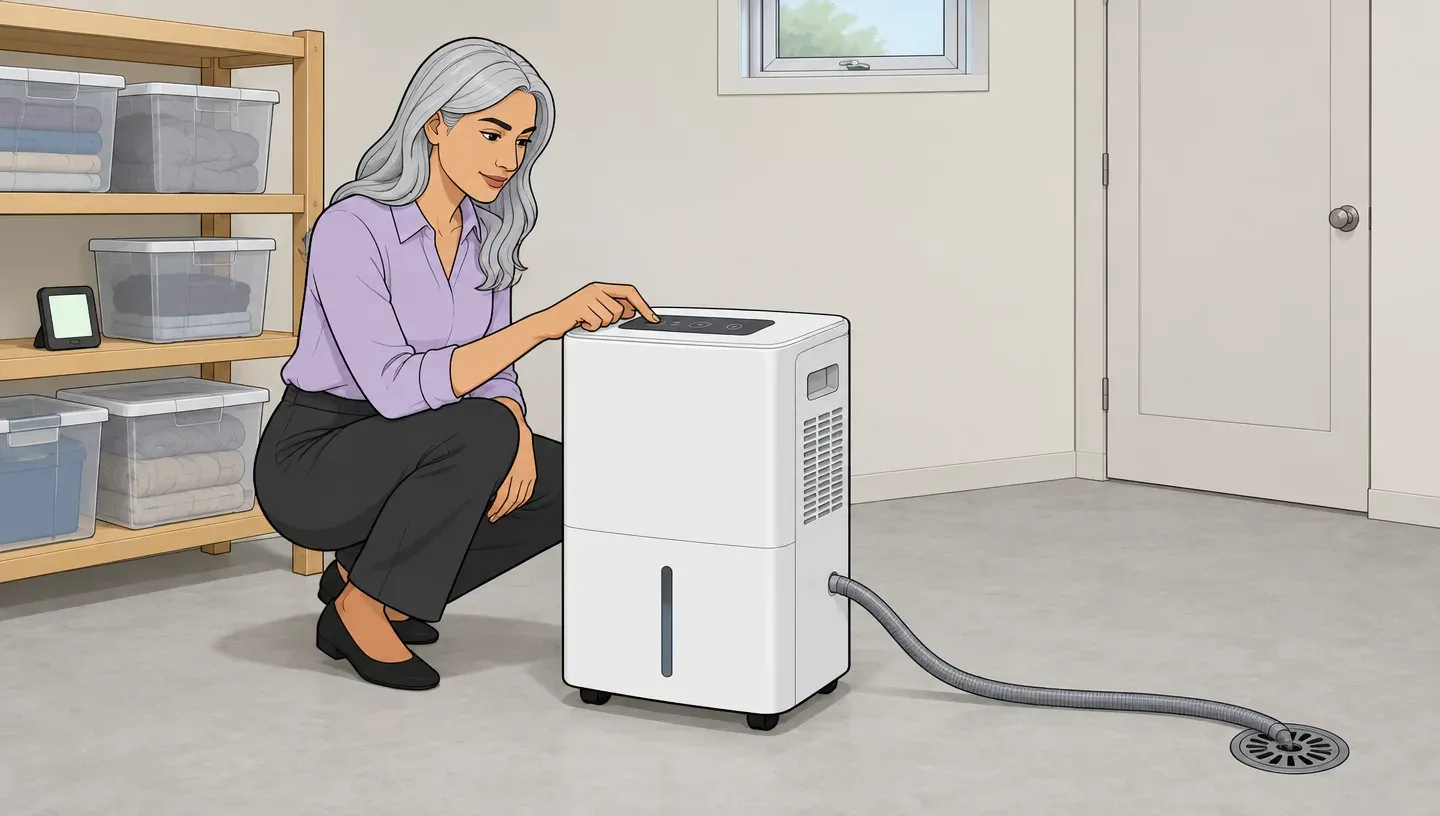
Illustration: a portable dehumidifier in a basement, its hose running to the floor drain and a small hygrometer on the shelf behind it.
A dehumidifier for silverfish works as part of the fix, not all of it. A portable ENERGY STAR unit holding the worst room at 30–50% humidity makes it hard for silverfish, springtails and house centipedes to live there. Fix leaks and run fans first, skip tiny countertop units, and keep sticky traps out to see it working.
Cost: about $140–160 in supplies. Difficulty: easy. Call a pro if you find a hidden leak or water seeping through basement walls, want a whole-home unit installed, or silverfish keep turning up weeks after humidity is under 50%.
This guide compares the ways to dry out a room, from free fixes to a whole-house unit, then covers size, placement and running cost. We haven’t tested dehumidifiers ourselves; this rests on UC IPM, Cornell, Minnesota, Kansas State and Utah State extension guidance, EPA and ENERGY STAR advice, and list prices. Traps and dusts are in our plan to get rid of silverfish.
How We Compared Ways to Dry Out a Room
We rated each option on five things:
- Effect on moisture bugs: what extension guides say it does for silverfish and their damp-loving neighbors.
- Coverage: a closet, one room, or the whole house.
- Upfront cost: U.S. list prices checked October 1, 2026.
- Running cost: electricity, from ENERGY STAR efficiency figures and the July 2026 U.S. average rate.
- Effort: install, emptying the bucket and permission if you rent.
Sources are listed at the end.
Does a Dehumidifier Get Rid of Silverfish?
It helps, but rarely finishes the job alone. UC IPM says silverfish require a lot of moisture, so dehumidifiers in closed spaces can help discourage them; at higher temperatures they need relative humidity above 75%.
Extension advice puts drying the room alongside fixing leaks, sealing cracks, clearing clutter and sticky traps. One Reddit poster ran a dehumidifier “nearly 24/7 to the point where it’s drying ME out” and still found silverfish: adults already hiding in wall voids and boxes don’t vanish the week the air dries.
Silverfish don’t bite people; they scrape paper and fabric, and Cornell IPM counts them as a nuisance pest and a sign of damp (are silverfish harmful?). Two look-alikes behave differently. Mottled gray or brown firebrats live in hot spots above 90°F at humidity as low as 30%, so a dehumidifier won’t bother them. Tiny pale booklice in old books need at least 60% humidity (Utah State IPM), so drying works on them too.
What Humidity Keeps Bugs Away?
Aim for 30 to 50% relative humidity, never above 60%. That’s the EPA’s indoor moisture guideline, and university pest guides use it for “moisture pests” like springtails, silverfish and house centipedes. The target sits below silverfish’s 75% because it also covers booklice and mold.
Set the humidistat to 45 or 50%, not the lowest setting; running at 30% just costs more. In cold climates, ENERGY STAR suggests 30 to 40% during heating season to prevent window condensation.
Ways to Dry Out a Room at a Glance
| Option | Cost | Best for | Main limitation |
|---|---|---|---|
| Fans and fixing leaks | Little or nothing | Every home, before buying anything | Still over 50% afterward? You need a machine |
| Hygrometer | $9.99–$11.99 | Finding the worst room | Measures; doesn’t dry |
| Portable dehumidifier | $129.99–$149.99 | One damp basement, bathroom or closet | Bucket needs emptying without a drain hose |
| Tiny countertop unit | — | A closet at most | Too small for a room |
| Whole-house dehumidifier | Contractor quote | Damp air in most rooms every summer | Needs ducts and a contractor to install |
| Sealed bins and silica gel | — | Books, papers and boxes | Only protects what’s inside |
Hygrometer and portable unit (25–32 pints/day, ENERGY STAR): Target list prices, October 1, 2026, before tax.
Fans and Leak Repairs: Do These First
Cornell IPM puts it plainly: the moisture is the problem and the pests are the symptom. Before you buy anything, run the bathroom fan during and after showers, wipe up standing water and check under sinks for drips.
Then repair drips under sinks, tubs and the fridge drip pan, and wrap sweating cold-water pipes with pipe insulation. Vent the dryer and bathroom fans outdoors, not into the attic. Outside, extend downspouts, clear gutters and pull mulch back from the foundation.
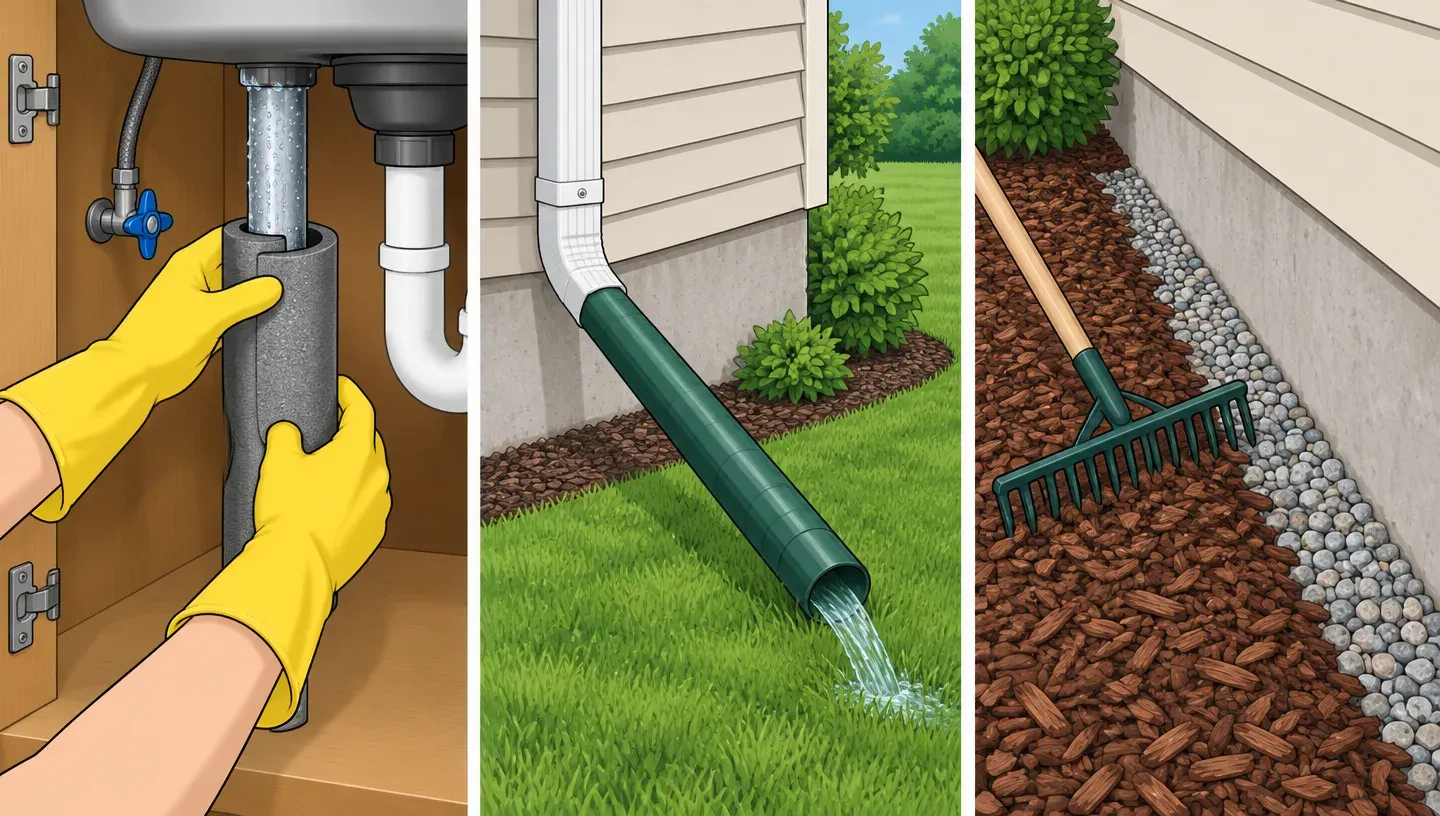
Illustration: pipe insulation going onto a sweating pipe, a downspout extension and mulch pulled back from the foundation.
Best for: every home, and renters, who can do the first steps without permission.
Main limitation: if the hygrometer still reads over 50% afterward, you need a machine.
Portable Dehumidifier: The Right Buy for Most Homes
For silverfish, a portable unit is almost always enough, because they gather in one or two damp rooms. ENERGY STAR sizes units by pints of water removed per day and says it’s better to oversize than undersize. For a room or apartment under 2,000 sq ft:
| Your hygrometer reads | Capacity |
|---|---|
| 50–75% (musty now and then) | 20–30 pints/day |
| 75–90% (damp spots on walls or floors) | 25–40 pints/day |
| 90–100% (walls sweat or water seeps in) | 30–50 pints/day |
Look for a built-in humidistat, which every ENERGY STAR model has, and a hose fitting for continuous drain if you have a floor drain or sump pump. If the room drops below 65°F, buy a low-temperature or anti-frost model: frost on the coils can stop it removing water. Round up if you’re between sizes.
Best for: a damp basement, bathroom or closet where bugs gather.
Main limitation: without a drain hose you empty the bucket by hand, often daily in a damp basement.
Countertop Mini Units: Skip Them for a Room
Tiny countertop units are too small for anything bigger than a closet. “I bought a very small countertop dehumidifier and I might as well have thrown my money away,” one Reddit poster wrote about a silverfish-prone bathroom.
Best for: a closet, if anything.
Main limitation: can’t keep up with a bathroom or basement.
Whole-House Dehumidifier: Only When Every Room Is Damp
A whole-house unit connects to your home’s air ducts and is plumbed to a drain, and ENERGY STAR suggests a contractor size and install it. It’s worth a quote only if your hygrometer reads high in most rooms even after leaks are fixed and fans are running.
Best for: damp air throughout the house, every summer.
Main limitation: installation by a contractor, for a pest that usually sticks to one or two rooms.
Sealed Bins and Silica Gel: For Closets and Boxes
Keep books and papers in sealed plastic bins, not cardboard; silica gel packs help in small enclosed spaces. This protects what silverfish and booklice feed on while the room dries.
Best for: stored papers, books and clothes.
Main limitation: it doesn’t lower the humidity of the room.
How to Set Up a Dehumidifier for Bugs
Step 1: Measure for a few days. Put a hygrometer where you see bugs, away from the shower, and note morning and evening readings. Check the basement, closets and the bathroom an hour after a shower; already under 50%? Look for a local leak instead of buying a machine.
Step 2: Put it in the worst room, doors shut. ENERGY STAR says to keep doors and windows closed while it runs, and to keep the unit away from walls and furniture unless it blows air out the top. In a basement, set it near the floor drain so the hose is short.
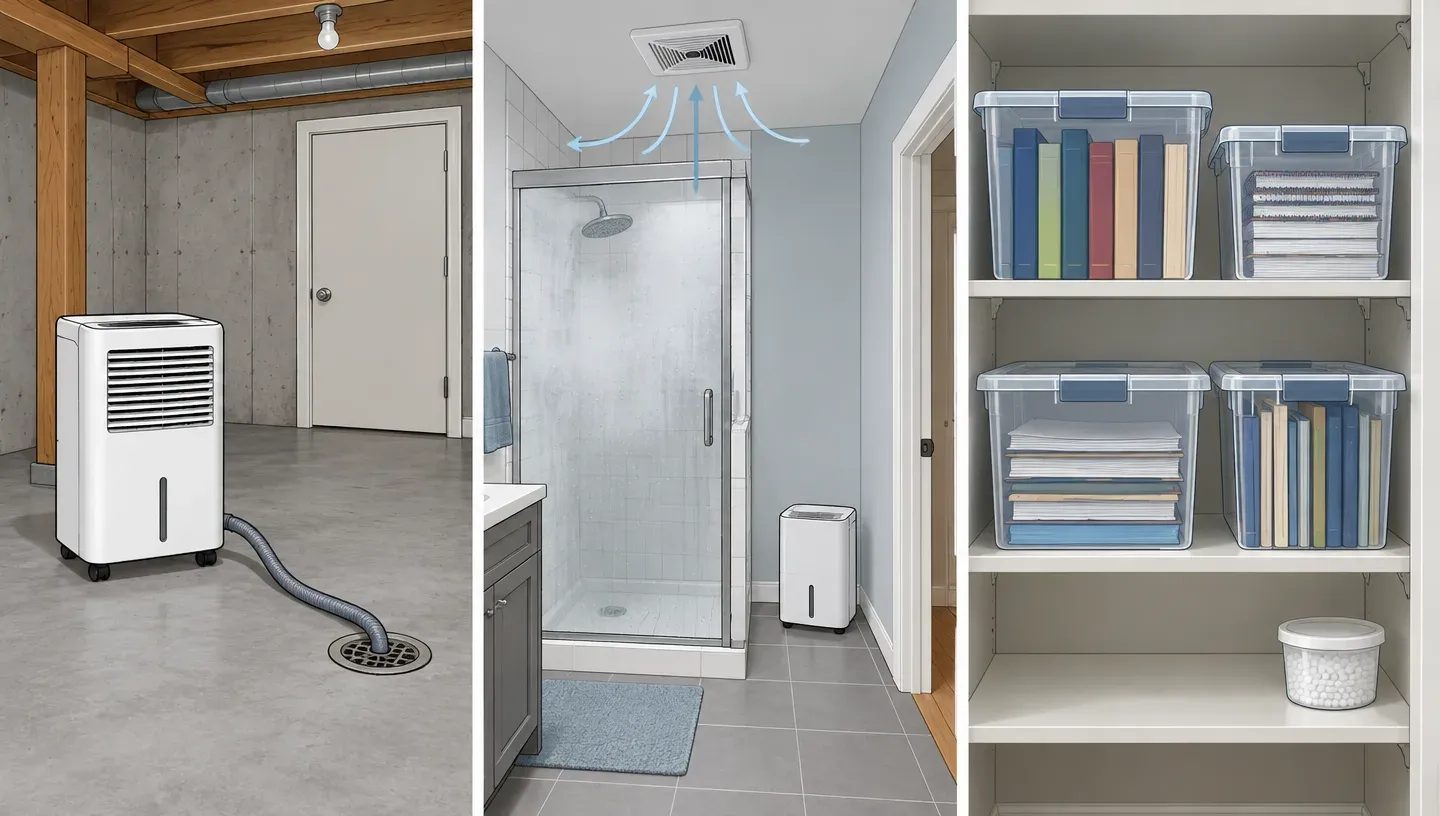
Illustration: a basement dehumidifier draining to the floor drain, a bathroom exhaust fan over the shower, and a closet with papers in sealed bins.
Step 3: Keep it safe in a bathroom or apartment. Place it outside splash range, on a grounded outlet. With no drain, empty the bucket by hand; most units warn you and shut off when it’s full (ENERGY STAR).
Step 4: Track humidity and catches for a month. The hygrometer should hold under 50% day and night, and sticky traps along the baseboards should catch fewer each week. Steady catches after several weeks mean a hidden leak or time for the full silverfish plan.
Springtails, Centipedes and Roaches: Where Drying Helps
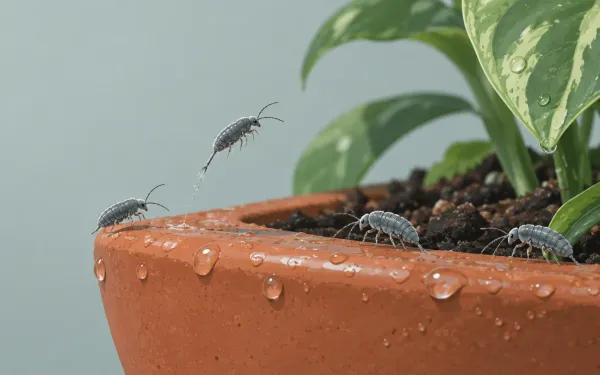
For springtails, the tiny dark “moisture bugs” that jump when poked, drying out is the treatment. University of Minnesota Extension calls moisture control the most effective option, recommends a fan or dehumidifier, and says pesticides don’t work on them indoors; see how to get rid of springtails.
House centipedes favor basements, sump-pump areas and bathrooms because they’re humid. Kansas State pairs a dehumidifier or fan with sticky boards, clearing clutter and sealing outside openings, and says not to spray insecticides indoors for them.
Two other damp-lovers turn up in basements and ground-floor rooms: pill bugs and millipedes. Indoors both dry out and die within a day or two, so finding many points to a damp spot or a gap under a door, according to the University of Kentucky. Drying the room and sealing the gap is the fix; neither needs a spray.
Most roaches like damp too: American cockroaches prefer humid spots above 82°F, and oriental cockroaches, the “water bugs” from floor drains, favor cool, damp basements (UC IPM, Utah State). For German roaches in a kitchen, drying is a side measure next to baiting; compare a water bug and a cockroach, then see how to get rid of roaches.
Which Option Fits Your Situation
| Situation | What to use | Why |
|---|---|---|
| Silverfish in a damp basement | Portable unit draining to the floor drain | They gather in one damp area; a hose saves daily emptying. |
| Bugs in the bathroom | Exhaust fan during and after showers, then a unit | Shower steam is the usual source there. |
| You rent | A portable unit, plus leaks reported in writing | It needs no permission; leaks and broken fans are the landlord’s. |
| Old books or boxes | Sealed plastic bins, silica gel in small spaces | Booklice need 60% humidity; bins protect what they eat. |
| Every room reads high | Whole-house unit, sized by a contractor | A portable unit only dries one room. |
| Room colder than 65°F | A low-temperature or anti-frost model | Frost on the coils stops water removal. |
What It Might Still Cost
Running it costs about $26 a month at 20 pints a day, less once the room is dry: roughly 4 cents per pint.
| Item | Cost |
|---|---|
| Hygrometer | $9.99–$11.99 |
| ENERGY STAR dehumidifier, 25–32 pints/day | $129.99–$149.99 |
| Electricity, 20 pints a day for 30 days | About $26 |
| Pro silverfish treatment | $200–$700 (about $400 average) |
Retail: Target, October 1, 2026, before tax. Pro: Fixr. Electricity is our math from ENERGY STAR’s minimum efficiency (2.01 liters per kWh) and the U.S. average of 18.31¢ per kWh in July 2026 (EIA); your rate changes it. The bill drops because the humidistat cycles the unit off, and certified models use about 20% less energy than comparable standard ones.
Before You Buy: A Quick Checklist
- Run the bathroom fan and fix drips before spending anything.
- Measure with a hygrometer for a few days to find the worst room.
- Size up, not down, using the pints-per-day table.
- Check for a humidistat and a drain-hose fitting.
- Set it to 45–50%, not the lowest setting.
- Keep the doors shut while it runs.
- Count sticky-trap catches weekly for a month.
When to Call a Pro
Call one if water seeps through basement walls or you suspect a leak inside a wall, if you want a whole-home unit sized and installed, or if silverfish keep turning up for weeks after the room is dry. Ask whether follow-up visits are included.
Common questions
Measure first, then run a correctly sized unit with the doors closed and the humidistat at 45–50%. Dry air makes the room hostile; traps and dusts remove the silverfish already there.
Yes. They need high humidity, which is why they gather in bathrooms, laundry rooms and basements. Their look-alike, the firebrat, is the exception and does fine in dry heat.
The Bottom Line
Fix leaks and run fans first, then put a correctly sized portable dehumidifier in the worst room with the humidistat at 45–50%. It’s working when the hygrometer stays under 50% and weekly trap catches drop.
Sources and further reading · 11
- UC IPM: Silverfish and Firebrats, Springtails, Cockroaches.
- Utah State: IPM for Silverfish, Firebrats, and Booklice, Oriental Cockroach.
- NC State Extension: Silverfish and Firebrats.
- University of Minnesota Extension: Springtails, House centipede.
- Colorado State Extension: Springtails.
- Kansas State: House Centipede.
- University of Kentucky Entomology: Sowbugs and Pillbugs (EF439) and Millipedes (EF645).
- Cornell IPM: Moisture Pests.
- EPA: A Brief Guide to Mold, Moisture and Your Home.
- ENERGY STAR: Dehumidifiers, Key Efficiency Criteria.
- U.S. EIA: Average Price of Electricity, July 2026.