How to Get Rid of Clothes Moths for Good: A DIY Plan
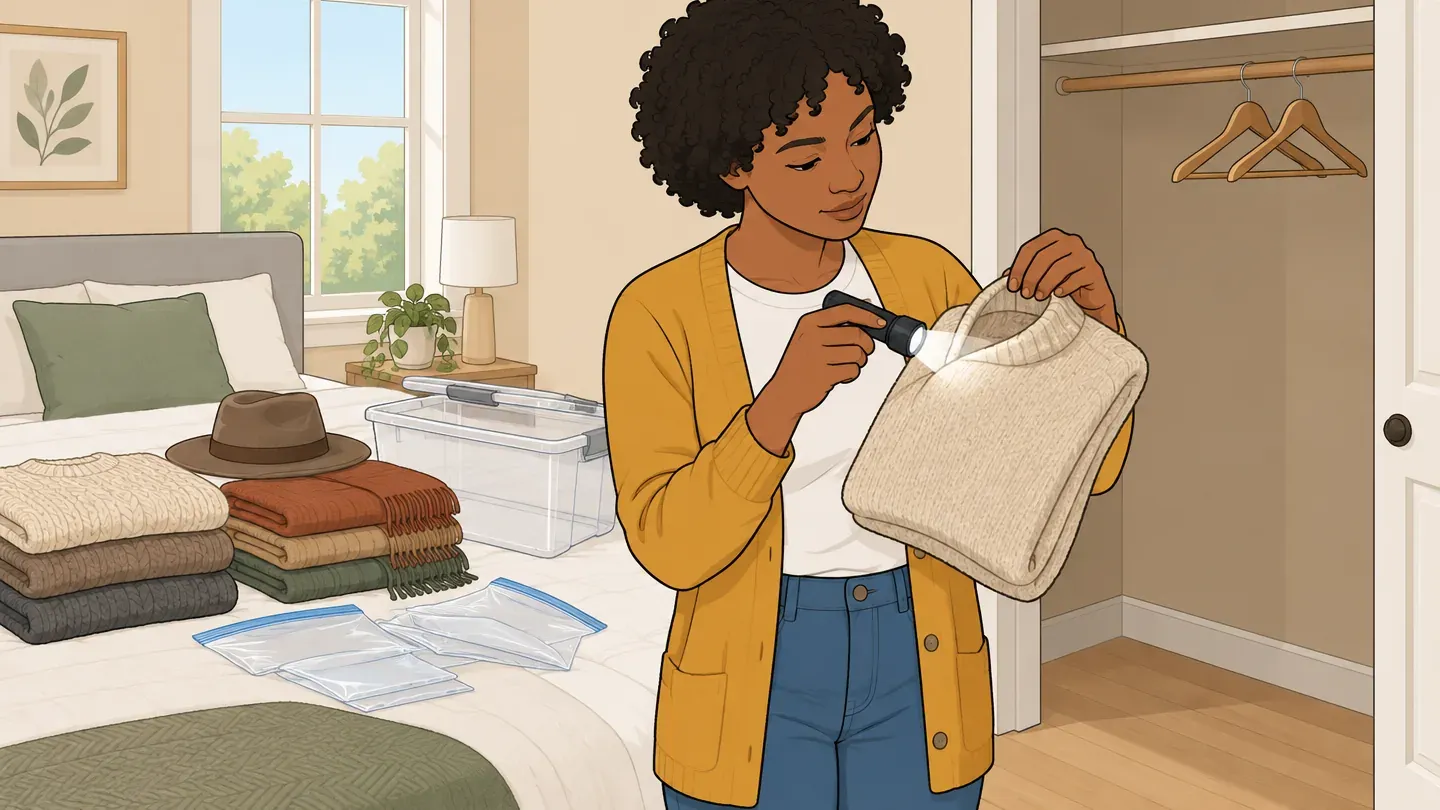
Illustration: empty the whole closet and check collars, cuffs and folds, where larvae like to feed.
To get rid of clothes moths, empty the closet and find every infested wool, fur or feather item. Wash it hot, dry-clean it or freeze it, vacuum the closet and carpet edges, then store woolens clean in airtight bags or bins. Pheromone traps show whether it worked: no new moths in them over the following months.
Saw a clothes moth tonight? Don’t spray your clothes. Pull the wool, fur and feather items out of that closet or drawer and bag them. Freeze small pieces or put washables through a hot wash or hot dryer now; the rest can wait sealed until you work through the steps below.
Cost: about $11 in supplies. Difficulty: moderate. Call a pro if moths are in feather- or hair-stuffed furniture, pillows or mattresses you can’t wash or freeze, the infestation has spread through the house, or moths keep turning up months after a full cleanout.
Moths in your closet, or holes in a sweater you just unpacked for fall? Clothes moth adults don’t feed at all; their caterpillars eat only animal fibers such as wool, fur and feathers (University of Kentucky), usually somewhere dark you haven’t looked. So clothes moth control is mostly finding and cleaning, not spraying. This guide covers webbing and casemaking clothes moths in closets, rugs and furniture. It won’t promise a quick end: confirming the job worked takes a full life cycle of four to six months, and stuffed furniture may need a pro.
What Works and What Doesn’t Against Clothes Moths
| Method | Works? | Cost | Main limitation |
|---|---|---|---|
| Finding infested wool, fur and feathers | Yes, the core fix | Free | Sources hide in rugs, vents and nests |
| Hot wash, hot dryer, dry cleaning | Yes, kills all stages | Laundry or cleaner’s bill | Only for items that can take it |
| Freezing two weeks at 0°F | Yes | Freezer space | Slow in batches |
| Vacuuming closet, carpet edges, vents | Yes | Free | Empty the vacuum right away |
| Pheromone traps | To monitor, partly reduce | $10.99 for 2 | Males only; species-specific lure |
| Sprays, cedar, lavender | Rarely | $13.69 for 3 killer units | Can’t reach larvae inside fabric |
Is It Clothes Moths or Something Else?
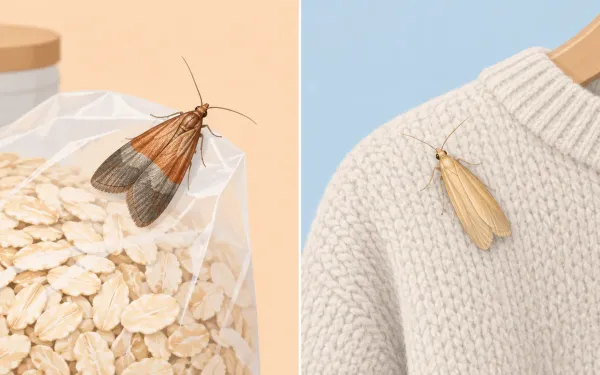
Clothes moths are about ¼ inch long at rest and gold or buff. They flutter weakly near what they’re infesting, often in a dark closet. Most pantry moths are about twice as long and fly around the house in a steady line (UC IPM), so telling pantry moths from clothes moths comes down to size, flight and where you see them.
| What you see | Most likely |
|---|---|
| Small gold moth fluttering in a closet | Webbing clothes moth |
| Larger moth flying around the kitchen | Pantry moth |
| White caterpillar with a dark head in silk tubes on wool | Webbing clothes moth larva |
| Larva carrying a silk case the color of the fabric | Casemaking clothes moth larva |
Moths flying around the kitchen breed in stored food, so getting rid of pantry moths starts in the cupboards, not the closet. No match in the table? Carpet beetles eat the same fibers.
Besides wool, larvae eat felt and leather. Cotton and synthetics are rarely attacked unless blended with wool or soiled with food stains or body oils. Guides disagree on silk, so clean any silk stored next to damaged wool too.
Step 1: Find Where the Clothes Moths Are Breeding
Clothes moths hide, so you may find damage before you see a moth. Empty the closet or drawer and check each animal-fiber item under collars and cuffs, along seams and in folds. Look for silk tubes or mats with droppings in them, thin grazed spots and holes. The droppings are often the color of the fabric.
Start with wool you rarely wear: clothing worn two or three times a week is rarely damaged (Oregon State). Then check these common sources:
- A wool scarf or felt hat at the back of the closet
- An old rug in the basement, or the edges and undersides of wool rugs
- Carpet under furniture, and upholstered furniture
- Heat ducts and floor vents full of lint and pet hair
- A bird or squirrel nest in the attic, chimney or a wall
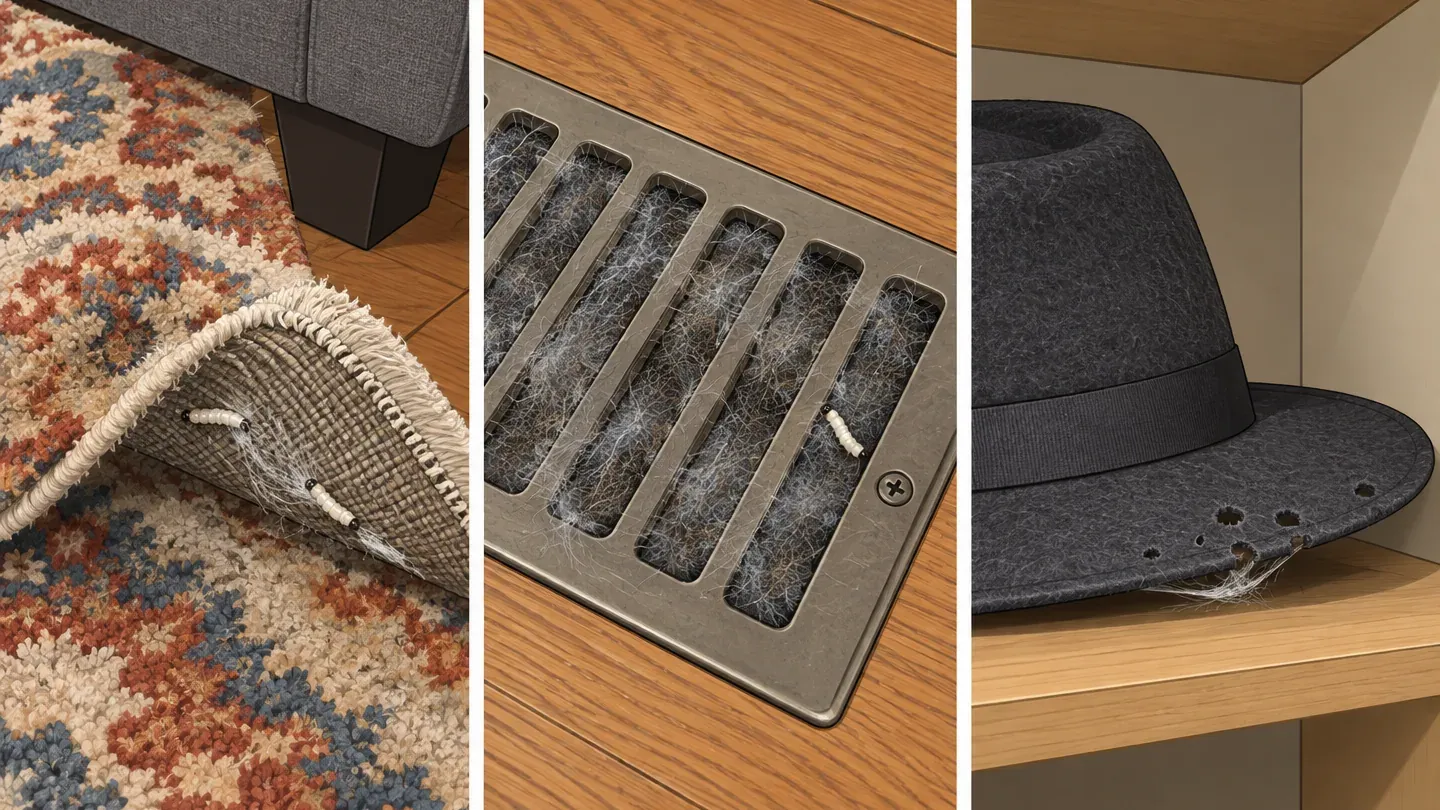
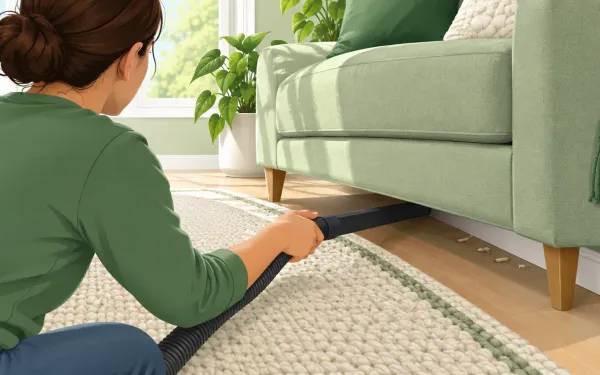
Illustration: rug edges under furniture, lint-filled vents and forgotten wool are common sources.
Step 2: Wash, Dry-Clean or Freeze Everything in the Closet
Launder, dry-clean or throw out infested items and anything susceptible nearby. Bag heavily infested items before you carry them through the house.
- Washables: 20 to 30 minutes in water of at least 120°F kills all stages (UC IPM). Not sure your hot cycle gets that hot? A hot dryer also kills eggs and larvae.
- Wool that can’t take hot water: dry-clean it or freeze it.
- Rugs and coats: dry-clean them, or hang them in the sun, brush them and vacuum them. Brushing destroys eggs, and larvae drop off in bright light.
- Hats, delicates and anything else: freeze it.
To freeze: seal items in plastic bags and freeze them for two weeks at 0°F or colder. That covers every guide listed below. Short on space? Freeze in batches and keep the rest bagged.
Let items warm up for about a day before opening the bag, so condensation forms on the outside (University of Kentucky).
Step 3: Vacuum the Closet, Carpet Edges and Vents
Vacuum the empty closet’s cracks and crevices, then wash walls and shelves with soapy water. Also vacuum the spots people miss: under heavy furniture, along baseboards, inside and behind heaters, and inside vents. Empty the vacuum right away, since it can hold eggs and larvae. Most wall-to-wall carpet is synthetic, which clothes moths don’t eat (UC IPM).
If yours is wool, or traps keep pointing to a carpeted room, lift the carpet edge off the tack strip along the wall with needle-nose pliers and vacuum underneath (University of Kentucky). Renters should ask the landlord in writing first.
Step 4: Store Woolens Clean and Sealed
Cleaning kills eggs and larvae and removes the sweat odors that attract them.
- Pack woolens airtight in tight-fitting plastic bags or containers.
- Check stored woolens at least once a year (Colorado State).
- Inspect secondhand wool, rugs and furniture before bringing them home.
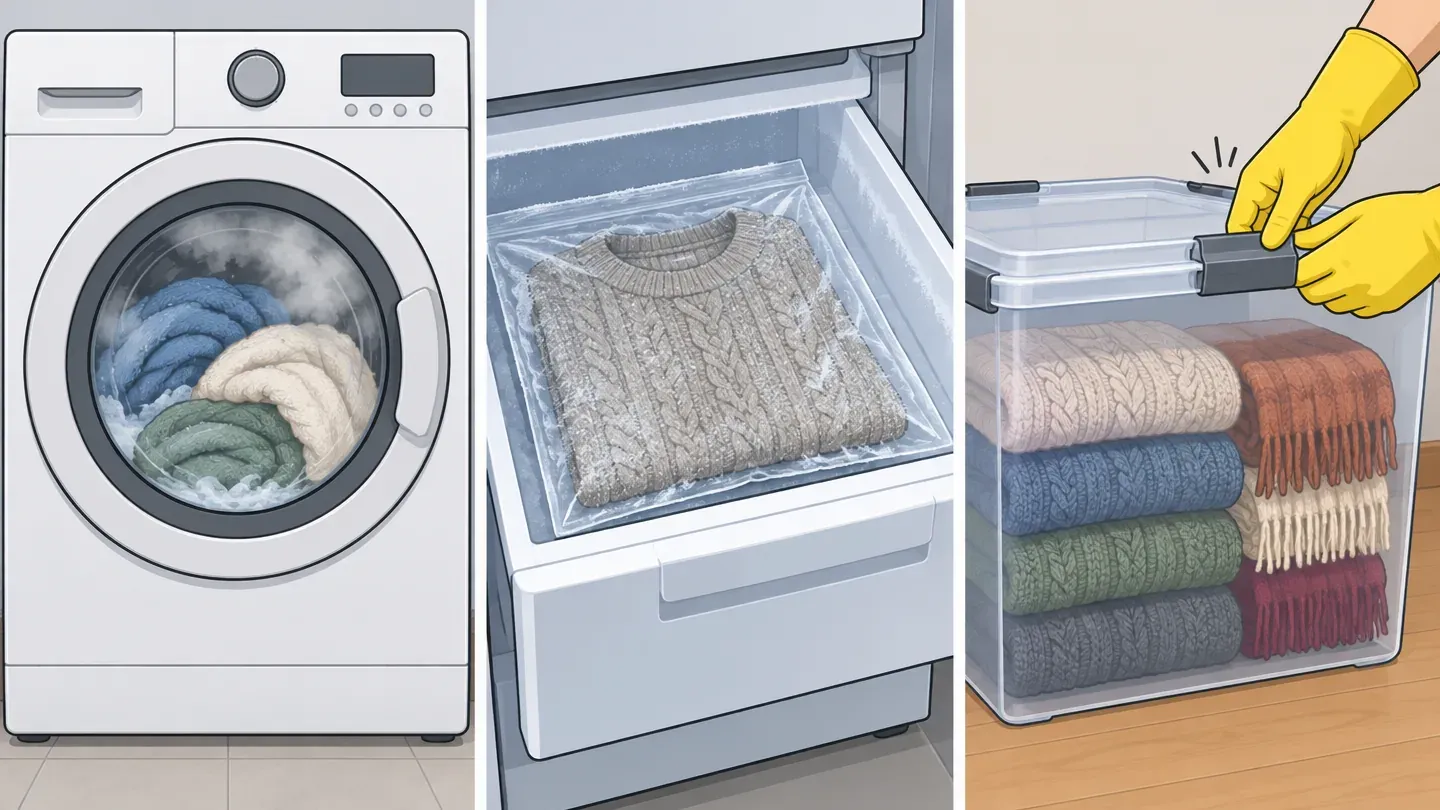
Illustration: wash hot or freeze, then store woolens clean in a sealed bin.
Step 5: Use Pheromone Traps to Check Your Work
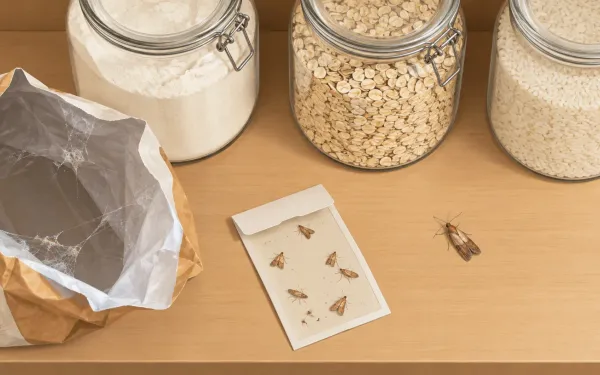
Clothes moth traps are sticky cards with a lure that attracts males only. They detect an infestation and help reduce it, but they don’t replace cleaning.
- Buy traps for webbing clothes moths. UC IPM calls it the most common clothes moth in the U.S. The casemaking moth needs its own lure, and pantry moth traps catch neither.
- Place them on closet shelves and wherever wool is stored, out of reach of pets and toddlers. The maker of the traps priced below suggests one or two per average-sized room and says each lure lasts up to 3 months.
- Use several to find the source. Traps with the most catches tend to be closest to infested items.
Do You Need a Clothes Moth Spray or Killer?
Usually not. Larvae sit inside materials where sprays can’t reach, and infested clothing or bedding shouldn’t be sprayed. University of Kentucky entomologists limit insecticide to carpet edges and closet floors, alongside cleaning.
UC IPM allows one exception: an item you can’t clean, heat or freeze may be sprayed with a product that lists clothes moths on the label, usually pyrethrins. Test a hidden spot first and follow the label.
A hanging clothes moth killer unit is labeled to treat one standard closet for up to 6 months, but it’s a pesticide and doesn’t replace cleaning.
Have kids or pets? You can skip pesticides entirely: heat, cold and vacuuming do the killing. If you use a killer unit anyway, its maker says it isn’t safe around pets; keep cats away from treated areas.
Mothballs, Cedar and Lavender: What Actually Works
Mothballs work only sealed in. They are pesticides, and labels typically require a tightly closed container. Used any other way, such as loose in an open closet or set out to keep mice away, they can harm people and pets (NPIC).
Keep them where young children and pets can’t reach: eating one naphthalene mothball can damage a young child’s red blood cells (Oregon State).
If someone may have swallowed one, call Poison Control at 1-800-222-1222. Wash clothes stored with mothballs before wearing them.
Cedar is weaker than its reputation. Its oil kills small larvae but not large ones and fades after several years, so a tightly built chest matters more than the wood (UC IPM).
Herbal oils such as lavender: UC IPM says little is known about how well they work.
Why Do Clothes Moths Keep Coming Back?
“I’ve been haunted by clothing moths for almost a year with no solution,” one Reddit poster wrote, after hot-washing or dry-cleaning everything and trying lavender and cedar. The usual causes:
- A missed source outside the closet: a rug edge, a lint-filled vent, upholstered furniture, piano felts, animal-bristle brushes or an old nest.
- A dead rodent. Carcasses of rodents killed by indoor poison baits can become breeding grounds for clothes moths (Oregon State).
- An unsealed woolen left in the clean closet.
- New wool brought in, such as secondhand clothes or rugs that weren’t checked first.
How Long Does It Take to Get Rid of Clothes Moths?
Confirming it worked takes months: egg to egg takes four to six months (UC IPM).
Adults die within about a month, and Colorado State calls long-dormant eggs a myth. So moths still appearing two or three months after a thorough cleanout came from larvae you missed. Keep traps out for at least one full cycle, replacing lures as directed. Empty traps through that cycle mean you’re done.
Which Plan Fits Your Situation
| Your situation | Start with | Then |
|---|---|---|
| Holes in one sweater | Empty that closet or drawer | Wash, dry-clean or freeze everything in it |
| Moths but no damage found | Traps in several rooms | Search near the trap with the most catches |
| Wool rug or wall-to-wall wool carpet | Vacuum under furniture and edges | Lift the edge off the tack strip |
| Kids or pets at home | Heat, cold and vacuuming | Skip killer units |
| Stuffed furniture, mattress or pillows | A pro | Fumigation, per UC IPM |
| Moths 2–3 months after cleanout | Rugs, vents, nests, a dead rodent | Keep traps out a full cycle |
What It Might Still Cost
| Item | Typical cost |
|---|---|
| Clothes moth pheromone traps, 2 with lures | $10.99 |
| Clothes moth killer units, 3 (optional) | $13.69 |
| Pro clothes moth treatment (Fixr, Jan. 2025) | $150–$250 |
DIY prices are TERRO list prices on terro.com, October 1, 2026, before tax and shipping. Airtight bins and dry cleaning are extra. Pro: Fixr (January 2025); one homeowner shared a $600 quote for a single room, a single example rather than a market rate.
Before You Start: A Quick Checklist
- Bag heavily infested items before carrying them through the house.
- Check the label or care tag before a hot wash.
- Clear freezer space for two weeks, or plan batches.
- Empty the vacuum outside right after each closet.
- Buy traps for webbing clothes moths, not pantry moths.
- Seal clean woolens in airtight bags or bins.
- Inspect secondhand wool, rugs and furniture before they come in.
When to Call a Pro
Most people can handle clothes moths themselves (UC IPM). Call for help with:
- Feather- or hair-stuffed furniture, mattresses or pillows. Spraying the outside won’t reach the larvae; UC IPM recommends fumigation by a pest control or storage firm.
- Widespread or heavy infestations, or ones that persist after a full cleanout.
Ask what source they found, what they’ll treat and how many visits the price covers. Question any clothes moth pest control plan built on spraying your clothes. More in what an exterminator does.
Common questions
Usually an item that came in already infested. NPIC advises checking used clothes, rugs and furniture with wool, fur or feathers before bringing them home. Once inside, the larvae do best on animal fibers left undisturbed, especially pieces stored with stains or body oils on them.
Not a hot wash. The guides vouch only for hot water, so wool you wash cool should go to the dry cleaner or the freezer afterward.
Not in a heated home, where they keep breeding through winter (UC IPM).
The Bottom Line
Clothes moths are a finding-and-cleaning job. Empty the closet, wash hot, dry-clean or freeze every wool, fur and feather item, vacuum the edges and vents, then store woolens clean and sealed. Traps tell you whether it worked, but only over a full life cycle of four to six months. Not sure moths made the holes? See holes in clothes: moths or carpet beetles.
Sources and further reading · 8
- UC IPM: Clothes Moths
- NPIC: Clothes Moths and Mothballs
- University of Kentucky: Clothes Moths (ENTFACT-609) and Thermal Deinfestation of Household Items (ENTFACT-640)
- Colorado State University Extension: Clothes Moths (5.599), hosted by Maine DACF
- Oregon State University Extension: Mothballs (PNW 606)
- Poison Control: Mothballs Can Be Poisonous
- TERRO (manufacturer): Clothes Moth Alert and Clothes Moth Killer
- Cost guide: Fixr