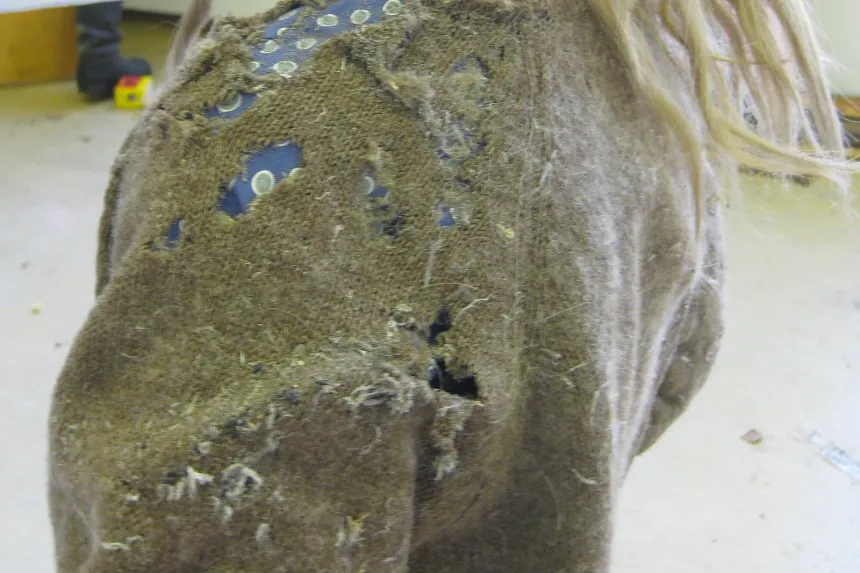
- Size
- Pinholes to irregular holes over 1/2 in
- Looks like
- Holes with grazed or thinned edges
- Where you find it
- Wool, cashmere, silk, fur, felt; stored or rarely worn clothes
- Harmful?
- Damages clothing and rugs
- When
- Year-round indoors
What to do
Holes in wool, cashmere, silk or fur are usually clothes moths or carpet beetles; what’s next to the holes tells you which. Silk webbing points to clothes moths, hollow bristly shed skins to carpet beetles, and a neat row of small holes in cotton T-shirts usually isn’t bugs at all. The one thing to do: shake the item out over white paper and look.
This page matches fabric damage to its likely cause and says how to confirm it. It rests on UC IPM guidance; a pheromone trap settles a suspected moth problem.
What’s Eating My Clothes? Look Beside the Hole
| Main clue (damage) | Clues on or near it | Fabrics | From |
|---|---|---|---|
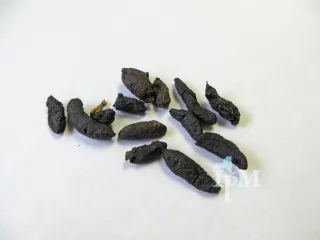
| Irregular holes, fuzz grazed off | Silk webbing or tubes; tiny droppings the color of the fabric | Wool, cashmere, felt, fur | Clothes moths |
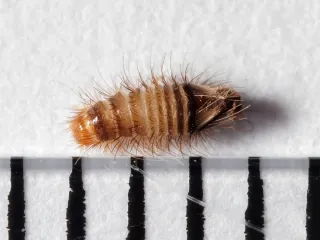
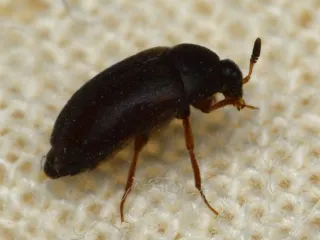
| Irregular holes, often along seams and folds | Hollow, bristly shed skins; no webbing | Wool, silk, feathers, fur | Carpet beetles |
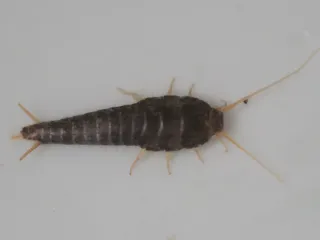
| Thin, grazed patches and yellowish stains | Scales, tiny pepper-like droppings | Cotton, linen, rayon, starched fabric | Silverfish |
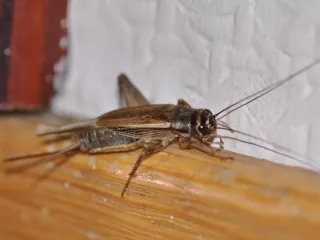
| Ragged holes, often in soiled spots | Crickets nearby, dark droppings | Cotton, wool, silk in basements | Crickets |
| Neat small holes in a line at waist height | No bugs, no webbing | Cotton T-shirts | Friction from belts, counters or jeans buttons |
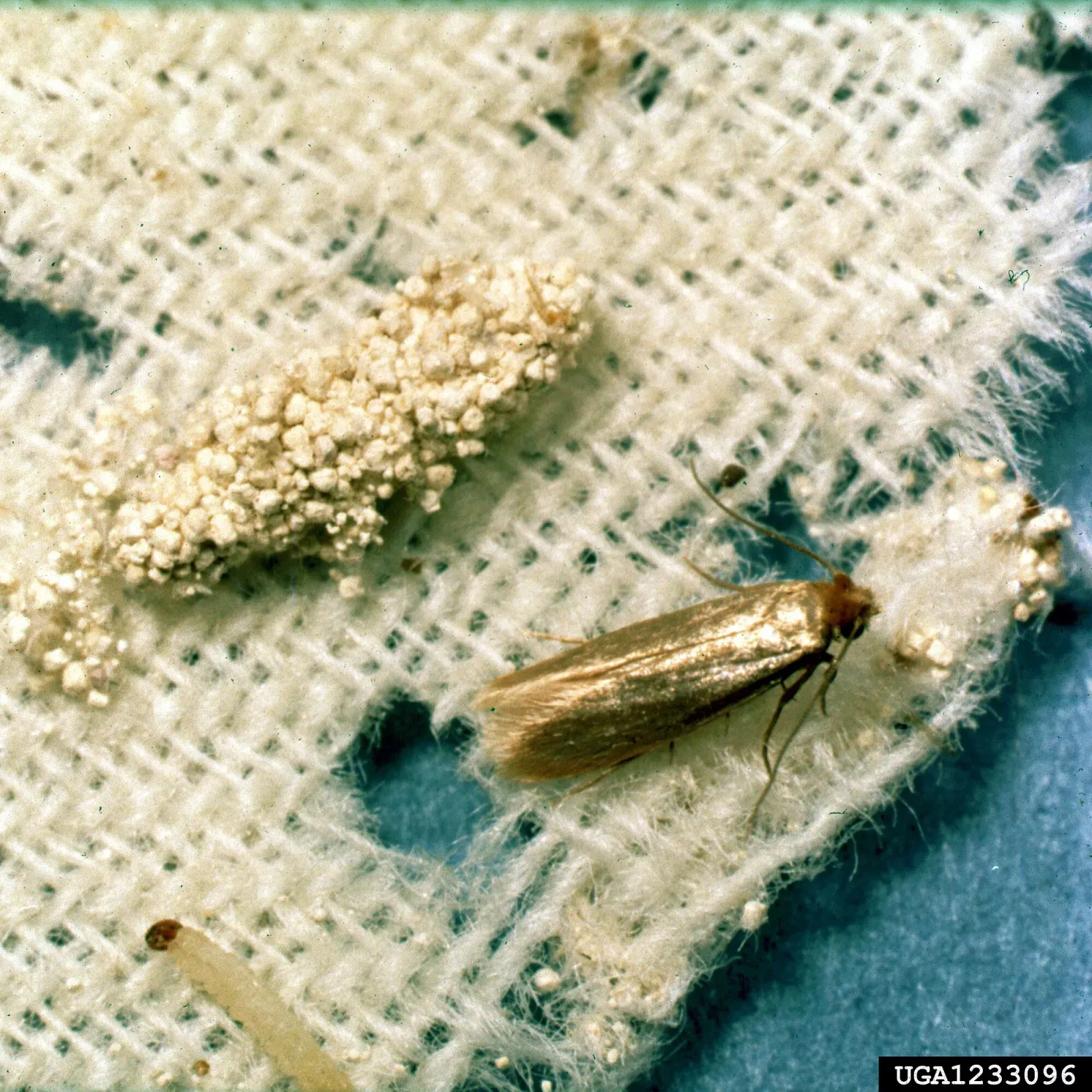
A clothes moth, its larva and crumbly frass beside holes in wool. Photo: Clemson University – USDA Cooperative Extension (CC BY 3.0 us), via Wikimedia Commons.
Clothes Moth vs. Carpet Beetle Damage: Webbing or Skins
Both do the same kind of damage, so the clues next to the holes matter more than the holes. UC IPM notes that webbing clothes moth larvae spin silk mats and tunnels as they feed, while carpet beetle larvae leave no webbing but shed skins as they grow. Carpet beetles also roam from closets to rugs, upholstery and air ducts, while clothes moths stay in dark, undisturbed spots; pantry moths vs. clothes moths covers the moth side.
Main clue: silk webbing or tubes mean clothes moths; hollow, bristly shed skins and no webbing mean carpet beetles.
Why Cotton T-Shirts Get Small Holes: Friction, Not Bugs
Clothes moths and carpet beetles feed on animal fibers such as wool, silk and fur, not plain cotton, unless it’s blended or soiled. A row of small holes across the front of cotton T-shirts at belt height usually comes from friction against belt buckles, countertops or jeans buttons, not insects.
Main clue: a neat line of small holes at belt height, with no webbing, skins or droppings anywhere.
Silverfish and Crickets: Grazed Patches, Ragged Holes
Silverfish graze on starchy fabrics like cotton, linen and rayon, leaving thinned patches and yellow stains rather than clean holes. Crickets that get into basements and garages can chew ragged holes in clothing, especially soiled spots (UC IPM).
Main clue: thinned, yellow-stained patches on starchy fabric mean silverfish; ragged holes in soiled spots, with crickets nearby, mean crickets.
How to Confirm What’s Eating Your Clothes
- Shake out the item over white paper and look for larvae, webbing, droppings and shed skins.
- Check folds, collars and cuffs, and under heavy furniture on wool rugs, with a flashlight.
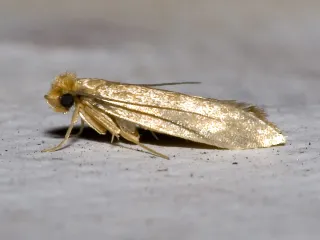
- Hang a pheromone trap in the closet for a few weeks; small golden moths confirm clothes moths.
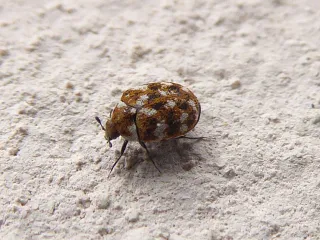
- Look for small spotted beetles on windowsills in spring, a sign of carpet beetles.
What to Do Next: Clean, Freeze or Launder, Then Store Sealed
For moths, follow how to get rid of clothes moths; for beetles, how to get rid of carpet beetles. Both start with cleaning the closet and treating the infested items, not with spraying.
What could have caused it
Sources
- Clothes Moths (UC IPM)
- Clothes Moths (University of Kentucky Entomology, EF609)
- Carpet Beetles (UC IPM)
- Silverfish and Firebrats (UC IPM)
- Crickets (UC IPM)
Last reviewed Oct 4, 2026.