Signs of Carpet Beetles: Shells, Poop and Fabric Damage
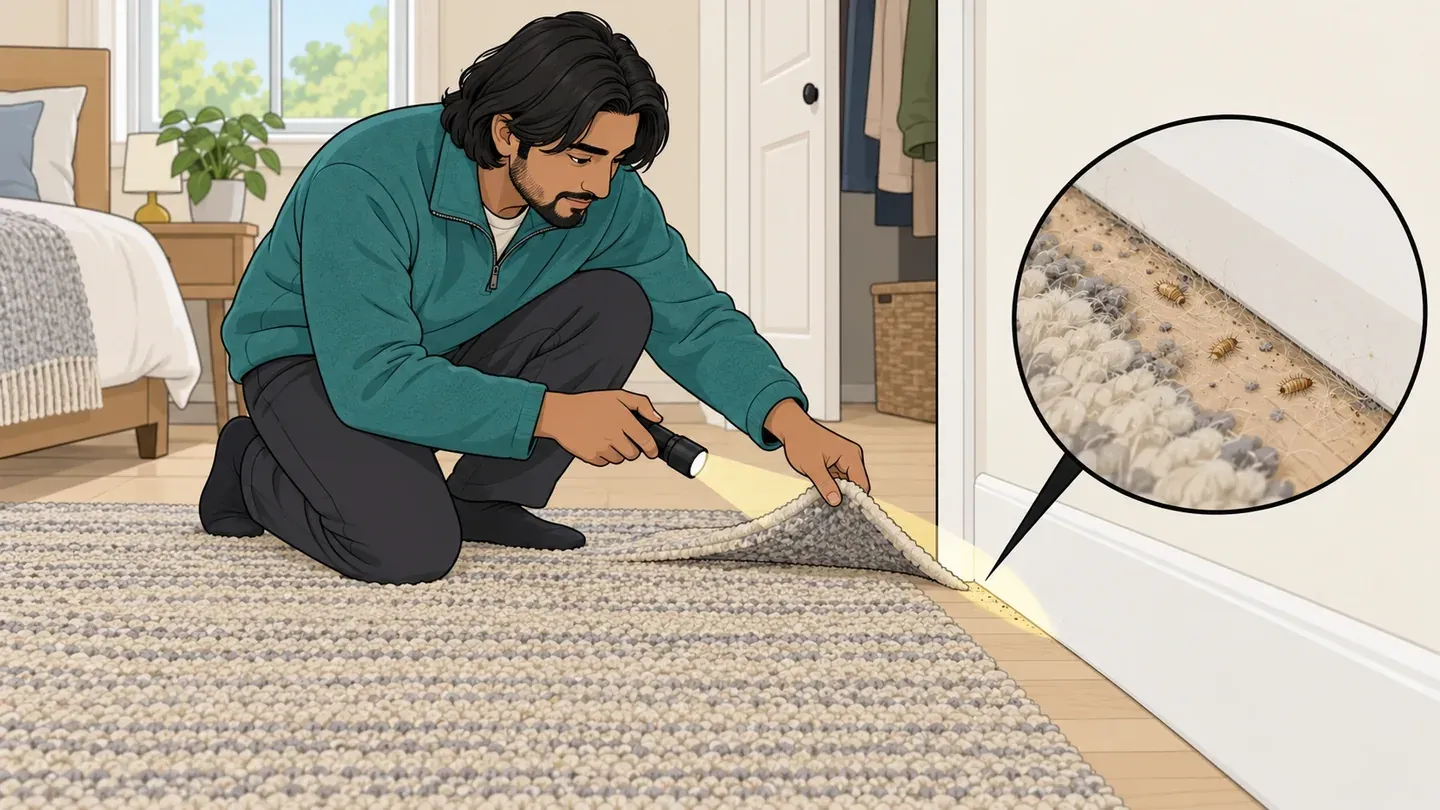
Illustration: a flashlight check under a lifted rug corner, with shed skins along the baseboard.
Signs of carpet beetles are bristly brown shed skins, poop pellets the size of a grain of salt, and one chewed patch in wool, silk, fur or feathers, usually somewhere dark and undisturbed. Skins or live larvae in fabric mean they’re breeding indoors. A few adults on a windowsill don’t. Don’t spray bedding or clothing; check with a flashlight and tape first.
Cost: about $8 in supplies. Difficulty: easy. Call a pro if larvae are inside a hair- or feather-stuffed mattress, pillow or sofa you can’t wash, or valuable wool rugs and heirlooms are damaged and spot checks keep finding live larvae.
This page covers each sign, how to tell it from clothes moths and bed bugs, how to confirm it in one evening, and how many beetles count as an infestation. We haven’t tested anything ourselves; it rests on UC IPM, Colorado State, University of Florida, Purdue and EPA guidance, plus list prices.
What Does a Carpet Beetle Infestation Look Like?
Mostly like leftovers: larvae feed in dark, secluded places, so you find their skins, pellets and damage before you see them. Several signs together in one drawer or rug edge point to a live infestation.
| Sign | What it looks like | Where | Most like |
|---|---|---|---|
| Shed skins | Brown, bristly, hollow shells | Rug edges, drawers, lint under furniture | Bed bug skins (pale yellow) |
| Poop | Pellets the size of a grain of salt | Lint, dust, base of carpet fibers | Bed bug spots (bleed into fabric) |
| Damage | One bigger chewed patch, no webbing | Wool, silk, fur, feathers, stained cotton | Clothes moth holes |
| Larvae | Fuzzy, slow, reddish or light brown, about ¼ in | Closets, baseboards, ducts, dresser drawers | Bed bug nymphs |
| Adults | Round, 1/10 to 1/8 in, black or mottled | Windowsills, drapes, panes | Tiny ladybugs |
Sources: UC IPM, Purdue and Colorado State.
Carpet Beetle Shells: Shed Larval Skins Are the Surest Sign
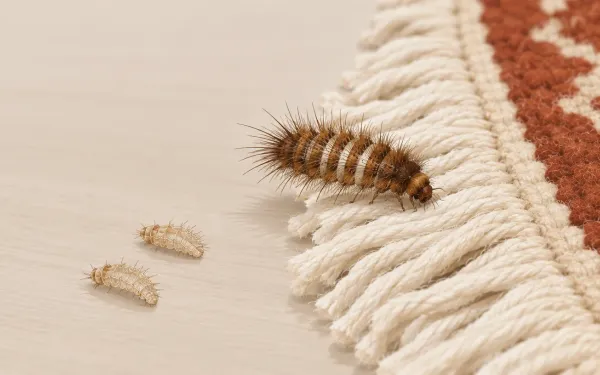
The “carpet beetle shell” people find is almost always a shed larval skin. Larvae molt a dozen times or more (Colorado State), so skins often outnumber the larvae.
Varied carpet beetle larvae stay put while they feed, so a little heap of skins marks a feeding site. To tell old from new, vacuum the spot and look again in a week or two.
Main clue: a pile of brown, bristly, hollow skins in one spot; new ones after vacuuming mean larvae are still feeding.
Carpet Beetle Poop: Salt-Grain Pellets Next to Skins
Carpet beetle droppings are tiny pellets about the size of a grain of salt, left where larvae have fed (UC IPM). Look in lint and dust and at the base of carpet fibers.
The pellets alone don’t name the pest; what’s next to them does. Hard little balls with bristly skins nearby point to carpet beetles.
Main clue: salt-grain pellets lying beside bristly skins, not dark smears.
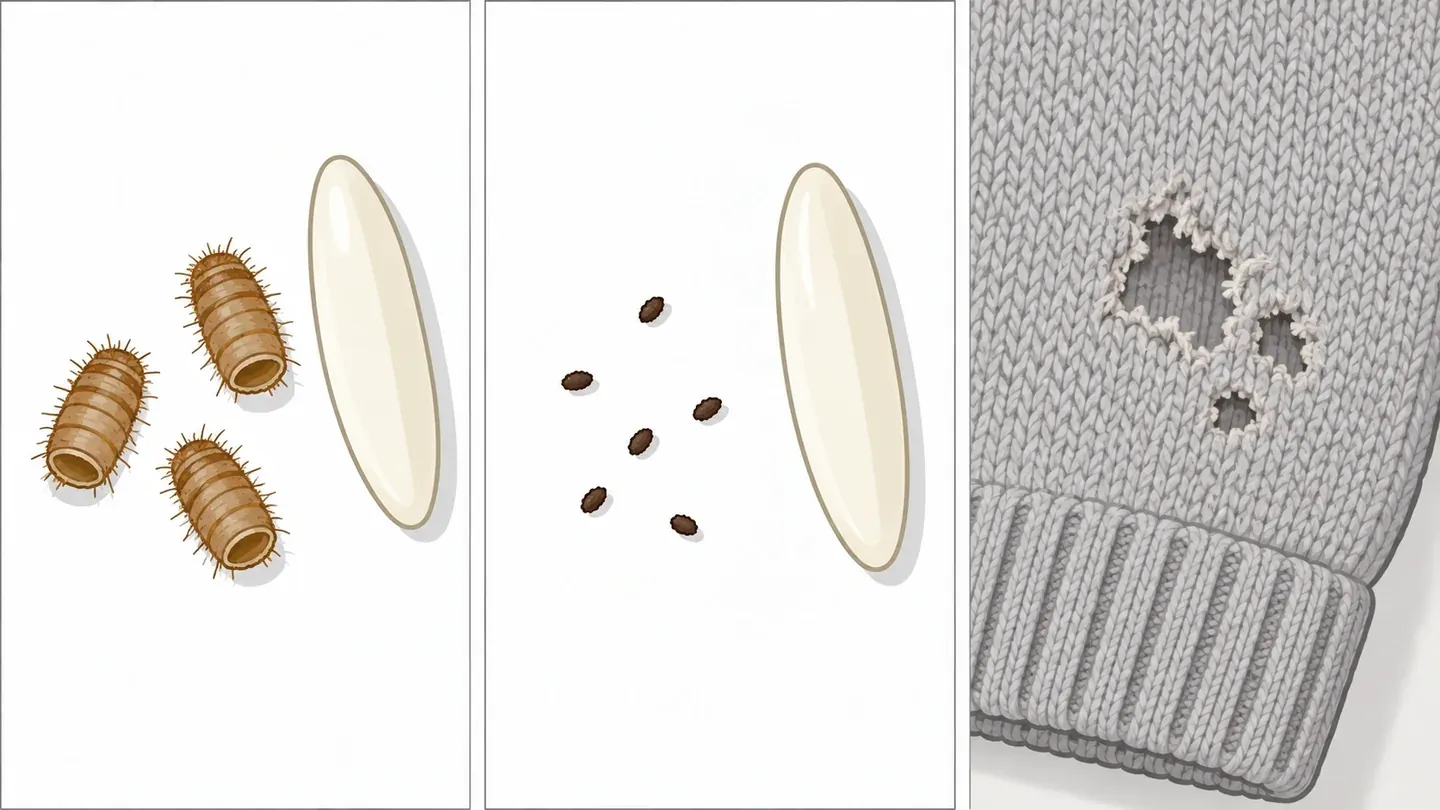
Illustration: shed skins, salt-grain droppings and a patch of wool damage, with a grain of rice for scale.
Carpet Beetle Damage vs. Clothes Moth Holes: One Patch, No Webbing
Carpet beetles chew one bigger patch and leave no webbing; clothes moths leave scattered holes and silk. Larvae eat wool, silk, fur, feathers, leather and pet hair. They skip pure synthetics, but the University of Florida says blends can be damaged, and cotton, linen and rayon stained with body oils attract them.
| Carpet beetles | Clothes moths |
|---|---|
| One bigger chewed patch | Scattered holes |
| No webbing | Silk webbing or cases |
| Brown, bristly shed skins nearby | Larvae live inside silk cases or webs |
Synthetic carpet isn’t food, but the lint and hair along its edges is. The webbing clothes moth page shows the other suspect up close.
Main clue: a chewed patch with skins nearby and no silk means carpet beetles; webbing or cases mean moths.
Live Larvae: Fuzzy, Slow and Hidden
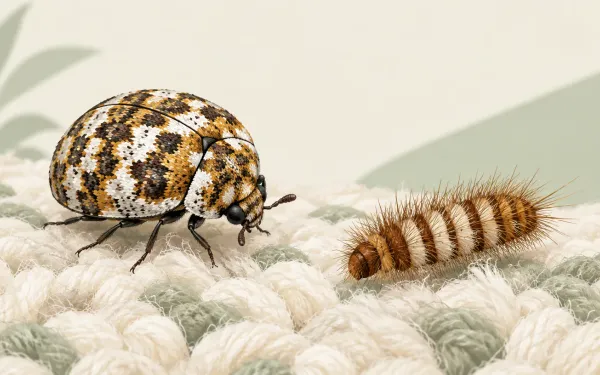
Larvae are the stage that eats fabric. They look like fuzzy, reddish or light brown maggots about ¼ inch long (Purdue), a little longer than the adults, and they move slowly.
They turn up behind baseboards, in heating ducts and in dresser drawers. The carpet beetle larvae guide has close-ups of the common types.
Main clue: a slow, bristly, brown grub in a closet, drawer or along a baseboard.
Adults at Windows: Not an Infestation on Their Own
Adults are small, round carpet beetles about 1/10 to 1/8 inch long, black or mottled white, brown and yellow (UC IPM). They eat pollen, fly in from flowering plants or ride in on cut flowers, and gather on windowsills, drapes and panes because they’re drawn to light. A solid black one is likely a black carpet beetle.
Main clue: tiny round beetles on a sunny sill; they matter only if you also find skins or larvae indoors.
Signs of Carpet Beetles on a Mattress
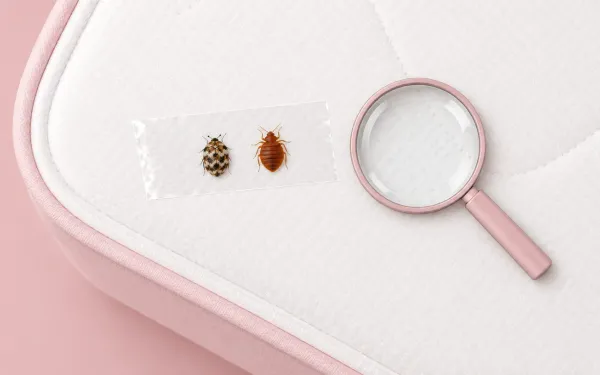
Bristly skins and salt-grain pellets on or under a mattress point to carpet beetles; rusty stains, pale yellow skins and dark spots that bleed into fabric are the EPA’s bed bug signs. Check the seams and the floor under the bed. A foam or polyester mattress isn’t food; one stuffed with wool, hair or feathers can be.
Carpet beetles don’t bite. The five checks in carpet beetle vs. bed bug settle it, and larvae on sheets or pillowcases are mostly a laundry job (carpet beetles in bed).
Main clue: bristly skins mean carpet beetles; spots that bleed like a marker mean bed bugs.
How to Confirm You Have Carpet Beetles
You need a flashlight, a nail file or old plastic card for cracks, clear tape and a white index card.
- Start at the windows. Adults on sills, drapes and panes can lead you to the infestation.
- Search closets, rug edges and baseboards. Check stored wool, furs and feathers, lift rug corners, look where pet hair collects and run the nail file along cracks, registers and upholstery folds.
- Tape-lift anything suspicious onto the white card, where skins, pellets and larvae stand out.
- Look for the food source. Old bird, rodent, bee and wasp nests, spider webs and dead insects around windows or in the attic can all feed larvae.
- Set plain sticky traps on windowsills and check them once or twice a week (UC IPM). Traps around the house show where beetles come from; pick a higher sill if a cat or toddler can reach.
A pack of 12 plain sticky monitors cost $7.47 at DoMyOwn on October 1, 2026, before tax.
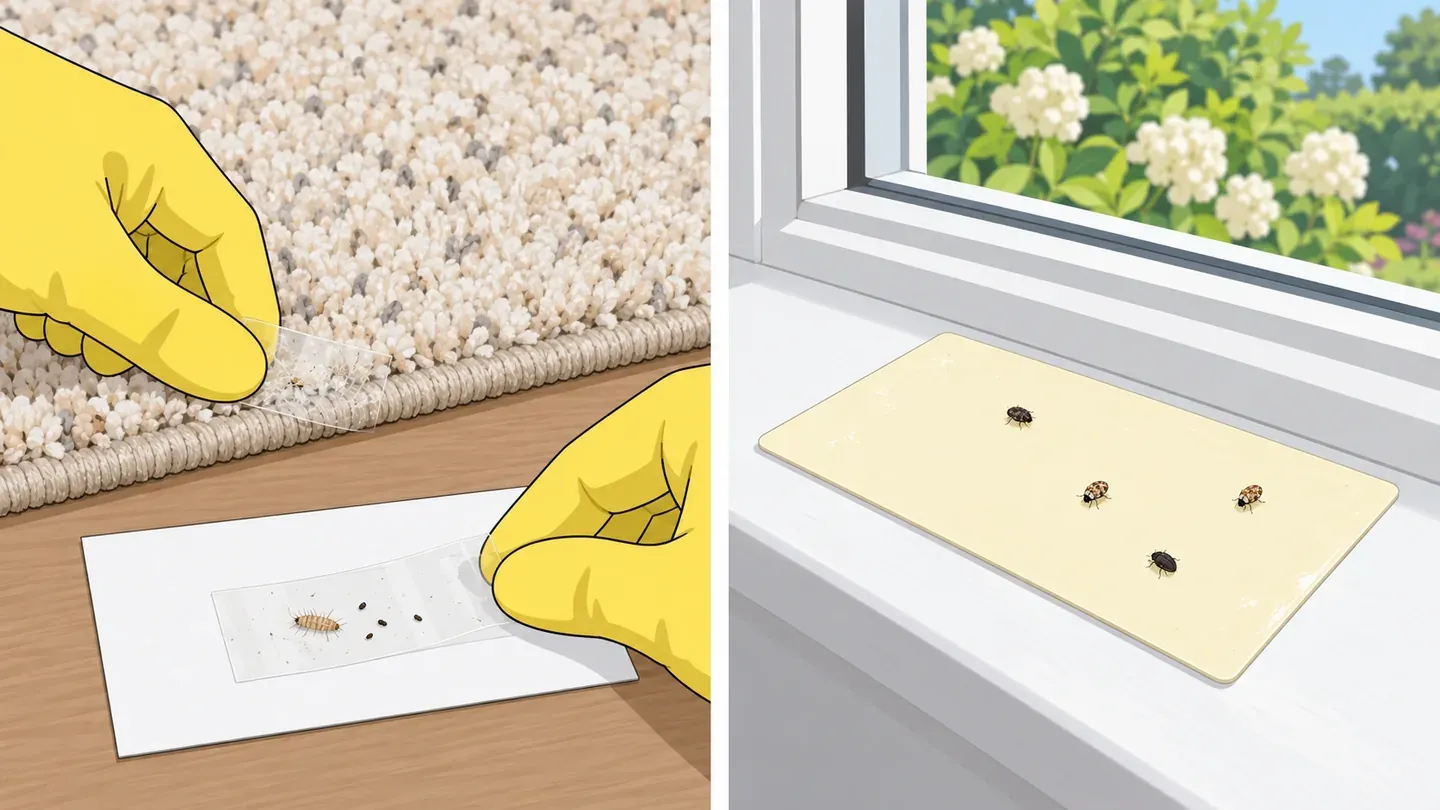
Illustration: a tape lift from the carpet edge (left) and a plain sticky trap on the windowsill (right).
How Many Carpet Beetles Is an Infestation?
No source gives a number, but UC IPM is clear: “A few adult beetles indoors should not be cause for alarm.” Adults alone on a sill likely flew in from flowers; vacuum and check the screens. Larvae, fresh skins or damage in fabric mean they’re breeding indoors.
Colorado State says dermestid beetles can likely be found in almost any home in the state, so aim to stop them breeding in your fabrics, not to never see one.
What to Do Next: Clean the Feeding Spot, Then Follow the Plan
Vacuum the spot where you found skins or larvae and empty the vacuum outside. Bag any wool with larvae until you can clean it, and don’t spray bedding or clothing. The full carpet beetle plan covers washing, freezing and treating cracks. Renting? Ask your landlord in writing to fix torn screens.
Call a pro when larvae are inside a hair- or feather-stuffed mattress, pillow or sofa (UC IPM notes only licensed operators can fumigate), valuable wool rugs show fresh damage, or new skins keep turning up after a cleanup. A typical treatment runs $150–$450, averaging $250 (HomeAdvisor, June 2026). Ask where they found larvae and what they’ll treat.
- Tape a few skins or larvae to white paper to compare later.
- Check windowsills, closets and rug edges with a flashlight.
- Set sticky traps on two or three sills.
- Vacuum the feeding spot and empty the vacuum outside.
- Bag wool with larvae until you can wash or freeze it.
- Look again in a week for fresh skins.
Common questions
Sometimes. They don’t bite, but a 2024 review in the dermatology journal Cutis says loose larval hairs can cause itchy bumps mistaken for bites, so see a doctor about a rash that won’t clear.
No. Extension guides describe it only as tiny pellets about the size of a grain of salt. Dark spots that bleed into fabric point to bed bugs.
Usually a food source nearby: lint, hair, dead insects, old nests or stored wool. A few adults on a windowsill can simply mean spring.
Sources and further reading · 10
- UC IPM: Carpet Beetles (Pest Notes 7436).
- Colorado State University Extension: Dermestid Beetles (Carpet Beetles).
- University of Florida IFAS: Carpet Beetles (ENY-204).
- Ohio State University Extension: Carpet Beetles (HYG-2103).
- Purdue Extension: Clothes Moths and Carpet Beetles (E-18).
- University of Minnesota Extension: Carpet beetle.
- EPA: How to Find Bed Bugs.
- Cutis: What’s Eating You? Carpet Beetles (Dermestidae).
- Trap price: DoMyOwn: Carpet Beetle Control Kit (sticky monitors listed separately), October 1, 2026.
- HomeAdvisor: Carpet Beetle Extermination Cost.