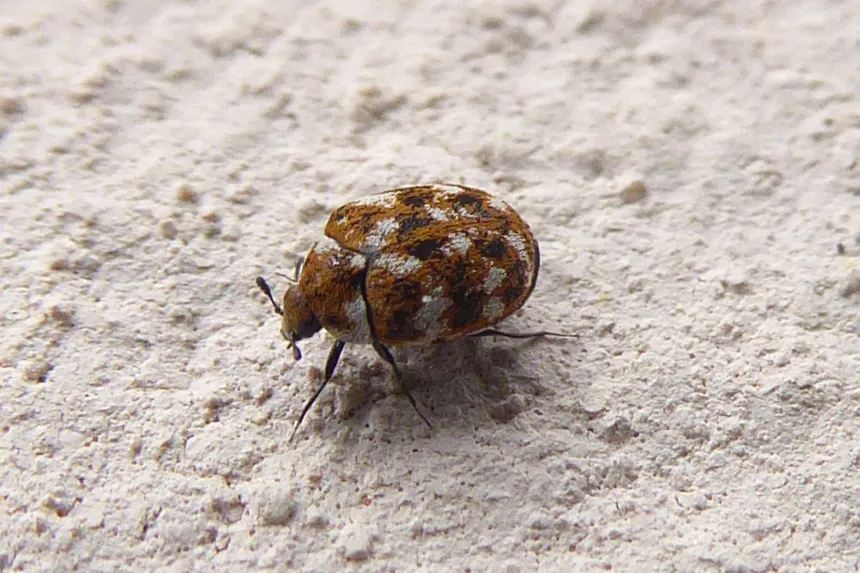
- Scientific name
- Anthrenus verbasci
- Also called
- carpet beetle, woolly bear larva
- Size
- Adults 1/10–1/8 in; larvae up to about 1/4 in
- Color
- Adults mottled white, brown and yellow; larvae banded brown and hairy
- Found in
- Windowsills, closets, rugs, under furniture, air ducts
- Harmful?
- Damages wool, silk and feathers; larval hairs can irritate skin
- Active
- Adults at windows in spring; larvae year-round
- DIY cost
- $13 in suppliesSee the plan
What to do
The varied carpet beetle is the tiny spotted beetle people find on windowsills in spring. Adults feed on pollen outdoors; the larvae, small fuzzy “woolly bears,” live indoors and eat wool, silk, feathers and fur. The one thing to do: one adult is no emergency, but if you find larvae or shed skins, vacuum, clean and seal where they feed.
This page covers how to identify varied carpet beetles and their larvae, tell them from look-alikes and find where they feed. It rests on University of Kentucky, UC IPM and Colorado State University Extension guidance.
How to Identify a Varied Carpet Beetle: Spotted Adult, Banded Larva
- Adults: round, about 1/10 to 1/8 inch, covered in a mottled pattern of white, brown and yellowish scales. Roughly the size of a sesame seed.
- Larvae: up to about 1/4 inch, carrot-shaped and hairy, with alternating light and dark bands and tufts of longer hairs at the back end.
- Shed skins: larvae molt many times, leaving hollow, bristly skins behind.
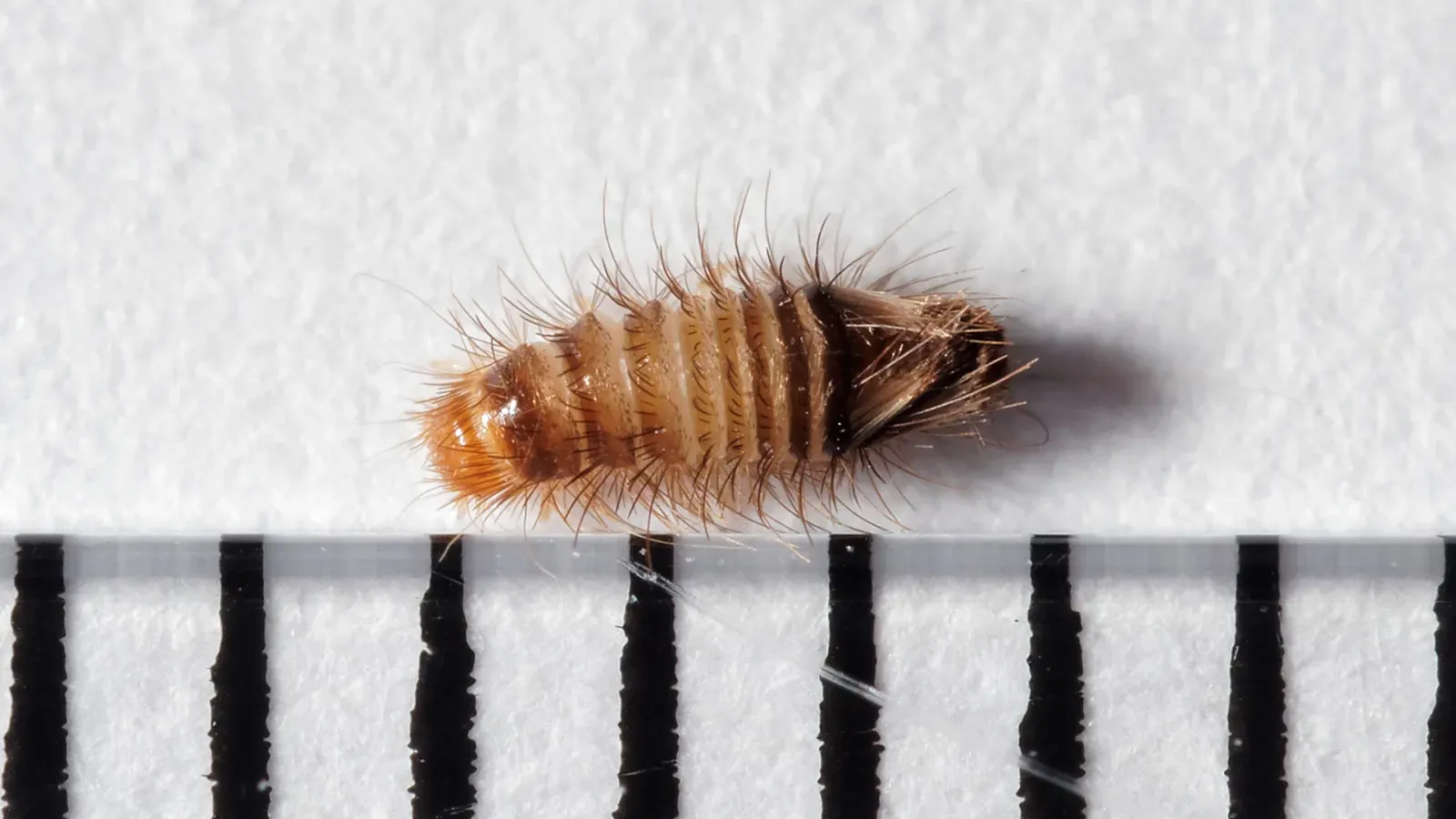
A carpet beetle larva next to a millimeter scale. These larvae eat wool and leave the holes. Photo: Arnoldius (CC BY-SA 4.0), via Wikimedia Commons.
Varied Carpet Beetle vs. Look-Alikes: Spots and Bristles
| Pest | How it differs | How to tell |
|---|---|---|
| Varied carpet beetle | Round, spotted adult | Banded, bristly larva; shed skins, no webbing |
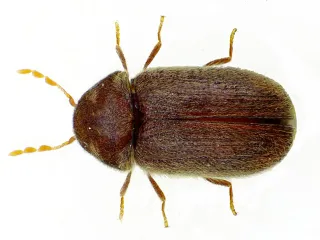
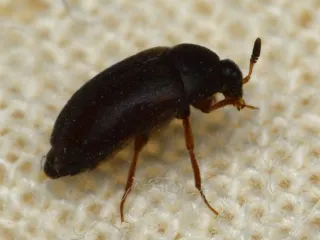
| Black carpet beetle | Oval, solid shiny black adult | Smooth golden-brown larva with a long tail tuft |
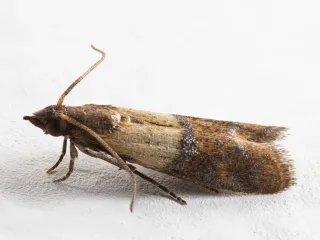
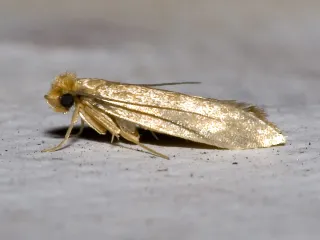
| Webbing clothes moth | Small gold moth | Silk webbing and tubes on wool |
| Bed bug | Flat, reddish brown, feeds on blood | Dark spots in mattress seams; see carpet beetle vs. bed bug |
Where You’ll Find Them: Windows in Spring, Larvae Out of Sight
- Adults on windowsills and near light in spring and early summer
- Larvae under furniture, along carpet edges, in closets and drawers
- In air ducts, lint, pet hair and dead insects in light fixtures
- In stored wool, feathers, silk and museum or natural-history collections
- Behind walls and in attics where dead insects collect
UC IPM says eggs hatch in about 2 weeks and larvae can feed for months before turning into adults, so a missed larva can surface much later.
Are Varied Carpet Beetles Harmful? To Fabric, Not People
They damage wool rugs, clothes, feathers and silk. For some people, the hairs of the larvae cause itchy, red bumps that look like bites, though the beetles don’t bite. Damage shows as irregular holes in wool and thinning patches in rugs, with shed skins in closets and along baseboards.
How to Confirm It’s Varied Carpet Beetles
- Look at the windowsill for small spotted beetles in spring.
- Check closets and carpet edges with a flashlight for banded larvae or shed skins.
- Compare with photos in carpet beetle larvae.
How to Get Rid of Varied Carpet Beetles
Vacuum thoroughly, including carpet edges, under furniture, vents and closets, and empty the vacuum outside. Hot-wash, dry-clean or freeze infested items, store woolens sealed, and remove dead insects and bird or wasp nests that larvae feed on. The full plan, with a section just for this species, is in how to get rid of varied carpet beetles. For other pests, browse all pest guides.
Often confused with
Sources
- Carpet Beetles (University of Kentucky Entomology, EF601)
- Carpet Beetles (UC IPM)
- Dermestid Beetles (Carpet Beetles) (Colorado State University Extension)
Last reviewed Oct 8, 2026.