Carpet Beetles: What They Look Like and How to Be Sure
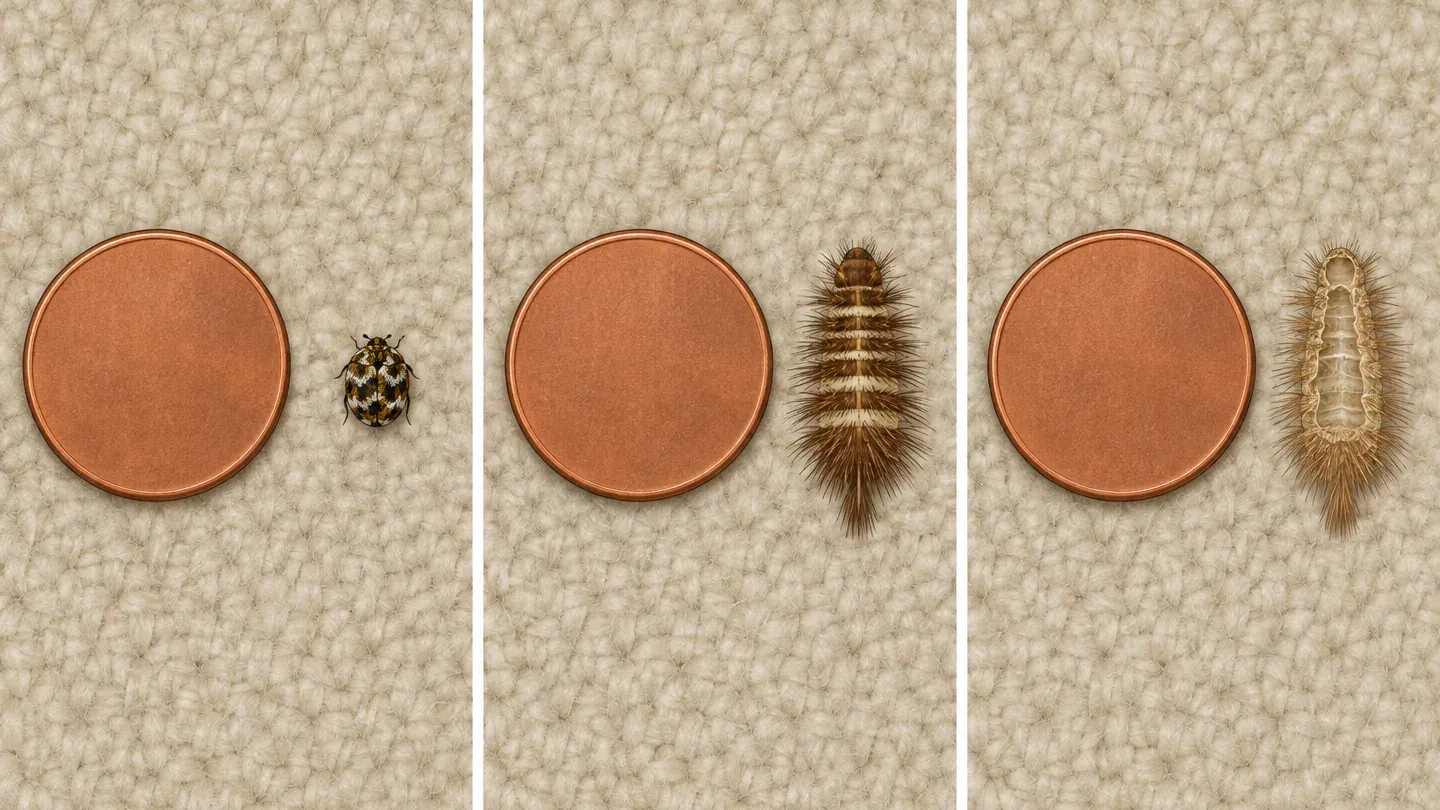
Illustration: an adult, a larva and a shed skin at true size next to a small coin.
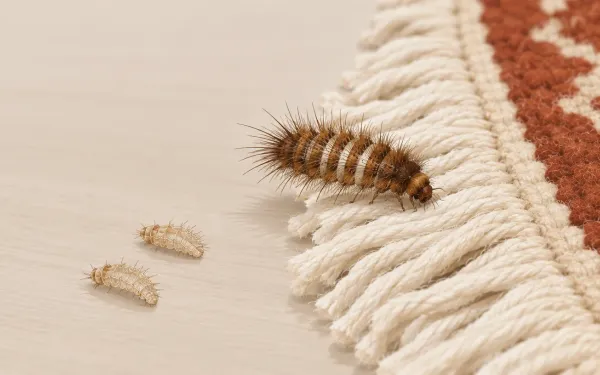
A carpet beetle is a tiny, round beetle, about 1/16 to 3/16 inch long, black or speckled white, brown and yellow, often found on windowsills. The adult eats pollen. Its larva does the damage: a hairy, brown grub that eats wool, fur, feathers and lint, leaving bristly shed skins. Larvae or skins mean beetles are breeding indoors.
Saw a carpet beetle tonight? Lift it with clear tape, fold the tape onto white paper and photograph it next to a coin. Then shine a flashlight along the nearest rug edge and closet floor for hairy brown larvae or empty skins. One adult on its own is no emergency, and it won’t bite.
Cost: about $8 in supplies. Difficulty: easy. Call a pro if larvae are inside a hair- or feather-stuffed mattress, pillow or sofa, valuable wool rugs are infested, or cleaning and laundering haven’t stopped new larvae from turning up.
This page is for telling what you have; the cleanup itself is in our guide to getting rid of carpet beetles. We haven’t tested anything ourselves; it rests on UC IPM, University of Kentucky, Rutgers and other extension guidance, plus one list price.
What Are Carpet Beetles?
Carpet beetles, often called carpet bugs, are small scavenging beetles. Only the young damage your things.
- Adults eat pollen and nectar outdoors and don’t harm fabric. They fly toward light, so indoors you usually see them near windows.
- Larvae eat wool, fur, felt, silk, feathers and leather. Plain cotton and synthetics usually escape unless mixed with wool or stained by food or body oils.
Do carpet beetles bite? No, not people or children. Dermatologists describe an itchy rash from touching loose larval hairs, often mistaken for bites, and say thorough cleaning greatly cuts that contact. A rash that lingers needs a doctor.
What Do Carpet Beetles Look Like?
Adults have round bodies and short antennae, like very small lady beetles.
- Most species: 1/16 to 1/8 inch, says the University of Kentucky. Even the biggest is only about a quarter as wide as a penny.
- Black carpet beetle: up to 3/16 inch, and oval rather than round.
Colors run from solid black to speckles of white, brown, yellow and orange. The speckles are tiny scales that wear off with age, so an older beetle can look plain brown or black. Your phone’s zoom shows them best.
Carpet beetle shed skins are often the first thing people find. A larva sheds its skin several times as it grows, and each empty skin keeps its shape: a hollow, banded, bristly shell about the size of the larva, usually in a closet corner, along a baseboard or under a rug edge.
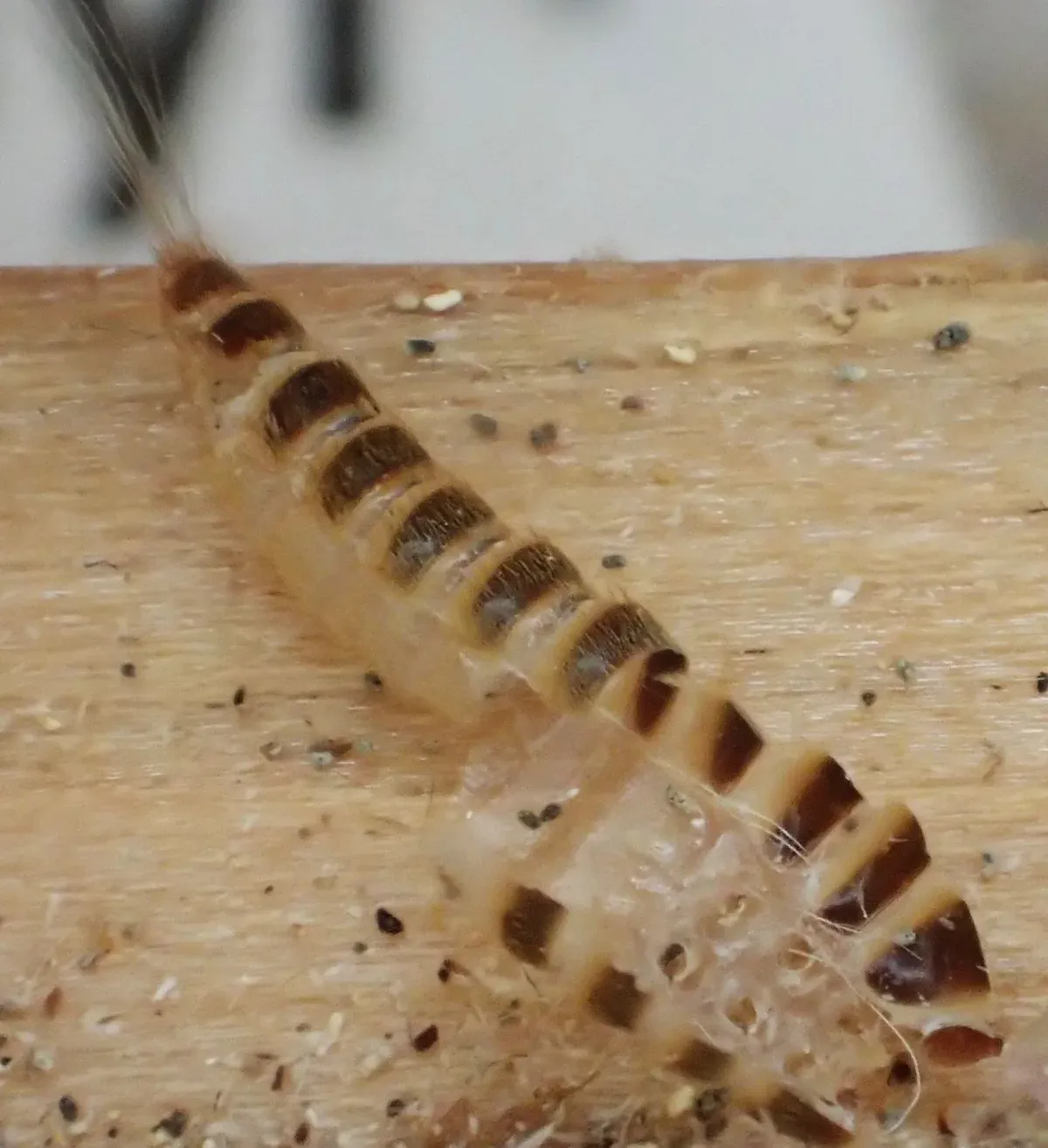
An empty carpet beetle larva skin (Attagenus). Photo: Magnefl (CC BY-SA 4.0), via Wikimedia Commons.
Adults vs. Larvae at a Glance
| Stage | What to look for |
|---|---|
| Adult | Round, 1/16–3/16 inch, black or mottled, near windows |
| Larva | Hairy, tan to dark brown grub, in dark undisturbed spots |
| Shed skin | Empty, brown, bristly husk shaped like the larva |
| Droppings | Tiny pellets, like grains of salt, where larvae feed |
Larvae look like fuzzy brown maggots, 1/8 to 1/4 inch long, slow-moving and covered in bristles, says the University of Kentucky. They avoid light, so you usually find them when you move a box or lift a rug. If you find one, check nearby wool and rug edges, the places carpet beetle larvae usually hide.
Found One Carpet Beetle in the House?
Treat one adult as a clue, and let larvae and shed skins decide it. Adults often fly in from flowers outside; according to UC IPM, a handful indoors is no reason for alarm. Larvae are what call for action.
Several adults on windowsills in spring can mean larvae are breeding somewhere inside, so run the check below either way.
Is This a Carpet Beetle? How to Tell for Sure
Catch one first: trap it under clear tape on white paper, photograph it beside a coin and compare it with the carpet beetle pictures above. Then answer three questions.
Is it round or oval, with a hard shell and short antennae?
That fits an adult carpet beetle, especially a speckled one near a window.
A flat, wingless, reddish-brown bug is more likely a bed bug.
Is it hairy or bristly?
A fuzzy, slow larva or an empty bristly skin means carpet beetles.
A smooth, creamy caterpillar with silk nearby means clothes moths.
Did you find it on a windowsill, closet floor, rug edge or vent?
Windowsills, closet floors, rug edges and vents fit carpet beetles.
Rusty stains or dark, marker-like specks on sheets and mattresses point to bed bugs, says the EPA; the carpet beetle vs. bed bug comparison covers that check.
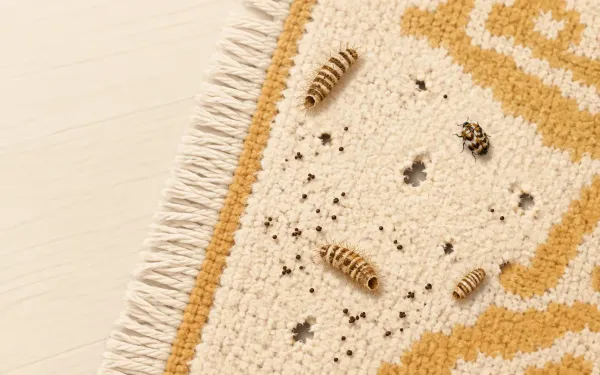
If the answers point to carpet beetles, look for more evidence: the signs of carpet beetles include bristly skins, salt-grain droppings and chewed patches in wool.
Still unsure? Catch adults over a week or two. Plain sticky traps on a windowsill catch adults flying toward the light. A pack of 12 cost $7.47 online on October 1, 2026.
Cat or toddler at home? Only use sills they can’t reach. Keep glue boards away from children and pets; if one gets stuck, vegetable oil dissolves the glue.
Confirmed? What to Do Next
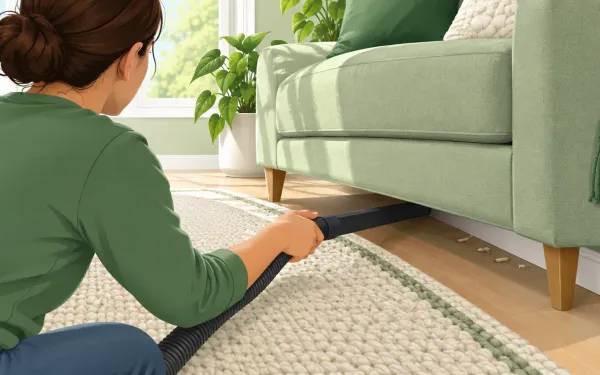
Larvae or skins mean carpet beetles are breeding indoors, but it’s rarely an emergency. The fix is cleaning, not spraying: vacuum where the larvae feed, then wash, dry-clean or freeze what they touched.
- Already sprayed? UC IPM says insecticides aren’t needed when cleanup works, and clothing or bedding should never be sprayed.
- Freezing? Two sealed weeks below 18°F kills them, and a home freezer set to the standard 0°F is colder than that.
Each step, from wash heat to when a pro is worth the $150–$450, is laid out in how to get rid of carpet beetles.
Bugs That Look Like Carpet Beetles
- Bed bugs: flat, oval, wingless and rusty red, about 1/5 inch, and they feed only on blood. Carpet beetle adults are rounder, often speckled, and can fly. A hairy larva points to carpet beetles, not bed bugs.
- Fleas: reddish-brown, wingless and no more than 1/8 inch, flattened side to side so they seem to walk on edge. A carpet beetle is round from above and can fly.
- Clothes moth larvae: creamy-white caterpillars up to ½ inch long; webbing clothes moth larvae spin silk. Moth holes tend to be scattered, while carpet beetles often eat one larger patch. If it’s moths, follow the plan to get rid of clothes moths.
- Duff millipedes (rare): hairy specks about 1 mm long, with fans of hair at the rear and far more than a beetle larva’s six legs.
Where Carpet Beetles Live in the House
Carpet beetles in the house turn up far beyond the carpet. The University of Kentucky’s checklist:
- Closets and storage: woolens packed away for months, such as sweaters, coats and blankets, especially in folds, cuffs and collars. Clothes you wear often are seldom attacked.
- Rugs and carpet: edges and undersides more than the open floor.
- Pet hair and lint: under baseboards and inside floor vents and ducts.
- Bedding and upholstery: down pillows, comforters and upholstered furniture, which is why larvae sometimes turn up in beds and bedrooms.
- Toys made of wool, felt, fur or feathers.
- Attics and light fixtures: bird nests and piles of dead insects.
No wool carpet at all? You can still have them. Most carpets today are synthetic and rarely eaten; the larvae live on shed hair, dead insects and stored food instead.
Carpet beetle larvae on walls? A larva crawling up a wall or across the ceiling is usually a wanderer. Ohio State says larvae crawl from room to room and live behind baseboards and moldings and in air ducts, and UC IPM notes that a larva ready to pupate may leave its food. So the source is somewhere in the house, not necessarily in that room; carpet beetle larvae shows how to trace it.
Shed skins and droppings are often easier to find than the larvae. The skins are hollow, bristly and striped, in several sizes as the larva grows; the droppings are tiny pellets like grains of salt. Both collect where larvae feed: rug edges, closet corners and lint under baseboards.
Common Types of Carpet Bugs
You don’t need the species to start cleaning. Rutgers counts four common U.S. species:
- Black carpet beetle, the most common: shiny black to dark brown.
- Varied carpet beetle: black with an irregular pattern of white, brown and dark yellow scales.
- Furniture carpet beetle: slightly larger and rounder, mottled with black spots among white and yellow-orange scales.
- Common carpet beetle: gray to black with a band of orange-red scales down its back.
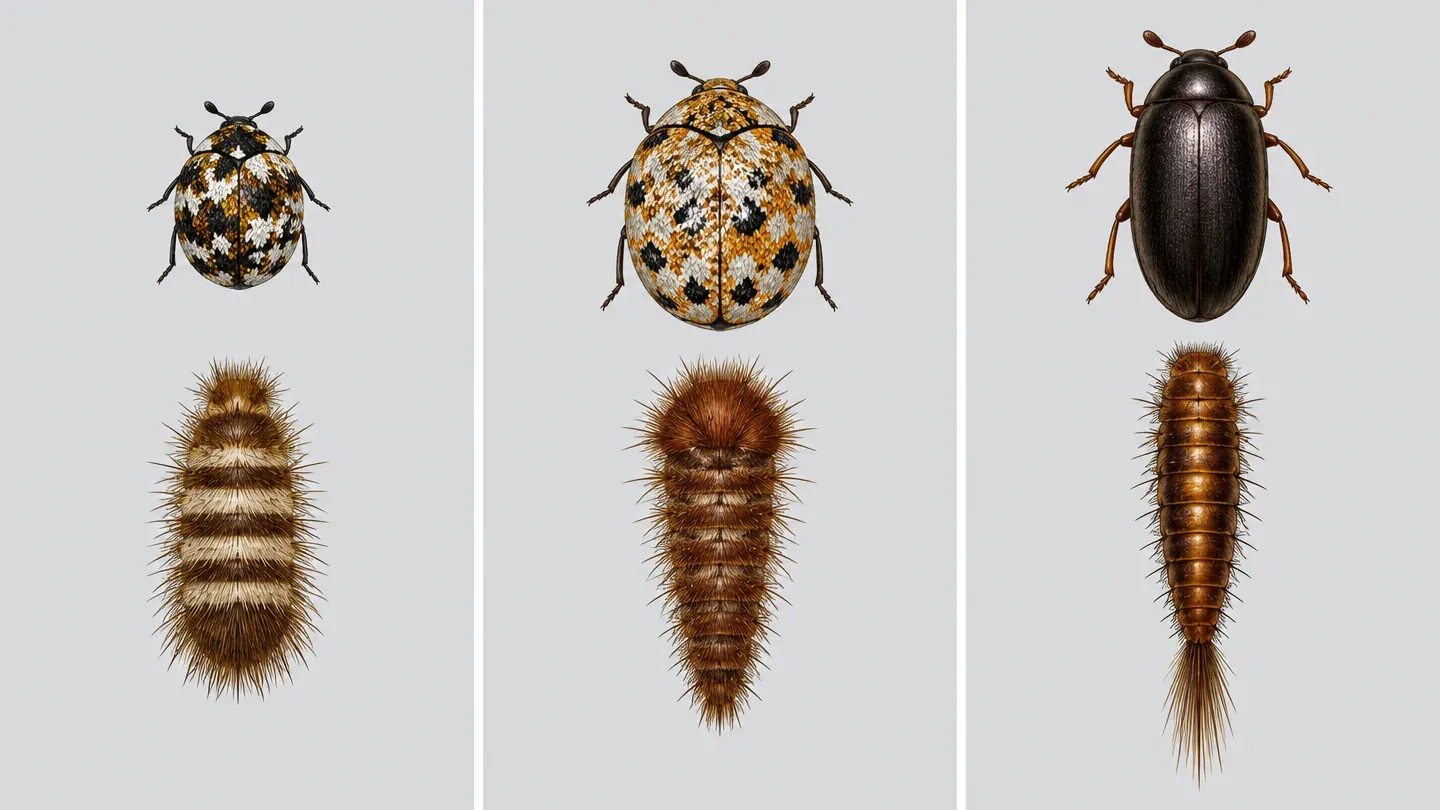
Illustration: varied, furniture and black carpet beetles, adults above their larvae, drawn to the same scale.
Common questions
Yes. Colorado State says dermestid beetles are probably the most common insects in Colorado homes and buildings. Seeing one is ordinary; finding larvae is what matters.
They don't eat it. UC IPM says carpet beetles don't feed on synthetic fibers, but the lint, hair and crumbs caught in any carpet can feed them, so vacuum edges and under furniture.
Close. Carpet beetles belong to the dermestid family, which also includes larder and hide beetles, and "skin beetles" is a name people often search for the group. Most dermestids are scavengers that live on animal material: hair, hides, feathers and dead insects.
Sources and further reading · 13
- UC IPM: Carpet Beetles (Pest Notes 7436), Bed Bugs (Pest Notes 7454) and Fleas (Pest Notes 7419).
- University of Kentucky Entomology: Carpet Beetles (ENTFACT-601) and Clothes Moths (ENTFACT-609).
- Rutgers NJAES: Carpet Beetles (FS1181), for black carpet beetle size and the four common species.
- Ohio State University Extension: Carpet Beetles (HYG-2103), for the common carpet beetle.
- Colorado State University Extension: Dermestid Beetles (Carpet Beetles), for duff millipedes and how common dermestids are.
- Utah State University Extension: Carpet Beetles (Utah Pest Press), for larvae in homes without wool carpet.
- Nebraska Extension: Controlling House Mice (G1105), whose glue-board safety advice applies to any sticky trap.
- EPA: How to Find Bed Bugs.
- Cutis: What’s Eating You? Carpet Beetles (Dermestidae), for the larval-hair rash.
- FDA: Are You Storing Food Safely?, for the 0°F freezer setting.
- U.S. Mint: Penny specifications (0.750 inch across).
- Cost guide: HomeAdvisor: Carpet Beetle Extermination Cost.
- Trap price: DoMyOwn: Carpet Beetle Control Kit (sticky monitors listed separately), October 1, 2026.