- Scientific name
- Sceliphron, Chalybion and Trypoxylon species
- Also called
- dirt dauber, organ pipe wasp
- Size
- About 1/2–1 in
- Color
- Black and yellow, metallic blue, or shiny black
- Found in
- Under eaves, porch ceilings, sheds, garages and attics
- Harmful?
- Rarely sting; not aggressive
- Active
- Late spring through summer
Mud daubers are slender, solitary wasps with a thread-thin waist that build their nests out of mud on walls, eaves and equipment. Each female builds and stocks her own cells with paralyzed spiders, so there’s no colony to defend and they rarely sting. The one thing to do: knock down nests where they’re in the way, and leave the rest.
This page covers how to identify mud daubers and their nests, how they differ from paper wasps and yellowjackets, and what to do. It rests on Clemson and University of Maryland Extension guidance.
How to Identify a Mud Dauber: Thread Waist, Mud Nest
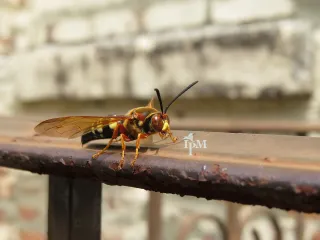
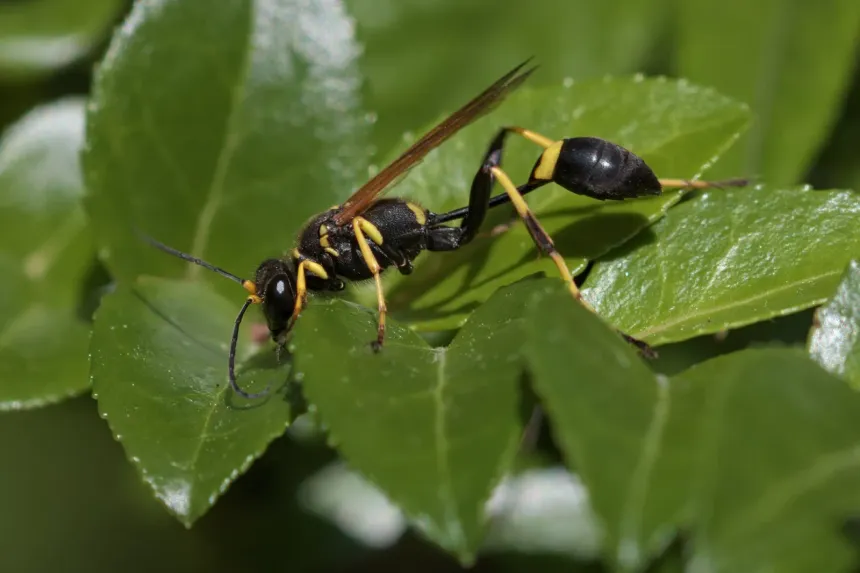
- Slender, about 1/2 to slightly over 1 inch, with a very thin, thread-like waist.
- Often shiny or metallic, black or blue, some with yellow.
- Three common types:
- Black and yellow mud dauber: black with yellow markings and yellow legs.
- Blue mud dauber: shiny metallic blue-black.
- Pipe organ mud dauber: shiny black, builds long parallel mud tubes.
- Mud nests: clumps of mud cells about an inch long, long tubes side by side like organ pipes, or mud plastered into cracks and round openings.
You’ll most often see them collecting mud at puddles or building on a wall (University of Maryland).
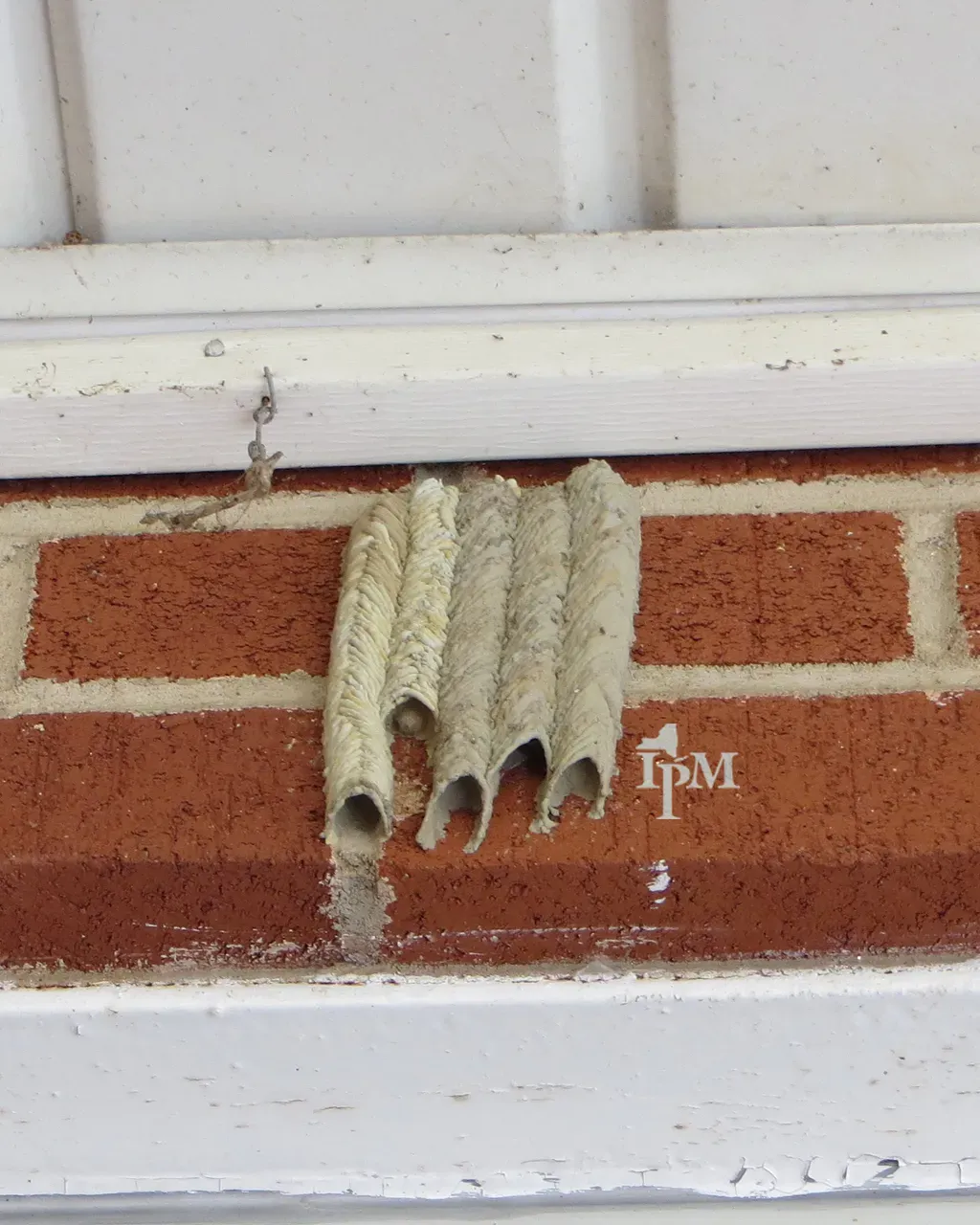
Organ-pipe mud dauber tubes on a brick wall. Nests like these are the usual sign. Photo: New York State IPM Program at Cornell University (CC BY 2.0), via Wikimedia Commons.
Mud Dauber vs. Look-Alikes: Mud, Not Paper
| Wasp | Nest | Temper |
|---|---|---|
| Mud dauber | Mud cells or tubes | Solitary, rarely stings |
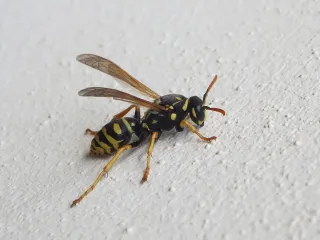
| Paper wasp | Open gray paper comb, umbrella-shaped | Stings if the nest is disturbed |
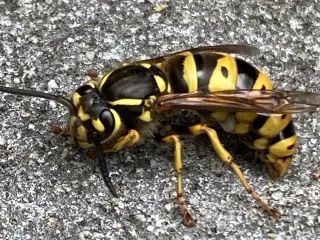
| Yellowjacket | Covered paper nest in the ground or walls | Aggressive near the nest |
| Potter wasp | Small mud pot with a narrow neck, on twigs or fences | Hunts caterpillars |
Potter and mason wasps are close relatives that also build with mud. Side-by-side nest photos are on wasp nests.
Where You’ll Find Them: Sheltered Walls and Unused Equipment
- Under eaves, porch ceilings and overhangs
- Inside sheds, garages, barns and attics
- On walls, foundations and outdoor equipment that isn’t moved often
- Inside round openings in lawn furniture, and in motor housings of unused machinery
Many females may nest in the same area, even though each one works alone (Clemson).
How a Mud Dauber Nest Works: One Female, Stocked With Spiders
Each cell holds one egg and spiders the female has paralyzed with her sting; her venom keeps them fresh. The larva eats the spiders, then the new wasp chews a hole in the cell wall and flies out. Old nests with round exit holes are empty. Some species repair and reuse old nests. Black and yellow and organ-pipe mud daubers hunt only spiders; other species stock caterpillars or even cockroaches (Clemson). The young are worm-like larvae, sealed in the cell until they emerge as adults.
Clemson calls mud daubers nuisances rather than pests. The ones that stock caterpillars are clearly beneficial; the spider hunters are a mixed blessing, since the spiders they remove also eat insects.
Do Mud Daubers Sting? Rarely
They’re not aggressive and rarely sting unless threatened or touched by accident. The sting is meant for prey but it does hurt: the black and yellow mud dauber rates a 1 on a 1-to-4 pain scale, the same as a fire ant (Clemson). Only females can sting, and a wasp busy building or hunting has no nest to defend. If you’ve been stung by something you didn’t see, bug bite pictures can help narrow it down.
How to Confirm It’s a Mud Dauber
- Look at the nest: mud, not paper.
- Check the waist: long and thread-thin.
- Break open an old cell with a stick: leftover spider remains confirm it.
- Look for exit holes: a small round hole in a cell means that wasp has already left.
What to Do: Knock Down Nests in the Way
Knocking down the nest is the best control, says the University of Maryland; otherwise leave them alone. Scrape old nests off with a putty knife; how to remove a wasp nest shows how to tell mud tubes from nests that need more care. To make an area less attractive, caulk cracks where spiders hide and clear webs from corners and crevices. Insecticides are rarely needed; Clemson says a wasp spray with a 20-foot stream reaches nests safely in the late evening or early morning. Fewer spiders around means fewer mud daubers; see common house spiders. For other pests, browse all pest guides.
Often confused with
Sources
Last reviewed Oct 4, 2026.