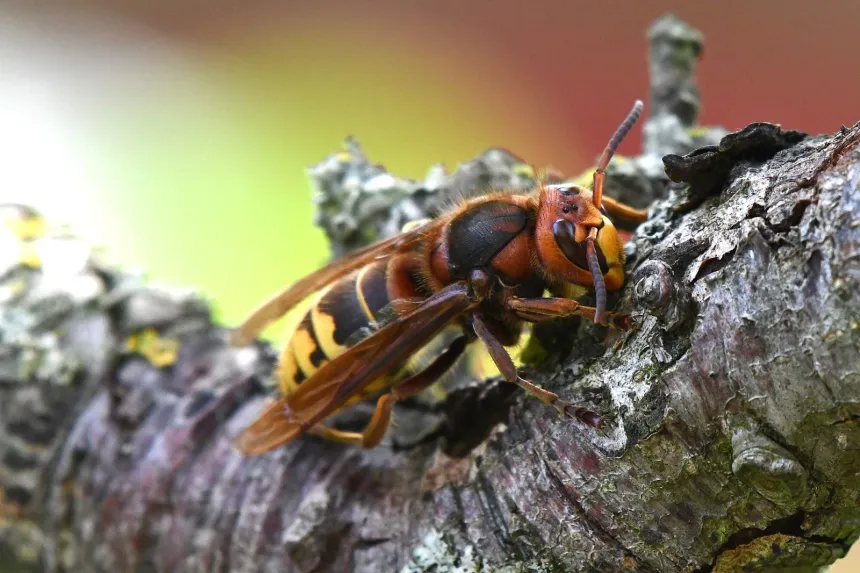
- Scientific name
- Vespa crabro
- Also called
- giant hornet, brown hornet
- Size
- Workers about 1 in; queens about 1 1/2 in
- Color
- Brown and reddish head and thorax, yellow and brown abdomen
- Found in
- Tree hollows, wall voids, attics, barns; eastern US
- Harmful?
- Stings if the nest is disturbed
- Active
- Spring to fall; flies at night and comes to lights
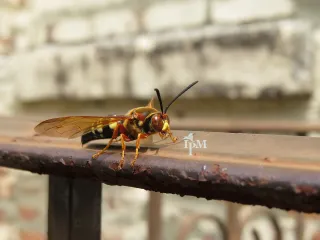
The European hornet is the only true hornet in most of the US: a large, brown, red and yellow wasp that nests in hollow trees and sometimes in wall voids and attics. It’s defensive near the nest but seldom stings while foraging. The one thing to do: leave nests that are out of the way, and have a professional deal with nests in or on the house.
This page covers how to identify a European hornet, tell it from look-alikes and decide what to do. It rests on University of Kentucky guidance.
How to Identify a European Hornet: Big, Brown, Red and Yellow
- Large: workers about 1 inch, queens about 1 1/2 inches.
- Head and thorax dark red with brown and yellow; yellow abdomen with dark brown patterns.
- Brown-tinted wings.
- Nest: brown, brittle paper inside a cavity, like an overfilled paper football with tiers of comb inside.
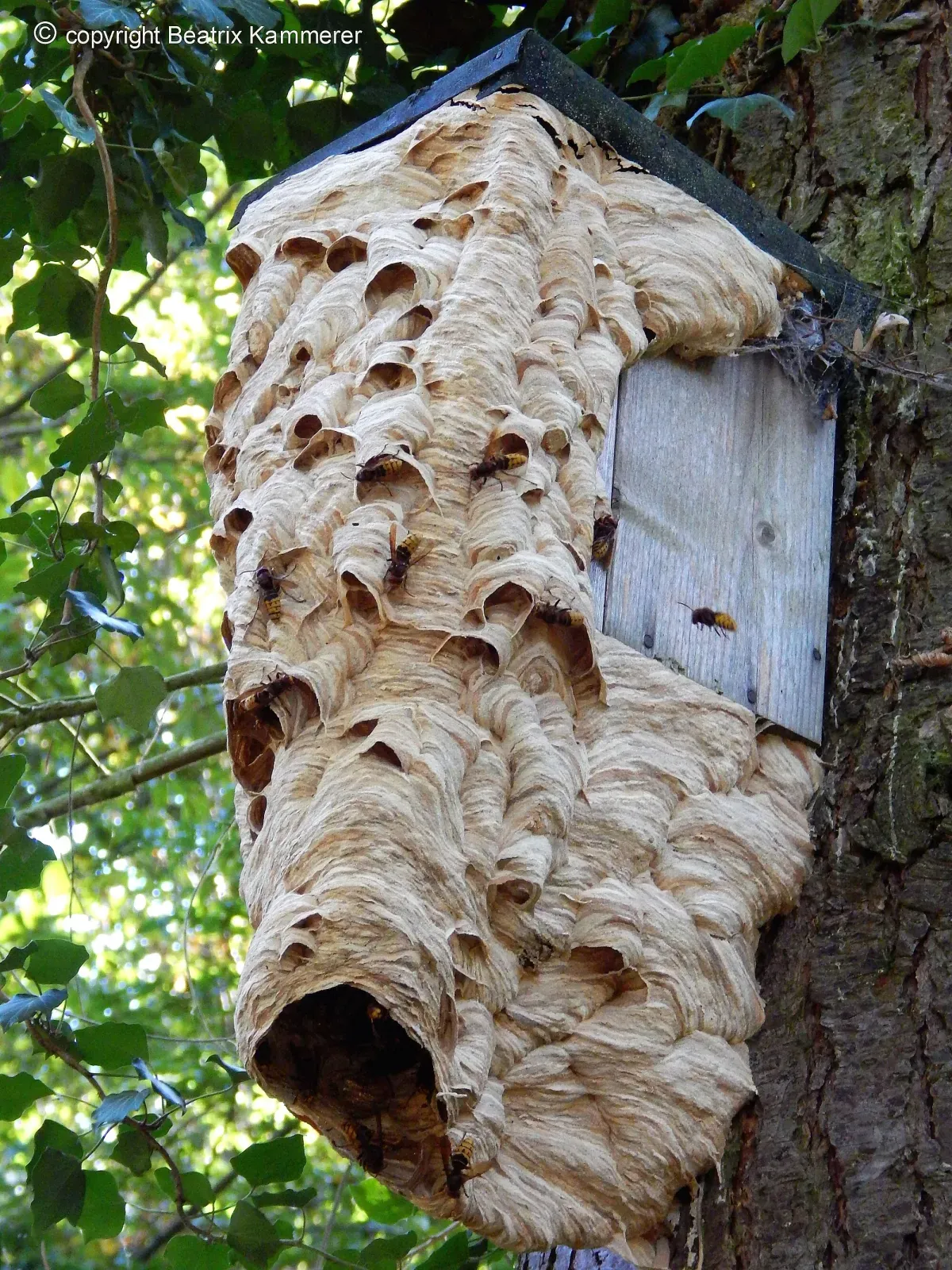
A large European hornet nest that outgrew a nest box on a tree. Photo: InsektenDoku (CC BY-SA 4.0), via Wikimedia Commons.
European Hornet vs. Look-Alikes: Red Head, Cavity Nest
| Wasp | How it differs | How to tell |
|---|---|---|
| European hornet | 1–1 1/2 in, red, brown and yellow | Red on top of the head; nests in cavities |
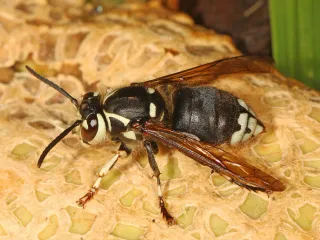
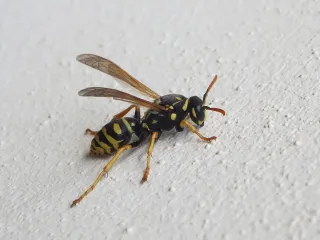
| Bald-faced hornet | About 3/4 in, black and white | Gray paper ball in the open |
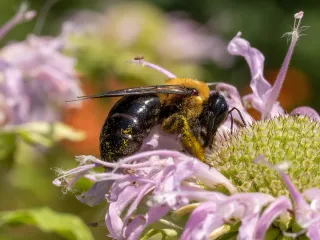
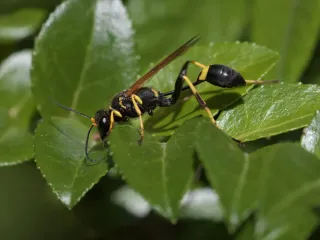
| Cicada killer | Big solitary wasp | Digs burrows in bare, sandy soil |
| Northern giant hornet | Larger, uniform yellow-orange head | Known in North America only in the Pacific Northwest |
The University of Kentucky notes that European hornets are often mistaken for the northern giant hornet, the so-called murder hornet; the European hornet has red on the top and sides of its head and is a half inch to an inch smaller.
Where They Nest: Hollow Trees, Sometimes Walls
They most often nest in tree hollows, occasionally in soil, and sometimes in attics and wall voids. In fall they chew bark off lilac, rhododendron and birch to get at the sap, which can girdle branches, and they feed on fallen fruit such as apples. Nest types are compared on wasp nests.
When You’ll See Them: Big Queens in Spring
New queens come out in late April or early May in Kentucky, sometimes wandering into homes looking for a nest site, and build a small teacup-sized nest. Workers take over by midsummer. By July the colony produces new queens and males; the old queen and all the workers die in autumn, and only mated new queens survive the winter.
Are European Hornets Dangerous? Painful but Ordinary Stings
They’re most defensive when the nest is threatened; a hornet foraging away from it is unlikely to sting unless harassed or stepped on. The sting is painful but comparable to other wasps and bees. Because the stinger is straight, one hornet can sting several times. Anyone with signs of an allergic reaction after a sting needs medical help right away. Seeing workers in the yard doesn’t necessarily mean there’s a nest in or near your home.
How to Confirm It’s a European Hornet
- Look at the head: dark red on top, yellow in front.
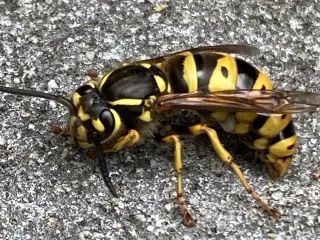
- Check the size: about an inch, larger than a yellowjacket.
- Look for the nest in a tree cavity, attic or wall, or for stripped bark on lilac or birch.
What to Do: Leave It Alone or Call a Pro
Leave nests that are out of reach and away from people. Nests in or near the home are best handled by a professional. If you must treat one yourself, the University of Kentucky says you need to see the entrance and spray a wasp and hornet aerosol into it at night, in long sleeves tucked into gloves and pants tucked into socks. Spraying the outside does nothing, and puncturing the nest sends hornets everywhere. For other pests, browse all pest guides.
Often confused with
Sources
- European Hornet in Kentucky (University of Kentucky Entomology, EF600)
- Controlling Wasps, Hornets, and Yellowjackets (University of Kentucky Entomology, EF620)
Last reviewed Oct 4, 2026.
_2.jpg)