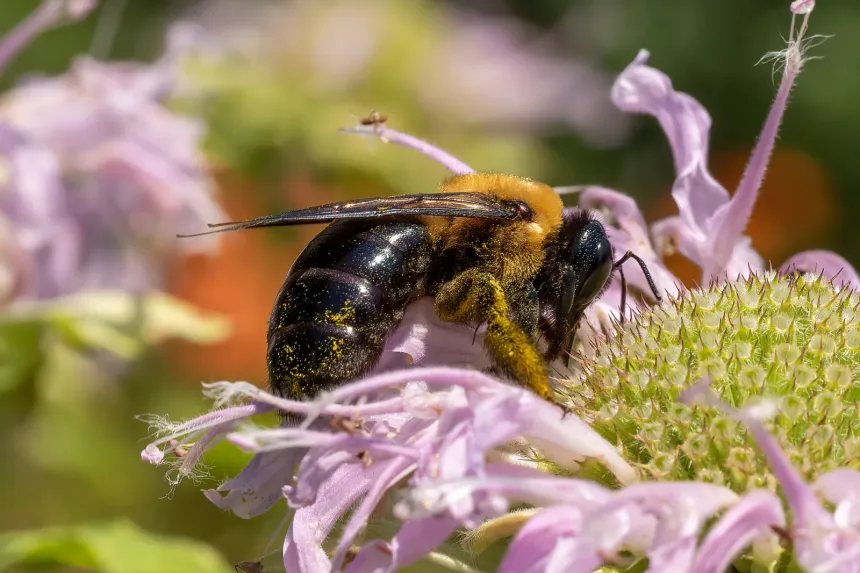
- Scientific name
- Xylocopa virginica
- Also called
- eastern carpenter bee, wood bee
- Size
- About 3/4–1 in
- Color
- Black and yellow; top of the abdomen shiny black and nearly hairless
- Found in
- Unpainted or weathered wood such as eaves, fascia, decks and railings
- Harmful?
- Damages wood over years; females rarely sting, males can't
- Active
- Spring, when they bore new holes and mate
Carpenter bees are big, bumblebee-like bees that bore perfectly round holes into bare or weathered wood around the outside of a house. They’re low-risk to people: males can’t sting and females seldom do unless handled, but the same boards get tunneled year after year. The one thing to do: paint or varnish exposed wood, because carpenter bees rarely bore into painted surfaces.
This page covers how to identify a carpenter bee, tell it from look-alikes, why it picks your wood and how much harm it does. It rests on University of Kentucky and UC IPM guidance.
How to Identify a Carpenter Bee: Shiny, Bare Black Abdomen
- About 3/4 to 1 inch, large and robust; UC IPM puts females at about 5/8 to 1 inch.
- Shiny, nearly hairless black abdomen, sometimes with a metallic blue sheen. Bumblebees have a hairy abdomen with black and yellow stripes.
- Males have a yellow or white patch on the face and hover in front of people near the nest; females have a black face. In the West, the male valley carpenter bee is golden brown (UC IPM).
- Perfectly round holes about 1/2 inch wide, about the diameter of your little finger, with coarse sawdust below. Smaller holes have other makers: compare them in holes in wood.
Large black bees hovering around the eaves in spring are most likely carpenter bees (University of Kentucky).
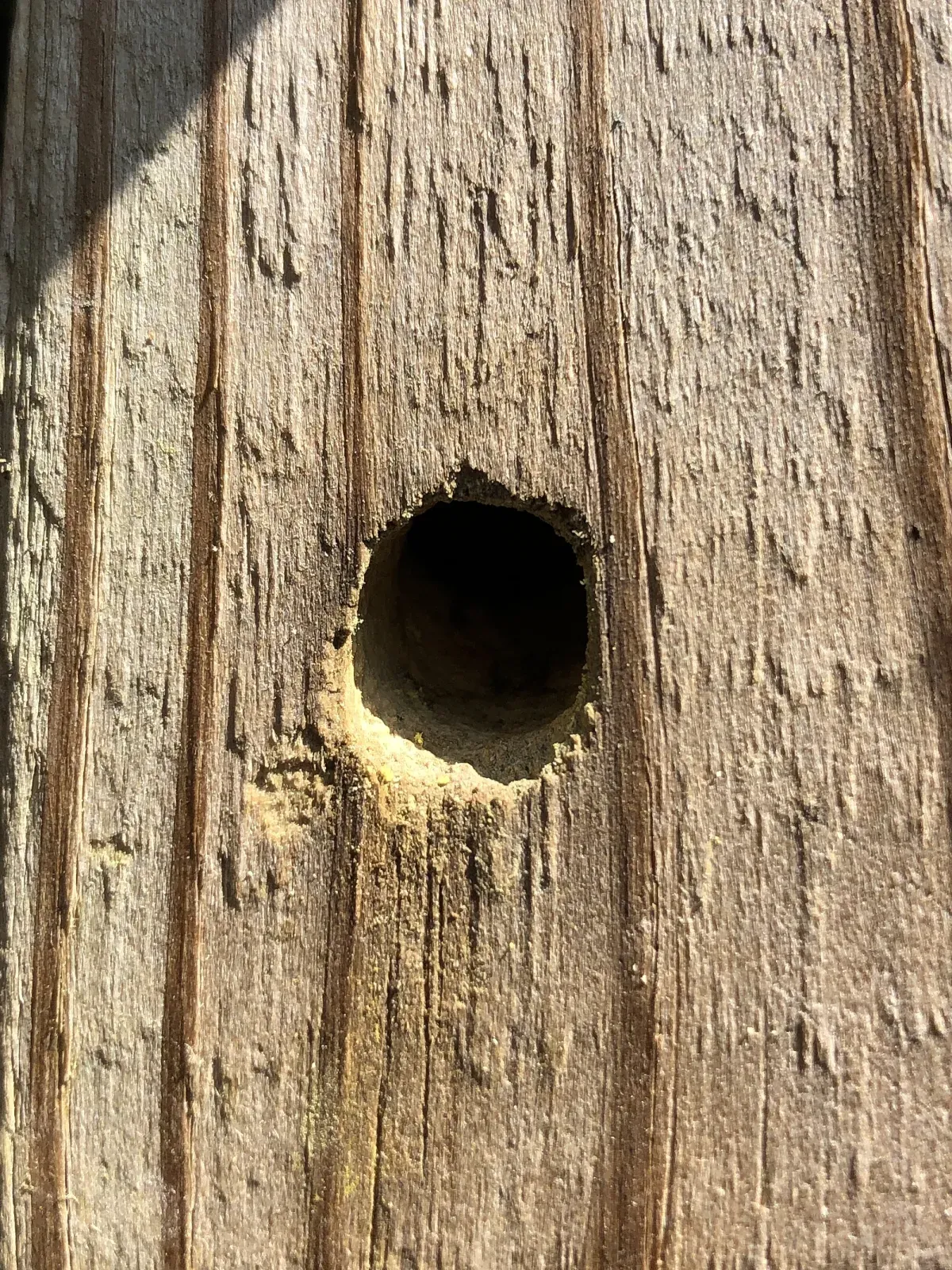
A carpenter bee entrance hole in a wooden post: perfectly round, about 1/2 inch, with fresh sawdust. Photo: Famartin (CC BY-SA 4.0), via Wikimedia Commons.
Carpenter Bee vs. Look-Alikes: Check the Abdomen and the Nest
| Insect | How it differs | How to tell |
|---|---|---|
| Carpenter bee | Shiny, bare black abdomen | Round 1/2-inch holes in bare wood, sawdust below |
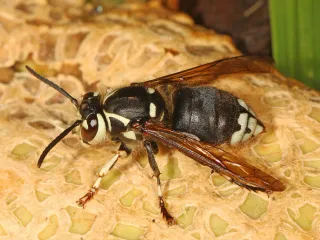
| Bumblebee | Hairy abdomen with black and yellow stripes | Nests in an existing cavity, often underground |
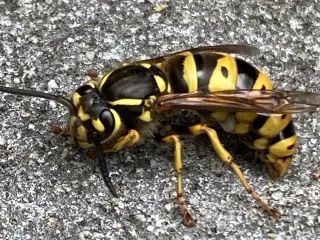
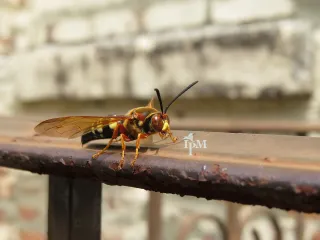
| Yellowjacket | Smaller, smooth, bright yellow and black bands | Covered paper nest in the ground or a wall |
| Carpenter ant | An ant, not a bee; no flying around the eaves | Coarse shavings with dead ant parts, not round holes |
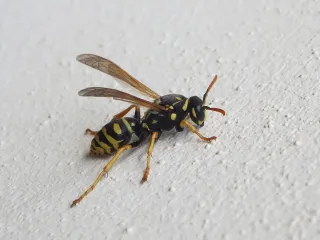
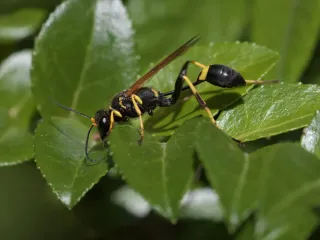
| Small solitary bees and wasps | Much smaller | Seen visiting abandoned carpenter bee holes |
The small bees and wasps around old holes are usually scavenging leftover pollen or sheltering, and seldom cause problems (University of Kentucky). For paper nests and other stingers, see wasp nests.
Do Carpenter Bees Sting? Males Can’t, Females Rarely
Males have no stinger. They’re the ones that dive at people and hover in front of faces around nesting sites in spring, which looks aggressive but is harmless. Females can give a painful sting but seldom do unless handled or bothered. Carpenter bees are less inclined to sting than bees and wasps that live in colonies (University of Kentucky). If you do get stung, bug bite pictures helps you check the mark.
Why Carpenter Bees Pick Your Wood: Bare, Soft and Weathered
They prefer unpainted, weathered softwood such as redwood, cedar, cypress and pine. Painted or pressure-treated wood is much less likely to be attacked, and they avoid most hardwoods (UC IPM). Common nest sites:
- Eaves, rafters and fascia boards
- Siding and wooden shake roofs
- Decks, deck railings and joist ends
- Outdoor furniture, fences and sheds
How Carpenter Bees Nest: One Generation a Year
Carpenter bees don’t live in colonies. Adults spend winter alone, often in old tunnels, and mate in spring. Each fertilized female bores in a short way, turns at a right angle and tunnels along the grain, building about five or six cells, each with pollen and one egg. Tunnels are about 1/2 inch wide and 6 to 10 inches deep, and over the years they can reach 10 feet into a timber (UC IPM).
Development from egg to adult takes about 3 months. New adults emerge in late summer, feed on flowers and return to the wood in fall to spend the winter, so the same boards get used again.
Are Carpenter Bees Harmful? Slow Damage to Wood
They’re seldom as destructive as termites, but they cause cosmetic and structural damage. Females dig new tunnels or enlarge old ones, and wood infested year after year can be seriously weakened. The holes also let in moisture, which leads to rot and decay (University of Kentucky). Woodpeckers hunting the larvae make bigger, ragged holes over the tunnels. On the plus side, carpenter bees are pollinators, and UC IPM considers them beneficial.
How to Confirm It’s a Carpenter Bee
- Look at the abdomen: shiny and bare means carpenter bee, fuzzy and striped means bumblebee.
- Find the hole: perfectly round, about 1/2 inch, on bare or weathered wood.
- Check below it for coarse sawdust and stains; you may also hear tunneling inside.
- Watch in spring: large bees hovering near eaves and decks, with one diving at you.
What to Do: Paint, Then Plug Empty Holes
Paint or varnish exposed wood; stains are less reliable than paint. Fill cracks in wood surfaces, and cover rough timber ends with wire screening or metal flashing. Keep garages and sheds closed in spring while bees are searching for nest sites. Once the bees have left, fill the holes with steel wool and caulk or a dowel coated with carpenter’s glue, then paint over the repair. UC IPM says insecticides aren’t usually needed; if you treat heavy damage, do it in early spring or fall, because sealed brood chambers block treatments in late spring and summer. For other pests, browse all pest guides.
Often confused with
Sources
Last reviewed Oct 4, 2026.
.jpg)