How to Remove a Wasp Nest Yourself, Safely
Which nests you can handle with a $12 can of spray, which ones you should leave to a pro, and the mistakes that get people stung.
To remove a wasp nest yourself, first make sure it’s a small, open paper wasp nest you can reach from the ground. Then, at dusk, cover up, stand to one side and soak the nest with an aerosol wasp and hornet spray. Wait 3–4 days, and once nothing is flying, scrape the nest into a trash bag. Gray hornet nests, nests in the ground or inside walls, and anything you’d need a ladder for are safer left to a pro.
Cost: about $12 in supplies. Time: about 1 evening + 3–4 days. Difficulty: moderate. Call a pro if the nest is a gray hornet ball, sits inside a wall or attic, needs a ladder to reach, or anyone in the house is allergic to stings.
This guide covers telling the nests apart, the six steps for the ones you can do yourself, the mistakes that cause mass stings, and what a pro charges. We haven’t tested these methods ourselves. It rests on University of Kentucky and UC IPM entomology guidance and a HomeAdvisor price guide.
Just found a nest? Back away slowly; don’t swat or hit it. From a safe distance, note where it is and whether wasps fly in and out of one spot. If anyone in the house has had a serious reaction to a sting, don’t treat it yourself. If someone is stung and gets hives, trouble breathing or swelling in the face or throat, call 911.
What Works and What Doesn’t on a Wasp Nest
| Method | Works? | Cost | Main limitation |
|---|---|---|---|
| Aerosol wasp and hornet spray at dusk | Yes, on exposed paper wasp nests | About $12 | You have to reach the nest without a ladder |
| Insecticide dust into a ground or wall hole | Yes, reaches deeper than spray (UKY) | About $15 | Hard to do safely in the dark |
| Waiting for the first hard frost | Yes, in cold-winter states the colony dies off | Free | Only if the nest is away from where people walk |
| Knocking the nest down while wasps are inside | No, the colony attacks | Free | Multiple stings |
| Hosing it or pouring gasoline on it | Seldom works (UKY) | Free | Multiple stings; gasoline is a fire hazard |
| Sealing the hole in a wall | No, wasps can chew their way indoors (UKY) | A tube of caulk | Turns an outdoor problem into an indoor one |
Whose Nest Is It? Start Here
The nest tells you who built it, and the builder tells you whether it’s a DIY job. An open comb with cells you can see is a paper wasp, the easiest nest to treat. A closed gray ball is a hornet. A busy hole in the lawn or a wall is yellowjackets. Mud tubes are mud daubers, which rarely sting. The hornet nest vs. wasp nest page has more photos.
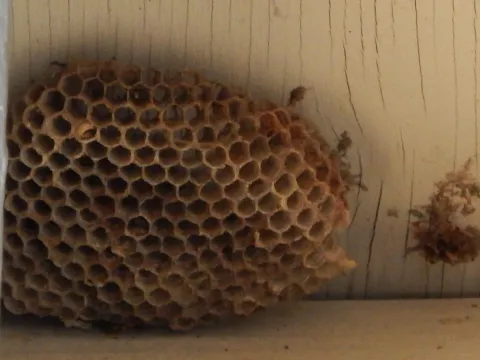 Often DIYPaper waspOpen comb, no cover, under eaves and railings. Usually DIY.
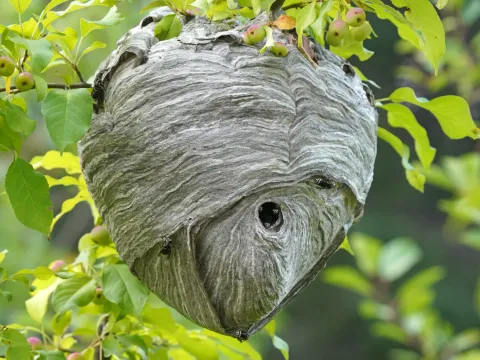 Call a proBald-faced hornetGray paper ball with one hole near the bottom. Call a pro.
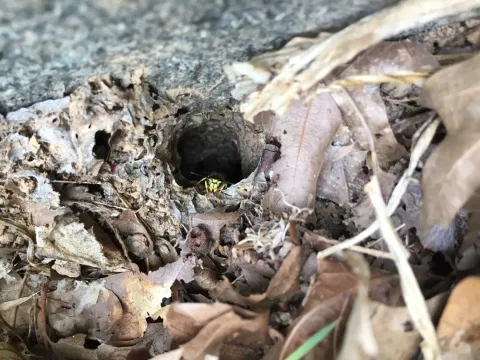 CarefulYellowjacketA hole in the lawn or a wall with steady traffic. Up to 15,000 wasps.
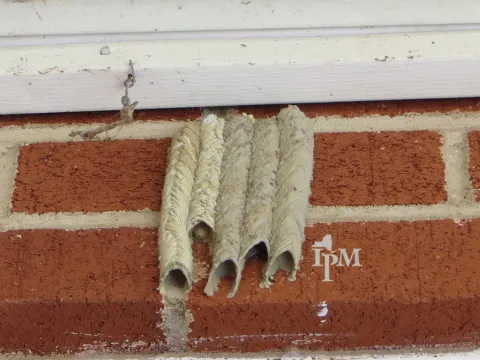 HarmlessMud dauberMud tubes on siding or in sheds. Rarely stings; scrape it off.
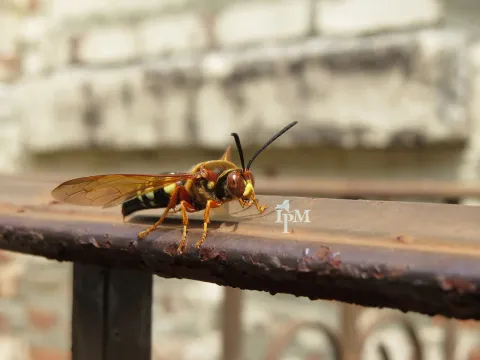 Leave itCicada killerHuge wasp, single burrows in sandy soil. Rarely stings.
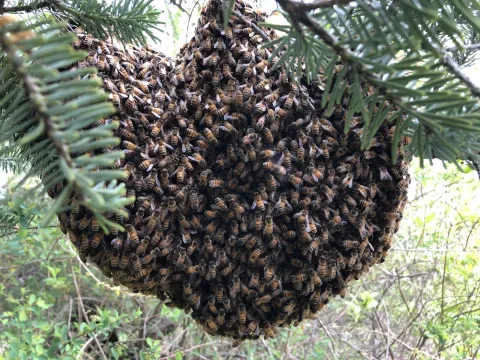 Don’t sprayHoney bee swarmA furry cluster on a branch. Don’t spray; call a beekeeper.
Can You Do It Yourself? A Quick Check
University of Kentucky entomologists say an accessible paper wasp nest can be eliminated “fairly easily” with a store-bought wasp and hornet spray, while hornet nests are “often best” left to a professional. Treat it yourself only if every line below is true:
- It’s a paper wasp nest (open comb) or a yellowjacket hole in open ground, not a gray hornet ball.
- You can reach it from the ground. UKY says it’s prudent to call a pro when a nest needs a ladder.
- It’s outside, not inside a wall, attic, shed wall or chimney.
- Nobody helping or nearby is allergic to stings.
- The nest is small. A paper wasp colony is 15 to 200 wasps; a yellowjacket colony can be 1,500 to 15,000 (UC IPM).
If any line is false, skip to what it costs and when to call a pro.
Step 1: Cover Up Before You Go Near It
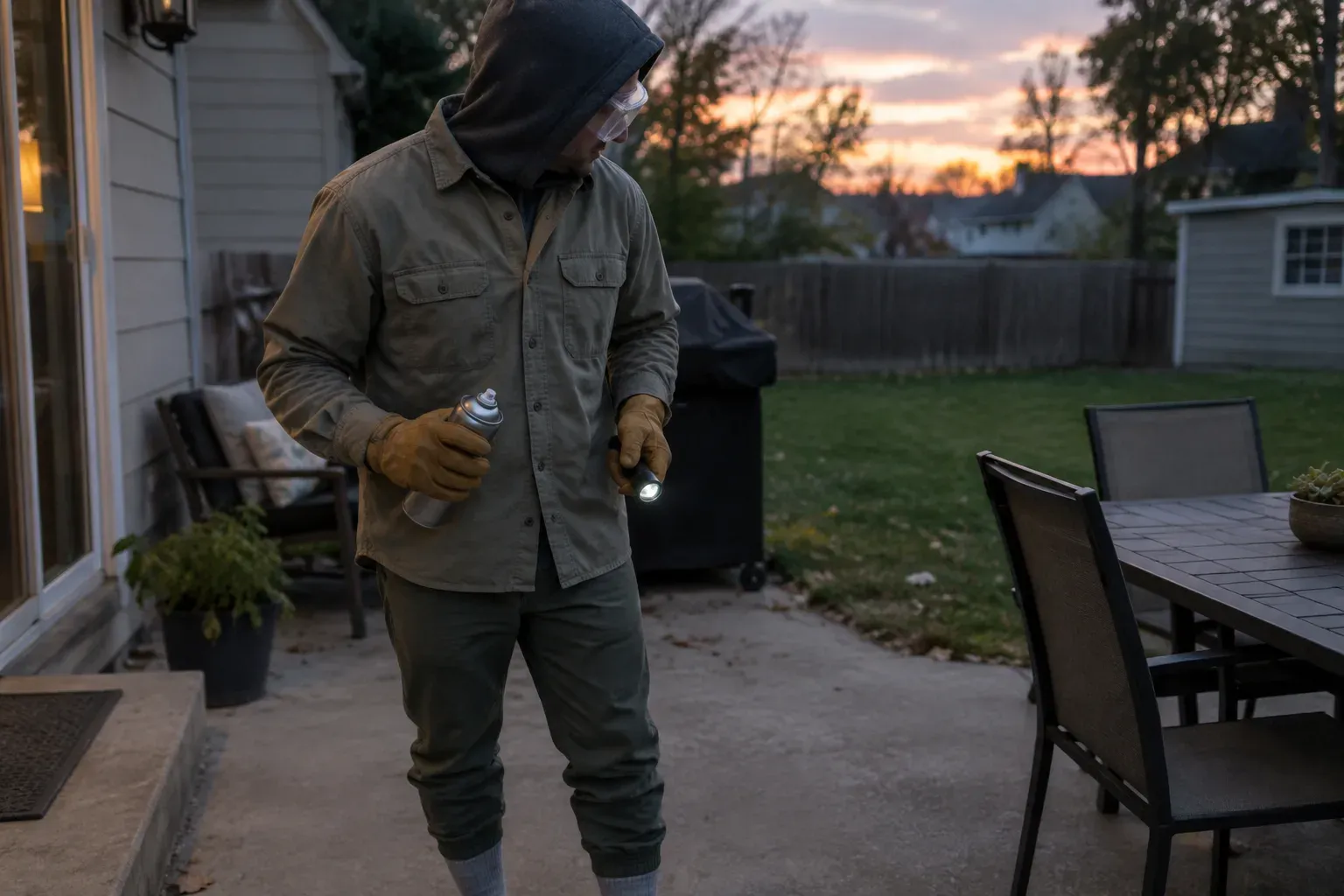
Wear long sleeves buttoned at the wrists, long pants tucked into socks, gloves, and eye protection, with a hood or a hat and veil over your head and neck. UC IPM recommends covering the whole body, face, hands and eyes. For anything bigger than a small paper wasp nest, UKY strongly recommends a full wasp suit and head veil, sealed at the wrists, ankles and collar; a beekeeper suit runs about $100 (HomeAdvisor).
Plan your exit before you start: a clear path away from the nest, no toys or hoses to trip on, and a door you can close behind you.
Step 2: Wait Until Dusk
Treat yellowjacket and hornet nests at night, when most of the wasps are home and slow (UKY). Paper wasp nests can be done in the daytime as long as you don’t stand directly under the nest (UKY), but dusk still catches more of the colony at home.
Don’t point a flashlight straight at the nest or its entrance; UKY warns that startled wasps may fly toward the light. Set it on the ground or a railing so it lights the wall beside the nest.
Step 3: Spray From the Side, Then Leave
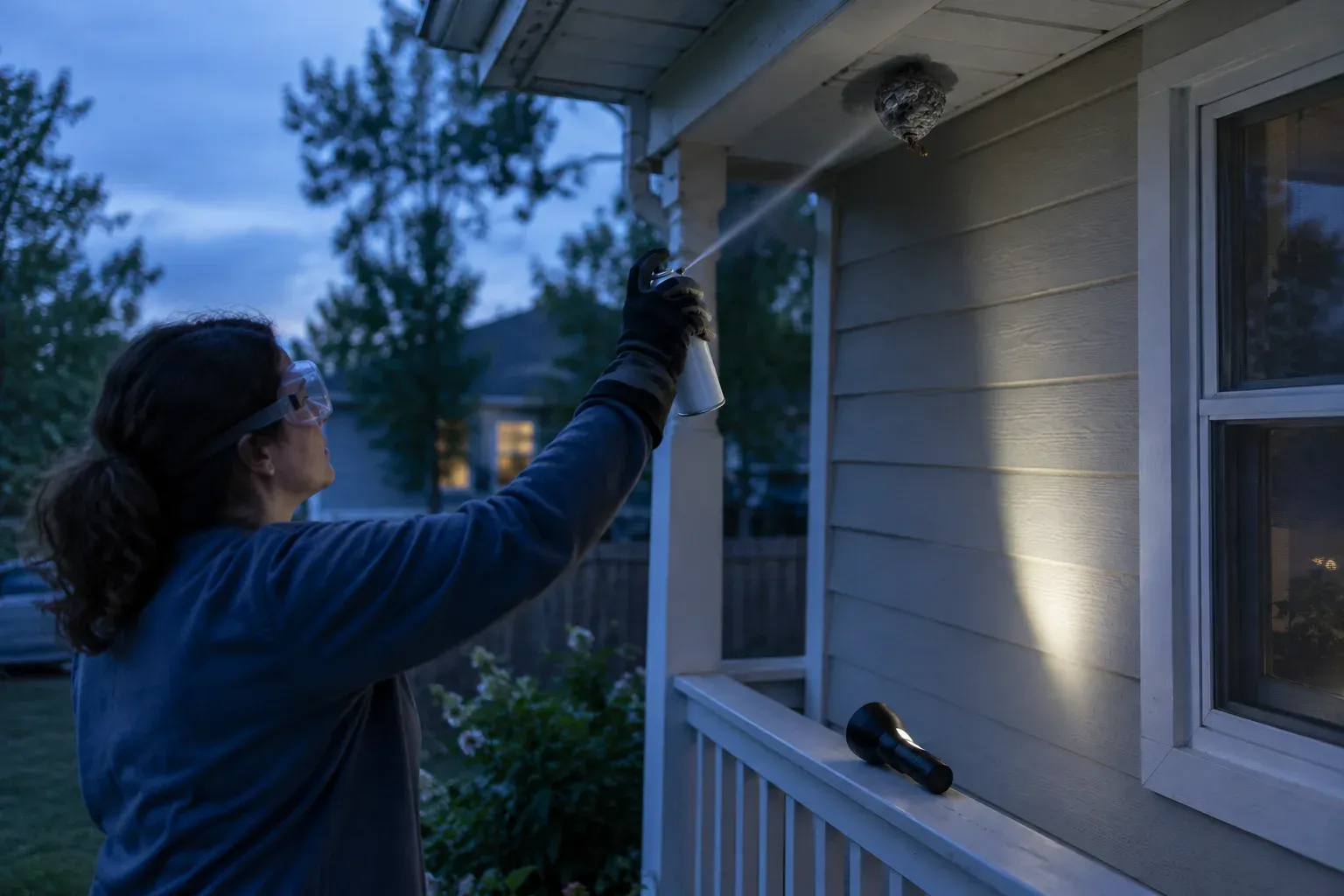
Use an aerosol spray labeled for wasp and hornet nests. These shoot a jet stream up to about 20 feet (UKY, UC IPM), so you never need to be close. Stand to the side, not underneath, aim at the open cells or the entrance hole, and keep spraying until the nest is soaked, following the label. Then walk away and go inside.
UC IPM warns that wasps attack when they sense a spray on their nest, and that even freeze-type sprays aren’t guaranteed to stop every wasp. That’s why you spray from the side and leave right away.
Step 4: For a Hole in the Ground, Use Dust
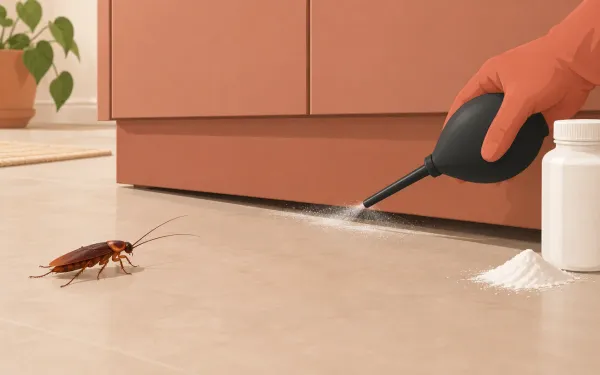
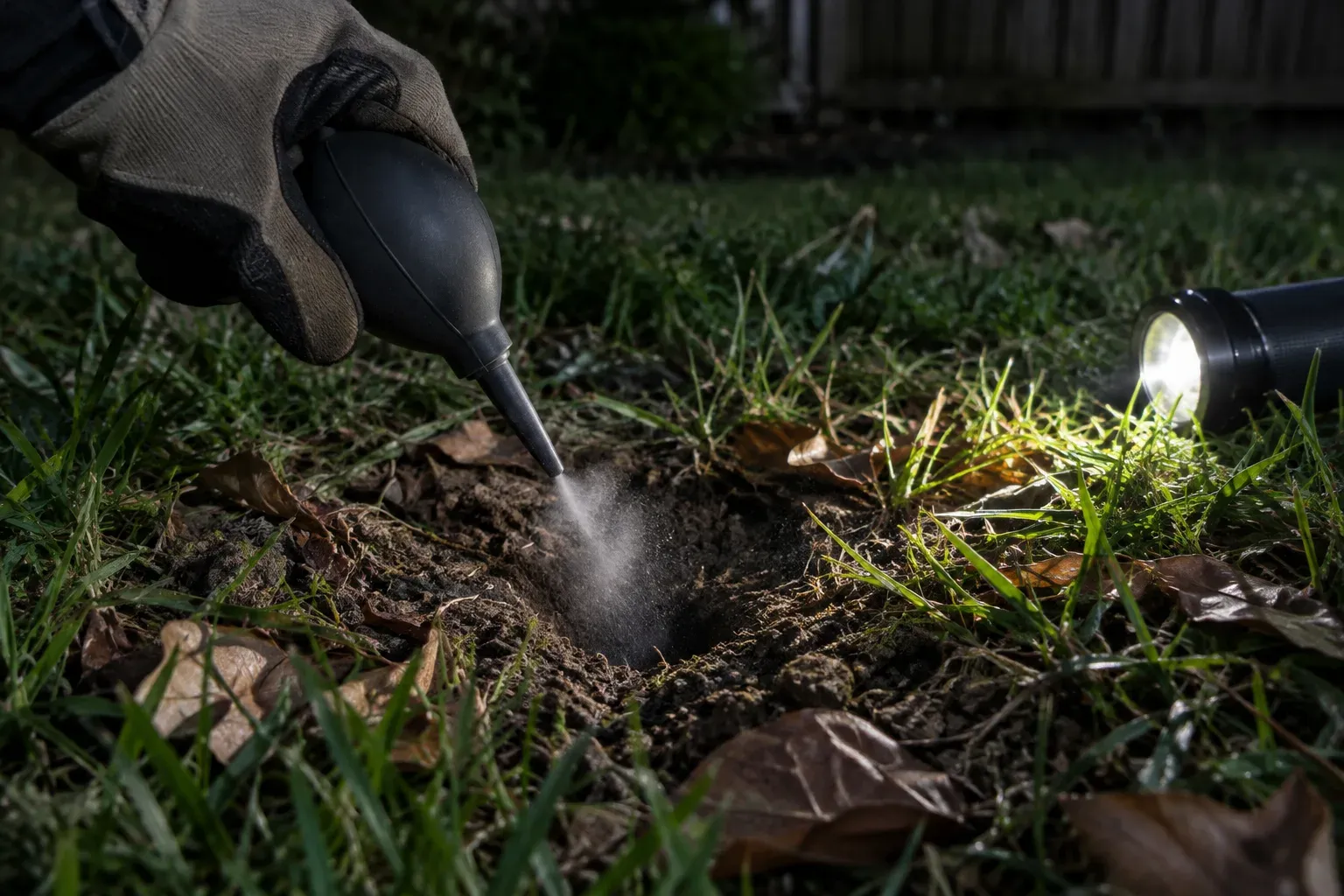
A yellowjacket nest underground often has more wasps than a can of spray can reach. UKY notes that an insecticide dust labeled for wasps (such as deltamethrin or cyfluthrin dust), puffed into the opening, gets farther into the nest than a spray. A bellows duster works best. UKY’s low-cost alternative is an empty, dry dish-soap bottle with a few inches of dust and a few pebbles to keep it from caking. Dusts cost about $15 (HomeAdvisor).
Go at night, puff the dust into the hole, and leave. Don’t plug the hole, and never block an opening in siding or a wall: UKY warns that the wasps may chew their way inward and come out inside the house. UC IPM adds that digging up a ground nest isn’t practical.
Step 5: Wait 3–4 Days, Then Bag the Nest
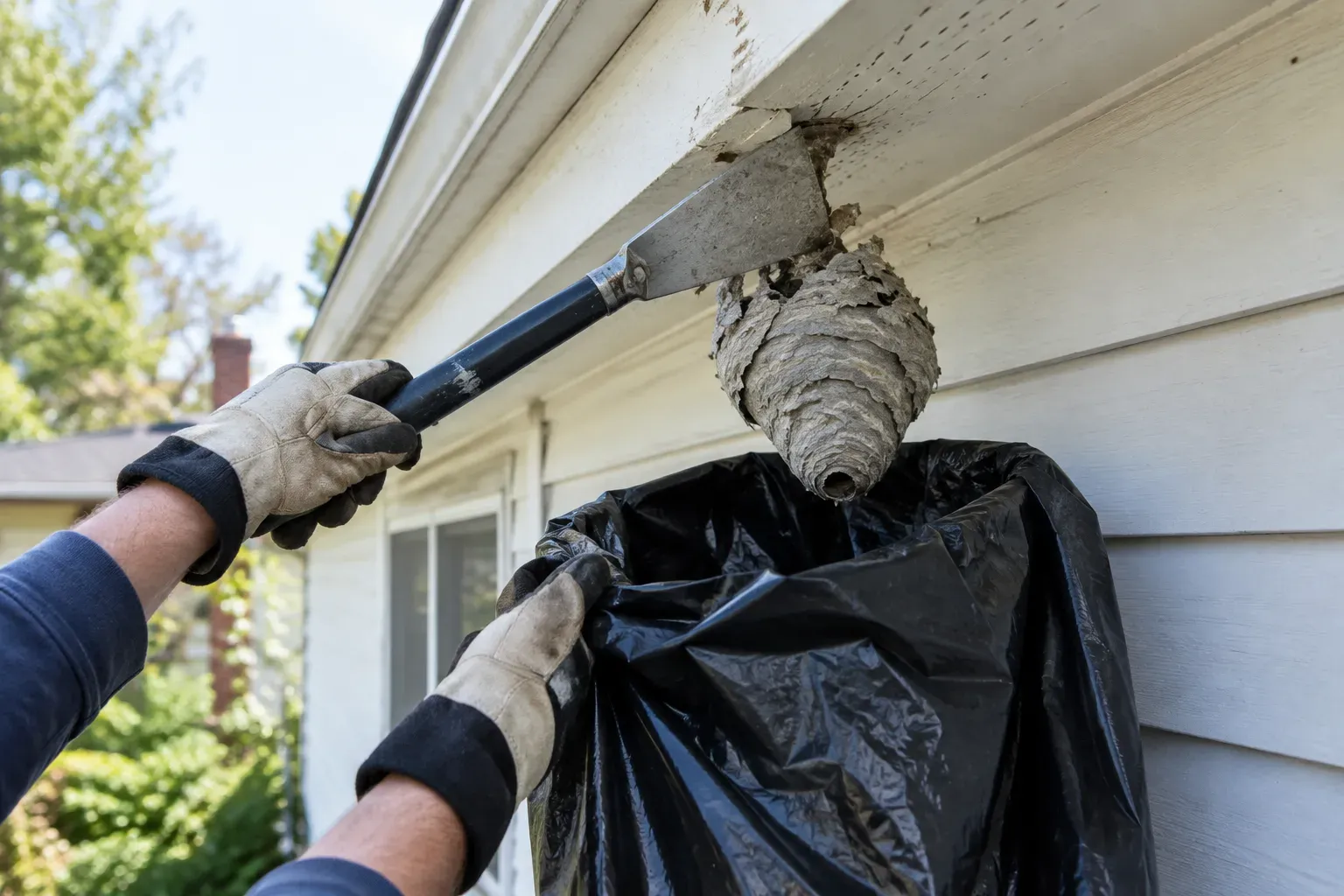
Leave the nest alone for at least 3–4 days so all the wasps are dead (UKY). Check it from a distance on a warm afternoon. If nothing flies in or out, put on gloves, hold a trash bag open under the nest and scrape it off with a long-handled scraper so it drops straight in. Tie the bag and put it in the trash. If wasps are still coming and going, spray again at dusk.
Step 6: Check the Eaves Each Spring
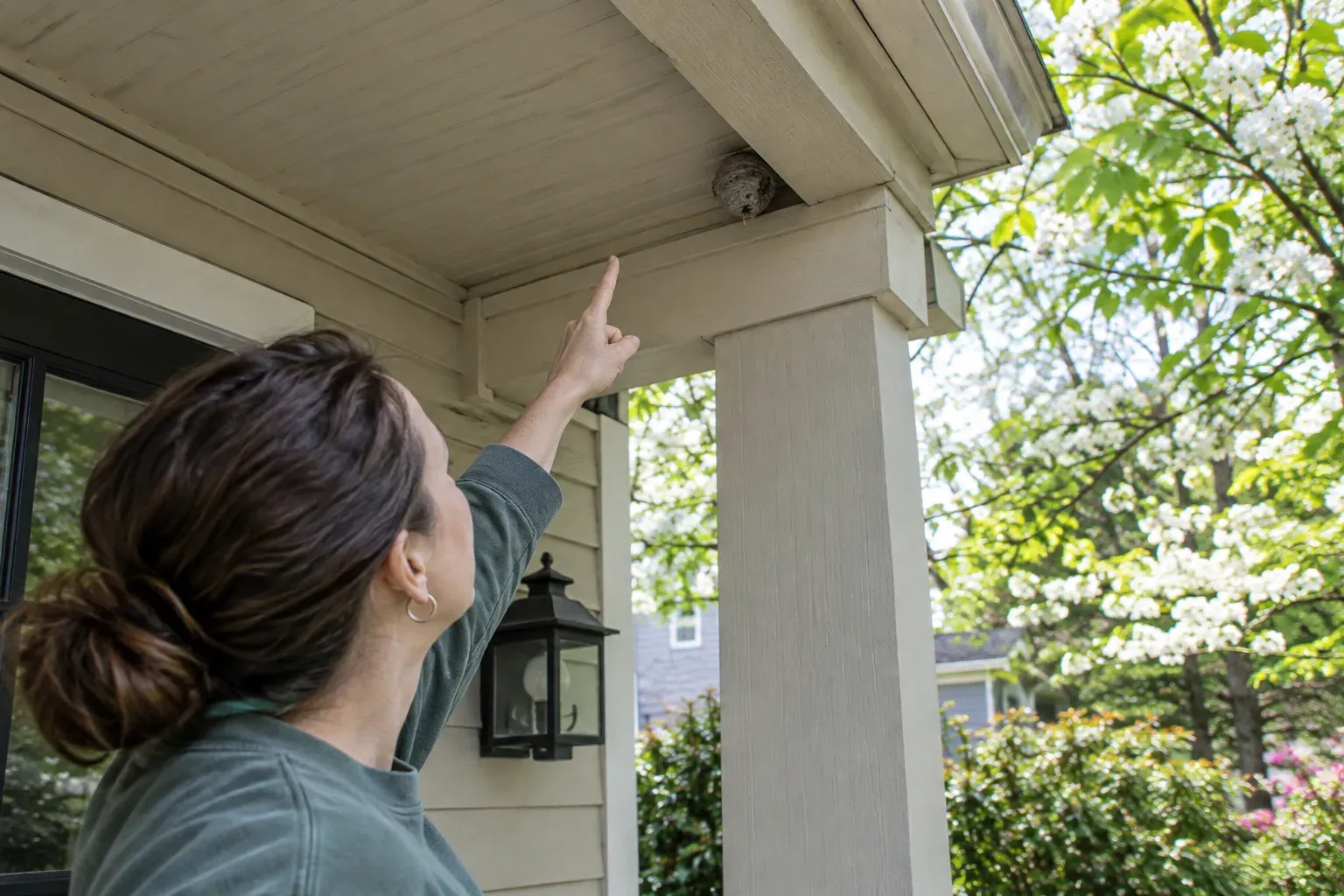
New colonies start in spring, when a nest is small and has few wasps. Walk around the house every couple of weeks in spring and early summer and look under eaves, porch ceilings, railings, shutters and the grill cover. A nest the size of a walnut is far easier to deal with than one the size of a dinner plate in August.
Five Mistakes That Get People Stung
- Hitting or knocking down a live nest. The whole colony comes out. Kill first, remove days later.
- Breaking a hornet nest’s paper cover. UKY calls this crucial: a torn envelope scatters angry wasps in every direction.
- Hosing it or pouring gasoline on it. UKY says these seldom work and can end in multiple stings. Gasoline also soaks the soil and can catch fire.
- Sealing the entrance in a wall. The wasps look for another way out, and that can be your living room.
- Working from a ladder. One sting while you’re up a ladder can mean a fall. UKY’s advice: call a pro when a nest needs a ladder.
Nests in Walls, Attics and Sheds
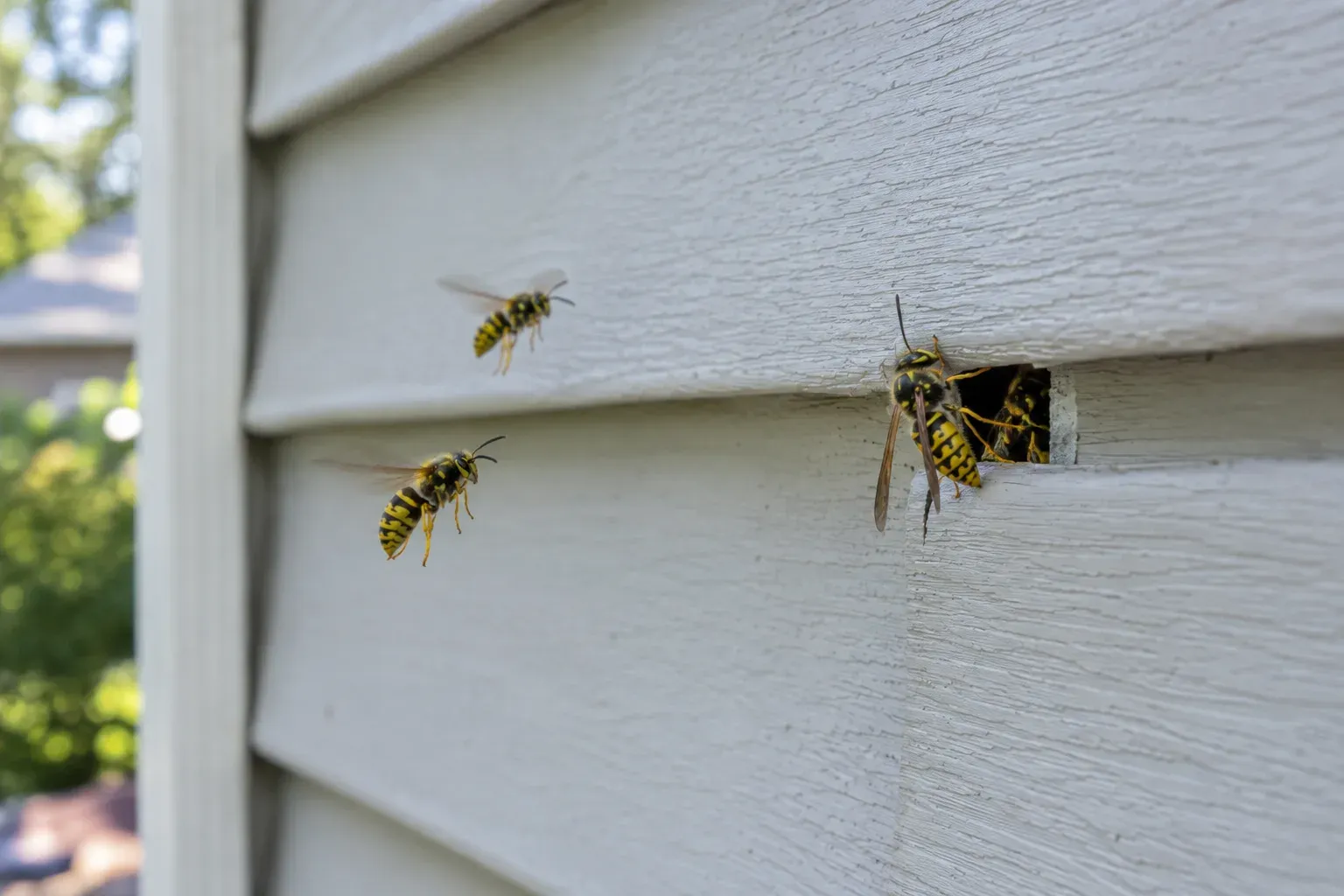
Yellowjackets and European hornets often nest in wall voids and attics, and a nest you can’t see is a nest you can’t treat well. Signs include wasps going in and out of one gap in the siding, a buzzing sound in the wall, or, UC IPM notes, a damp patch that turns into a hole in a wall or ceiling as the wasps chew through. Don’t seal the gap and don’t spray into the wall from inside. This is a pro job.
Doing Nothing Is Sometimes the Right Call
If the nest is high in a tree, at the back of the yard or anywhere nobody walks, you can leave it. In states with cold winters, wasp, hornet and yellowjacket colonies die off when the weather turns cold, and the paper nest falls apart over the winter (UKY). Mud daubers and cicada killers rarely sting at all.
Honey bees are a different case. A swarm hanging on a branch is usually not dangerous and stays for an hour to a few days (Iowa State University Extension). Don’t spray it. A local beekeeper or your county extension office can often collect it.
What a Pro Charges for Wasp Nest Removal
The national average is $525, and most people pay $300–$700 (HomeAdvisor, updated June 17, 2026). Hornets and yellowjackets cost the most because their nests are bigger, more defensive and often hidden. Nests in attics, walls or up high can add more.
| Nest | Typical pro price | DIY cost |
|---|---|---|
| Paper wasp | $100–$200 | About $12 spray |
| Mud dauber | $300–$400 | Free: scrape it off |
| Hornet | $300–$400 | Pro recommended |
| Yellowjacket | $500–$750 | About $15 dust, if in open lawn |
| Bald-faced hornet | $625–$750 | Pro recommended |
| Any nest, full range | $100–$1,300 | About $100 for a beekeeper suit |
A paper wasp nest under the eave is where DIY saves the most: a $12 can versus a $100–$200 visit. For a yellowjacket nest in the wall, the pro’s price buys the equipment and the stings you’d otherwise take. Before you hire, ask whether a follow-up visit is included; what an exterminator does covers the questions to ask.
When to Call a Pro
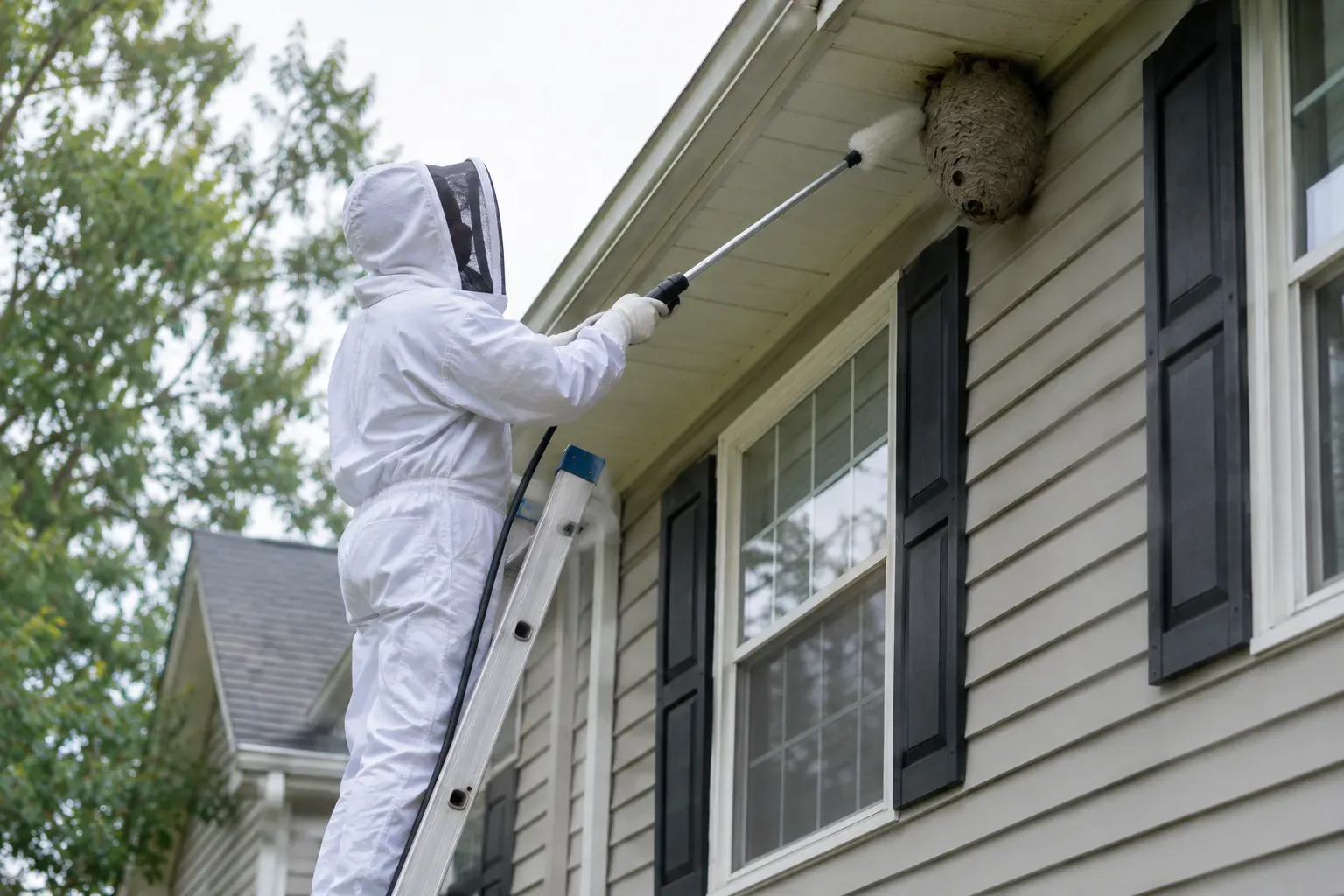
Call one if the nest is a gray hornet ball, if it’s inside a wall, attic or chimney, if you’d need a ladder, if a yellowjacket nest is big or close to a door, or if anyone in the household is allergic to stings. Also call if wasps are still active a week after you treated the nest.
Common questions
At dusk or after dark, when most of the colony is in the nest and the wasps are slow (UKY). Keep the flashlight off the entrance.
Wait at least 3–4 days (UKY), then check from a distance on a warm afternoon. If nothing is flying in or out, it’s safe to scrape it into a bag.
Only once the colony is dead. Knocking down a live nest, day or night, brings the wasps out after you. Treat it first, wait, then remove it.
The Bottom Line
A small paper wasp nest you can reach from the ground is a $12 evening job: cover up, spray from the side at dusk, wait 3–4 days, bag it. Hornet balls, nests in walls and anything up a ladder are worth a pro, and a nest nobody walks past can simply wait for the first frost.
Sources and further reading · 4
- University of Kentucky Entomology: Controlling Wasps, Hornets, and Yellowjackets (EF620): night treatment, sprays and dusts, waiting 3–4 days, not sealing wall entrances, ladders, gasoline and hoses, winter die-off, sting allergy.
- UC IPM: Yellowjackets and Other Social Wasps: protective clothing, 20-foot jet sprays, colony sizes, ground and wall nests.
- Iowa State University Extension: What to Do When You See a Honey Bee Swarm.
- HomeAdvisor: Wasp Nest Removal Cost (updated June 17, 2026): national average, prices by wasp type, DIY supply costs.