- Scientific name
- Dolichovespula maculata
- Also called
- white-faced hornet
- Size
- About 3/4 in
- Color
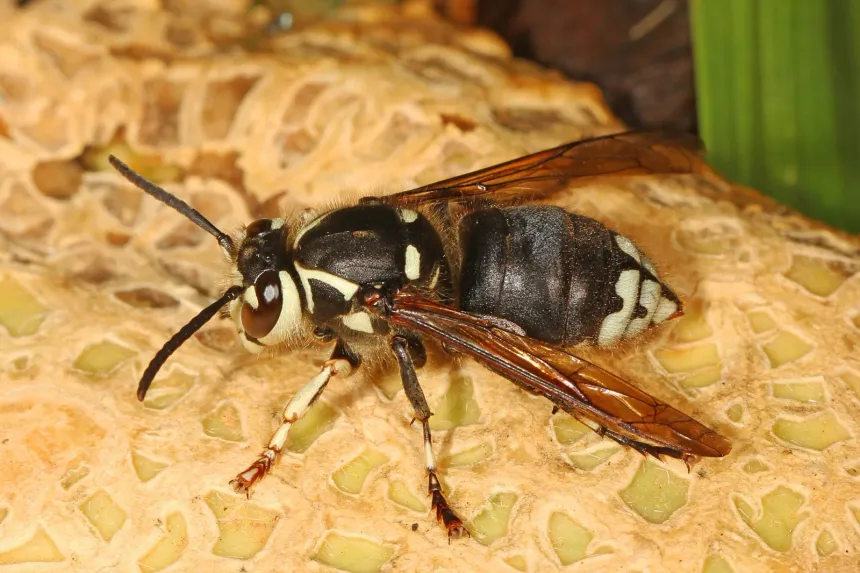
- Black with white or ivory markings on the face and tail
- Found in
- Trees, shrubs, eaves and sheds; nests above ground
- Harmful?
- Yes. Stings repeatedly when the nest is disturbed
- Active
- Spring to fall; nests are abandoned after the first hard frost
The bald-faced hornet is a black-and-white wasp that builds a large gray paper nest, shaped like a bloated football, in trees, shrubs and under eaves. Despite the name it’s a kind of yellowjacket, not a true hornet, and it’s extremely aggressive when the nest is disturbed. The one thing to do: leave nests high and out of the way, and call a professional for nests near doors, paths or play areas.
This page covers how to identify a bald-faced hornet and its nest, tell it from look-alikes and decide what to do. It rests on University of Kentucky guidance.
How to Identify a Bald-Faced Hornet: Black and White
- About 3/4 inch, larger than most yellowjackets.
- Black with white or ivory markings, including a mostly white face.
- Nest: an enclosed, gray paper ball with layered, swirled walls and one entrance hole near the bottom.
Nests can hold hundreds of wasps and grow bigger than a basketball by late summer. They’re often hidden among branches, especially in dense trees such as Bradford pear (University of Kentucky).
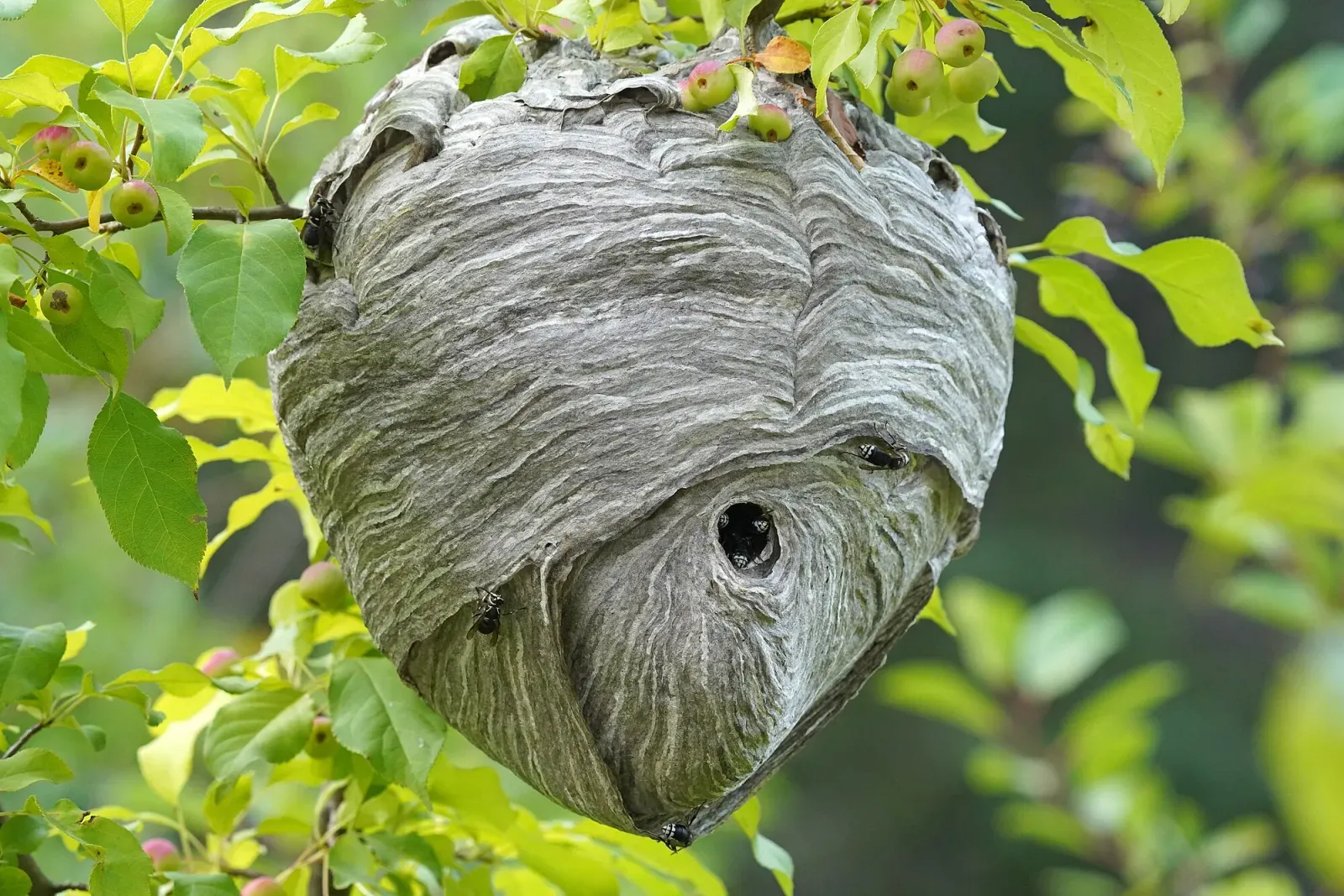
A bald-faced hornet nest in a shrub: gray paper layers with one entrance hole near the bottom. Photo: U.S. Fish and Wildlife Service (Public domain), via Wikimedia Commons.
Bald-Faced Hornet vs. Look-Alikes: Color and Nest Site
| Wasp | How it differs | How to tell |
|---|---|---|
| Bald-faced hornet | Black and white, about 3/4 in | Gray paper ball in the open |
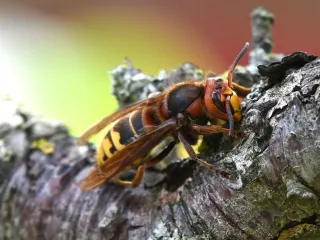
| European hornet | About 1 in or more, brown, red and yellow | Nests in hollow trees and wall voids; flies toward lights at night |
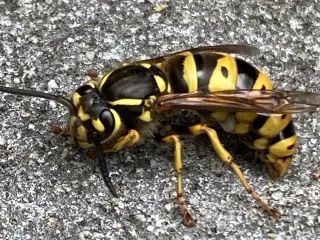
| Yellowjacket | Smaller, yellow and black | Nest in the ground or a wall |
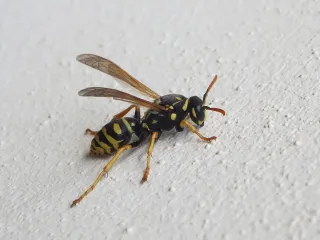
| Paper wasp | Slender, brown or rust | Open comb, no paper cover |
Where You’ll Find Them: Trees, Shrubs and Eaves
- Tree branches and dense shrubs
- Eaves, overhangs, sheds and playsets
- The side of a building
The single entrance near the bottom of the nest is where the wasps come and go; side-by-side nest photos are on wasp nests.
When You’ll See Them: Spring Through Fall
Like yellowjackets, a colony starts from one queen in spring, grows all summer and is present well into fall. In cold-winter states the colony dies off when the weather turns cold, and the paper nest falls apart over winter. Abandoned nests aren’t reused (University of Kentucky). Each colony has one egg-laying queen and many workers that tend her and the larvae, so a big nest late in the season can mean hundreds of defenders.
Are Bald-Faced Hornets Harmful? Yes, Near the Nest
They’re beneficial predators of flies and other insects, and like other wasps they’re seldom aggressive while out foraging. Near the nest it’s different: they defend it aggressively, and alarm signals released by the first defenders call more out, so one bump can bring many stings. The University of Kentucky notes that allergic reactions to wasp and hornet stings send about 225,000 people in the US to the emergency room each year. Hornets are far harder and more dangerous to control than paper wasps, and nests are often out of reach. Get medical help right away for signs of an allergic reaction, such as hives, trouble breathing, or swelling of the face or throat (University of Kentucky).
How to Confirm It’s a Bald-Faced Hornet Nest
- Look for a closed gray paper ball with one hole near the bottom.
- Watch from a distance for black-and-white wasps going in and out.
- Check dense trees and shrubs near the house in midsummer, before pruning.
- Look up before using a ladder near eaves or trees; nests are often hidden in the canopy and out of reach.
What to Do: Wait It Out or Call a Pro
Leave nests that are high up and away from activity; the colony dies off after the first hard frost. Nests near doors, paths or play areas are best removed by a professional. The University of Kentucky says anyone treating a nest themselves should do it at night in a full wasp suit with a sealed head veil, aim into the single opening, and never break the paper envelope. Professionals often use dusters on long extension poles to reach high nests from a safer distance. Wasp nest removal compares the DIY and pro options and costs. For ordinary stings, an over-the-counter antihistamine and an ice pack ease the pain and swelling. Don’t knock nests down with a hose or douse them with gasoline: these folk remedies seldom work and can cause many stings. For other pests, browse all pest guides.
Often confused with
Sources
- Controlling Wasps, Hornets, and Yellowjackets (University of Kentucky Entomology, EF620)
- European Hornet in Kentucky (University of Kentucky Entomology, EF600)
Last reviewed Oct 4, 2026.