- Scientific name
- Tetramorium immigrans
- Size
- About 1/8 in
- Color
- Dark brown to black, lighter legs
- Found in
- Under sidewalks, driveways, patios and slab foundations
- Harmful?
- Nuisance; can sting weakly
- Active
- Spring to fall; spring swarms on pavement
- Pro quotes
- $250–$500
Pavement ants are small dark ants that live under concrete: sidewalks, driveways, patios and the slab under a house. They push soil up through the cracks, leaving small sand piles, and come indoors through expansion joints and slab gaps. The one thing to do: bait their trails and seal cracks where floors meet walls.
This page covers how to identify pavement ants, tell them from look-alikes and where they get in. It rests on University of Kentucky guidance.
How to Identify a Pavement Ant: Grooves and Spines
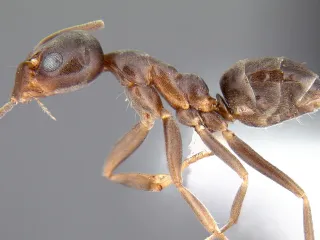
- About 1/8 inch, dark brown to black with lighter legs.
- Fine parallel grooves on the head and back, visible with a magnifier.
- Two small spines on the back and two bumps at the waist.
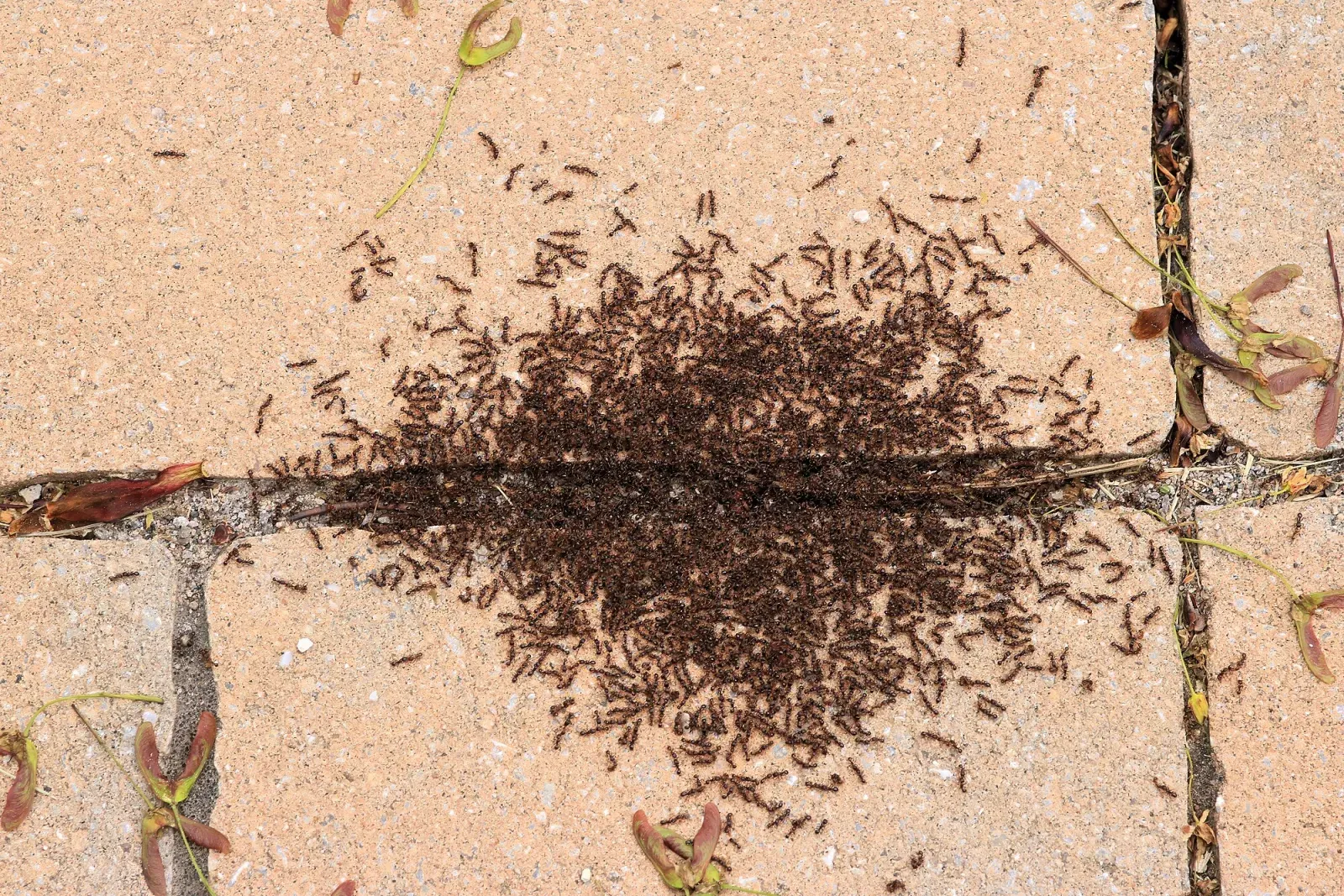
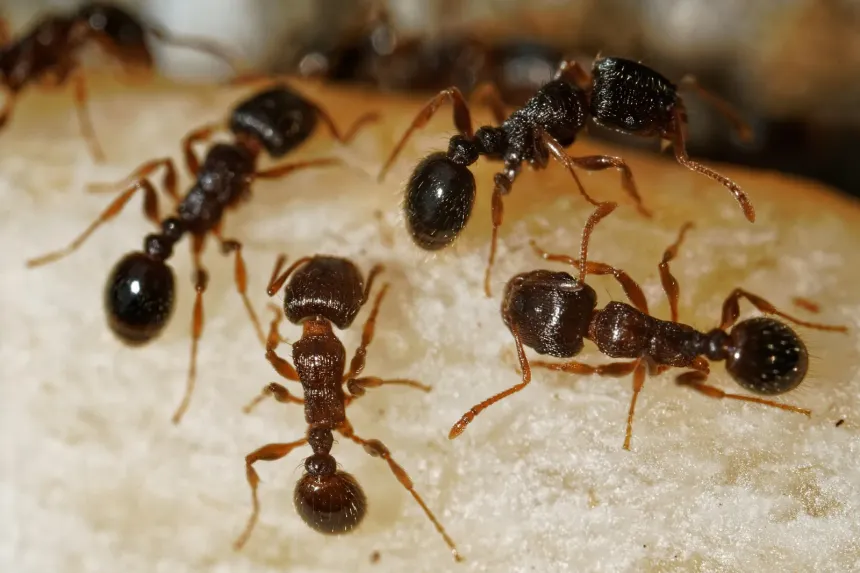
A pavement ant swarm on a patio in spring, often two colonies fighting over territory. Photo: ImagePerson (CC BY 4.0), via Wikimedia Commons.
Pavement Ant vs. Look-Alikes: Soil Piles in Cracks
| Ant | How it differs | How to tell |
|---|---|---|
| Pavement ant | Dark, grooved head and back | Little soil piles in pavement cracks |
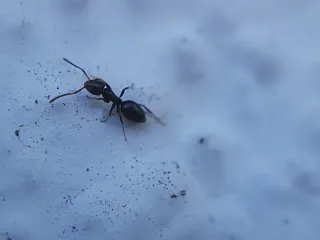
| Odorous house ant | Smaller, smooth head | Coconut smell when crushed |
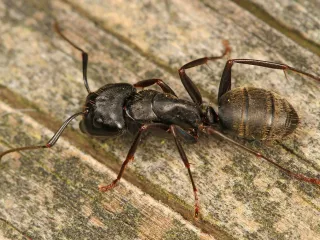
| Carpenter ant | Much bigger, black | Sawdust from wood, not soil piles |
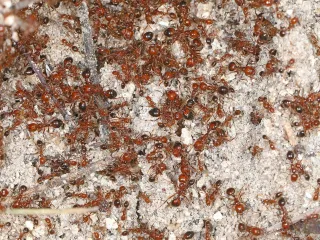
| Fire ant | Reddish, mixed sizes | Domed mounds in open lawns; painful stings |
Where You’ll Find Them: Under Concrete
- Sidewalk and driveway cracks with little soil piles
- Basement and garage floors, along walls
- Kitchens on the ground floor, coming up through slab cracks
In spring, neighboring colonies sometimes fight on the pavement over hunting territory, leaving thousands of ants in one spot. They also nest under bricks and stones and eat almost anything: live and dead insects, seeds and honeydew (University of Kentucky).
Are Pavement Ants Harmful? No Real Harm
They get into food and can sting if provoked, but don’t damage buildings. Outdoors they can even help, as predators of garden pests.
How to Confirm It’s Pavement Ants
- Look for soil piles in pavement or slab cracks.
- Check the head with a magnifier for fine grooves.
- Follow the trail to a crack, expansion joint or floor gap.
What to Do: Bait and Seal Slab Cracks
Bait along their trails indoors and next to the soil piles outside, and seal slab cracks and gaps where floors meet walls. UC IPM says baits beat sprays for ants: workers carry the bait back so the whole colony, queens included, can be killed, while sprays mostly kill foragers. If you hire a pest control company, ask for baits and spot treatments rather than monthly perimeter sprays. For other pests, browse all pest guides.
Often confused with
Sources
- Ant Control for Householders (University of Kentucky Entomology, EF619)
- Ants in Kentucky Landscapes and Gardens (University of Kentucky Entomology, EF458)
Last reviewed Oct 5, 2026.