Rat Bait Stations: Where to Put Them and Are They Worth It?
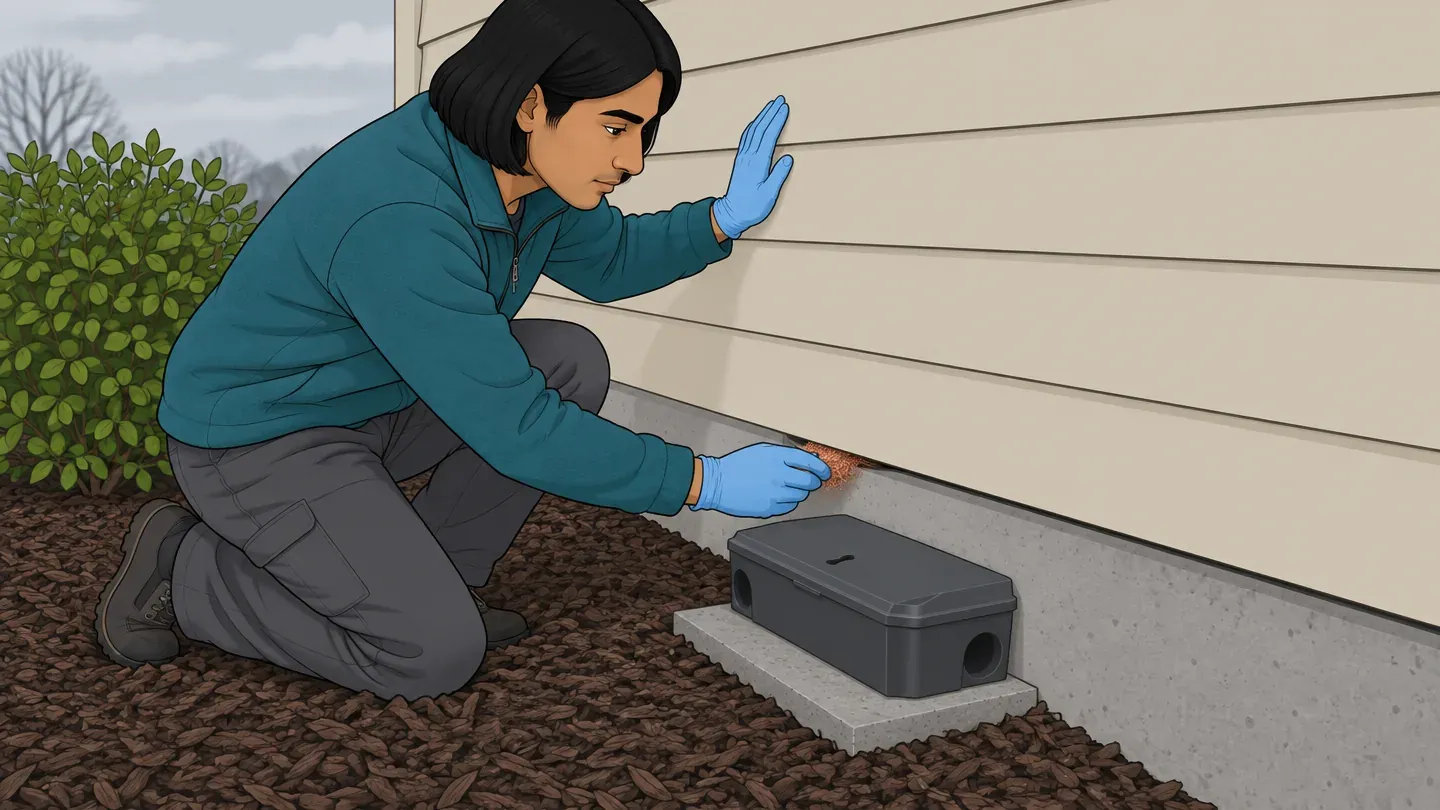
Illustration: a locked bait station against the foundation, and the gap beside it being packed with copper mesh.
Rat bait stations are locked boxes of poison bait that rats and mice enter to feed. Outdoors, they can kill some rodents feeding along the house, but they seal nothing, and poisoned rodents don’t reliably leave to die outside. For most homes, sealing gaps and setting snap traps works better and costs less. Skip poison indoors.
Cost: about $65–87 in supplies. Difficulty: moderate. Call a pro if fresh droppings or gnawing continue after at least 15 days of sealing, trapping and re-baiting, or the entry points are on the roof or somewhere you can’t reach safely.
This guide covers how stations work, where they go, the “they’ll leave to find water” pitch, what monthly plans cost and the seal-and-trap alternative. We haven’t tested these products ourselves; this rests on CDC, UC IPM, Nebraska Extension, EPA and NPIC guidance, 2026 list and platform prices, and two quotes homeowners posted on Reddit. The full job is in how to get rid of rats in your house.
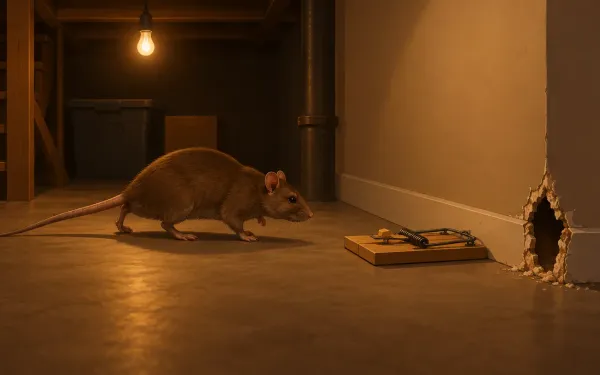
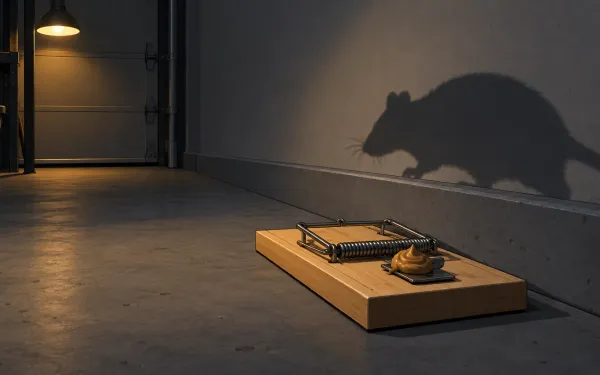
Saw a rat tonight? Skip poison indoors, where a poisoned rodent can die inside a wall. Put rat-size snap traps on the floor where you found droppings, baited end touching the wall, with a dab of chunky peanut butter, but don’t set them until the bait starts disappearing. Sealing can wait for daylight.
What Works and What Doesn’t Against Rats
| Method | Works? | Cost | Main limitation |
|---|---|---|---|
| Snap traps, in a locking station if needed | Yes, the CDC’s first pick | $22–43 for 6–12 | Rats are wary; bait unset first |
| Sealing gaps with mesh and metal | Yes, most effective (Illinois DPH) | Part of the $65–87 kit | Roofline gaps may need a pro |
| Outdoor bait stations | Partly: kill some rodents | $12–$20 each | Seal nothing; some rats skip them |
| Monthly refill plan | Rarely worth it alone | $50–$150 a month | Pays for poison, not sealing |
| Poison indoors | Skip | — | Rodents die inside walls |
How Do Rat Bait Stations Work?
A rodent bait station is a sturdy plastic box with entry holes at each end and poison bait held on rods inside. A rodent walks in and feeds; a child’s hand or a dog’s mouth can’t reach the bait. The box also keeps bait dry and makes rodents feel safe enough to eat more, says University of Nebraska–Lincoln Extension, the source for placement and timing facts below unless another is named.
Store stations come filled with block or paste poison; pros can use stronger poisons, such as brodifacoum, that aren’t sold to homeowners. For outdoor use, only the toughest grade of store station (Tier 1) qualifies under EPA rules: tested against children and dogs, weather-resistant, and placed within 50 feet of a building.
Kids and pets? A dog or cat can still be poisoned by eating a rodent that ate the bait (why no rat poison is truly pet-safe). If a child gets into bait, call Poison Control at 1-800-222-1222; for a pet, NPIC’s line is 800-858-7378.
Do Rat Bait Stations Work?
They kill rats and mice, but they aren’t the first tool. The CDC recommends snap traps for homes and says to “only use poison or bait stations for mouse and rat infestations that persist.”
- Rats are wary. Some wait up to two weeks before feeding at a new station, or ignore it altogether.
- Roof rats may skip them, even on their established runways (UC IPM).
- Poison doesn’t close the door. The Illinois Department of Public Health calls sealing and trapping the most effective methods, with bait only as a supplement.
Where Should Rat Bait Stations Go?
Outdoors, against the foundation, on paths rats already use: 15 to 50 feet apart for rats, no more than 12 feet apart for mice, and never more than 50 feet from the building. Keep them out of afternoon sun, which can melt bait blocks, and anchor each to a wall, slab or heavy patio stone so an animal can’t shake the bait loose.
“They’ll Leave to Find Water”: Is That True?
No source we checked supports it. One Reddit poster in Miami, with a rodent in the attic, was quoted $290 for two outdoor poison boxes plus $65 a month in refills and told “the rodents will leave to find water and get trapped.”
UC IPM says house mice seldom go more than 30 feet from their nest, so rodenticide often leaves them dying inside the home. For rats, UC IPM advises sealing entry points before baiting outside, “to prevent poisoned rats from coming inside to die.” A rodent that dies in a wall leaves a smell (finding a dead mouse by the smell).
Do Outdoor Bait Stations Attract Rats to Your House?
We found no study that measures this either way. UC IPM says rats won’t “go out of their way to find the bait,” so stations must sit on routes rats already use, and those run along your foundation, right past any open gap.
Rodents already in the attic? Ground-level boxes don’t reach them. Trap on rafters near rub marks, then seal the roofline; how to catch a rat shows how to fasten traps there.
The DIY Alternative: Seal and Trap
The full kit costs $65–87, less than one $180 quarterly check in a Pittsburgh quote below, and it closes the gaps and catches rodents already inside.
Step 1: Trap tonight. Set rat snap traps baited but unset, and set them once the bait starts disappearing. Not sure it’s a rat? Rat droppings reach ¾ inch, mouse droppings average ¼ inch (ICWDM); mice are less cautious, so mouse traps can be set right away (CDC).
Step 2: Check daily for 15 days. Re-bait and keep trapping at least 15 days, as the CDC advises. Wear gloves, don’t sweep, and spray droppings with bleach solution, letting it soak 5 minutes before wiping.
Step 3: Seal this weekend. Pack gaps wider than ¼ inch with copper mesh held in with caulk, and cover bigger holes with hardware cloth or sheet metal (CDC), not plastic, foam or wood, which rats chew through (UC IPM).
Kids or pets at home? Put each snap trap inside an empty locking station, anchored against the wall. Renting? Tell your landlord in writing before sealing outside gaps or placing anything outdoors.
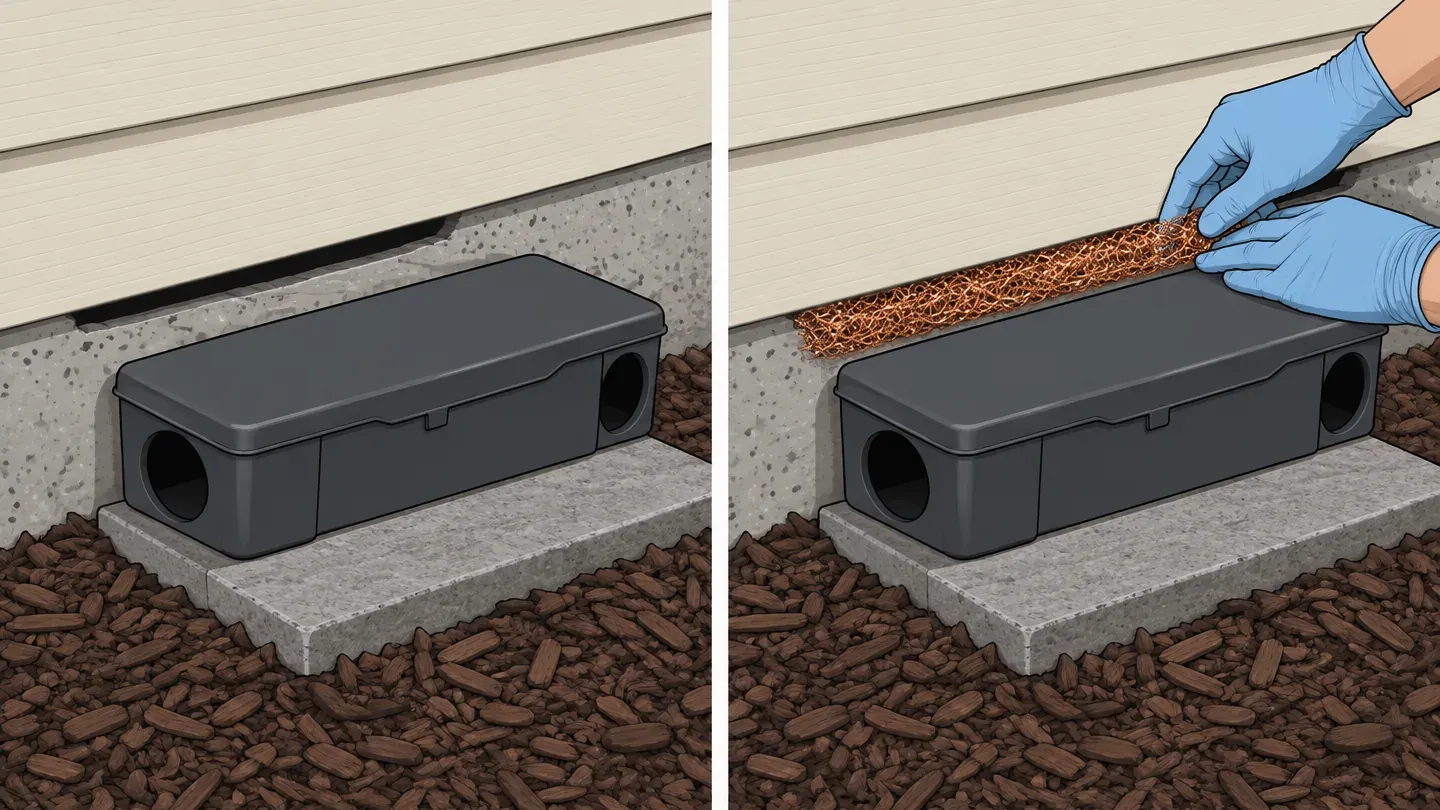
Illustration: a station next to an open gap (left), and the same gap packed with copper mesh (right).
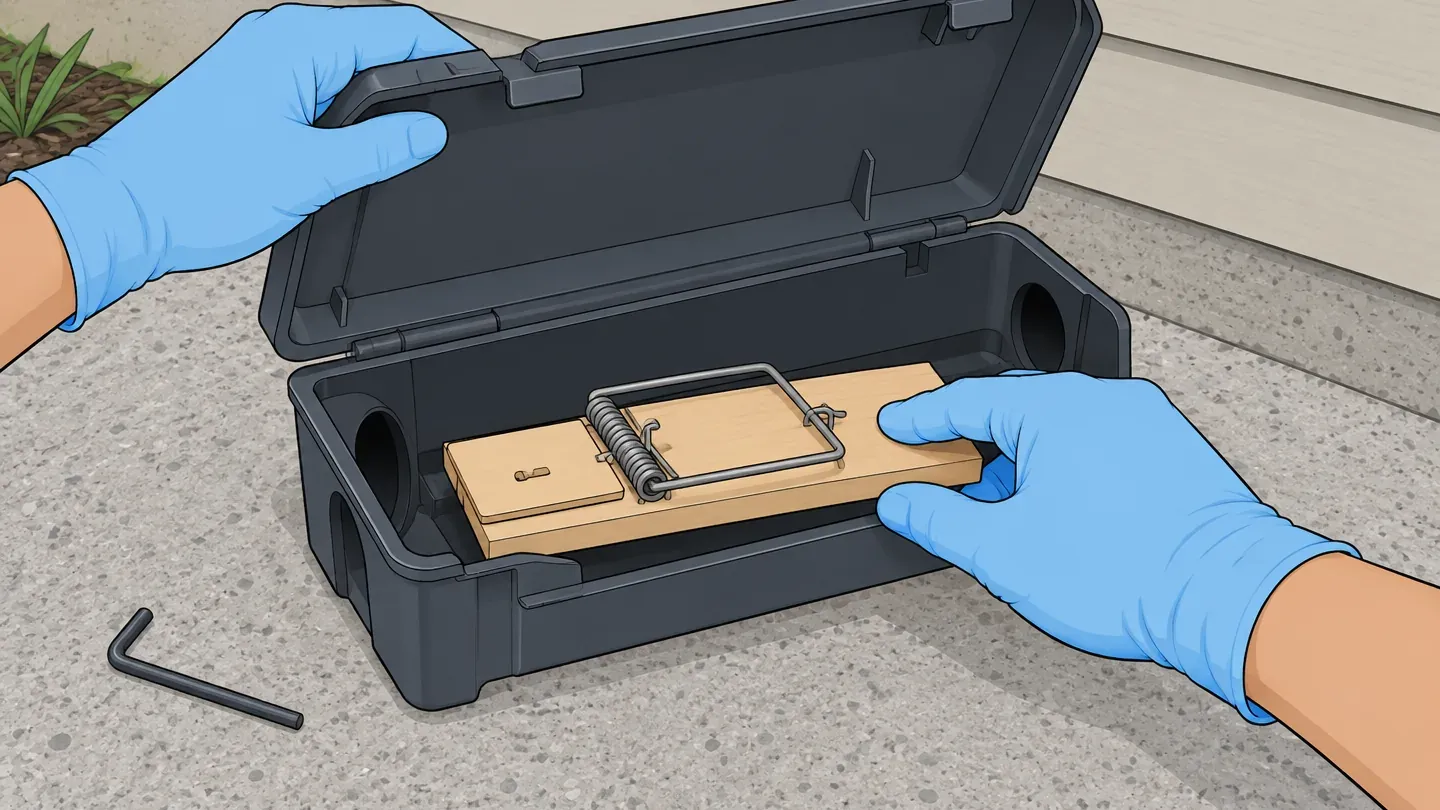
Illustration: a wooden rat snap trap set inside an empty locking station.
What Does a Monthly Bait Station Plan Cost?
| Option | Typical cost |
|---|---|
| Store-bought bait station | $12–$20 each |
| Empty locking rat station that holds a snap trap | $27.69 |
| DIY: 6–12 rat snap traps | $22–43 |
| Full DIY kit: 6–12 rat snap traps, 20 ft copper mesh, gloves, bleach | $65–87 |
| Pro trap-and-seal job, 53 shared quotes (middle half) | $1,400–$3,000 |
| Pro visit, price-guide range (usually no sealing) | $150–$655 |
| Pro attic insulation cleanup, if upsold | $7,500–$14,000 |
| Ongoing rodent monitoring plan | $50–$150 a month, or per visit if billed by visit |
DIY: U.S. list prices from Victor, DoMyOwn and Target, September 30, 2026, before tax; empty station from DoMyOwn, October 1, 2026. Per-station price: Today’s Homeowner (April 2025). Pro removal and sealing: the middle half of 53 trap-and-seal quotes homeowners shared on Reddit (see the quote table). Price-guide range: This Old House for mice (April 2026) and HomeAdvisor for rats (June 2026); it usually covers a trap-and-bait visit, with sealing extra. Attic cleanup: the middle half of 35 shared quotes that included new insulation. Monitoring plan: Orkin’s published price ranges (September 2026).
Over a year, the Miami poster’s $65 refill plan comes to $780 (our math), about two-fifths of the $2,000 median for rat jobs that trap and seal in the quotes homeowners shared. A poster near Pittsburgh, with rats in the crawl space, was quoted about $1,135 for one year of one outdoor box: $295 to reinspect and refill, $180 a quarter for checks and $120 to remove it, with no sealing and no snap traps. These are single quotes, not market rates.
Which Plan Fits Your Situation
| Your situation | Start with | Then |
|---|---|---|
| Rats keep arriving from an alley | Seal and trap | Permanent outdoor stations may make sense |
| Rodents in the attic or walls | Traps on rafters and beams | Seal the roofline; skip ground boxes |
| Kids or pets | Snap traps in empty locking stations | No poison |
| Renting | Traps indoors | Written note before anything goes outside |
| Already on a refill plan | Ask what’s in the boxes | Ask what sealing and ending the plan cost |
Already Have Bait Stations Outside?
Ask what’s in them and to see the label; the EPA says to follow it. Check each box is locked, anchored and within 50 feet of the building. Near where kids play? Ask, in writing if you rent, to move it or swap the poison for a snap trap. Pick up dead rodents outside with gloves and put them in a trash can with a secure lid, NPIC advises.
Opening an old, empty station? Deer mice, which can carry hantavirus, often nest in them. Wear gloves, don’t sweep, and soak any nest with bleach solution (1½ cups per gallon of water) for 5 minutes before wiping it out (CDC).
When Bait Stations Make Sense
Nebraska Extension suggests permanent stations along outside walls of buildings that can’t be fully rodent-proofed, such as where rats keep arriving from an alley or neighbors; rats come to trust a familiar box. They’re a poor fit when you saw one mouse indoors, the rodents are in the attic or walls, nobody has sealed the entry points, or the plan runs month after month with no end date.
Before You Sign: A Quick Checklist
A proper exterminator visit means inspecting, placing stations and traps, sealing entry points and returning to confirm it worked (HomeAdvisor).
- Ask what they’ll seal, and whether it’s in this price.
- Ask what goes in the stations, whether anything goes indoors, and to see the label.
- Ask whether they’ll set traps inside.
- Ask what it costs to end the plan and remove the stations.
- Check their license and guarantee, and get bids from two or three companies, as the EPA suggests.
When to Call a Pro
Fresh droppings or gnawing after at least 15 days of sealing, trapping and re-baiting, or gaps on the roof or somewhere you can’t reach safely.
Common questions
Anchor it outdoors against the foundation on a rat route, and leave it in place while rats get used to it. Once feeding drops, checking every two to four weeks is enough (Nebraska Extension). Indoors, use a snap trap in an empty locking station, not poison.
Often weeks. Nebraska Extension suggests switching products or calling a professional if control isn’t reached in four to six weeks.
Size: the minimum entry hole is 2¼ inches for rats and ¾ inch for mice. Don’t use mouse-size stations where rats are present, because rats can gnaw into them and expose the bait.
Sources and further reading · 8
- U.S. EPA: Restrictions on Rodenticide Products, Choosing a Bait Station Product for Household Use, Tips for Hiring a Rodent Control Professional and Citizen’s Guide to Pest Control and Pesticide Safety.
- University of Nebraska–Lincoln Extension: Bait Stations for Controlling Rats and Mice (G1646).
- UC IPM: Rats and House Mouse.
- CDC: Trap Up, Seal Up and Clean Up.
- ICWDM: Norway Rats and House Mice.
- Illinois Department of Public Health: Norway Rats.
- NPIC: Rodenticides Fact Sheet and Can Rat Poison Hurt Kids and Pets?.
- Reddit posts quoted: one outdoor station, about $1,135 a year and $290 for two rodent boxes plus $65 a month.