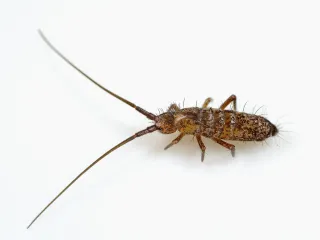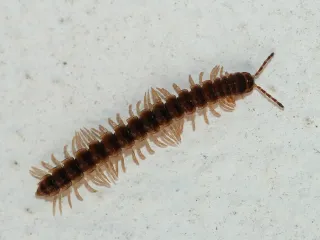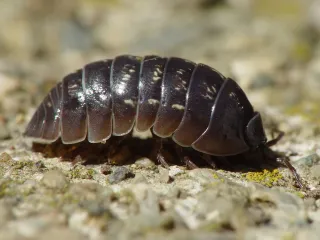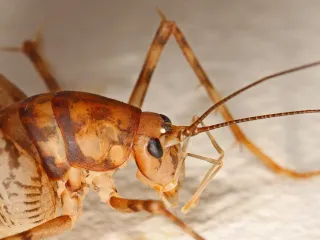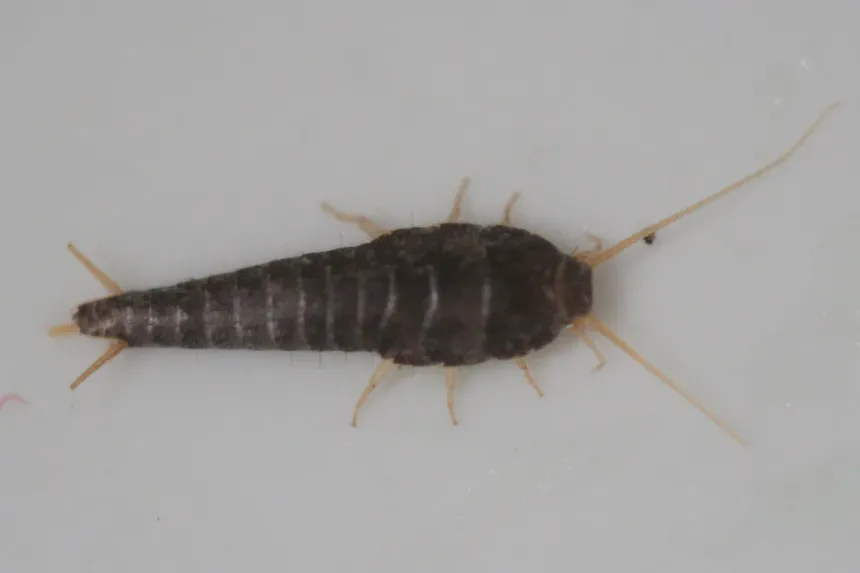
- Scientific name
- Lepisma saccharinum
- Also called
- silverfish bug, firebrat (close relative)
- Size
- About 1/2–3/4 in, not counting tails
- Color
- Silvery gray, shiny scales
- Found in
- Bathrooms, basements, attics, bookshelves, storage boxes
- Harmful?
- No health risk; damages paper, books and some fabrics
- Active
- Year-round, at night
Silverfish are shiny, carrot-shaped insects with three tails that live where the air is damp. They don’t bite or spread disease, but they graze on paper, photos, wallpaper and starched fabric. The one thing to do: dry the room out, because humidity, not dirt, is what keeps them there.
This page covers how to identify silverfish, the damage they leave, what they eat and how to confirm them. It rests on UC IPM, University of Nebraska–Lincoln and Virginia Cooperative Extension guidance; the full plan is in how to get rid of silverfish.
How to Identify Silverfish: Silver, Carrot-Shaped, Three Tails
- Carrot or teardrop-shaped, wide at the head and tapering to the tail.
- Silvery gray and shiny, covered in tiny scales that rub off.
- Three long, thin tails at the back end and two long antennae at the front.
- Fast, wiggling run, like a fish swimming.
- About 1/2 to 3/4 inch long, not counting the tails.
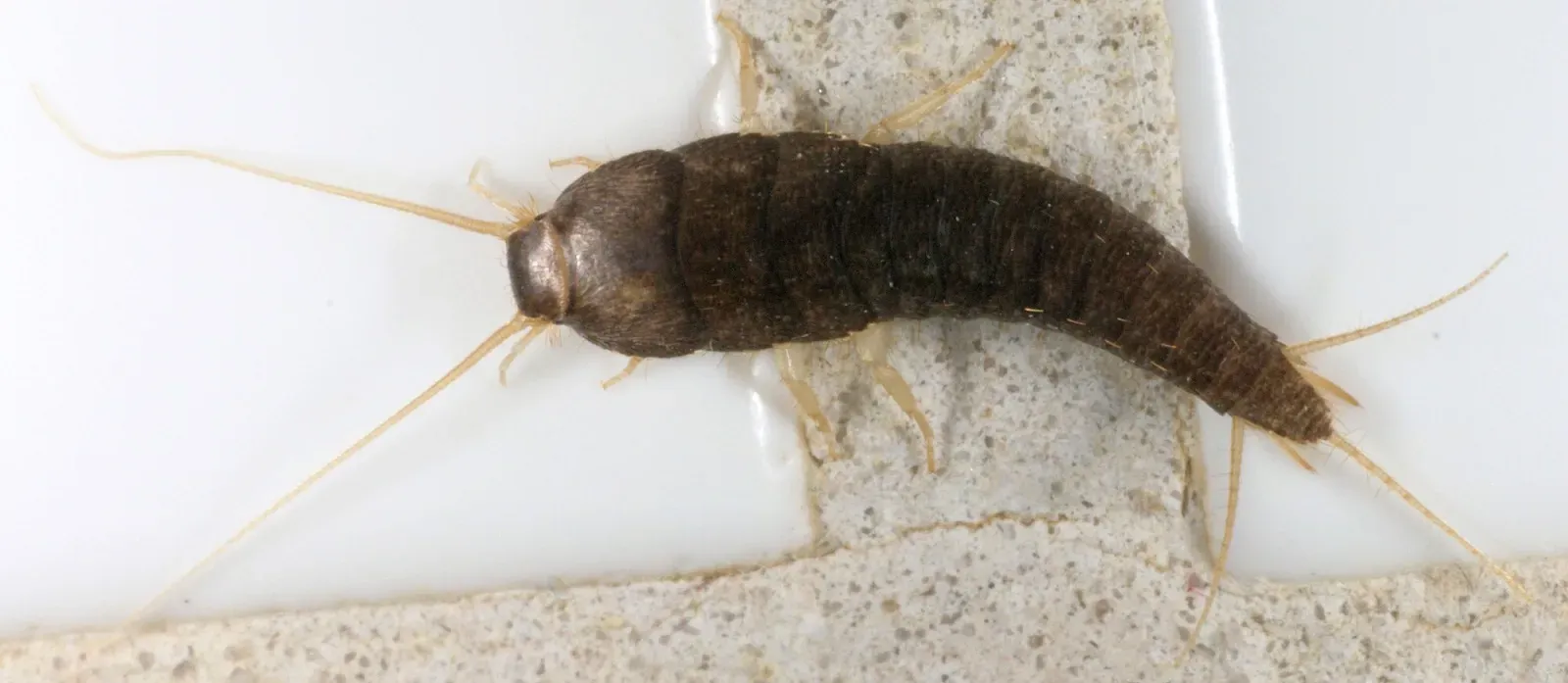
A silverfish on bathroom tile, the kind of damp spot where they turn up. Photo: Magne Flåten (CC BY-SA 3.0), via Wikimedia Commons.
Silverfish vs. Look-Alikes: Color, Tails and Where They Live
| Insect | How it differs | How to tell |
|---|---|---|
| Silverfish | Silvery, carrot-shaped | Three long tails; damp rooms |
| Firebrat | Mottled gray-brown, same shape | Hot spots near furnaces and dryers |
| Jumping bristletail | Humped back, comes in from outdoors | Jumps |
| Booklice | Tiny (under 1/16 in) and pale | No tails; on damp paper and books |
Where Silverfish Live: Damp Rooms and Stored Paper
- Bathrooms, especially around tubs, sinks and under the vanity
- Damp basements, laundry rooms and crawl spaces
- Attics, closets and storage boxes of paper, photos or books
- Behind baseboards, wallpaper and window frames
They often arrive in cardboard boxes, old books and papers. The University of Nebraska–Lincoln puts their preferred range at 75 to 97% humidity and 70 to 80°F, like a bathroom that still feels muggy an hour after a shower.
Do Silverfish Bite? No
Silverfish don’t bite people or pets, and they aren’t known to carry disease, according to UC IPM. The harm is to paper and fabric, and to stored food they contaminate; are silverfish harmful covers it in detail.
What Silverfish Damage Looks Like: Grazed Paper, Not Big Holes
- Irregular holes and notched edges on paper, envelopes and book pages
- Surface grazing on photos, wallpaper and book covers, where the glossy layer is scraped off
- Small yellowish stains and tiny pepper-like droppings
- Shed scales and skins in stored boxes
- Damage in starched fabrics, cotton, linen and rayon stored in damp places
What Silverfish Eat: Starch, Sugar and Glue
- paper, cardboard, book bindings and wallpaper paste
- glue on envelopes and labels
- flour, oats, cereal and dry pet food
- starched clothing, cotton, linen and rayon
- dead insects and mold
They can survive for months without food, so cleaning alone rarely ends an infestation; drying out the space matters more.
Silverfish Life Cycle: Slow to Build
Newly hatched silverfish are about 1/16 inch long, plump and white, and gain their silver scales as they grow (UC IPM). They keep molting throughout life and live about 3 years. A female normally lays fewer than 100 eggs in her life (Virginia Cooperative Extension), so a large infestation usually means they’ve been there a while.
Are Silverfish a Sign of a Dirty House? No, of Damp
A spotless bathroom with poor ventilation can have more silverfish than a cluttered but dry room. Old paper and clutter give them food and hiding places, but humidity is what lets them settle in.
How to Confirm Silverfish
- Set a jar trap: wrap the outside of a small glass jar with tape, put bread inside and leave it overnight; they climb in and can’t climb out.
- Lay sticky traps along baseboards in the bathroom or basement.
- Leave a paste card: coat an index card with flour-and-water paste and let it dry; the University of Nebraska–Lincoln says silverfish usually find it within a week and leave tiny scraped spots.
What to Do: Dry the Room, Then Store Paper in Plastic
Lower the humidity first: run a dehumidifier, fix leaks and ventilate bathrooms. Store paper and photos in sealed plastic bins, not cardboard boxes, clear clutter and seal cracks along baseboards. Sticky traps help show where they’re active.
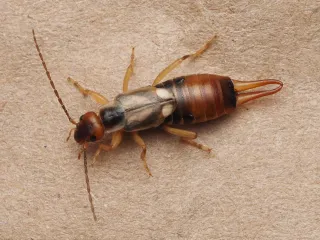
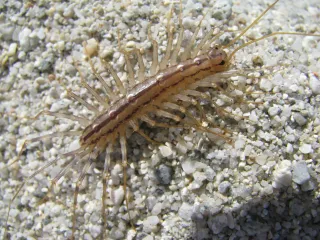
Often confused with
Sources
- IPM for Silverfish, Firebrats, and Booklice (University of Nebraska–Lincoln, hosted by Utah State)
- Silverfish and Firebrats, ENTO-24NP (Virginia Cooperative Extension)
- Silverfish and Firebrats (UC IPM)
- Silverfish and Firebrats (NC State Extension)
- Silverfish (Washington State University PestSense)
Last reviewed Oct 4, 2026.