Wood Roach: What It Looks Like and Why It Won't Infest Homes
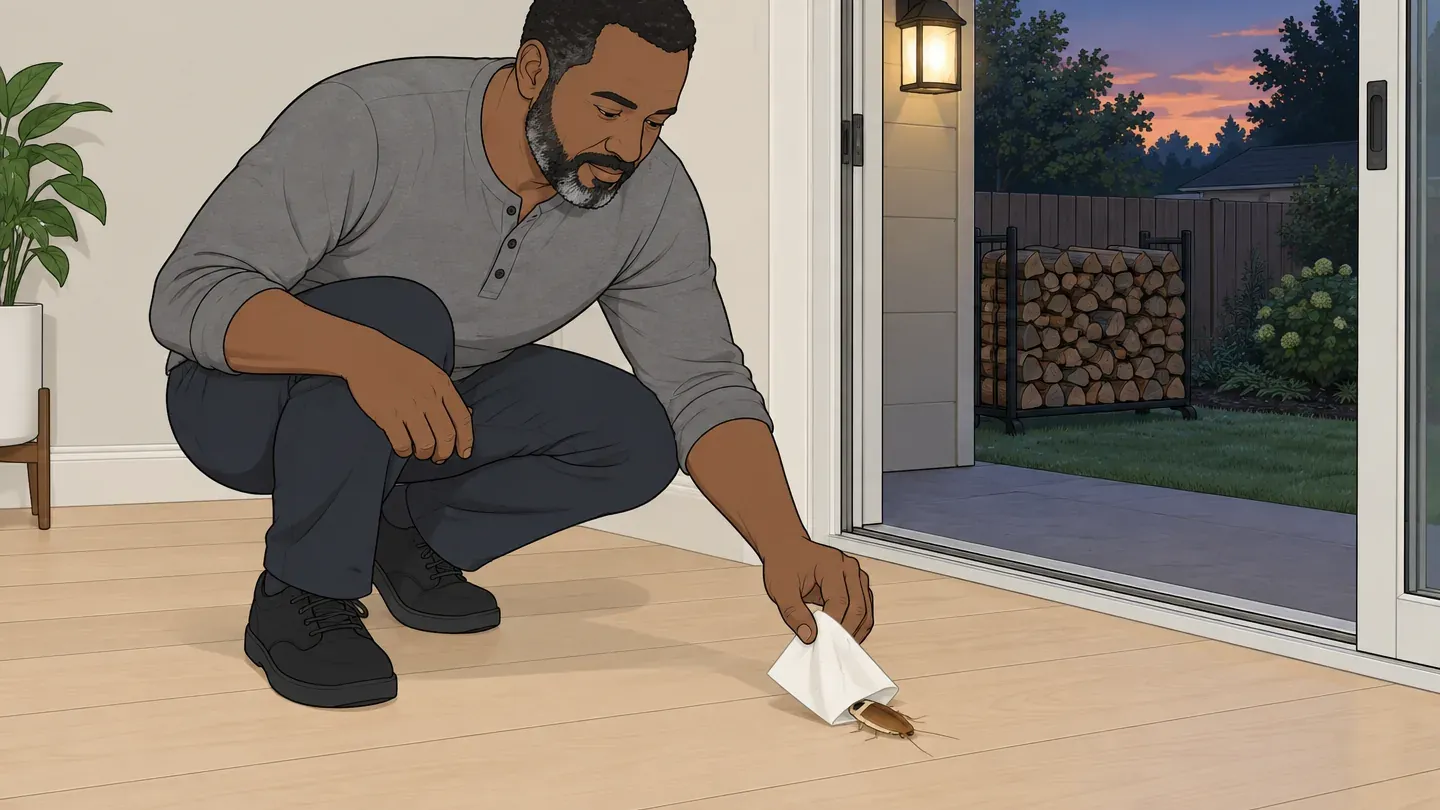
Illustration: a wood roach picked up with a folded paper towel by the patio door, with the woodpile and porch light outside.
A wood roach is a native outdoor cockroach, about ¾ to 1 inch long, with pale edges on the plate just behind its head. Unlike the smaller German cockroach, with two dark stripes, it can’t survive or breed indoors and dies within days. Pick it up and toss it outside; no spray or exterminator needed.
Cost: about $0–22 in supplies. Difficulty: easy. Call a pro if your sticky traps keep catching small roaches with two dark stripes in the kitchen or bathroom even after two rounds of baiting.
This guide covers how to tell a wood roach from a German cockroach and other look-alikes, why they come in and how to keep them out. We haven’t tested anything ourselves; this rests on Iowa State, Virginia Tech and University of Kentucky guidance. Tiny nymphs are hard to name by eye, so for those the pattern of sightings matters more than the look.
Saw a wood roach tonight? Pick it up with a paper towel or vacuum it, then check the table below. If it’s small with two dark stripes, set a couple of sticky traps under the kitchen sink and follow the full plan for getting rid of roaches. If it matches the wood roach, you’re done.
What Does a Wood Roach Look Like?
“Wood roach” covers several look-alike native species, the best known being the Pennsylvania wood cockroach; control is the same for all of them.
- Adult males: tan to light brown, about 1 inch. The pale edge behind the head runs onto the first part of the wings, which cover the whole body.
- Adult females: shinier, darker and often more reddish, a little smaller, with short wings or just wing pads. They can’t fly.
- Nymphs: wingless, like small females.
Tiny nymphs usually need a microscope to name (Iowa State), so go by the pattern: a steady stream of small baby cockroaches indoors points to a species that breeds inside, not a wood roach.
Wood Roach vs. German Roach: Pale Rim or Two Stripes
A wood roach is bigger, with a pale rim behind the head; a German roach is smaller, with two dark stripes there. The German cockroach is the one to worry about: the University of Kentucky calls it by far the most common cockroach infesting homes, and it doesn’t live outdoors. The plate behind the head (the pronotum) is the spot to check.
| Wood roach | German cockroach |
|---|---|
| Size: about ¾ to 1 inch | Size: about ½ inch |
| Markings: pale or clear rim around the plate behind the head | Markings: two dark parallel stripes on that plate |
| Flight: males fly well and come to lights | Flight: has wings but can’t fly |
| Behavior: out in the open, day or night, slow to hide | Behavior: hides in cracks, gathers in groups |
| Where: near doors, windows, firewood, porch lights | Where: kitchens and bathrooms |
| Indoors: dies within days | Indoors: breeds; about 40 eggs per egg case |
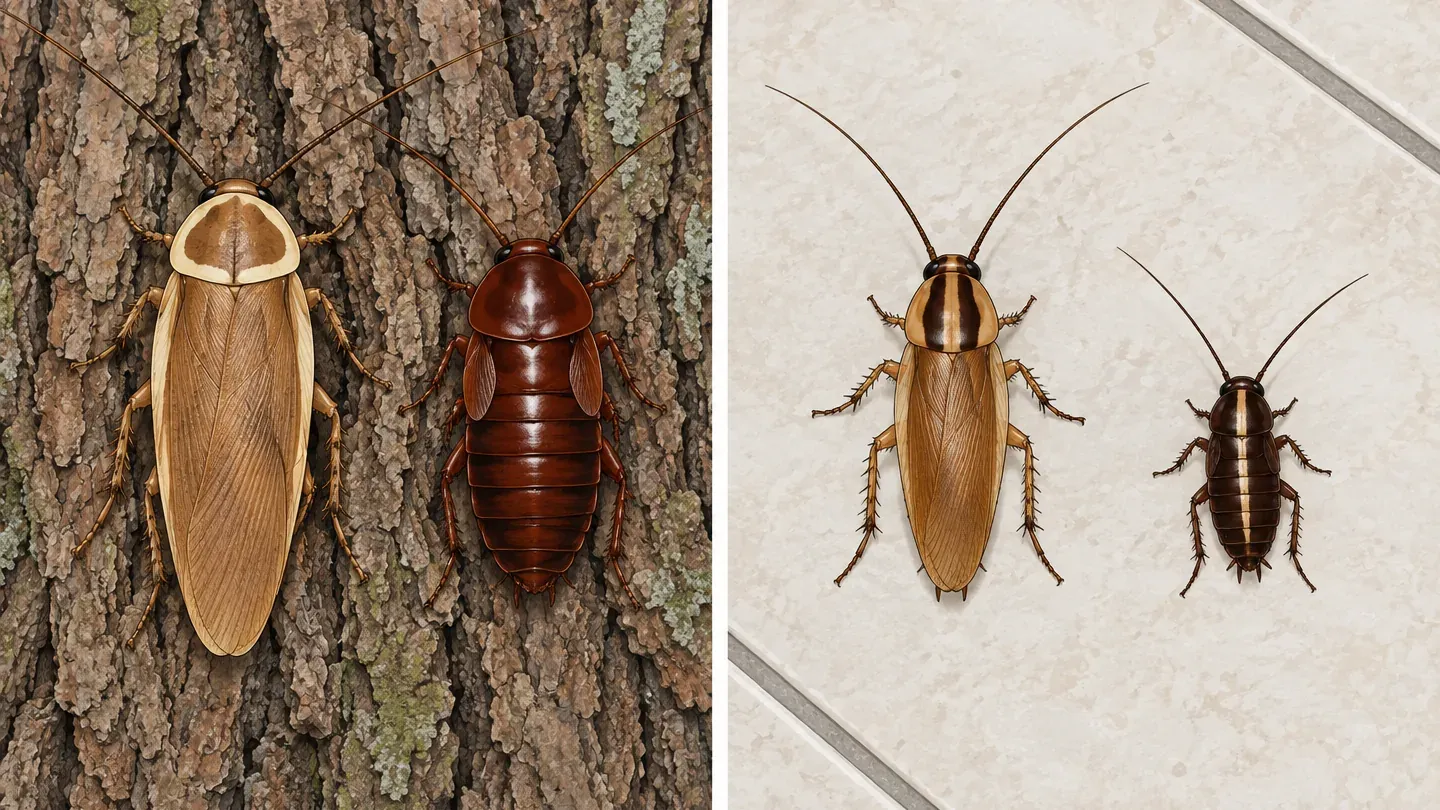
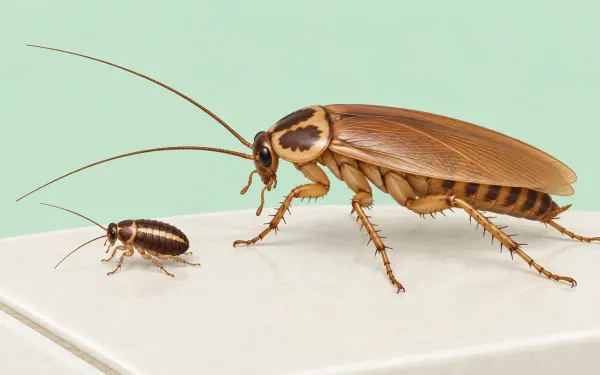
Illustration: a male and female wood roach on bark (left) and a German cockroach adult and nymph on kitchen tile (right), drawn to the same scale.
Tree Roaches and Other Look-Alikes: Check the Size
“Tree roach” is a nickname, not a species, and several outdoor roaches get mistaken for wood roaches.
- Tree roach: it can mean a wood roach, which lives under loose bark and in woodpiles. In Texas and the Southeast, a bigger (about 1¼ to 1½ inch), very dark roach on trees at night is more likely a smokybrown cockroach, another outdoor roach that wanders in.
- American cockroach: also has a pale rim behind the head, but it’s about 1½ inches. A wood roach tops out around an inch.
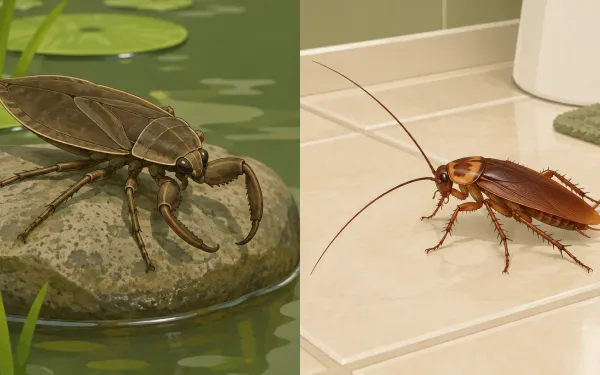
- Oriental cockroach: about 1 to 1¼ inches, shiny black or dark brown, and easy to confuse with a wingless wood roach female. It favors drains, garages and basements and is often called a water bug.
Why Are Wood Roaches in My House?
Wood roaches get into houses by accident: males fly to lights, and both sexes ride in on firewood or crawl under doors.
- Through the air. Males fly to lights at night in late spring and early summer (late May through June in Iowa).
- On firewood. Wood roaches live under the bark and ride in with the logs, even in winter.
- Under doors and through gaps around windows, pipes and wires.
- From clogged gutters, wet mulch and leaf litter next to the house.
Homes near woods see the most, and a spotless kitchen won’t keep them away.
Do Wood Roaches Infest Homes? Almost Never
Almost never. Wood roaches are native outdoor cockroaches that live under bark and leaf litter and can’t survive long indoors. Virginia Tech says house air is too dry for them to survive or reproduce, so the ones that wander in die within days. One in the house doesn’t mean a colony in your walls.
Two situations are worth a closer look:
- Lots of them at once. The University of Kentucky says large numbers sometimes nest in rain gutters and crawl spaces. Clean the gutters and check the crawl space.
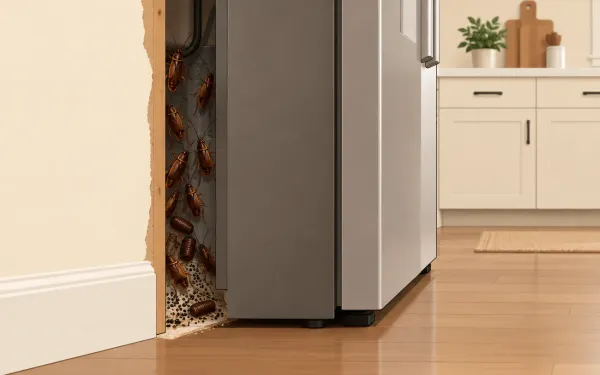
- Small roaches that keep turning up for weeks, especially in the kitchen or bathroom. That pattern fits German cockroaches, not wood roaches. Sticky traps under the sink, out of reach of kids and pets, will show it. The signs of a roach infestation include pepper-like droppings and egg cases.
Are Wood Roaches Harmful? No
No. Iowa State says wood roaches don’t harm the house, your furniture or the people in it. They’re a nuisance, not a health problem.
Do wood roaches eat wood? Not your house’s. They eat the decaying matter in rotting logs and leaf litter, which also holds the moisture they need.
With kids or pets at home, that’s one more reason to skip sprays: picking a wood roach up or vacuuming it uses no pesticide.
How to Confirm It’s a Wood Roach
- Shine a flashlight on the plate behind the head: a pale rim and no stripes means wood roach; two dark stripes means German.
- Measure by eye: about ¾ to 1 inch for a wood roach, about ½ inch for a German roach.
- Note where and when: near a door, window or porch light in late spring and summer fits a wood roach.
- Set two sticky traps under the sink for a week if you’re unsure; wood roaches wander alone and don’t gather.
How to Get Rid of Wood Roaches
To get rid of a wood roach, pick it up and throw it out; Iowa State says that’s all ones found indoors need.
- Pick it up with a paper towel, or use a vacuum or fly swatter. Toss it in the trash or outside.
- Skip sprays, dusts and perimeter treatments. Iowa State says household roach sprays and dusts are of very limited benefit against wood roaches, and Virginia Tech calls foundation treatments generally unnecessary.
If they keep pouring in despite the steps below, an outdoor barrier treatment around doors, windows and the foundation is the last resort.
How to Keep Wood Roaches Out: A Quick Checklist
Stopping the next one is mostly outdoor housekeeping, based on Virginia Tech’s list:
- Fix worn door sweeps and window seals, and make sure screens fit tightly. Caulk cracks around frames, and seal where pipes and wires enter.
- Stack firewood away from the house, not on the porch. Knock or shake each log before bringing it in, and bring in only what you’ll burn.
- Clear leaves out of gutters, and keep mulch and leaf litter away from basement doors, windows and the foundation. Remove rotting stumps and wood near the house.
- Turn off outdoor lights you don’t need, or switch to yellow bulbs, which draw fewer night insects.
- Dry out a damp basement with a dehumidifier.
Renting? Tell your landlord in writing about worn door sweeps, gaps and clogged gutters.
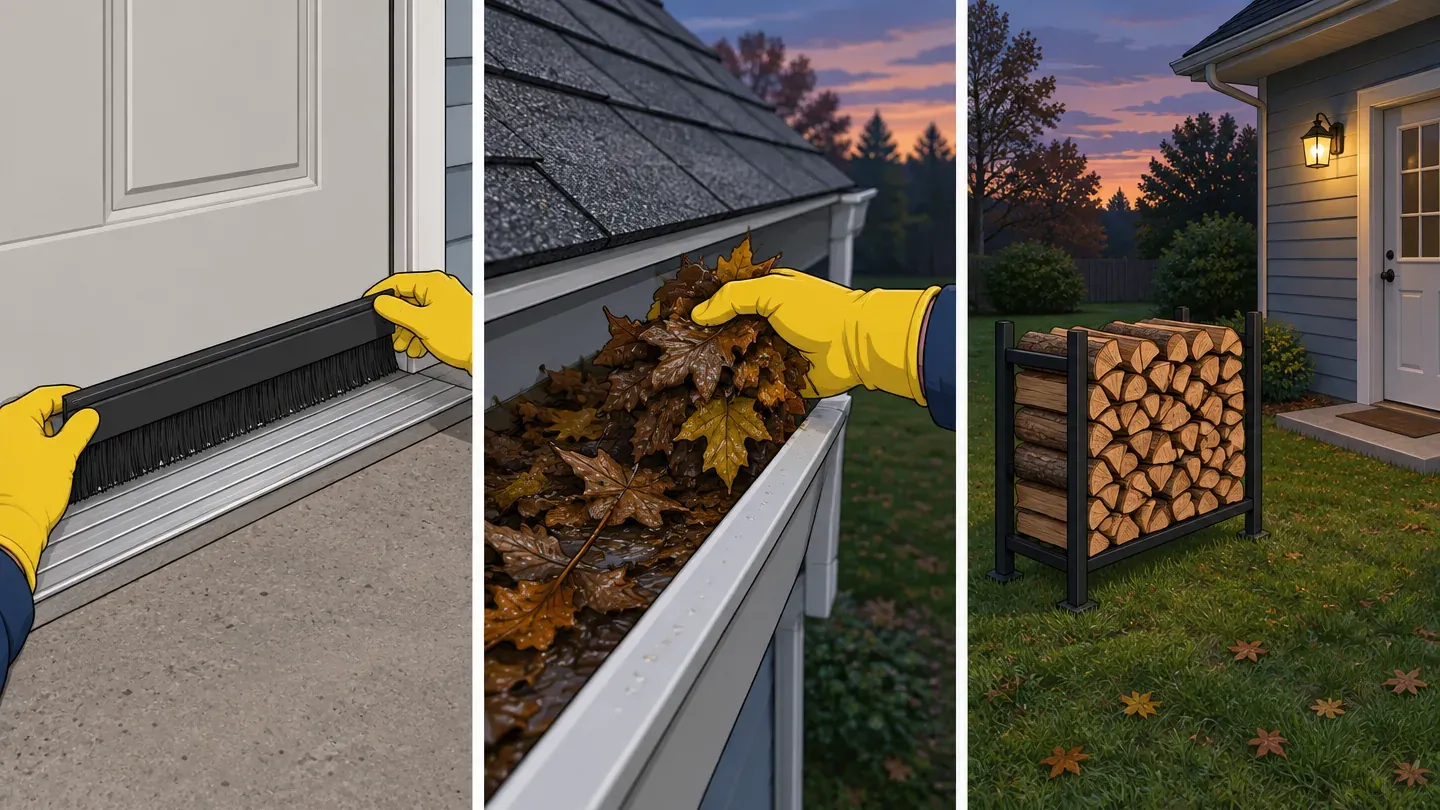
Illustration: a new sweep on the bottom of an exterior door, leaves scooped out of a gutter, and firewood stacked away from the wall under a yellow porch light.
Do You Need an Exterminator for Wood Roaches?
Usually not. For a roach that can’t breed indoors, a door sweep and a clean gutter do the job for much less.
| Option | Typical cost |
|---|---|
| Pick up and toss, vacuum, swatter | $0 |
| Sticky monitor traps, 25 boards (if unsure of the species) | $21.99 |
| Pro cockroach visit, 25 shared quotes (middle half) | $200–$400 |
| Pro cockroach treatment, price-guide range | $100–$600 a round |
| Pro full treatment with follow-ups, 10 shared quotes (middle half) | $450–$1,500 |
| Pro annual pest plan | $200–$1,000 per year |
DIY: one online retailer’s list price (HomeandGardenSupply), October 1, 2026, before tax and shipping. Pro: the middle half of 25 single-visit and 10 full-treatment quotes homeowners shared on Reddit. Price-guide range and annual plans: This Old House (March 2026).
If a company recommends indoor treatment or a yearly plan for wood roaches, ask what species they found and how it’s breeding indoors. If the answer is German cockroaches, that’s a different job, and a German roach treatment plan starts with gel bait and traps.
Common questions
No. Cockroaches don’t generally bite people (National Pesticide Information Center), and none of the extension guides we checked lists biting as a wood roach problem.
The males do; the University of Kentucky calls them excellent fliers, unlike other household roaches. Females have short wings and can’t fly.
Sources and further reading · 11
- Virginia Cooperative Extension: Wood Cockroaches (ENTO-426NP) — identification, habitat, prevention, control.
- Virginia Cooperative Extension: Cockroaches Found in Living Spaces (ENTO-528) — wood roaches can’t establish indoors.
- Iowa State University Extension: Wood Cockroach — behavior indoors, nymphs, harm, control.
- University of Kentucky: Cockroach Elimination in Homes and Apartments (ENTFACT-614) — German cockroach traits, wood roach flight and entry.
- Rutgers NJAES: Cockroach Species in New Jersey (FS1327) — Pennsylvania wood and German cockroaches.
- Purdue Extension: Cockroaches (E-23)
- UC IPM: Cockroaches (Pest Notes 7467)
- National Pesticide Information Center: Cockroaches
- Texas A&M AgriLife: Cockroaches in the Texas Landscape
- University of Georgia: Is That a Roach or a Palmetto Bug?
- This Old House: Roach Exterminator Cost.