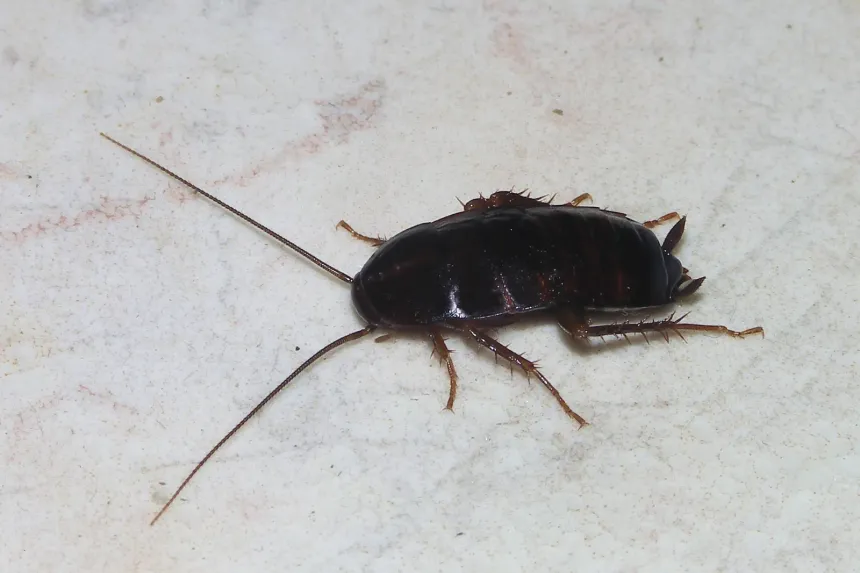
- Scientific name
- Blatta orientalis
- Also called
- water bug, black beetle
- Size
- About 1–1 1/4 in
- Color
- Shiny dark brown to black
- Found in
- Basements, crawl spaces, drains, under porches and mulch
- Harmful?
- Contaminates food; strong smell
- Active
- Spring and summer, at night
- DIY cost
- $24–54 in suppliesSee the plan
- Pro quotes
- $450–$1,500 for a full treatment
What to do
The oriental cockroach is the slow, shiny black roach that people call a water bug or black beetle, and it lives in cool, damp places: floor drains, crawl spaces, basements and leaf litter outside. It can’t fly and rarely climbs past the ground floor, but it feeds on garbage and decaying matter, so it can contaminate food and dishes and can trigger allergies. The one thing to do: block the floor drains and fix the leaks and damp spots it depends on.
This page covers how to identify an oriental cockroach, tell it from other dark roaches and beetles, and find where it gets in. It rests on Utah State University, UC IPM and Oklahoma State guidance.
How to Identify an Oriental Cockroach: Black, Short Wings, Slow
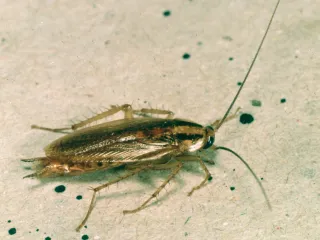
- Shiny dark brown to black, about 1 to 1 1/4 inches long (UC IPM).
- Short wings: males’ wings are shorter than the body; females have only small, undeveloped wing pads. Neither can fly.
- Slow-moving compared with other roaches, and it can’t climb smooth vertical surfaces.
- Egg cases are dark red-brown, about 3/8 inch, dropped in debris or food in sheltered spots (UC IPM).
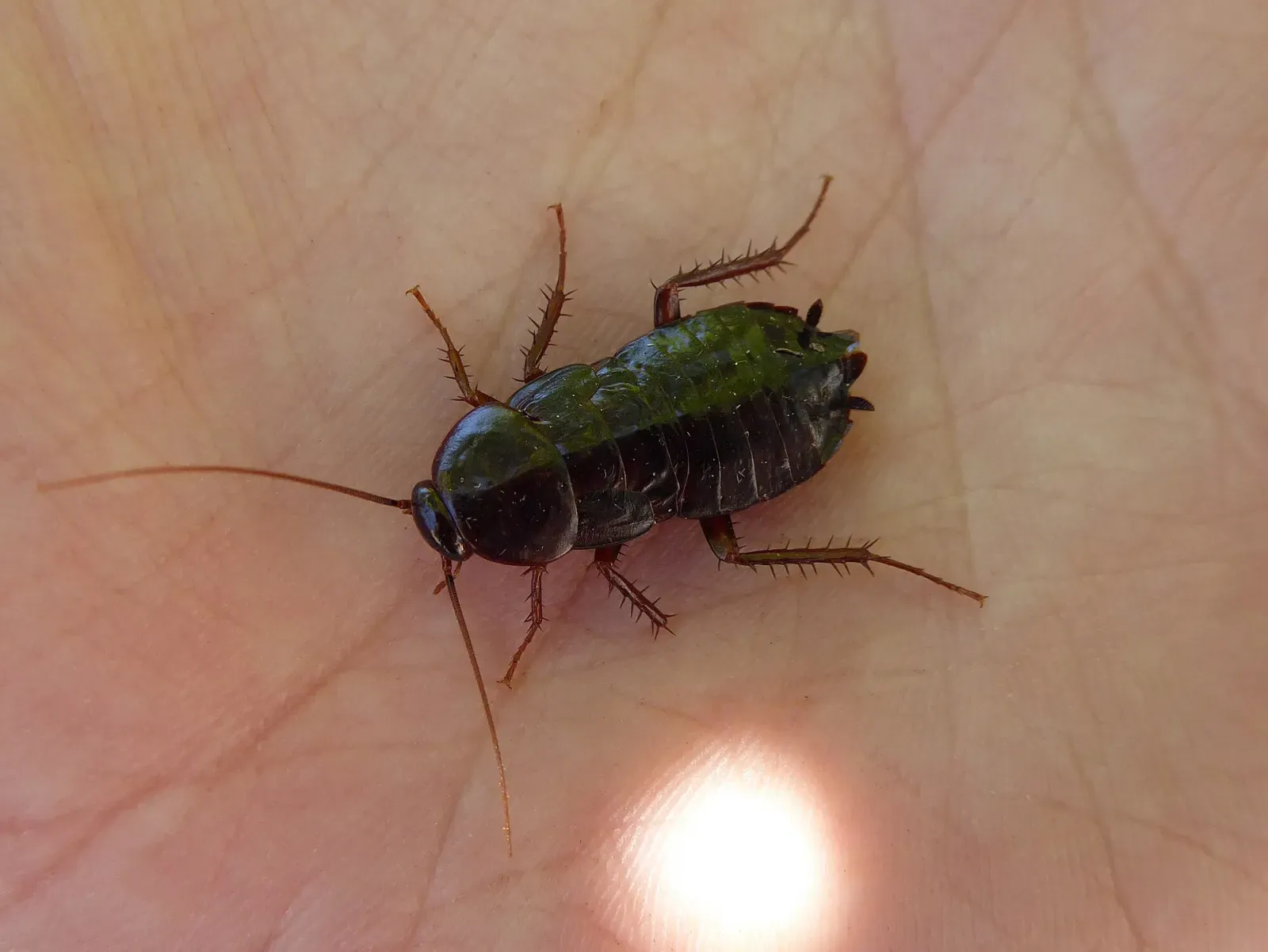
An oriental cockroach on a hand, for size: about an inch long, slow and very dark. Photo: Syrio (CC BY-SA 4.0), via Wikimedia Commons.
Oriental Cockroach vs. Look-Alikes: Wings and Color
| Insect | How it differs | How to tell |
|---|---|---|
| Oriental cockroach | About 1 to 1 1/4 in, shiny black, slow | Short wings or wing pads; can’t fly |
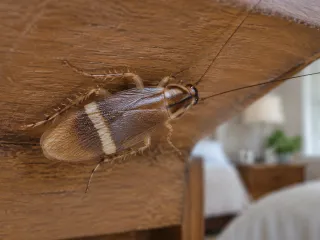
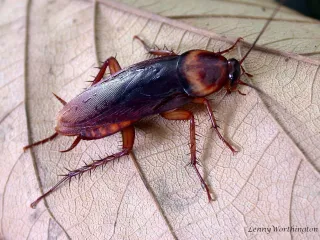
| American cockroach | About 1 1/2 in, reddish brown | Full wings, pale band around the shield |
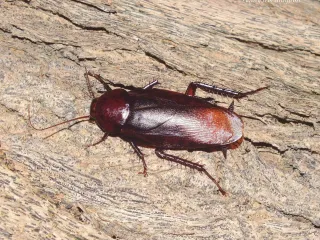
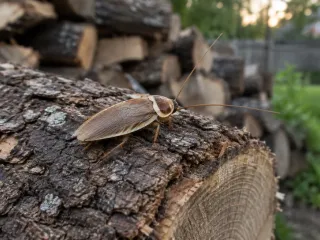
| Wood cockroach | Brown, comes in from woodpiles | Pale edges on the shield; males fly to lights |
| Turkestan cockroach (female) | Outdoor roach of warm, dry California | Cream-colored edges behind the head and on the wings |
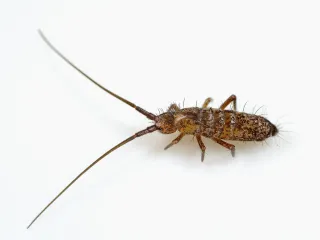
| Ground beetle | Often called a “black roach” | Hard, thick wing covers; roaches’ wings are soft |
In parts of California the Turkestan cockroach is pushing the oriental out, and its females are easy to mistake for oriental females (UC IPM). For the difference between roaches and true aquatic insects, see water bug vs. cockroach.
Where Oriental Cockroaches Live: Cool, Damp and Low
They prefer cooler temperatures than other pest roaches. Indoors, look in basements, cellars, crawl spaces, floor drains and sump pits, near leaky pipes and faucets, and under refrigerators and sinks (Utah State). Outdoors they build up in large numbers in water meter boxes and live under stones, debris, woodpiles, ivy and ground cover, especially around single-family homes surrounded by plants (UC IPM).
At night they wander indoors for food, water or mates, usually staying on the ground floor. Because they can’t climb porcelain, one that comes up a damaged drain often ends up stuck in a tub or sink. Infestations are most common from spring through fall.
Are Oriental Cockroaches Harmful? A Hygiene and Allergy Problem
They feed on garbage, human and animal waste and decaying organic matter, then walk over food and dishes, which is why entomologists consider them especially dirty. Utah State notes they can cause asthma-like allergic reactions in some people. Large numbers also leave a strong, musty odor; see what roaches smell like. They breed slowly: a female and her offspring produce nearly 200 roaches a year, far fewer than German roaches (UC IPM).
How to Confirm It’s Oriental Cockroaches
- Check the wings: short or stubby, not covering the body, on a shiny black roach.
- Note where you see them: near floor drains, in the basement or stuck in a tub.
- Set sticky traps by drains and exterior doors to see where they come in.
- Look for dark egg cases about 3/8 inch in damp debris; compare in cockroach eggs.
What to Do: Block Drains, Dry Out, Seal Low
Keep floor drains covered or their traps full, fix leaks, and dry out damp basements and crawl spaces; a dehumidifier helps in damp basements. Caulk gaps and install weather stripping and door sweeps at ground level, move woodpiles and debris away from the house, and use roach baits or boric acid dust where they travel (Utah State). The full plan is in how to get rid of roaches. For other pests, browse all pest guides.
Often confused with
Sources
- Oriental Cockroach (Oklahoma State University Extension)
- Oriental Cockroach (Utah State University Extension)
- Cockroaches (UC IPM Pest Notes)
Last reviewed Oct 5, 2026.