Do Roach Bombs Work? Why Foggers Fail on Cockroaches
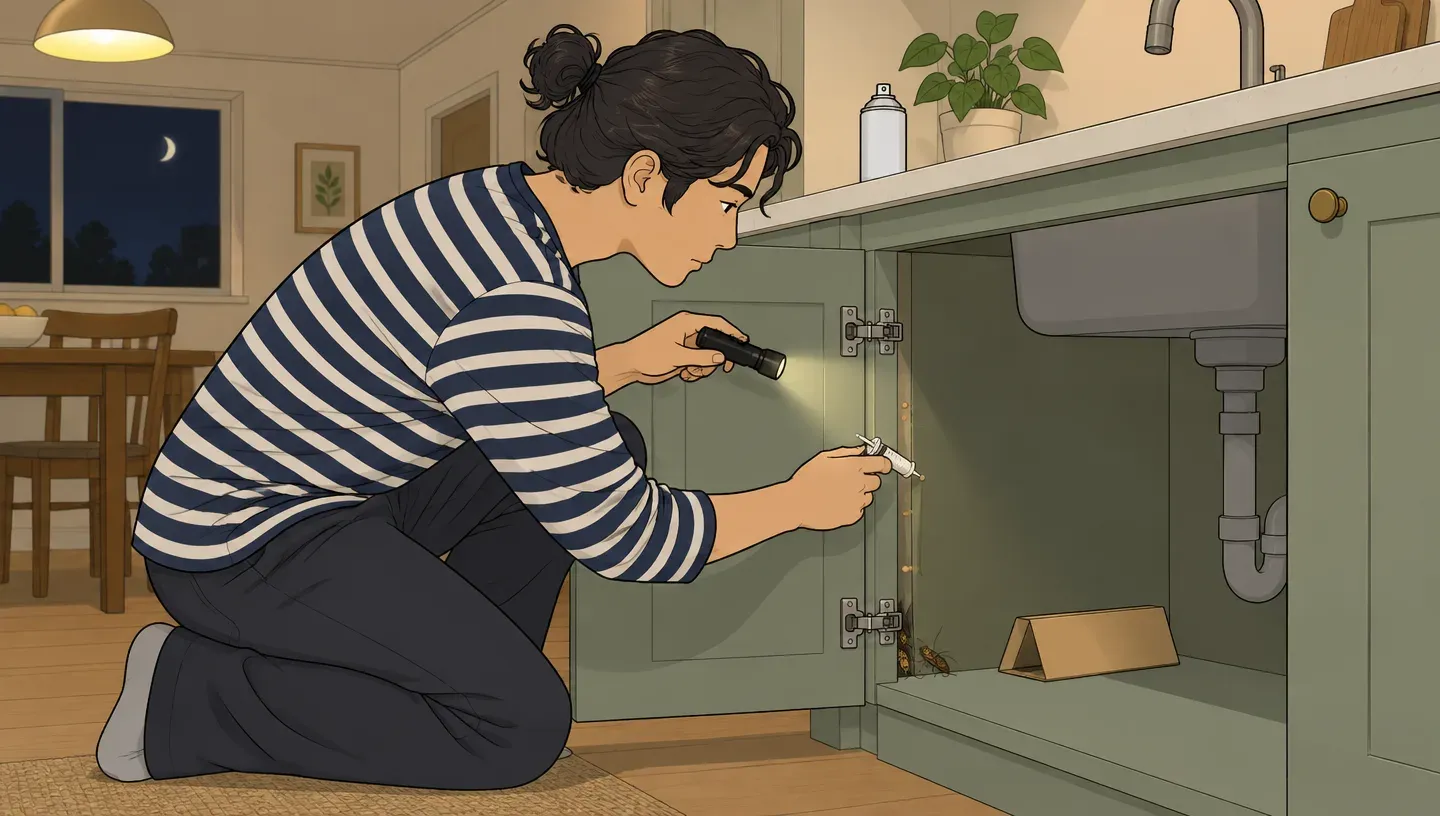
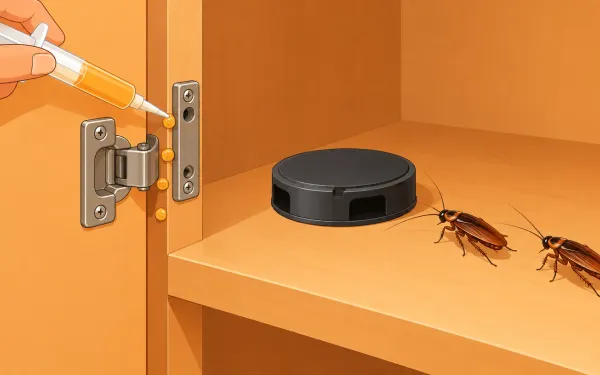
Illustration: gel bait going into a hinge gap under the sink, with the fogger left unopened on the counter.
Roach bombs don’t get rid of cockroaches. The mist settles on open floors and counters, not in the cracks where roaches hide, and in an NC State study foggers didn’t reduce German cockroach numbers while similarly priced gel bait did. Use gel bait and sticky traps instead, and skip foggers entirely in cars and small spaces.
Cost: about $54 in supplies. Difficulty: moderate. Call a pro if sticky traps still catch roaches after a month of steady baiting, roaches have spread past the kitchen and bathroom, or they keep arriving from a neighboring apartment.
This guide sets the fogger next to the alternatives on results, reach, safety and price, and covers how to use one safely if you still do. We haven’t tested foggers or baits ourselves; this rests on the NC State study, EPA, NPIC, CDC and university extension guidance, product labels and list prices.
How We Compared Roach Bombs and the Alternatives
We rated each option on five things:
- Results: whether studies or extension experts show it cuts roach numbers.
- Reach: whether it gets into the cracks and voids where roaches hide.
- Safety: fire, breathing and exposure risks for kids and pets.
- Effort: what you have to do before, during and after.
- Price: U.S. list prices checked October 1, 2026.
Sources are listed at the end.
Do Roach Bombs Work? What the Research Shows
No. Researchers at North Carolina State University tested four store-bought foggers in 20 homes with moderate to severe German cockroach infestations, following the label directions to the letter. Two weeks and one month later, roach numbers hadn’t dropped at all. In 10 other homes, similarly priced gel bait cut roach numbers significantly.
A follow-up study found roaches from those homes were about 200 times more resistant to a common fogger insecticide, a pyrethroid, than a lab strain.
The fog did land somewhere: on open floors and kitchen counters, where people and pets spend time. Pesticide levels on kitchen surfaces typically rose about 85-fold, and a month later a third of surfaces were still above where they started. The study’s lead author summed it up as “all costs and no benefits.” The University of Kentucky agrees that foggers “seldom are effective” and doesn’t recommend them for cockroaches.
Roach Bombs vs. Other Options at a Glance
| Option | Reaches hiding spots? | Price | Main limitation |
|---|---|---|---|
| Roach bomb (fogger) | No | $21.65 for 3 | No drop in roach numbers; fire and breathing risks |
| Gel bait | Yes, in cracks | $26.98 for 4 tubes | Spray nearby stops roaches eating it |
| Bait stations | Partly | $13.99 for 18 | Sit on surfaces, not inside cracks |
| Sticky traps | Show where they are | $10.49–$21.99 a pack | Kill only the roaches caught |
| Boric acid dust | Yes, in voids | About $19 a pound | Slow; must stay dry and out of reach |
| Pro fumigation | Yes | The most expensive job | Reserved for severe infestations |
DIY: list prices from DoMyOwn, Target, Catchmaster and HomeandGardenSupply, October 1, 2026; boric acid price from our boric acid guide.
Roach Bombs (Foggers): Skip Them
A roach bomb, also called a bug bomb or fogger, is what the EPA calls a total release fogger: a can that releases its whole contents at once to fill a room. You press the tab, leave, and the mist drifts down onto whatever is in the open.
A fogger isn’t a gas. NPIC explains that the mist falls onto exposed surfaces and doesn’t reach voids, cracks and crevices, which is where German cockroaches spend most of their time.
Worse, the University of Kentucky says foggers make insects scatter deeper into wall voids, so a bomb can push the problem into other rooms. And the mist doesn’t touch the next generation: egg cases shield the eggs from pesticides, so cockroach eggs tucked in cracks hatch later anyway.
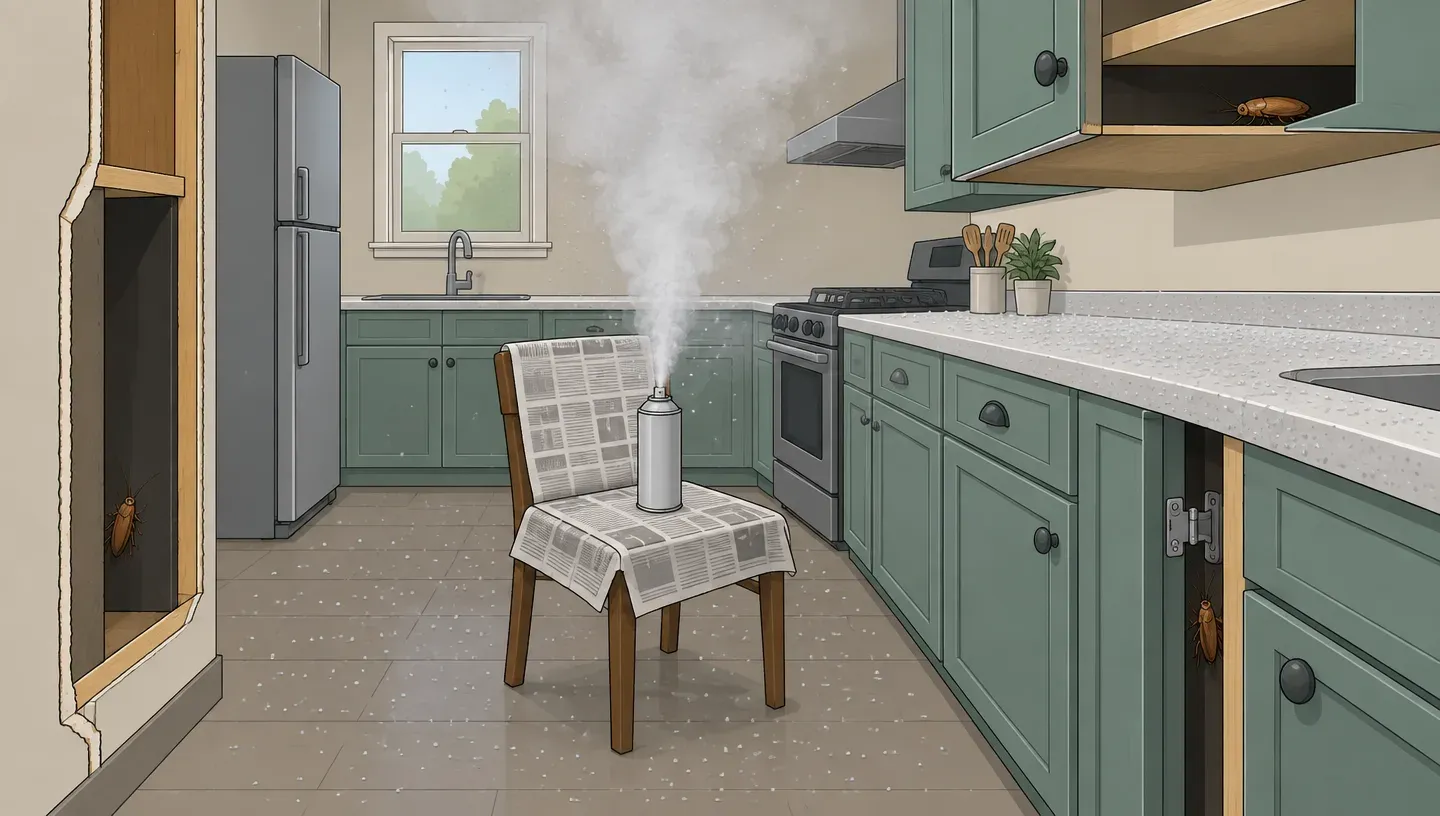
Illustration: fog settling on the floor and countertop, while roaches sit inside the wall void and a cabinet hinge gap.
Best for: nothing in a roach infestation.
Main limitation: it coats your counters, not the cracks, and survivors move deeper in.
Gel Bait: What to Use Instead
Gel goes where the fog can’t: into hinge gaps, pipe gaps and corners. Roaches carry it back to where they hide, a roach that eats it usually dies within 1 to 3 days, and the University of Kentucky says baits used correctly can match professional results.
Make each dot pea-sized, about ¼ inch across per one label, not one big glob; a dozen or more may be needed under one kitchen sink. Already fogged or sprayed? Bait cracks you didn’t treat: insecticide near bait keeps roaches from eating it. Placement is in how to use roach gel bait; for small roaches everywhere, see the German roach plan.
Best for: kitchens and bathrooms with an active infestation.
Main limitation: it dries out, so check and refill it every 2 to 4 weeks.
Bait Stations: For Spots Kids and Pets Can Reach
Stations hold the same kind of bait inside plastic. The gel label says not to put bait where kids or pets can easily reach, so use stations behind appliances and in low cabinets, and keep gel deep in cracks. Kentucky says baits pose minimal hazard to children or pets.
Best for: homes with toddlers or pets, and a roach-in-the-car cleanout.
Main limitation: they sit beside cracks rather than inside them.
Sticky Traps: To See Where Roaches Gather
Set sticky traps along walls, under the sink and behind the fridge. Roach traps won’t wipe out a colony; they show where roaches gather, so you know where to bait, and they tell you it’s working when counts drop week over week.
Best for: finding the busiest spots and tracking progress.
Main limitation: they catch, they don’t control.
Boric Acid Dust: For the Voids a Fogger Misses
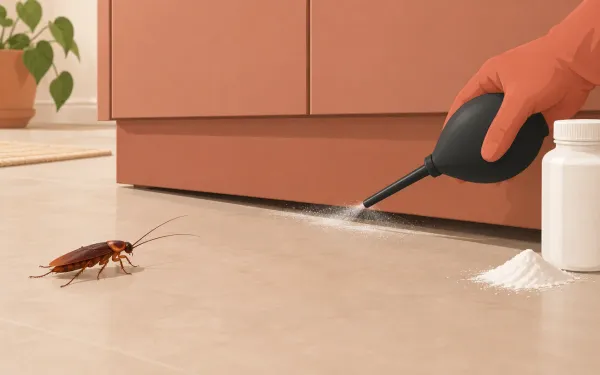
With a bulb duster, puff a barely visible film of boric acid through the cracks at the top of the kick panel, the board at floor level under the cabinet doors. It goes into the voids the fog never reaches. How to use boric acid for roaches covers where and how much.
Best for: wall voids and the space under cabinets, alongside bait.
Main limitation: slow, and it must stay dry and away from kids and pets.
Professional Fumigation: Only for Severe Cases
Professional fumigation isn’t a store-bought bomb. This Old House lists fumigation and tenting as the most expensive options, reserved for severe infestations; for a typical kitchen, what an exterminator does covers the usual visit.
Best for: severe infestations a pro has inspected.
Main limitation: the highest price of any option.
Are Roach Bombs Dangerous?
They can be, mostly through fire and breathing the mist. The EPA says fogger propellants are typically flammable, so using too many or setting one near a pilot light, open flame or an appliance that cycles on, like a fridge or air conditioner, can cause a fire or explosion.
A CDC review found 3,222 fogger-related illnesses in 10 states from 2007 to 2015, mostly coughing, breathing trouble and nausea, usually from staying inside or going back in too soon.
NPIC notes that foggers may pose more risk to children and people with asthma. If someone breathes the fog, get them into fresh air and call Poison Control at 1-800-222-1222; for a pet, call your vet.
How to Use a Roach Fogger Safely, If You Still Do
These are the EPA’s precautions, plus what a typical label adds.
Step 1: Use one fogger per room, at most. A typical 6 oz can covers up to 25 by 25 feet of open space. Never fog closets, cabinets or under counters.
Step 2: Kill every spark. Turn off pilot lights, unplug appliances that switch on by themselves, and keep the fogger at least 6 feet from anything that could spark. Your gas utility or building manager can help with pilot lights.
Step 3: Clear the room. Cover food, dishes and fish tanks (pump off), take out kids, pets, birds, plants and toys, and open cabinets and drawers.
Step 4: Leave the whole home. Stay out for the label’s time, usually 2 to 4 hours, with a sign on the door so nobody walks in.
Step 5: Air it out, then wipe down. Open windows and run fans; the label we checked adds 2 more hours. Wipe surfaces that children or food touch, wearing gloves and long sleeves.
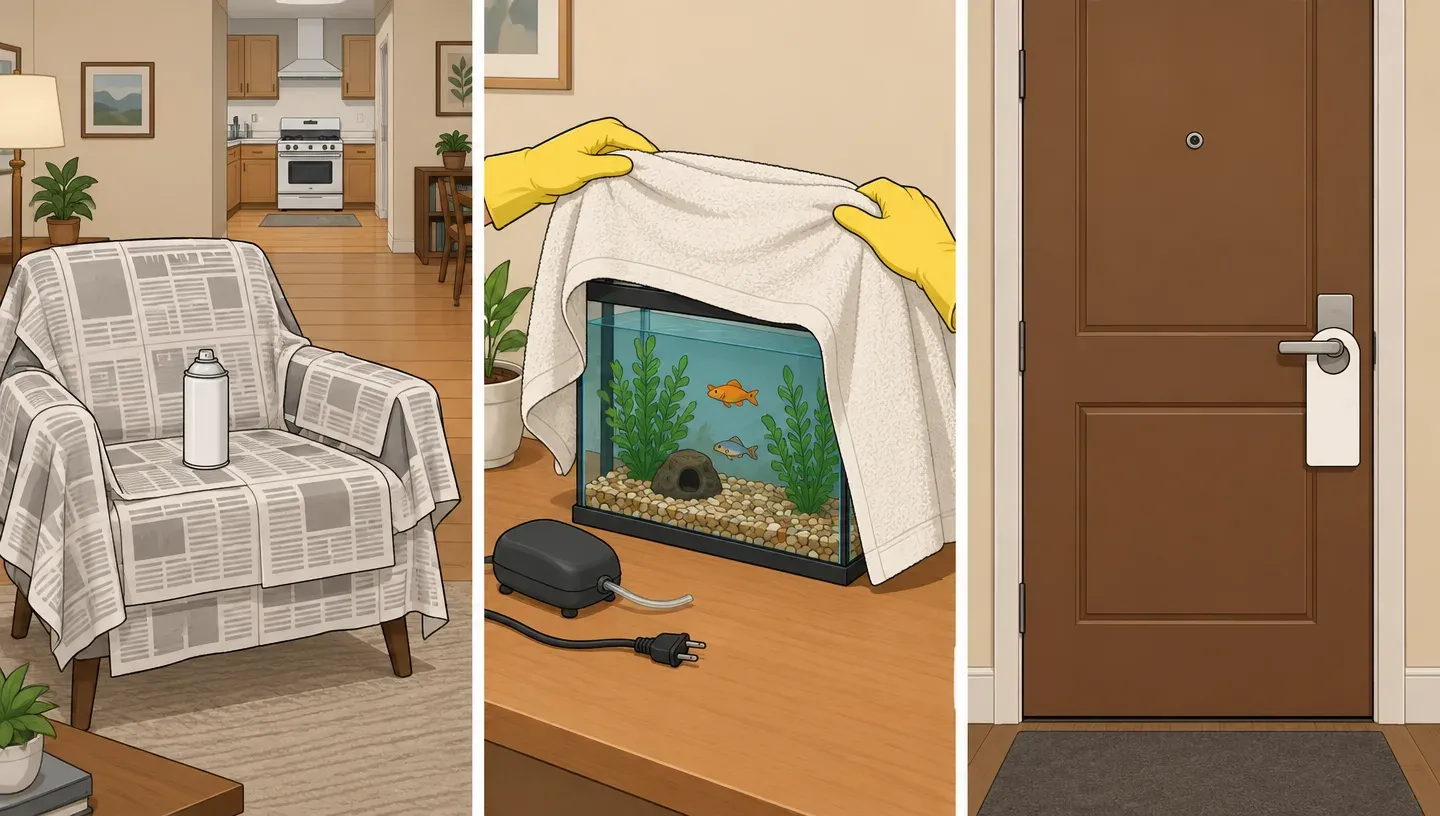
Illustration: a fogger on a chair in the middle of the room, a fish tank being covered, and a tag on the front door handle.
Can You Use a Roach Bomb in a Car?
No. NPIC says not to use foggers in small, enclosed spaces, including most vehicles, and the label we checked warns that fogging an enclosed space may make the product explode. The fix for a car is a thorough cleanout plus bait stations and sticky traps.
Which Option Fits Your Situation
| Situation | What to use | Why |
|---|---|---|
| Roaches in the kitchen or bathroom | Gel bait in cracks, sticky traps to track them | Bait reaches hiding spots; fog doesn’t. |
| Kids or pets at home | Stations behind appliances, gel deep in cracks | Labels say keep bait where kids and pets can’t easily reach. |
| Someone has asthma | Bait and traps, no fogger | NPIC says foggers may pose more risk to people with asthma. |
| You rent | Bait and traps; tell the landlord in writing | Ask before sealing pipe gaps; trap counts back up your request. |
| Roaches in the car | Cleanout, stations and sticky traps | Foggers aren’t for enclosed spaces like vehicles. |
What It Might Still Cost
A pack of foggers costs about as much as a box of bait, so the choice isn’t about price:
| Item | Price |
|---|---|
| Indoor foggers, 3-pack | $21.65 |
| Bait stations, 18-pack | $13.99 |
| Glue boards, 12-pack | $10.49 |
| Starter set (stations, glue boards) | About $24 |
| Gel bait, 4 × 30 g tubes | $26.98 |
| Sticky monitor traps, 25 boards | $21.99 |
| Silicone caulk, 2.8 oz | $5.29 |
| Full kit (gel, traps, caulk) | About $54 |
| Pro cockroach visit, 25 shared quotes (middle half) | $200–$400 |
| Pro cockroach treatment, price-guide range | $100–$600 a round |
| Pro full treatment with follow-ups, 10 shared quotes (middle half) | $450–$1,500 |
DIY: list prices from DoMyOwn, Target, Catchmaster and HomeandGardenSupply, October 1, 2026, before tax and shipping. Pro: the middle half of 25 single-visit and 10 full-treatment quotes homeowners shared on Reddit. Price-guide range and annual plans: This Old House (March 2026).
On a tight budget, start with the $24 set; one 30 g tube of gel may cover a one-bedroom apartment (Rutgers). The exterminator vs. DIY cost page shows how a pro quote is built.
Instead of a Bomb: A Quick Checklist
- Leave the fogger in the box, and never use one in a car.
- Cut off food and water tonight: no dishes overnight, sealed food and pet food, fixed drips.
- Set sticky traps under the sink and behind the fridge.
- Bait the cracks near the busiest traps with pea-sized dots.
- Seal pipe gaps under sinks with caulk; renters, ask first.
- Recheck every 2 to 4 weeks, refilling bait, until traps stay empty for a month.
When to Call a Pro
Call for help if sticky traps still catch roaches after a month of steady baiting, roaches have spread past the kitchen and bathroom, or they keep arriving from next door. Our plan to get rid of roaches lists what to ask a pest company before you sign up.
Common questions
There isn’t one that clears an infestation. None of the four products in the NC State study reduced roach numbers. For about the same money, gel bait is the better buy: about $54 gets gel, sticky traps and caulk, enough to treat a kitchen and bathroom and see whether it’s working.
Follow the label. The EPA says it’s usually 2 to 4 hours; then open doors and windows to air the place out, and wipe counters and anything children touch.
Rarely. Very little fog reaches cracks and wall voids, and roaches that survive move deeper in. Bait placed in the gaps they use works better.
The Bottom Line
A roach bomb coats your counters and misses the cracks. Gel bait in those cracks, with sticky traps to track counts, worked in the NC State study for about the same money.
Sources and further reading · 11
- NC State University: “Bug Bombs” Are Ineffective Killing Roaches Indoors (includes the BMC Public Health abstract) and NC Urban Pests: “Bug Bombs” Are Ineffective.
- DeVries et al., Pervasive Resistance to Pyrethroids in German Cockroaches Related to Lack of Efficacy of Total Release Foggers, Journal of Economic Entomology, 2019.
- EPA: Safety Precautions for Total Release Foggers.
- NPIC: Total Release Foggers.
- CDC MMWR: Acute Illnesses and Injuries Related to Total Release Foggers, 10 States, 2007–2015.
- University of Kentucky: Cockroach Elimination in Homes and Apartments (ENTFACT-614).
- UC IPM: Cockroaches (Pest Notes 7467).
- Rutgers NJAES: German Cockroach (FS1322).
- Gel bait label (indoxacarb 0.6%, EPA Reg. No. 352-652) as published by ABC Wildlife.
- Fogger label directions as published on DoMyOwn.
- This Old House: Roach Exterminator Cost.