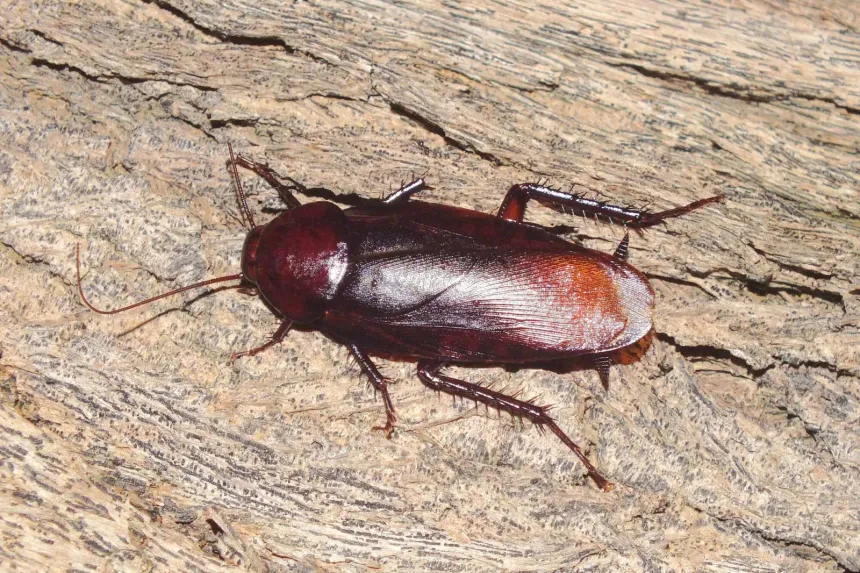
- Scientific name
- Periplaneta fuliginosa
- Also called
- palmetto bug
- Size
- About 1 1/4–1 1/2 in
- Color
- Uniform shiny dark brown to mahogany, no markings
- Found in
- Tree holes, gutters, mulch, attics; humid southern states
- Harmful?
- Nuisance; contaminates if indoors
- Active
- Warm months, at night; strong flier, drawn to lights
- Pro quotes
- $300 a visit; $450–$1,500 for a full treatment
The smokybrown cockroach is a big, evenly dark mahogany roach of the humid Southeast that lives outdoors in tree holes, woodpiles and mulch and flies on warm nights. It wanders inside looking for water, often into damp attics, but it’s mostly a nuisance: a University of Georgia entomologist calls it not harmful. The one thing to do: fix attic and roof leaks, then use granular or gel bait instead of spraying.
This page covers how to identify a smokybrown cockroach, tell it from the American cockroach and find where it comes from. It rests on Texas A&M, University of Georgia and UC IPM guidance.
How to Identify a Smokybrown Cockroach: One Even Dark Color
- Large: about 1 1/4 to 1 1/2 inches long (Texas A&M, UC IPM).
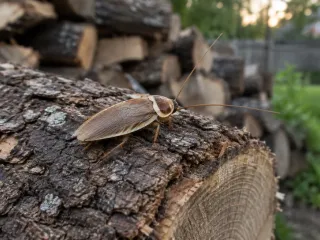
- Dark mahogany brown to nearly black and shiny, with an almost-black shield behind the head and no pale band or stripes.
- Flies: adults fly, especially on warm, humid evenings, and have been known to fly at people.
- Nymphs are dark brown with white segments at the tips of the antennae and across the back (UC IPM).
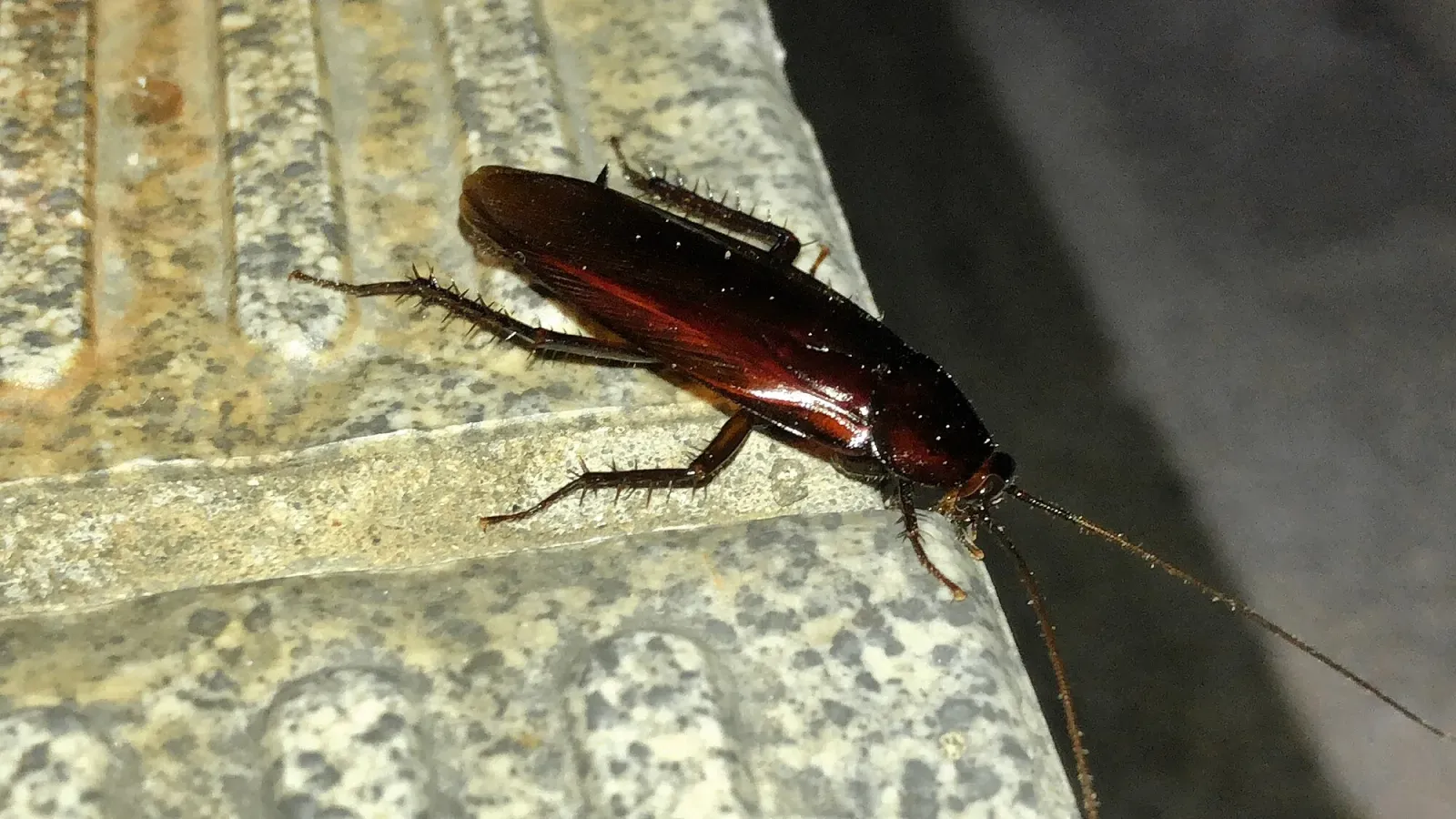
A smokybrown cockroach outdoors at night. They live outside and wander in near lights and damp spots. Photo: KKPCW (CC BY-SA 4.0), via Wikimedia Commons.
Smokybrown vs. Look-Alikes: No Pale Band
| Insect | How it differs | How to tell |
|---|---|---|
| Smokybrown cockroach | 1 1/4–1 1/2 in, dark mahogany | Evenly dark, shield nearly black |
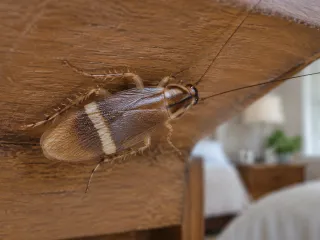
| American cockroach | About 1 1/2 in, lighter reddish brown | Pale yellow band around the shield |
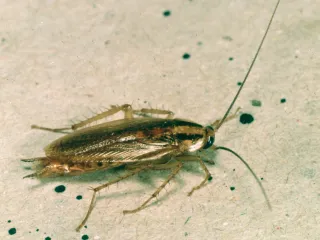
| Oriental cockroach | About 1 to 1 1/4 in, black, slow | Short wings; can’t fly |
| Florida woods roach | Up to 1 1/2 in, lives in palm trees | The likely origin of the “palmetto bug” name |
“Palmetto bug” is a catch-all for smokybrown, American and oriental cockroaches, and may have started with the Florida woods roach (University of Georgia). The name won’t tell you which one you have; the shield will. For roaches people call water bugs, see water bug vs. cockroach.
Where Smokybrown Cockroaches Live: Tree Holes and Humid Shade
They’re one of the most common outdoor roaches around homes in Texas and throughout the Southeast. They’re believed to come from Japan, and UGA’s Dan Suiter calls them the bread-and-butter bug of the pest control industry. They do best in older neighborhoods with large, mature hardwood trees, living in knot holes, and also turn up in woodpiles, decorative plantings, water meter boxes, carports, garages and sheds.
They need warmth above about 68°F and constant moisture, and they’re active only at night. They favor the upper parts of buildings and can live under shingles or siding (UC IPM). A leaky roof pipe that keeps an attic damp becomes, in Suiter’s words, the ecological equivalent of a tree hole.
Are Smokybrown Cockroaches Harmful? Mostly a Nuisance
They usually come in looking for water or food, and Suiter describes the flying-at-people habit as harmless: the roach likely mistakes you for a tree. Indoors they can still contaminate surfaces like any roach. Outdoors, parasitic wasps kill many of their egg cases; in one University of Georgia study in Gainesville, Florida, about half of the egg cases collected were parasitized.
How to Confirm It’s a Smokybrown Cockroach
- Check the shield: evenly dark, with no pale band around the edge.
- Measure it: about 1 1/4 to 1 1/2 inches.
- Note the setting: big roaches at night near mature trees, in the garage or in a damp attic, often flying.
- Look at the young: dark nymphs with white bands across the back and white antenna tips; compare in baby cockroach.
What to Do: Fix the Moisture, Bait, Skip the Spray
Seal pipes where they pass through the roof, fix leaks that keep the attic damp, screen doors and windows, and seal cracks. Move woodpiles and debris away from the house, and turn off outdoor lights you don’t need, since lights draw flying roaches (Texas A&M). Granular or gel bait works because they forage for food; sprays also kill the wasps that parasitize their eggs, and bug bombs are ineffective (do roach bombs work?). The full plan is in how to get rid of roaches. For other pests, browse all pest guides.
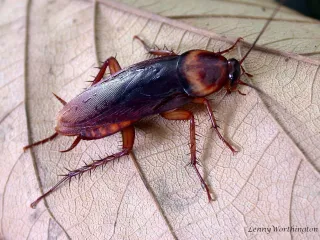
Often confused with
Sources
- Cockroaches (Texas A&M AgriLife Landscape IPM)
- Is That a Roach or a Palmetto Bug? (University of Georgia)
- Cockroaches (UC IPM Pest Notes)
Last reviewed Oct 5, 2026.
_Smoky_Brown_Cockroach_(24516346127).jpg)