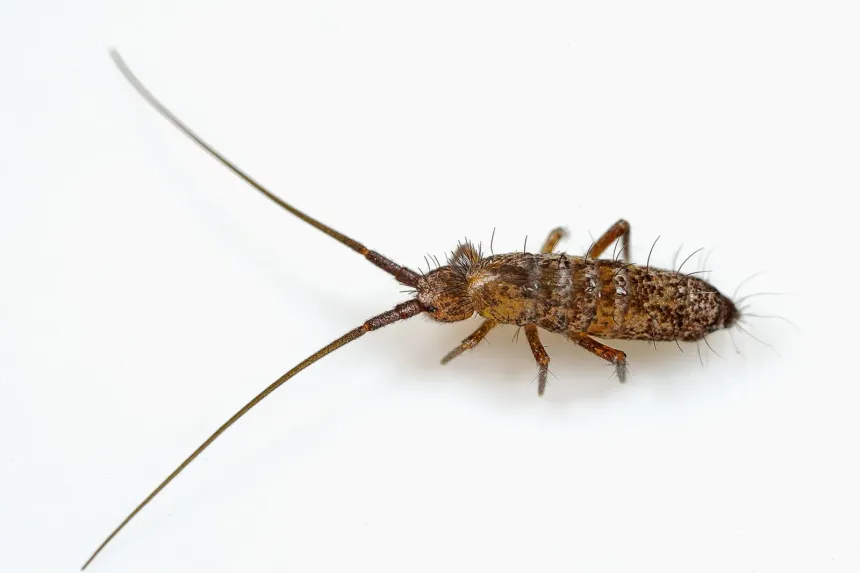
- Scientific name
- Collembola (order)
- Also called
- snow fleas
- Size
- About 1/16 in
- Color
- Gray, white, black or bluish
- Found in
- Damp bathrooms, basements, houseplant soil, window sills, new homes
- Harmful?
- No. They don't bite or damage anything
- Active
- Year-round where it's damp
Springtails are tiny, wingless specks that jump when disturbed and gather in sinks, tubs, windowsills and damp basements. They’re harmless: they don’t bite, spread disease or damage anything, but they’re a sure sign that something in the house is too wet. The one thing to do: find the leak or damp spot and dry it out; the springtails die without moisture.
This page covers how to identify springtails, tell them from fleas and clover mites, and why they come inside. It rests on UC IPM, University of Kentucky and Colorado State University Extension guidance.
How to Identify Springtails: Specks That Jump
- Tiny: about 1/16 inch, like specks of pepper or dust.
- Jump when disturbed, using a forked, spring-like tail folded under the body. This is the easiest giveaway.
- No wings, short antennae, soft rounded body; most are gray, brown or black, some white.
- Often in clusters, on damp surfaces, in sinks, tubs and window sills.
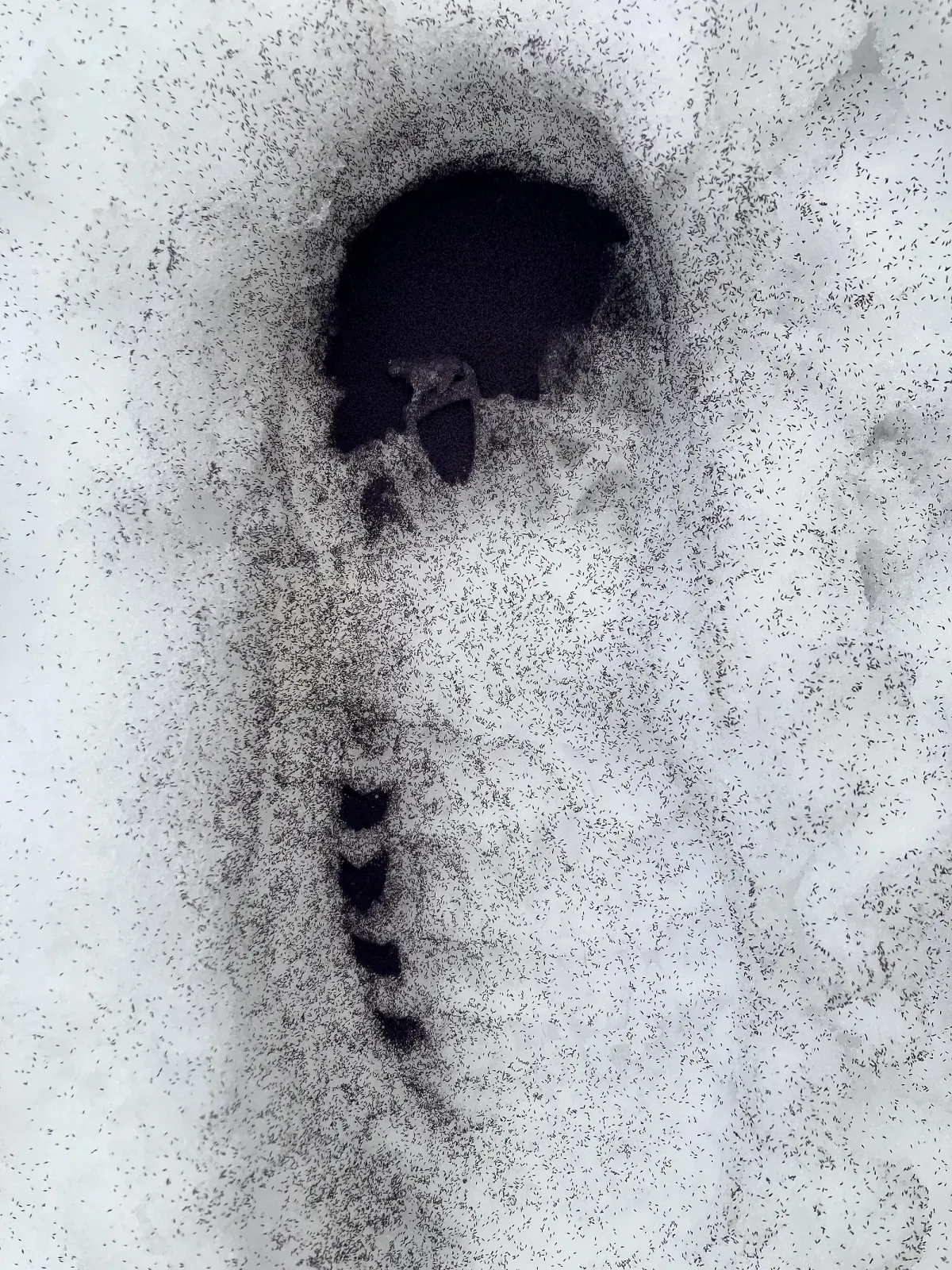
Springtails massed in a footprint in snow. In a group they look like spilled pepper that jumps. Photo: Kai Kemmann (CC BY-SA 4.0), via Wikimedia Commons.
Springtails vs. Look-Alikes: Soft, Round and Damp-Loving
| Pest | How it differs | How to tell |
|---|---|---|
| Springtail | Soft, round, jumps | In damp spots; squashes easily; doesn’t bite |
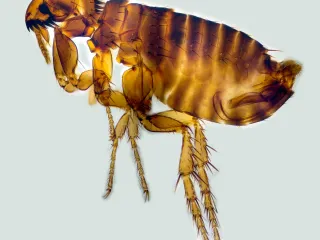
| Cat flea | Flat side to side, dark reddish brown | Hard to crush; on pets and in carpets; bites |
| Clover mite | Red speck with long front legs | Sunny windowsills; red smear; doesn’t jump |
| Fungus gnat | Tiny black fly | Flies from houseplant soil |
University of Minnesota Extension’s quick test: fleas are flattened and hard to crush, springtails are soft and squash easily.
Why Springtails Come Inside: Looking for Moisture
Springtails live in damp soil, mulch, leaf litter and rotting wood, feeding on fungi, mold and decaying plants. When the soil outside dries out, they go looking for moisture, often in a rush after a wet spring turns into a hot, dry spell. They get in under doors, through torn screens, along pipes and vents, or in potted plants, then crawl toward water and get trapped in sinks and tubs. A migration usually lasts less than a week (Colorado State).
Where You’ll Find Them: Wherever It’s Wet
- Bathrooms, around tubs, sinks and leaky pipes
- Basements, crawl spaces and window wells
- Overwatered houseplants and potting soil
- New homes, where concrete and wood are still drying
- Outdoors in mulch, leaf litter and lawns, sometimes in huge numbers after rain
Springtails in Houseplants: A Watering Problem
University of Minnesota Extension says springtails in potted plants prefer soil that’s too wet or mixes high in peat. They do little if any damage to the plant. Let the soil dry between waterings and empty saucers. Small flies around the pot, rather than jumping specks, are fungus gnats.
Still Seeing Springtails? Check These
If new ones keep appearing after a week of drying out, the moisture is still there. Check, in order: the spot where you see the most of them, with a flashlight; the hygrometer reading; outside that wall for mulch, a downspout or a sprinkler soaking the foundation; and overwatered houseplants. If all of these check out, the source may be inside a wall or under the floor, which is a job for a plumber.
Are Springtails Harmful? No
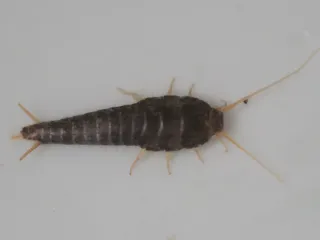
They don’t bite or sting people or pets, spread disease or damage the house or belongings. The same damp spot can grow mold, which is one more reason to dry it out. Silverfish in the same damp basement point to the same problem.
How to Confirm They’re Springtails
- Touch one: it jumps, then squashes easily.
- Look around it for a drip, damp cabinet floor or condensation.
- Check the humidity: a hygrometer above 60% means the air itself is too damp.
- Rule out fleas: springtails stay in damp spots, not on pets or in pet beds.
What to Do: Dry It Out, Then Vacuum
Fix leaks, replace cracked caulk, run exhaust fans, and keep indoor humidity under 60%; a dehumidifier helps only if the meter stays high after repairs. Let houseplant soil dry between waterings, and pull mulch back from the foundation. Rinse springtails down the drain or vacuum them. UC IPM says sprays are often no more effective than vacuuming, and University of Minnesota Extension advises against using pesticides for springtails indoors. The full plan is in how to get rid of springtails. For other pests, browse all pest guides.
Often confused with
Sources
- Springtails (UC IPM)
- Springtails (University of Kentucky Entomology, EF420)
- Springtails (Colorado State University Extension)
Last reviewed Oct 4, 2026.