- Scientific name
- Camponotus species
- Also called
- black carpenter ant
- Size
- Workers 1/4–1/2 in; winged queens larger
- Color
- Usually black, or black and red
- Found in
- Damp or decayed wood, wall voids, hollow doors, window frames
- Harmful?
- Can damage wood over years; may bite, doesn't sting
- Active
- Spring to fall; forages mostly at night
- Pro quotes
- $250–$850
Carpenter ants are the big black ants most people see indoors. They don’t eat wood: they chew tunnels in it to nest, usually starting in wood that’s already damp or rotting, and their damage builds slowly over years. The one thing to do: follow the ants back to their nest, then find and dry out the wet wood around it.
This page covers how to identify carpenter ants, tell them from termites, and find out whether the nest is inside your house. It rests on University of Kentucky and UC IPM guidance.
How to Identify a Carpenter Ant: Big, Black, Rounded Back
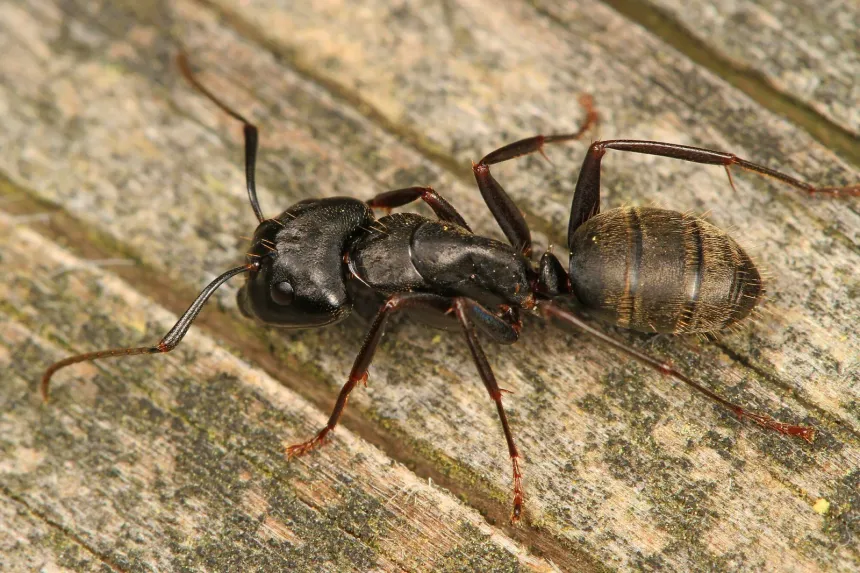
- Large: workers are about 1/4 to 1/2 inch, and sizes vary within one colony. Queens reach about 3/4 inch (University of Kentucky).
- Black, or black with a reddish middle, depending on the species.
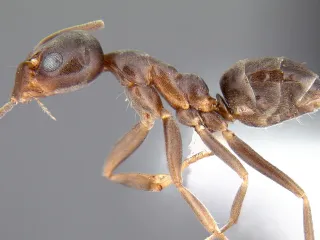
- Smoothly rounded back when seen from the side, and a single small bump (node) at the waist.
- Elbowed antennae and a narrow, pinched waist, like all ants.
- Swarmers: winged males and queens appear in spring; queens shed their wings after mating.
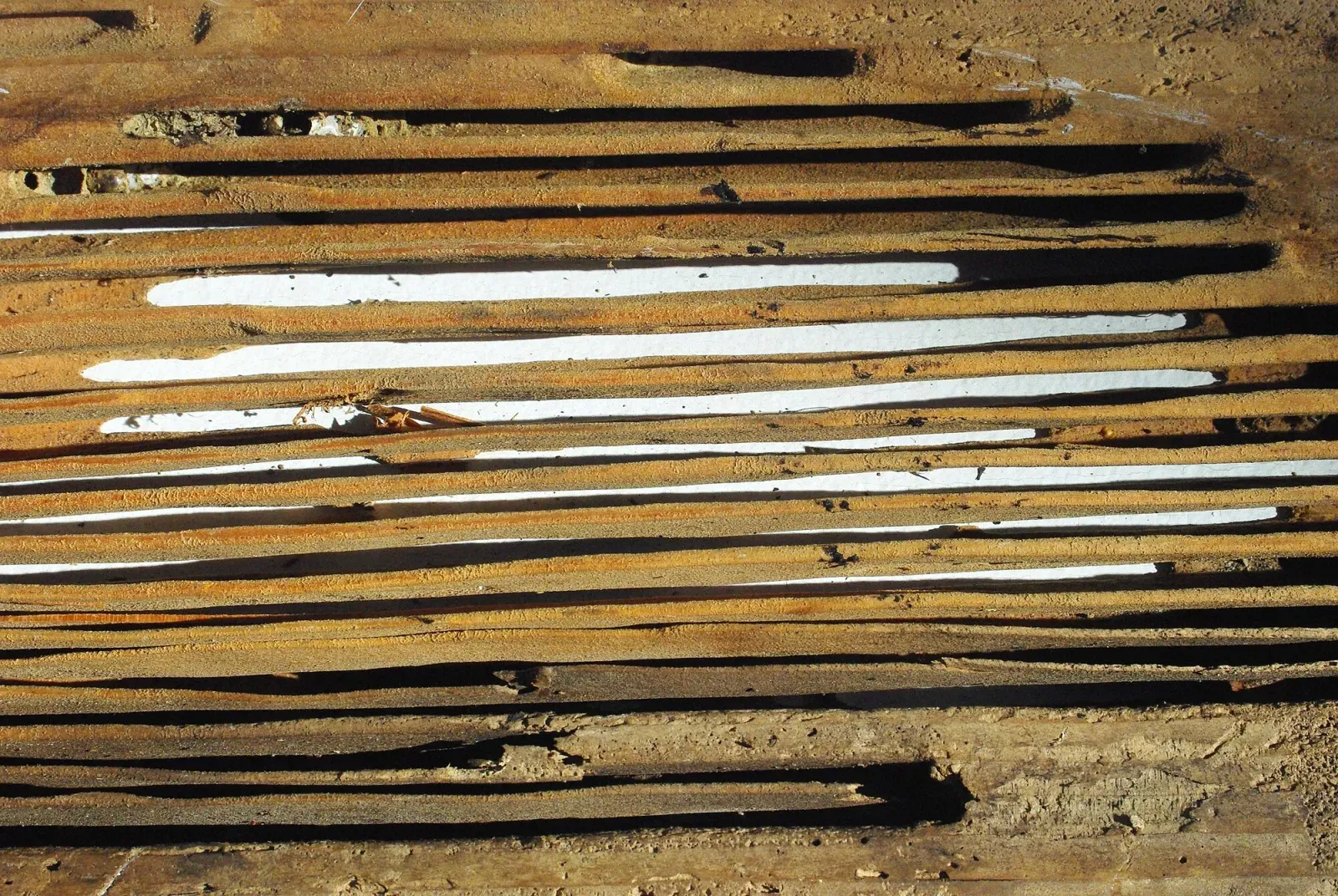
Carpenter ant damage in a board: smooth, clean tunnels that follow the wood grain. Photo: Nwbeeson (CC BY-SA 4.0), via Wikimedia Commons.
Carpenter Ant vs. Termite: Waist, Antennae, Wings
| Carpenter ant | Subterranean termite | |
|---|---|---|
| Waist | Narrow, pinched | Thick, no waist |
| Antennae | Elbowed | Straight, bead-like |
| Wings (swarmers) | Front pair longer than back pair | All four the same length |
| Wood damage | Smooth, clean galleries; sawdust pushed out | Galleries packed with soil or droppings; no sawdust |
Pavement ants are much smaller and nest under concrete, not in wood. Round holes in bare wood with no ants around are more likely carpenter bees.
Where Carpenter Ants Nest: Wet or Damaged Wood
- Wood that stays wet: around leaky windows, roof leaks, decks, bathrooms and dishwashers
- Hollow doors, wall voids, foam insulation and porch columns
- Outdoors in stumps, dead trees, firewood and landscape timbers
Homes near woods, with landscape timbers and wooden fences or porches, are prime candidates. Leaky pipes, damaged roofing, poorly ventilated attics and clogged gutters keep wood wet enough to attract them (University of Kentucky).
Is the Nest Inside? Winged Ants Are the Tell
A few big black ants in spring can be foragers or queens from outside looking for a nest site. The University of Kentucky says large numbers of winged ants indoors are the good indicator that the colony is in the house. Workers can be seen year-round indoors; swarmers emerge only in spring, mating in late May to early June. Colonies go dormant over winter and resume when indoor heat or sunshine warms them up.
Signs of Carpenter Ants: Sawdust and Night Trails
- Piles of coarse “sawdust” (frass) mixed with insect parts under wood; holes in wood compares it with termite and beetle debris
- Winged ants indoors in late winter or spring
- Large ants trailing at night, especially along wires and pipes
- Faint rustling inside walls, one of the sounds on scratching in walls
Are Carpenter Ants Harmful? Slowly, to Wood
They damage wood slowly, so the harm builds over several years rather than months, though given enough time it can be significant. A nest indoors also points to a moisture problem worth fixing. They don’t pose a health threat; they bite only if the nest is disturbed or one is picked up, and they don’t sting.
How to Confirm It’s Carpenter Ants
- Look at one from the side: an evenly rounded back and one waist node.
- Check for frass: coarse sawdust with insect parts below wood.
- Follow the trail: a drop of honey or jelly lets you track foragers back toward the nest.
- Count the winged ants: many winged ants indoors in spring means the nest is inside; a few wingless ones may have wandered in.
What to Do: Find the Nest, Fix the Moisture
Find and dry out the wet wood, replace rotted sections, trim branches that touch the house, move firewood away and cut back mulch near the foundation. Treatment has to reach the nest to work: baits made for carpenter ants and a direct nest treatment work better than spraying trails. The University of Kentucky says nests hidden inside walls are hard to reach and often call for a professional, since drilling into wood can damage the structure. For other pests, browse all pest guides.
Often confused with
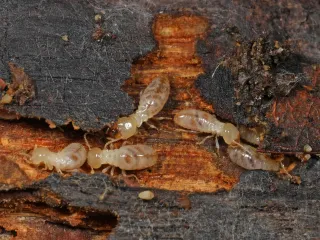
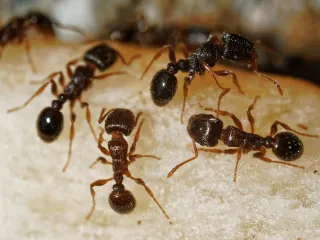
Sources
Last reviewed Oct 5, 2026.