Roach Bait: How to Use Gel Bait So It Actually Works
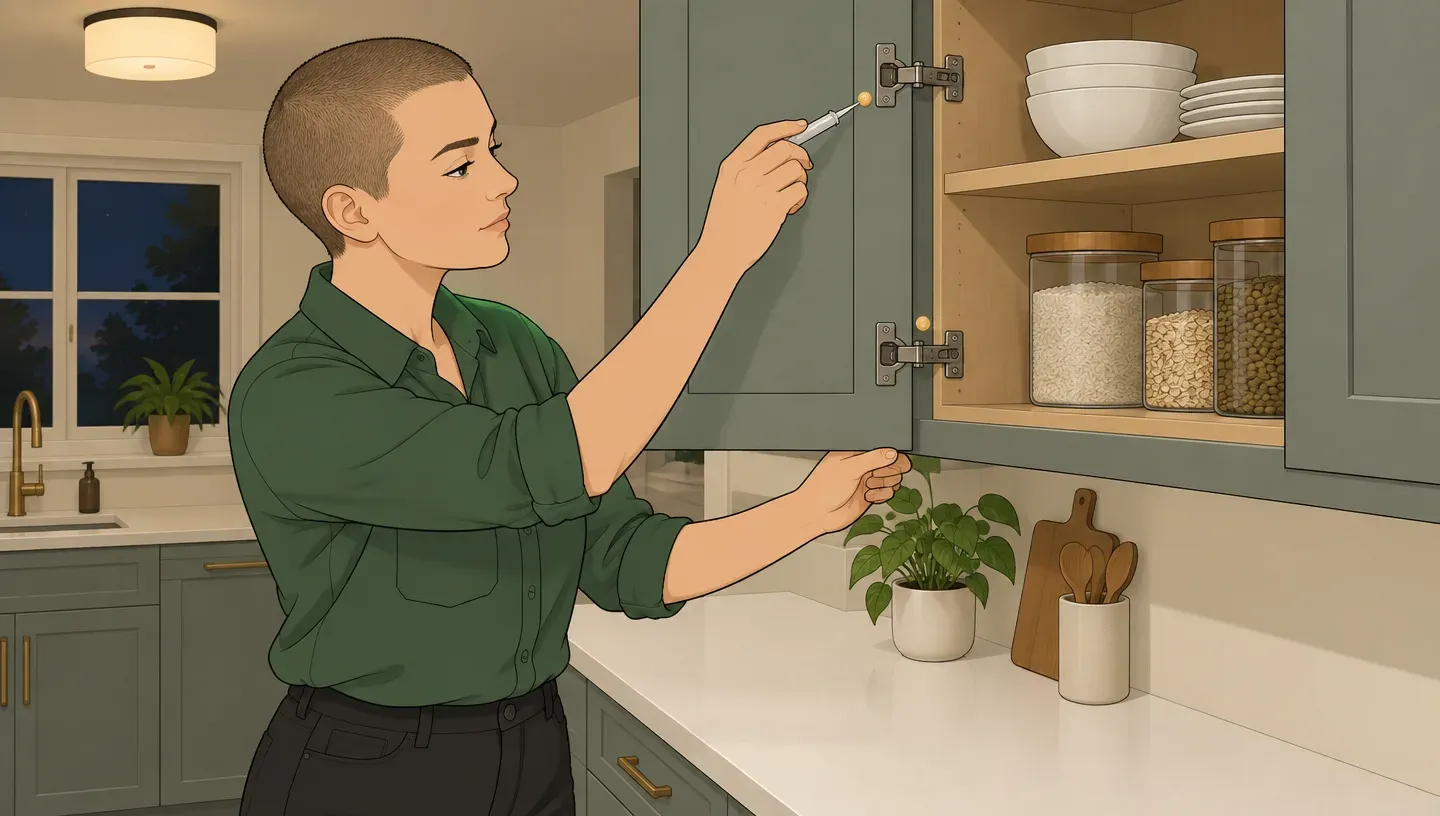
Illustration: a pea-sized dot of gel bait going into the hinge gap of an upper kitchen cabinet.
Gel bait is the best roach bait for most kitchens: many pea-sized dots in the cracks where roaches hide, no spray or cleaner nearby, and fresh bait every week or two. Use bait stations instead in low spots kids and pets can reach. Skip sprays and foggers near the bait; they stop roaches from eating it.
Cost: about $27 in supplies. Difficulty: moderate. Call a pro if sticky traps still catch roaches after two or three rounds of baiting, roaches are spreading beyond the kitchen and bathroom, or they keep coming in from a neighboring apartment.
This guide compares gel, stations and the products people pair with them, then shows how to place gel so roaches eat it. We haven’t tested these baits ourselves; this rests on University of Kentucky, Rutgers, NC State, UC IPM and NPIC guidance, the gel’s label and store list prices. Gel bait is the core of our plan to get rid of roaches.
How We Compared These Roach Baits
We rated each option on five things:
- Kill reach: whether it reaches roaches that never touch it.
- Placement: whether it fits into cracks and hinge gaps where roaches hide.
- Safety around kids and pets: how exposed the insecticide is.
- Upkeep: how often it dries out or needs refilling.
- Price: U.S. list prices checked October 1, 2026.
Sources are listed at the end.
Does Roach Bait Work?
Yes. Rutgers calls cockroach bait the most effective product type, ahead of sprays, dusts and foggers, and the University of Kentucky says bait used correctly can match a professional’s results.
“Used correctly” is where home baiting goes wrong. One Reddit poster who put out a few dots now and then wrote: “I feel like they only really devour it when it’s fresh, like the first day or so. Past that, I’ve seen them just walk right by it.” Many small dots and steady refills fix exactly that.
A light-brown roach about ½ inch long with two dark stripes is a German cockroach, the fast-breeding indoor kind; one about 1½ inches long is likely an American cockroach wandering in from outside (University of Kentucky).
Roach Bait Options at a Glance
| Option | Best for and main drawback |
|---|---|
| Gel bait ($26.98 / 4) | Most kitchens. Goes right into cracks and roaches find it more palatable, but it dries out and needs refills. |
| Bait stations ($13.99) | Low cabinets and floors in homes with kids or pets. Bait stays enclosed, but it can’t reach deep cracks. |
| Boric acid dust | Voids under and behind appliances, alongside bait. Works slowly and must stay out of reach. |
| Sticky traps | Showing where roaches are and whether bait is working. They kill only the roaches caught. |
| Sprays and foggers | Not near bait. Spray keeps roaches off the bait, and foggers push them deeper into walls. |
Gel: box of four 30 g tubes; stations: 18-pack. DoMyOwn and Target list prices, October 1, 2026.
Gel Bait: The Best Roach Bait for Most Kitchens
Cockroach gel bait, often sold as cockroach killer gel, is a slow-acting insecticide mixed into food. A roach eats it, walks back to its hiding spot and dies there, typically within 1 to 3 days (University of Kentucky).
Roaches feed on each other’s droppings, so the poison also reaches roaches that never touched the bait, including young ones hiding inside walls (NC State). Rutgers rates gel above stations because it goes closer to where roaches hide. A typical one-bedroom apartment may need 10 to 30 grams, about one standard 30-gram tube, so a box of four covers the first round and the refills.
The active ingredient on the label matters more than the brand: common ones are fipronil, indoxacarb, dinotefuran, abamectin and hydramethylnon. Note which one you bought.
Best for: kitchens and bathrooms, dotted into hinges, corners and pipe gaps.
Main limitation: it hardens over time, so dots need checking and refilling every week or two.
Bait Stations: For Low Spots Kids and Pets Can Reach
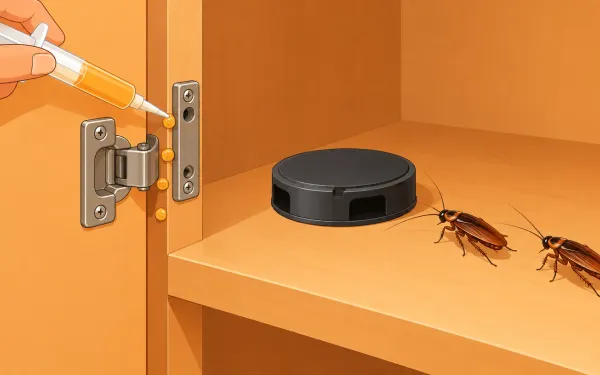
Stations keep the bait enclosed in plastic, which cuts exposure for kids and pets, and they last for months. Use them in low cabinets, near the floor and behind appliances, and keep gel up high or deep in cracks.
Set each station flush against a corner or edge, where roaches travel, not mid-shelf (University of Kentucky). Near heat, such as a toaster oven, use a station behind or beneath it, never gel: heat liquefies the bait.
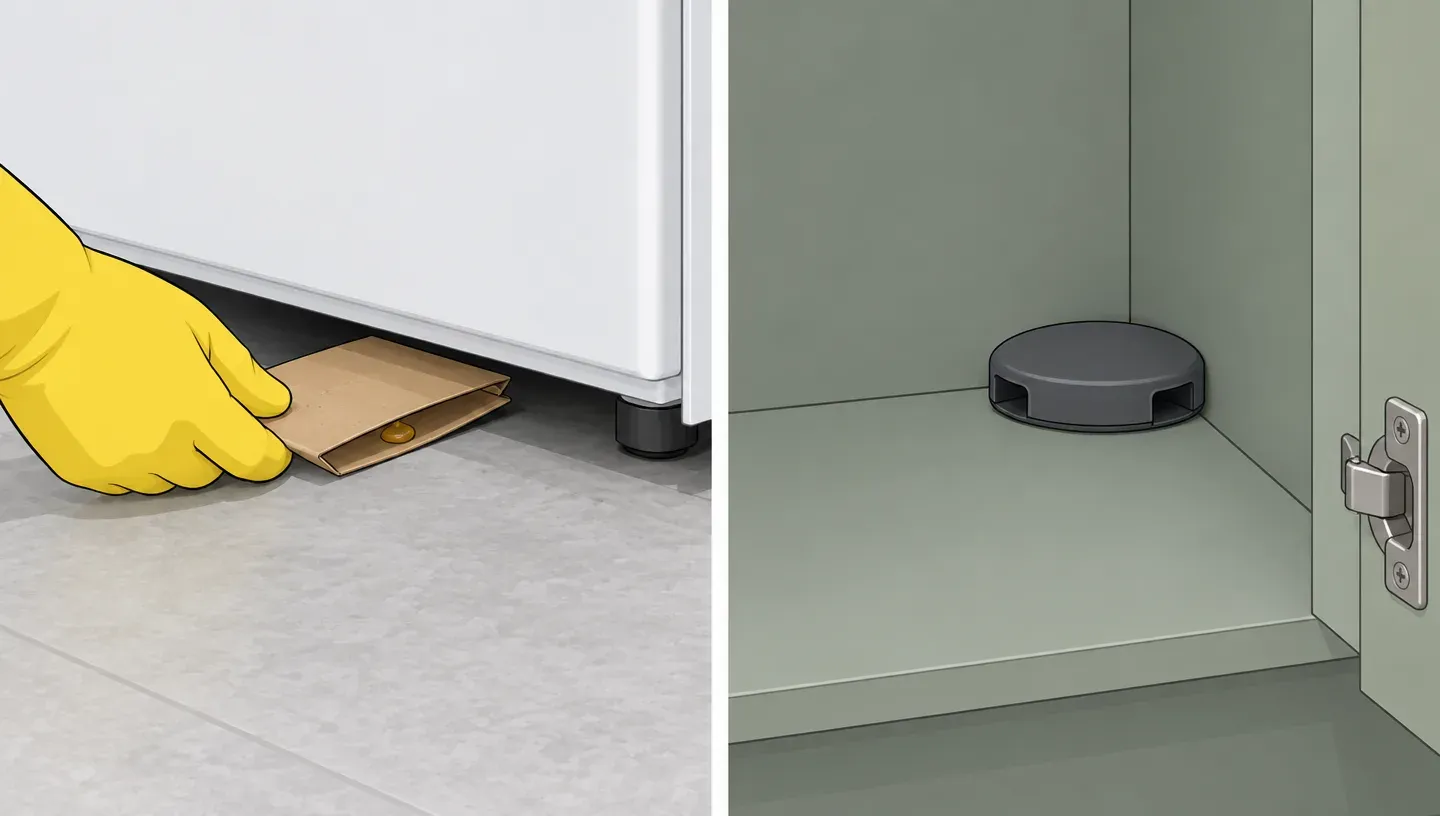
Illustration: folded cardboard with a dot of gel slid under the fridge (left) and a bait station flush in a cabinet corner (right).
Best for: homes with toddlers or pets, and spots near heat.
Main limitation: roaches find them less palatable than gel, and they can’t go into a hinge gap.
Boric Acid Dust: A Partner, Not a Replacement
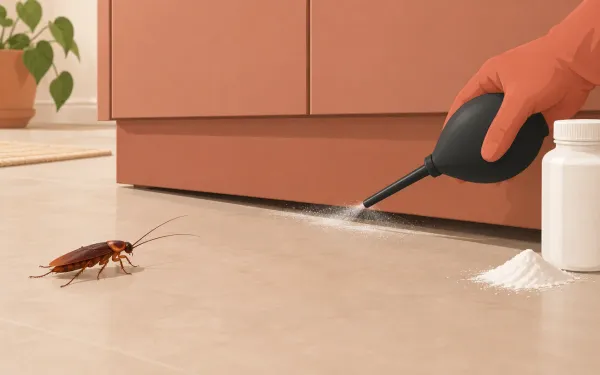
Rutgers says boric acid dust works best combined with bait: dust under and behind appliances, where kids and pets can’t reach, and gel in the cracks.
Best for: dry voids behind the fridge and stove.
Main limitation: slow, and it must stay where children and pets can’t get at it.
Sprays and Foggers: Keep Them Away From the Bait
Cleaners or insecticides sprayed around bait can keep roaches from eating it (University of Kentucky). The gel label adds: no gel on surfaces recently treated with sprays, and no spraying over gel.
Foggers are worse: they push roaches deeper into the walls, away from the bait; see whether roach bombs work.
Best for: nothing in a baiting plan.
Main limitation: they undo the bait you just placed.
How to Use Roach Gel Bait
Step 1: Clear competing food tonight. Wash dishes, seal food and pet food, and take out the trash; UC IPM says removing other food greatly improves results. Don’t wait for a spotless kitchen, though: NC State notes heavy baiting gives substantial control even where cleanup lags.
Step 2: Use small dots, not globs. The label sets a pea-sized dot, about ¼ inch across, or a thin bead about 2 inches long in a narrow crack. Space 1 to 3 dots per 10 feet of cabinet or wall edge, or 3 to 5 where you see many roaches.
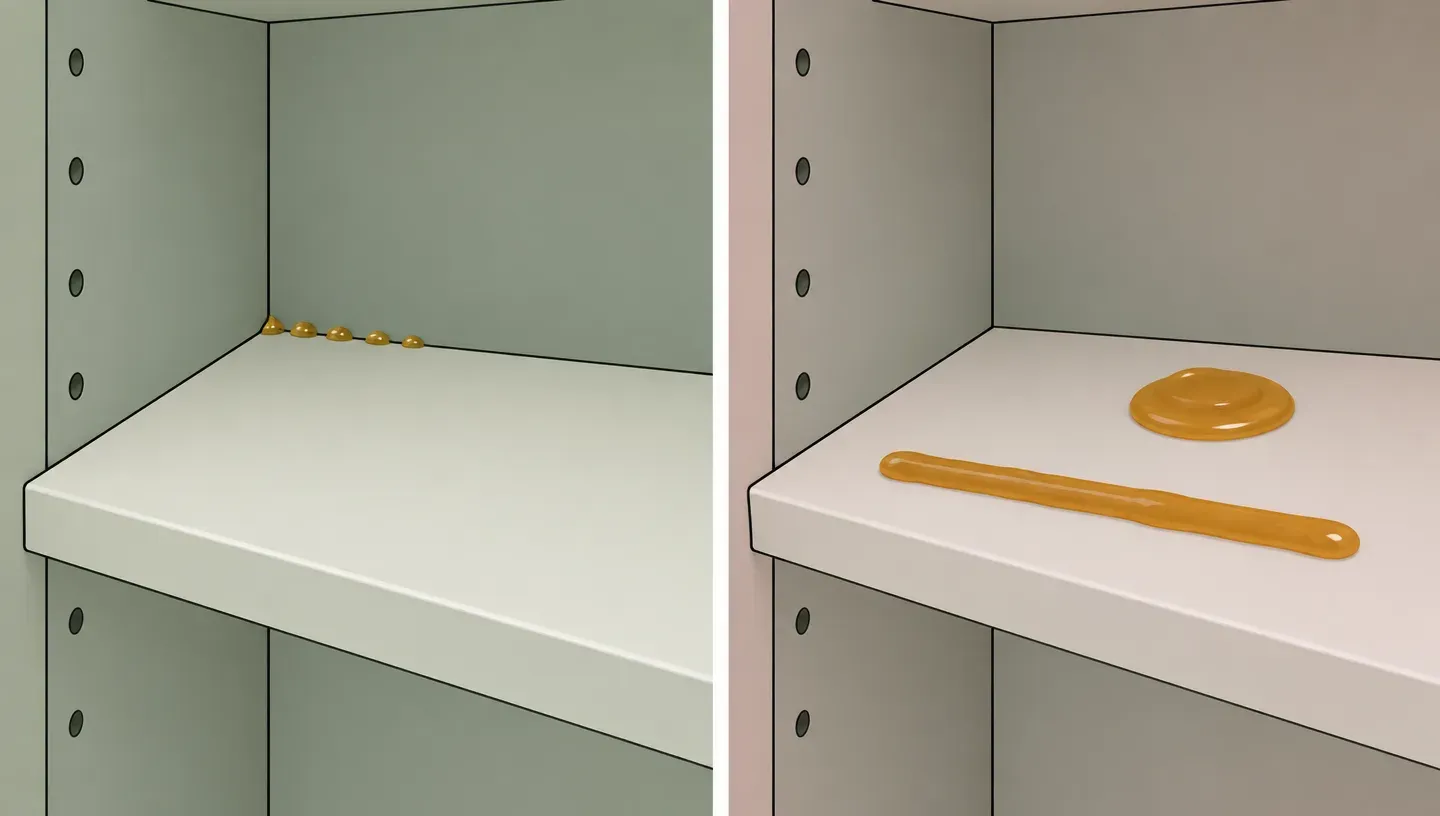
Illustration: small dots tucked into the corner crack (left) and one big glob and a long line in the open (right).
Step 3: Put dots where roaches hide. Cabinet hinges and corners near the sink and stove, the gap around the drain pipe, behind the fridge, stove and dishwasher, and around the toilet. Dot next to droppings, a key sign of roaches: they give off a scent that draws other roaches. Under a kitchen sink alone, a dozen or more dots may be needed (University of Kentucky).
Step 4: Keep gel off food surfaces and hot spots. Use hinge gaps, not shelves: the label says gel must not touch food or surfaces food contacts. Skip the stove, dishwasher, hot pipes and counters you wipe daily; with no crack, NC State suggests a dab in folded cardboard slid under the fridge.
Step 5: Check after a week, then refill. Refill any dot that’s gone or crusted, right beside the old one. Then re-treat every 2 to 4 weeks wherever roaches persist, until sticky traps stay empty for four weeks (Rutgers).
Why Roaches Stop Eating the Bait
First rule out too little bait, bait spoiled by spray or cleaner, bait roaches can’t reach, or old, hardened dots (NC State).
If roaches walk past fresh bait, they may reject its taste or other ingredients; NPIC suggests switching brands. If they eat it but keep turning up, they may be resistant: switch to a gel with a different active ingredient from the list above. German cockroaches, the usual culprit, get their own German roach treatment plan.
Is Roach Bait Poisonous to Dogs, Cats or Kids?
Roach bait is the low-risk option, not a no-risk one: the University of Kentucky says baits pose minimal hazard to children or pets.
ASPCA Animal Poison Control says pets like the taste, but there’s so little bait that stomach upset is typically the only problem; a plastic station swallowed whole is the bigger worry, since it can cause a blockage. Call your vet or the ASPCA line at (888) 426-4435 (a fee may apply).
Poison Control says a child’s accidental taste of these baits usually carries little risk because the concentration is low. Rinse their mouth, give a few sips of water, then call 1-800-222-1222.
Which Roach Bait Fits Your Situation
| Situation | What to use | Why |
|---|---|---|
| Small roaches in the kitchen | Gel in hinges, corners and pipe gaps | Most likely German roaches; gel goes closest to where they hide. |
| Toddlers or pets | Stations low down, gel only up high or deep in cracks | The label says not to treat spots children and pets can easily reach. |
| Roaches in a toaster oven | A station behind or beneath it | Heat liquefies gel bait. |
| You already sprayed | Gel in cracks and corners you didn’t spray | Spray residue keeps roaches off the bait. |
| Not sure where they are | Sticky traps first, then bait the busiest spots | Traps show which spots need the most bait; see roach traps. |
| Roaches keep coming from next door | Bait your unit, and tell the landlord in writing | Roaches from a neighboring unit are a reason to call a pro. |
What It Might Still Cost
The gel is the main buy, not the whole bill:
| Item | Price |
|---|---|
| Gel bait, box of four 30 g tubes | $26.98 |
| Bait stations, 18-pack | $13.99 |
| Glue boards to track roaches, 12-pack | $10.49 |
| Silicone caulk for cracks, 2.8 oz | $5.29 |
| Pro cockroach visit, 25 shared quotes (middle half) | $200–$400 |
| Pro cockroach treatment, price-guide range | $100–$600 a round |
| Pro full treatment with follow-ups, 10 shared quotes (middle half) | $450–$1,500 |
DIY: list prices from DoMyOwn and Target, October 1, 2026, before tax and shipping; glue boards and caulk are the prices on our roach plan. Pro: the middle half of 25 single-visit and 10 full-treatment quotes homeowners shared on Reddit. Price-guide range and annual plans: This Old House (March 2026). The exterminator vs. DIY cost page shows how a pro bill is built.
Before You Bait: A Quick Checklist
- Clear dishes, open food and trash the same night you bait.
- Put away the spray, and bait cracks you haven’t sprayed.
- Dot pea-sized gel in hinges and corners, not one big glob.
- Use stations in any low spot a child or pet can reach.
- Write down the active ingredient on the box.
- Check every dot after a week, and refill the crusted ones.
- Count roaches on sticky traps until four weeks pass with none.
When to Call a Pro
UC IPM says serious indoor infestations often need a professional. Call one if sticky traps still catch roaches after two or three rounds of baiting, if roaches spread beyond the kitchen and bathroom, or if they keep coming from a neighboring apartment (renters: tell the landlord in writing, with trap counts and photos). Ask which active ingredient the pro uses so your refills can switch; what an exterminator does covers the visit.
Common questions
A roach that eats gel usually dies within 1 to 3 days, but UC IPM says it takes 7 days or longer before you see fewer roaches. Expect several weeks to clear an infestation: females carrying egg cases barely eat, so hatchlings from roach eggs keep appearing until the last ones hatch.
No. Roaches find bait while foraging nearby; it doesn’t draw them in from outside or from other apartments. That’s why bait has to go right where they hide.
The one your roaches will eat. If they ignore it, switch brands; if they eat it and keep coming, switch active ingredients.
The Bottom Line
Dot gel into hinges and pipe gaps, not one glob on a shelf, and keep sprays away from it. Use stations where kids and pets reach, refill crusted dots, and stop after four weeks of empty sticky traps.
Sources and further reading · 9
- University of Kentucky: Cockroach Elimination in Homes and Apartments (ENTFACT-614): results, placement, stations, sprays, roach types, safety.
- Rutgers NJAES: German Cockroach (FS1322): gel vs. stations, amount, follow-up, boric acid.
- NC State Extension: German Cockroach Surveillance and Management: secondary kill, placement, cardboard trick, resistance.
- UC IPM: Cockroaches (Pest Notes 7467): timing, stations, gel hardening, droppings.
- NPIC: Cockroaches: switching brands or active ingredients.
- Gel bait product label (indoxacarb 0.6%, EPA Reg. No. 352-652): spot size and rate, sprays, heat, food surfaces, handwashing.
- ASPCA: Five Items Pet Parents Shouldn’t Worry About and Animal Poison Control.
- Poison Control: Is Ant Bait Safe Around Children?
- This Old House: Roach Exterminator Cost.