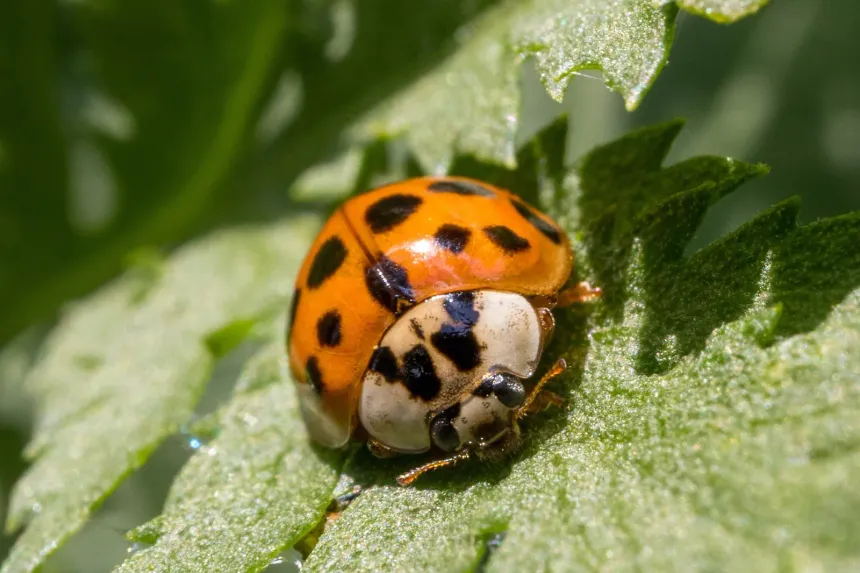
- Scientific name
- Harmonia axyridis
- Also called
- multicolored Asian lady beetle, Asian ladybug, Halloween ladybug
- Size
- About 1/4–1/3 in
- Color
- Yellow-orange to red, 0 to 19 black spots; black M or W mark behind the head
- Found in
- Sunny walls in fall; attics, wall voids and windows in winter
- Harmful?
- Can pinch; yellow fluid stains and smells; allergen for some
- Active
- Swarms in fall; reappears on warm winter and spring days
The Asian lady beetle is the orange “ladybug” with an M-shaped mark behind the head that swarms sunny walls in fall and turns up at windows all winter. It doesn’t damage the house, food or clothing and doesn’t breed indoors, but it smells, stains and can pinch. The one thing to do: seal gaps around windows, siding and attic vents in late spring or summer, before the fall flights.
This page covers how to identify an Asian lady beetle, tell it from native ladybugs and look-alikes, and why it comes inside. It rests on University of Kentucky and UC IPM guidance.
How to Identify an Asian Lady Beetle: The M Mark
- About 1/4 to 1/3 inch, oval and rounded like a ladybug.
- Color varies: tan or yellow-orange to red, with anywhere from no spots to 19. Many-spotted beetles tend to be females, few or no spots males (University of Kentucky).
- A black M or W mark on the whitish area behind the head. Native ladybugs don’t have it.
- Larvae are orange and black and shaped like tiny alligators; they live on plants with aphids.
Native to Asia, the beetle was released by the USDA from the 1960s to the 1990s to control crop pests, and the first US field populations were found in Louisiana in 1988. Outdoors it still eats aphids, hundreds a day.
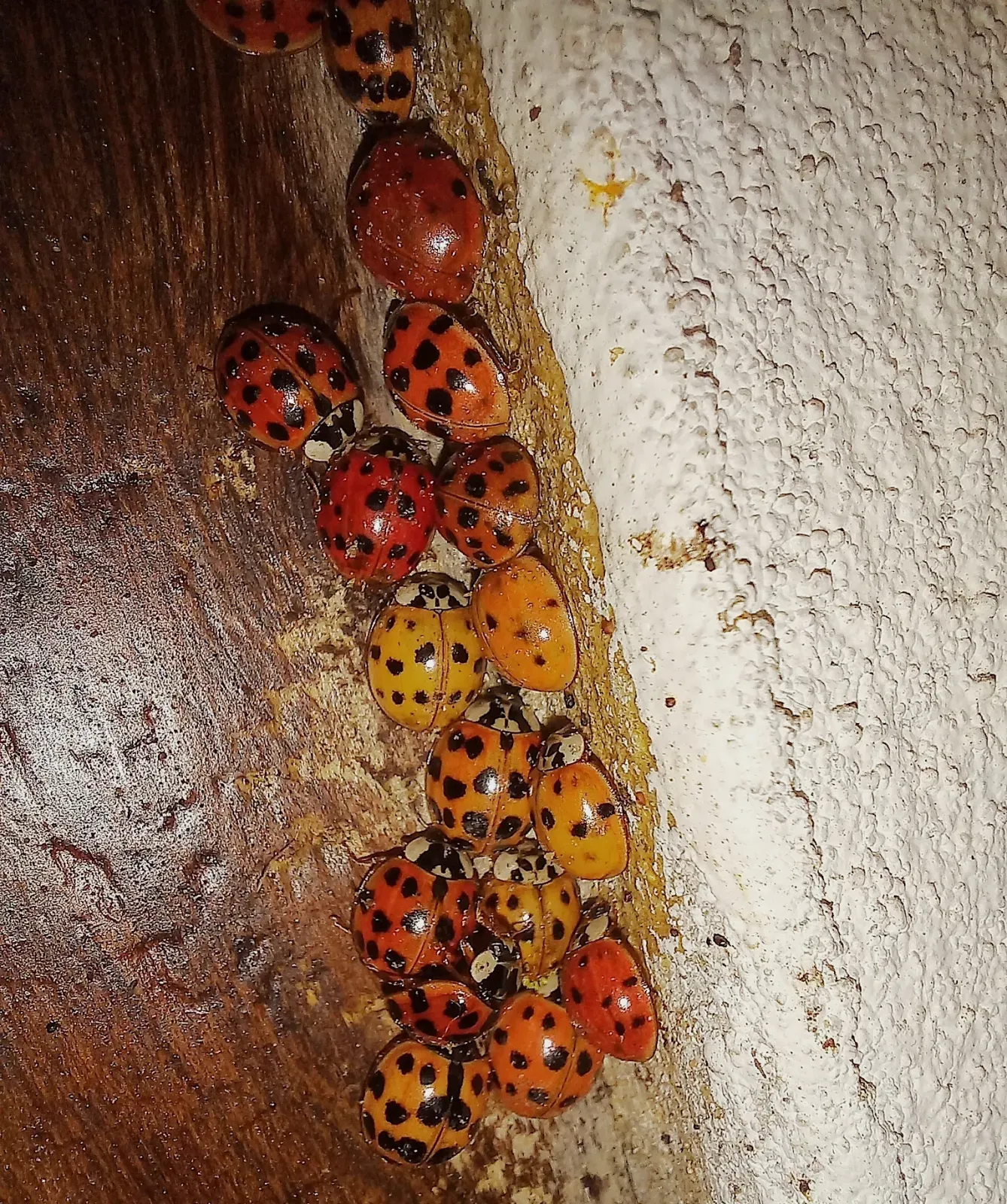
Asian lady beetles bunched on a door frame, the way they gather around homes in fall. Photo: Chinoaltubedenoia (CC BY-SA 4.0), via Wikimedia Commons.
Asian Lady Beetle vs. Look-Alikes: Check Behind the Head
| Insect | How it differs | How to tell |
|---|---|---|
| Asian lady beetle | Tan to red, variable spots | M or W mark on a white area; swarms in fall |
| Native ladybug | Usually bright red, few spots | Mostly black behind the head; doesn’t swarm into homes |
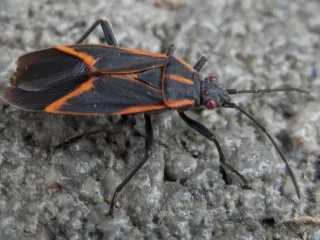
| Boxelder bug | Longer, flat, black with red lines | A true bug, not a round beetle |
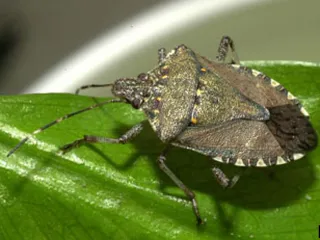
| Stink bug | Shield-shaped, mottled brown | Banded antennae and body edge |
| Clover mite | Tiny red speck, 1/30 in | Leaves red streaks when crushed |
Why Lady Beetles Come Inside: Sunny, Contrasting Walls
In fall the adults leave fields and woods for protected winter spots. Flights to buildings run from September through November and peak in October in Kentucky, on sunny afternoons after a cool spell, once it’s back up to the mid-60s. They gather on the southwest sides of buildings lit by afternoon sun, and they’re drawn to light-dark contrast such as dark shutters on light siding or light trim around windows. House color and building material matter less. Homes near woods and fields get the most (University of Kentucky).
Once on the wall, they crawl into cracks around windows and doors, behind fascia and siding, and into soffits, attics and wall voids.
When You’ll See Them: Fall Swarms, Winter Wanderers
In late winter and early spring the beetles wake up, usually on the sunny side first. Trying to get outdoors, some wander inward from behind baseboards, walls and ceilings and gather at windows and lights. They don’t reproduce indoors, so spring beetles are the same ones that came in last fall. Individual beetles can live up to three years.
Are Asian Lady Beetles Harmful? Smelly, Staining, Sometimes Allergenic
They don’t damage the house or breed indoors, but:
- They can pinch skin; it feels like a pinprick and is seldom serious.
- When disturbed they release a yellow fluid from their leg joints that smells and stains walls and fabric. It’s one of the common smells that mean pests.
- Some people develop allergies to them, from eye irritation to asthma. Avoid touching your eyes after handling them, and see a doctor if you suspect a reaction (University of Kentucky).
How to Confirm It’s an Asian Lady Beetle
- Look for the M or W on the white area behind the head.
- Check the timing: swarms on sunny walls in fall, stragglers at windows in winter and spring.
- Notice the smell and yellow stain if one is disturbed.
What to Do: Vacuum Them, Seal in Summer
Vacuum beetles indoors; a stocking or handkerchief between the hose and the bag traps them so you can empty them outside. A broom is more likely to cause stains, and crushing them releases the staining fluid. Sealing is the lasting fix, done in late spring or summer: caulk around windows, doors, soffits, fascia, pipes and wires, add door sweeps (gaps of 1/8 inch or less still let beetles in) and screen attic vents. Foggers, bug bombs and indoor sprays aren’t recommended; they rarely work and can stain surfaces. The full plan is in how to get rid of Asian lady beetles. For other pests, browse all pest guides.
Often confused with
Sources
- Asian Lady Beetle Infestation of Structures (University of Kentucky Entomology, EF416)
- Lady Beetles (UC IPM)
Last reviewed Oct 4, 2026.
.jpg)