Do Stink Bugs Bite? Are They Harmful to People or Pets?
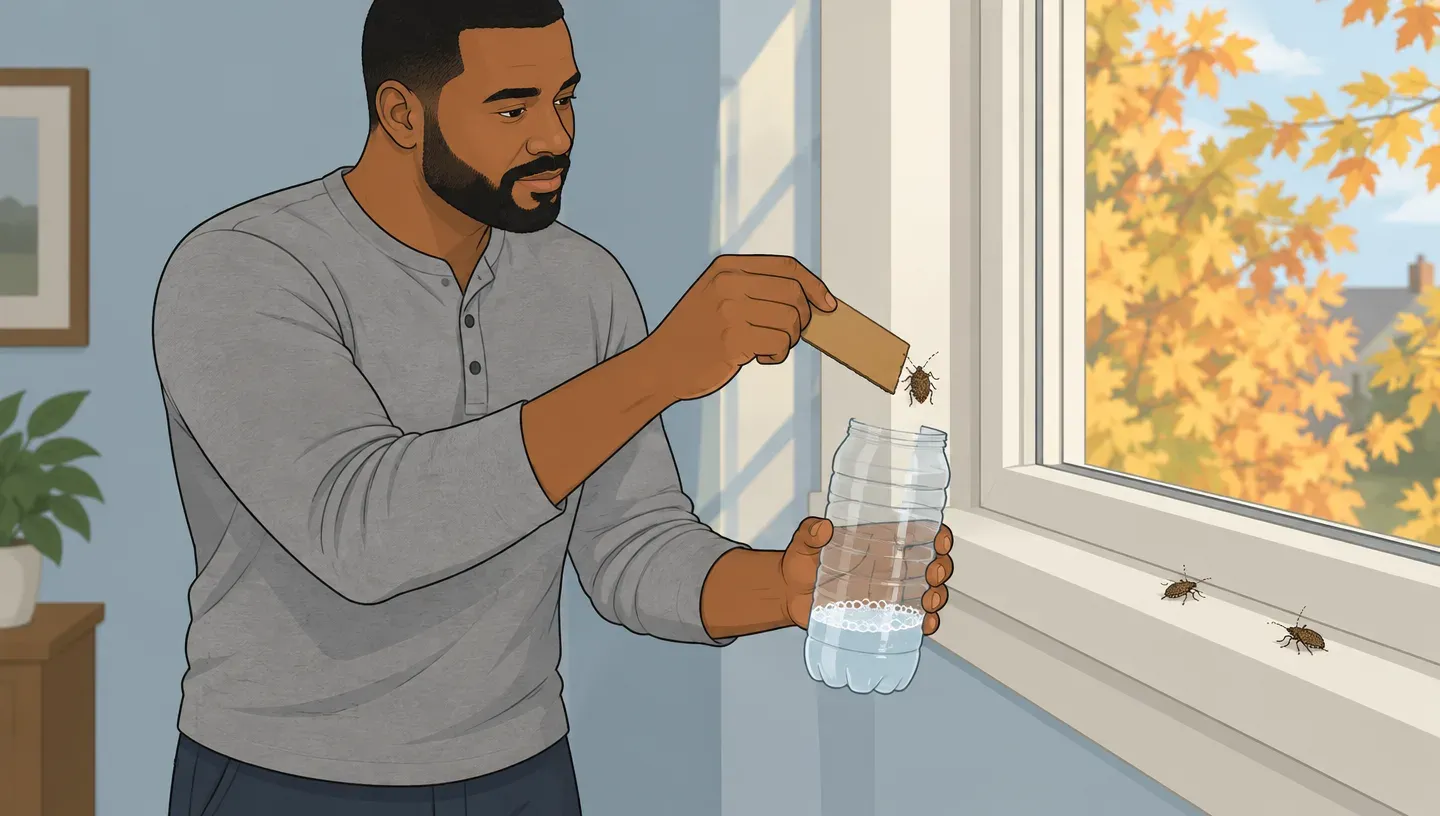
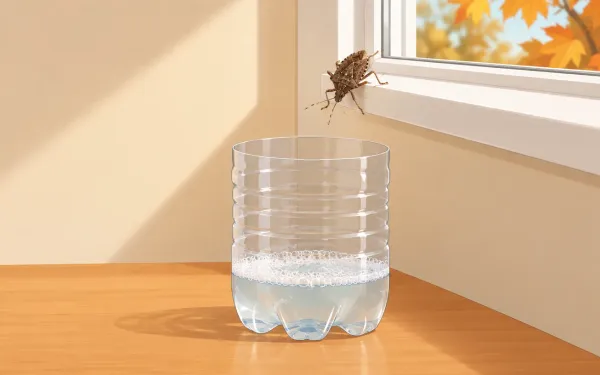
Illustration: a stink bug brushed off a window frame into a cut-off bottle with soapy water in the bottom.
Do stink bugs bite? No, stink bugs don’t bite people or pets. Their mouthparts only suck plant juices, and the National Pesticide Information Center (NPIC) says they don’t sting or damage your house either. The real risks are small: a smelly fluid that can irritate skin and eyes, and allergy symptoms in some sensitive people. Don’t crush one barehanded.
Difficulty: easy. Call a pro if large numbers of stink bugs come back every fall in spite of sealing, or you need an exterior insecticide applied, which Maryland Extension says should be done by a licensed pest control operator.
This page covers the look-alikes that do bite, the real risks to people, pets and your house, and how to remove stink bugs without touching them. We haven’t tested anything ourselves; it rests on University of Kentucky, UC IPM, Maryland and Iowa State extension guidance, NPIC, Texas A&M, the CDC, Poison Control and two published case studies.
Stink Bug vs. Bugs That Do Bite
| Bug | Looks | Bites you? |
|---|---|---|
| Brown marmorated stink bug | Brown shield, about ⅝ inch, white bands on antennae, banded edge | No |
| Kissing bug | Long, cone-shaped head; dark body with red, orange or yellow edge stripes | Yes, feeds on blood at night |
| Wheel bug | A kind of assassin bug | Yes, painfully, if handled |
Sources: UC IPM, Texas A&M and NC State Extension.
Do Stink Bugs Bite Humans?
No. Stink bugs are related to bed bugs, but University of Kentucky entomologists say they don’t bite humans or pets. Their long, piercing mouthparts are used only to suck nutrients from plants, and they have no stinger.
The species you’re most likely to see indoors is the brown marmorated stink bug. UC IPM says it doesn’t bite, sting, suck blood or spread mammalian diseases. Dozens gathering on a sunny wall in fall, then flying noisily around your lamps, is a nuisance, not an attack.
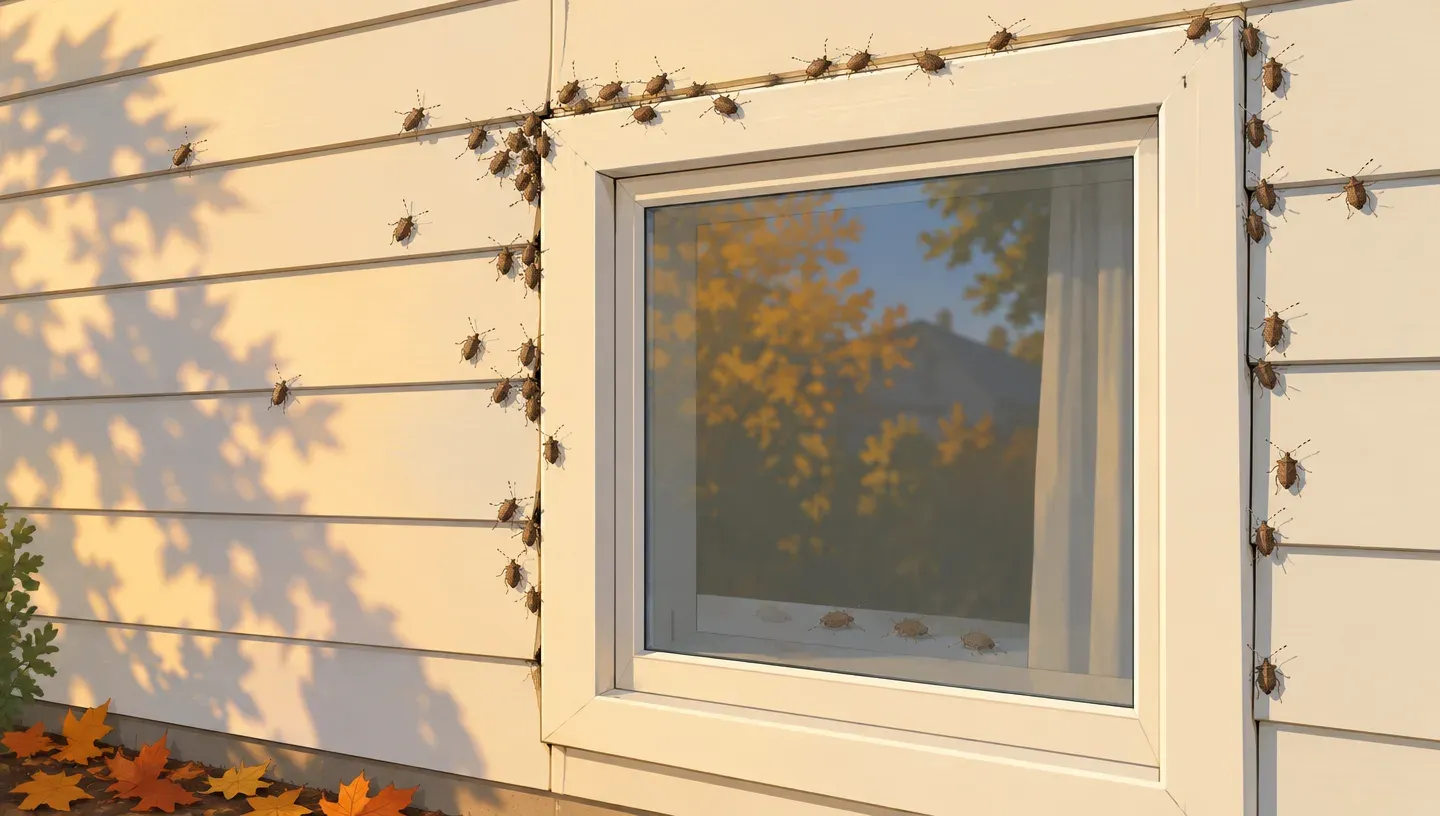
Illustration: stink bugs gathered on a sun-warmed wall and window frame in fall, with a few on the sill indoors.
Stink Bug or Kissing Bug? Check the Head
If you woke up with a bite and found a “stink bug” nearby, it was most likely a look-alike. Texas A&M’s kissing bug lab says a stink bug’s head is short and tucked into a broad shoulder shield, while a kissing bug has a long, narrow, cone-shaped head, a narrower body and longer, thinner legs.
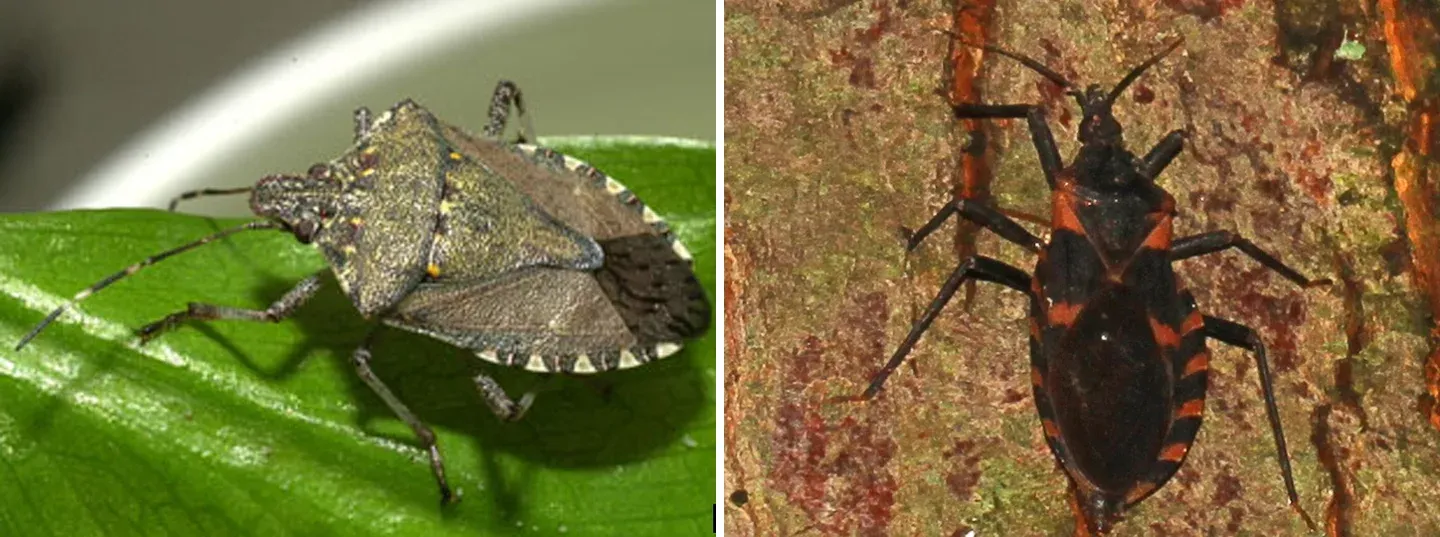
Left: brown marmorated stink bug, photo by David R. Lance, USDA APHIS PPQ (CC BY 3.0 US). Right: eastern blood-sucking conenose, a kissing bug, photo by Judy Gallagher (CC BY 2.0). Both via Wikimedia Commons.
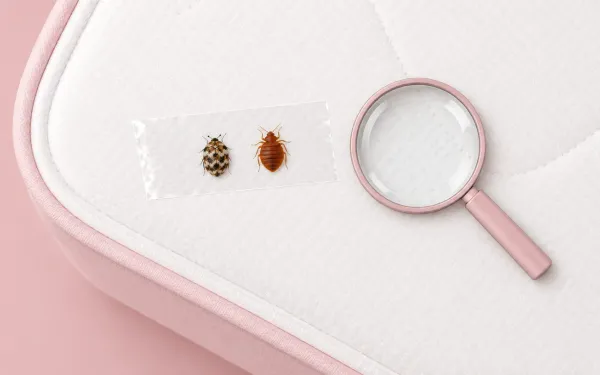
Kissing bugs can carry the parasite that causes Chagas disease (CDC), and their bites generally don’t hurt, so don’t touch one; bag it and get it identified. A wheel bug handled carelessly can give a bite “much more powerful than a hornet or wasp sting” that takes 10 days to two weeks to heal (NC State). Itchy bites in bed? Check our bug bites guide or compare carpet beetles vs. bed bugs.
Are Stink Bugs Poisonous or Dangerous to People? Only Mildly
They don’t spread mammalian diseases (UC IPM) and have no venom. Crushed or handled stink bugs release chemicals that irritate skin, and their droppings can spot walls and curtains. Kentucky’s fact sheet says they may be an important airborne allergen; a 2012 Penn State study of 10 allergy patients found symptoms worsened as stink bugs moved indoors. If your allergies flare each fall, tell your doctor.
Fluid in your eyes? Rare, but a 2017 case report describes a corneal injury that healed with treatment. Remove contact lenses and rinse with room-temperature water for 15 to 20 minutes, not a quick splash. If pain or blurry vision lasts an hour, get an urgent eye exam (Poison Control, 1-800-222-1222).
Are Stink Bugs Poisonous to Dogs and Cats? No
Ask Extension says stink bugs don’t appear to be poisonous to pets; eating one usually means drooling or vomiting that passes. A veterinarian writing for Dogster adds a short loss of appetite, eye irritation if it sprayed near the face, and rarely an allergic reaction. Call your vet for trouble breathing or vomiting that won’t stop, or the ASPCA Animal Poison Control Center at (888) 426-4435 (a fee may apply).
The bigger pet risk is the spray people reach for. Maryland Extension asks whether spraying a harmless nuisance pest is worth exposing people and pets to toxic chemicals.
Is Stink Bug Smell Harmful? No, Just Unpleasant
Stink bugs release the cilantro-like odor when disturbed or crushed, and Maryland Extension says it goes away quickly. NPIC says the odor from a killed or vacuumed bug won’t attract others, but live ones use a different scent to draw others to a winter hiding spot, so remove them promptly. A vacuum may smell for a while (University of Kentucky); a nylon stocking in the suction tube keeps bugs out of the bag.
Are Stink Bugs Bad for Your House? Not Structurally
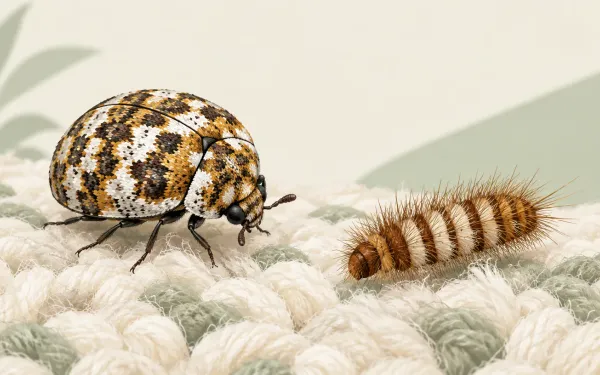
Iowa State says they can’t cause structural or cosmetic damage, and adults inside don’t feed or breed: every stink bug you find in winter crawled in the fall before. The one hidden risk is dead bugs piling up in walls, which Kentucky warns can feed carpet beetles that move on to wool and stored food.
How to Confirm It’s a Stink Bug
- Look at the head: short and tucked in, not long and cone-shaped.
- Check the body: a wide shield with light and dark bands along the edge.
- Check the antennae for white bands.
- Note when and where: clusters on sunny walls and windows in fall.
What to Do Next
Keep the fluid off your skin: use gloves or a tissue, or brush a single bug into a cup of soapy water (University of Kentucky). Larger numbers call for a vacuum and sealed gaps, step by step in the plan to get rid of stink bugs; another fall invader, the boxelder bug, has its own guide. Skip indoor sprays and bug bombs, which won’t stop new bugs coming in. Renting? Report gaps around windows and vents to your landlord in writing.
Call a pro only if stink bugs are a problem every year: Maryland Extension says exterior sprays should be applied by a licensed operator in fall, just before the bugs gather.
- Brush stink bugs into soapy water, never crush them barehanded.
- Wash your hands after any contact.
- Rinse eyes for 15 to 20 minutes if fluid gets in.
- Bag a cone-headed bug for ID instead of touching it.
- Vacuum clusters with a stocking in the tube.
- Seal window and siding gaps before next fall.
Common questions
Nothing; it can’t bite or sting. Brush it off rather than slapping it, because a crushed stink bug can leave irritating fluid on your skin, then wash the spot.
No. Iowa State says stink bugs can’t reproduce indoors or during winter, and females can’t lay eggs until early spring. Eggs go on the undersides of leaves outdoors.
Sources and further reading · 11
- University of Kentucky Entomology: Stink Bug Infestation of Dwellings (ENTFACT-654).
- National Pesticide Information Center: Stink Bugs.
- UC IPM: Brown Marmorated Stink Bug.
- University of Maryland Extension: Tips for Dealing With Brown Marmorated Stink Bugs.
- Iowa State University Extension: Brown Marmorated Stink Bug.
- Texas A&M: Kissing Bugs and Chagas Disease, Found a Bug?, and CDC: About Chagas Disease.
- NC State Extension, Lee County: Watch Out for Wheel Bugs.
- Mertz et al., The brown marmorated stinkbug as a new aeroallergen, Journal of Allergy and Clinical Immunology, 2012.
- Shen and Hu, Irritant contact keratitis caused by the bodily fluids of a brown marmorated stink bug, Taiwan Journal of Ophthalmology, 2017.
- Poison Control: Splashed a Poison in Your Eye?
- Pets: Ask Extension: Brown Marmorated Stink Bugs, Dogster: My Dog Ate a Stink Bug (Vet Answer) and ASPCA Animal Poison Control.