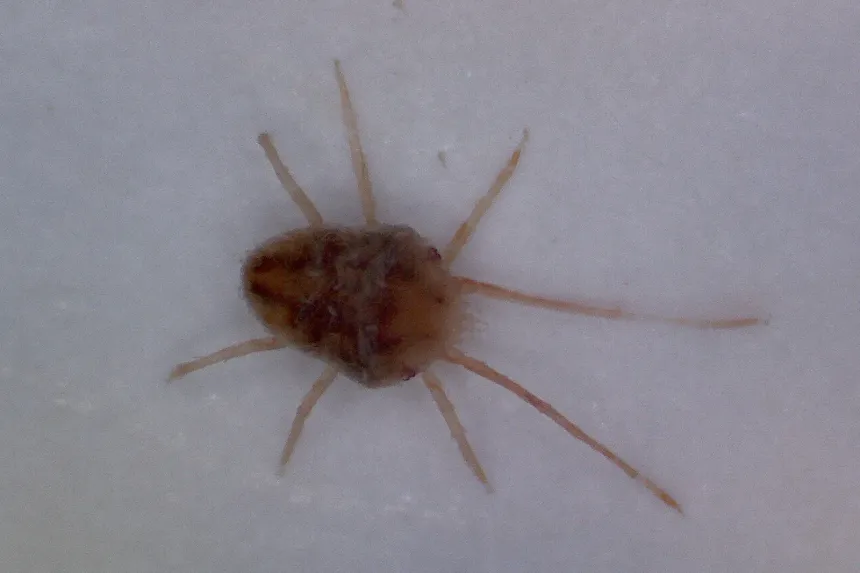
- Scientific name
- Bryobia praetiosa
- Also called
- tiny red bugs, red mites
- Size
- About 1/30 in, smaller than a pinhead
- Color
- Red to reddish brown; long front legs
- Found in
- Sunny walls, windowsills, curtains; lawns next to the foundation
- Harmful?
- No. Red stains when crushed
- Active
- Spring and fall, on sunny days
Clover mites are tiny red mites, smaller than a pinhead, that climb sunny walls by the thousands in spring and fall and crawl over windowsills and curtains. They’re harmless: they don’t bite, carry disease or breed indoors, but they leave a rusty stain when crushed. The one thing to do: vacuum them instead of crushing them, and keep grass away from the sunny side of the foundation.
This page covers how to identify clover mites, why they come in and how to keep them out. It rests on University of Kentucky and Colorado State University Extension guidance.
How to Identify Clover Mites: Walking Dust Specks
- Tiny: about 1/30 inch, smaller than a pinhead; Colorado State calls them “walking dust specks.”
- Red to reddish brown, sometimes dark green, moving slowly.
- Front legs much longer than the others, held forward like antennae.
- Red smear when crushed, which can stain fabric and paint.
Clover Mite vs. Look-Alikes: Long Front Legs
| Pest | How it differs | How to tell |
|---|---|---|
| Clover mite | Red speck on sunny windowsills | Long front legs; red smear; doesn’t bite |
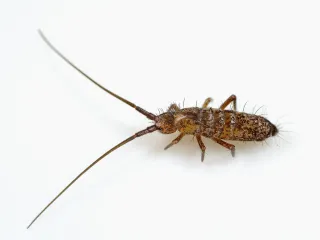
| Springtail | Gray, brown or white, jumps | In damp spots, not sunny windows |
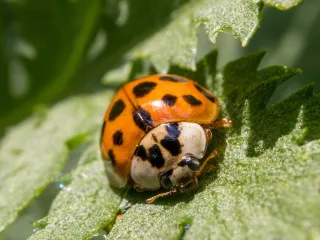
| Asian lady beetle | A real beetle, 1/4 in | Orange with an M mark behind the head |
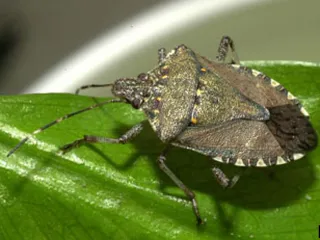
| Bird mite | Gray, turns red after feeding | Bites; comes from a nest in the eaves or a vent |
Why Clover Mites Come Inside: Sunny Walls Next to Lawns
They breed outdoors on grass, clover and other plants from fall through early May. On warm days in fall and spring, large numbers climb out of the lawn to shed skins and lay eggs, and they slip in through cracks around windows and doors. South-facing walls get the most, especially where lush grass grows right up to the wall (Colorado State).
When You’ll See Them: Cool Seasons Only
Clover mites are cool-season mites. As it warms in late spring they lay dormant eggs that don’t hatch until fall, so indoor problems end on their own by the end of May or early June. In spring they can also damage the lawn along sunny foundations, which is often mistaken for winter kill.
Are Clover Mites Harmful? No
They don’t bite people or pets, don’t carry disease and don’t breed indoors. The only damage is red stains when they’re crushed.
How to Confirm They’re Clover Mites
- Look closely for red specks with long front legs on a sunny windowsill.
- Wipe one on white paper: a red smear confirms it.
- Check the timing: spring or fall, on warm, sunny days.
What to Do: Vacuum, Don’t Crush; Keep Grass Back
Vacuum or wipe them up with a damp cloth instead of crushing them. Outside, a plant-free strip about 3 feet wide along the foundation is usually enough to stop most of them (Colorado State), though some may still cross it. Seal gaps around windows. A fine line of talc baby powder, diatomaceous earth, baking soda or cornstarch along windowsills and entry points can block them. The full plan is in how to get rid of clover mites. For other pests, browse all pest guides.
Often confused with
Sources
- Clover Mites (University of Kentucky Entomology, EF627)
- Clover Mites and Other Mites of Turfgrass (Colorado State University Extension)
Last reviewed Oct 4, 2026.
_viewed_with_digital_microscope.jpg)