How to Get Rid of Clover Mites (Tiny Red Bugs) in Your House
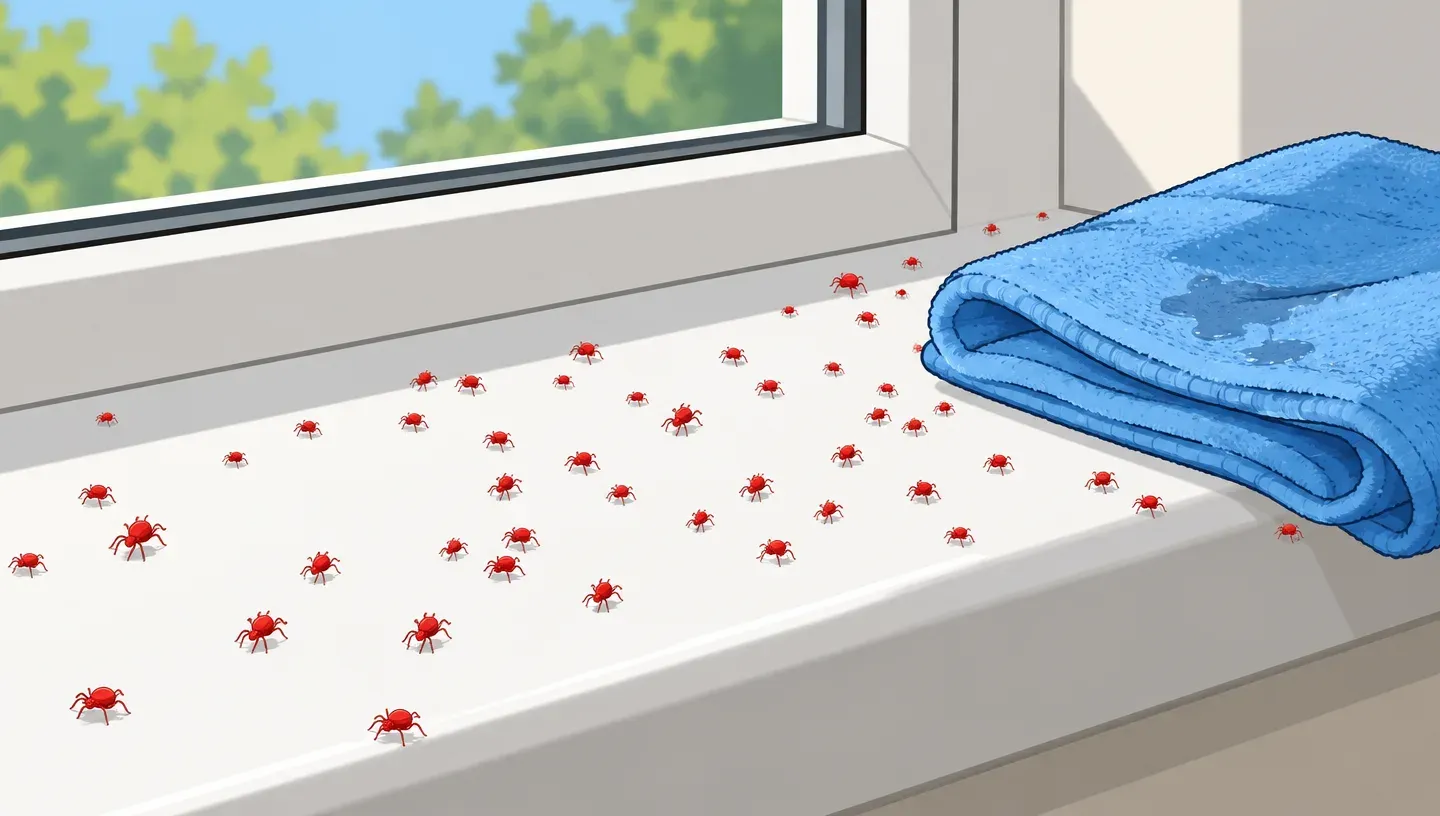
Illustration: clover mites on a sunny windowsill, with a damp cloth ready to wipe them up.
How to get rid of clover mites: vacuum them or wipe them up with a damp cloth, without crushing them, then seal the cracks around sunny windows and keep a strip of bare soil about 3 feet wide along the foundation. Indoor sprays aren’t needed. They’re under control when sills stay clear on warm days.
Cost: about $5 in supplies. Difficulty: easy. Call a pro if thousands come in every spring and fall in spite of a plant-free strip and sealed windows, and you want the foundation treated by a professional.
This page covers how to tell clover mites from look-alikes, why they come in, the three steps (remove, seal, bare strip), whether you need a spray and the roughly $5 in supplies. We haven’t tested these methods ourselves; this rests on University of Minnesota and Colorado State extension guidance, plus a store list price.
Tiny red bugs on the windowsill tonight? Don’t squash them; they leave red stains. Vacuum them up or wipe them with a damp cloth, then rinse it. They don’t bite and can’t hurt you, your pets or your house.
What Works and What Doesn’t Against Clover Mites
A vacuum, caulk and a bare strip of soil do the work; crushing them, landscape rock and indoor sprays don’t.
| Method | Works? | Cost | Main limitation |
|---|---|---|---|
| Vacuum or damp cloth | Yes, for mites indoors | A vacuum you own | More arrive on the next warm, sunny afternoon until cracks are sealed. |
| Caulking cracks around sunny windows | Yes, prevents indoor migrations | $4.99 for a tube of caulk | Each window on the south and west sides needs doing. |
| A dust line across the sill | Yes, as a barrier | From your cupboard | Has to be wiped away and redone each season. |
| A bare-soil strip about 3 feet wide | Yes, the long-term fix | Free, plus a shovel | Means giving up grass along the sunny foundation. |
| Landscape rock instead of bare soil | Not on its own | — | The University of Minnesota says rock alone isn’t enough of a deterrent. |
| Extra watering at the sunny wall base | Helps | Free | Only reduces numbers in warm, dry spots. |
| Indoor sprays | Not needed | — | A vacuum and damp cloth handle them. |
| Lawn chemicals | No | — | There are no highly effective chemical controls for clover mites in lawns. |
| Squashing them | No | Free | Leaves rusty or blood-red stains on sills, paint and fabric. |
Are They Clover Mites?
Clover mites are smaller than the head of a pin, reddish to reddish-brown, and leave rusty or blood-red spots when crushed (University of Minnesota Extension). Colorado State says people describe them as “walking dust specks”; up close they have an unusually long pair of front legs. Two other specks get mistaken for them:
| Speck | Looks | Where | Bites? |
|---|---|---|---|
| Clover mite | Red, slow, long front legs | Sunny windowsills and curtains, spring and fall | No |
| Bird mite | Gray or translucent, red after feeding, fast | Near bird nests in eaves, vents and attics | Yes, itchy bites |
| Springtail | Gray, white, black or bluish | Damp bathrooms, basements, plant soil | No |
Our clover mite page has close-up photos.
Why Are Clover Mites in My House?
They live in your lawn, feeding on grass, clover and other plants, and breed outdoors from fall through early May (Colorado State). On warm days in fall and spring, large numbers climb walls and slip in through cracks around windows and doors. Most gather on the sunny side of the house, south and west, indoors or out (University of Minnesota Extension).
They’re cool-season mites: they go quiet in cold weather, and in Colorado spring invasions end on their own by the end of May.
Are they harmful? No. Clover mites don’t bite people or animals and don’t damage the house or furnishings (University of Minnesota Extension). The only harm is the red stain if you crush them.
Step 1: Vacuum or Wipe Them Up Without Crushing
Physically remove them with a vacuum or a moist cloth, and be careful not to crush them; that’s the University of Minnesota’s advice. Expect more on the next warm, sunny afternoon until the cracks are sealed.
Damp cloth on hard sills. Wipe gently and rinse the cloth in the sink, not on the sill.
Best for: a few dozen on painted sills and glass.
Main limitation: press too hard and you smear red stains.
Vacuum on fabric and big clusters. On curtains and upholstery, vacuum instead of wiping, since a smear will stain.
Best for: curtains, carpet and sills crowded with mites.
Main limitation: you’ll repeat it every warm day until the windows are sealed.
Step 2: Seal the Sunny Windows
Caulk the cracks around windows first: carefully caulking the openings they use can prevent indoor migrations (Colorado State). Start with windows on the south and west sides, then doors.
Best for: stopping them for good at the windows they use most.
Main limitation: it only works on the gaps you find, so watch where they appear on the next warm day.
Add a dust line as a stopgap. Colorado State says a fine line of talc baby powder, diatomaceous earth, baking soda or cornstarch across the sill and around other entry points can create a barrier they won’t cross. Wipe it away once the season ends.
Best for: the weeks before you can caulk, or a rental where you can’t.
Main limitation: it smudges, so it has to be redone each season.
Step 3: Keep a Plant-Free Strip at the Foundation
This is the long-term fix. Keeping grass and other host plants away from the base of the foundation largely deters them, and Colorado State says a plant-free barrier about 3 feet wide is usually enough, mostly on the sunny south and west sides.
- Bare soil, not rock. The University of Minnesota says to keep the strip free of grass and leaves, and that landscape rock alone isn’t enough of a deterrent.
- Space any plants in that zone far enough apart that mites can’t bridge across.
- Water dry spots. Colorado State says extra watering of warm, dry areas at the base of sunny walls can greatly reduce populations.
Best for: houses where lush grass meets a sunny wall.
Main limitation: it takes digging, and you lose that strip of lawn.
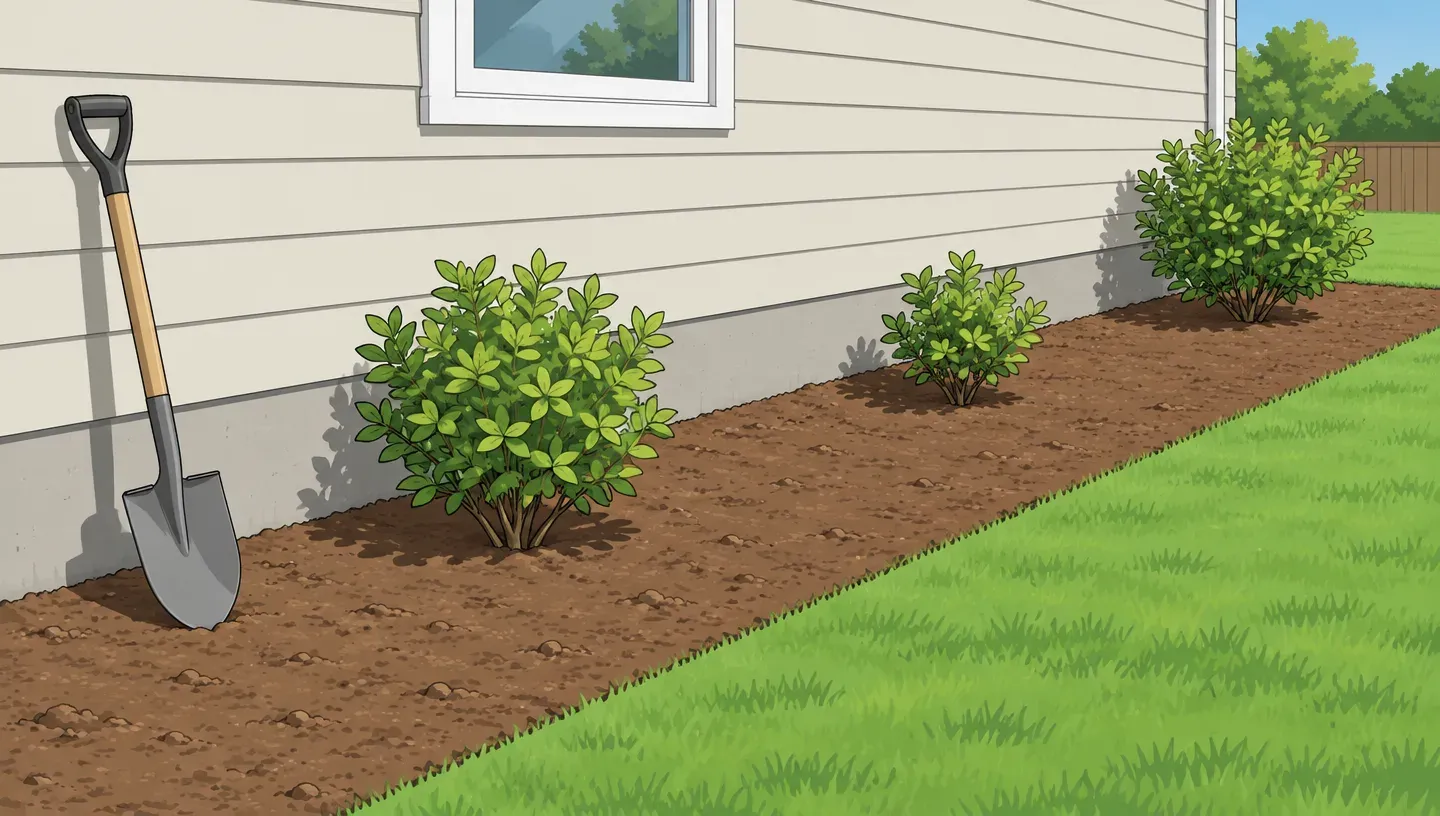
Illustration: a strip of bare soil about three feet wide between the lawn and a sunny foundation wall.
Do You Need a Spray for Clover Mites?
Indoors, no; a vacuum and damp cloth handle them. Outdoors, the University of Minnesota says a residual pesticide on the foundation is an option and suggests a professional pest control service for exterior treatments. Colorado State notes there are no highly effective chemical controls for clover mites in lawns, so the plant-free strip and sealing do most of the work.
Which Plan Fits Your Situation
| Situation | What to do | Why |
|---|---|---|
| You rent | Vacuum and wipe; ask the landlord in writing, with photos, to caulk the windows | Window caulking and landscaping are usually the landlord’s call. |
| Kids or pets at home | Vacuum, damp cloth and a baking soda or cornstarch sill line | Clover mites don’t bite people or animals, so there’s nothing to spray. |
| Mites on curtains or light fabric | Vacuum, never wipe | A smear stains fabric. |
| Lawn grows right up to the sunny wall | Dig a bare strip about 3 feet wide on the south and west sides | They walk from the grass straight up the wall. |
| Red specks that bite, near vents or eaves | Look for a bird nest instead | Biting specks near nests point to bird mites, not clover mites. |
| Thousands every spring and fall after all that | Have a pro treat the foundation (what an exterminator does) | Minnesota suggests a professional for exterior treatments. |
What It Might Still Cost
| Item | Price |
|---|---|
| 100% silicone caulk, 2.8 oz tube | $4.99 |
| Baby powder or baking soda for a sill barrier | From your cupboard |
| DIY total | About $5 |
Caulk: Target list price, October 2, 2026, before tax. Assumes you own a vacuum and caulk gun; a shovel for the bare strip is extra.
Before You Start: A Quick Checklist
- Confirm the speck: red, slow, long front legs, on a sunny sill.
- Wipe or vacuum them without pressing down.
- Rinse the cloth in the sink, not on the sill.
- Caulk the south and west windows first.
- Lay a dust line on the sill until the caulk is done.
- Dig a bare-soil strip about 3 feet wide, not a rock border.
When to Call a Pro
Rarely needed. Consider one if thousands come in every spring and fall even after you’ve sealed windows and cleared a plant-free strip, and you want the foundation treated.
Other Fall Invaders
These come in through the same sunny-side cracks:
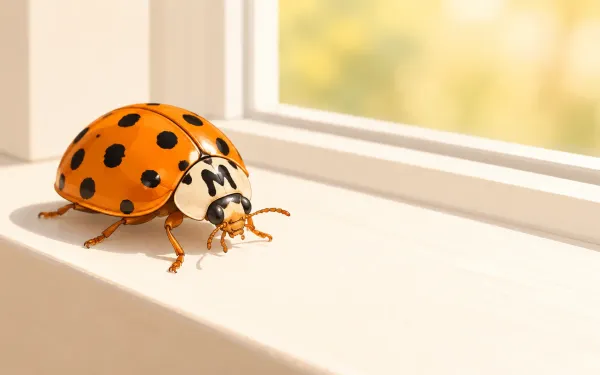
- Asian lady beetles: orange “ladybugs” swarming windows.
- Boxelder bugs: black and red bugs on sunny walls.
- Cluster flies: sluggish flies at attic and upstairs windows.
- Stink bugs: brown, shield-shaped bugs that smell when disturbed.
Common questions
No. They feed on plants and don’t bite humans or animals (University of Minnesota Extension). A red mark is from a crushed mite, not a bite.
Yes, seasonally. They go inactive in cold weather, and spring invasions end by late May in Colorado as they lay eggs that won’t hatch until fall. They’ll be back next fall or spring unless you seal and keep the plant-free strip.
No. They come from the lawn, not from anything in your house, and clean homes with lawns right up to the foundation get them too.
The Bottom Line
Wipe or vacuum clover mites without crushing them, and skip indoor sprays. The lasting fix costs about $5: caulk on the sunny windows and a bare-soil strip about 3 feet wide between the lawn and the wall.
Sources and further reading · 3
- University of Minnesota Extension: Clover Mites — identification, staining, no bites, sunny side, vacuum or damp cloth, bare soil barrier, landscape rock.
- Colorado State University Extension: Clover Mites and Other Mites of Turfgrass — seasons, “walking dust specks,” long front legs, 3-foot plant-free barrier, caulking, dust barriers, watering.
- Price: Target (silicone caulk).