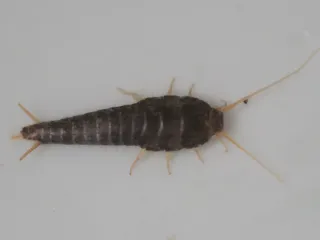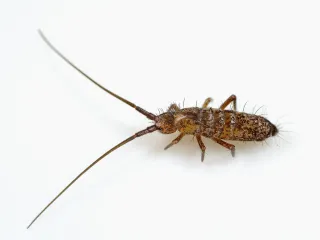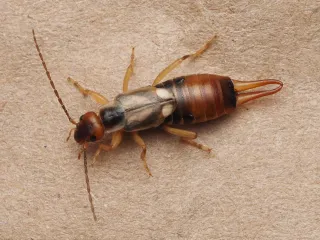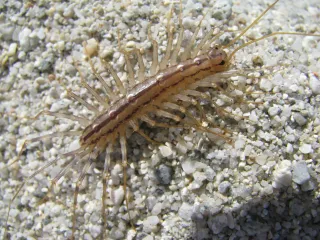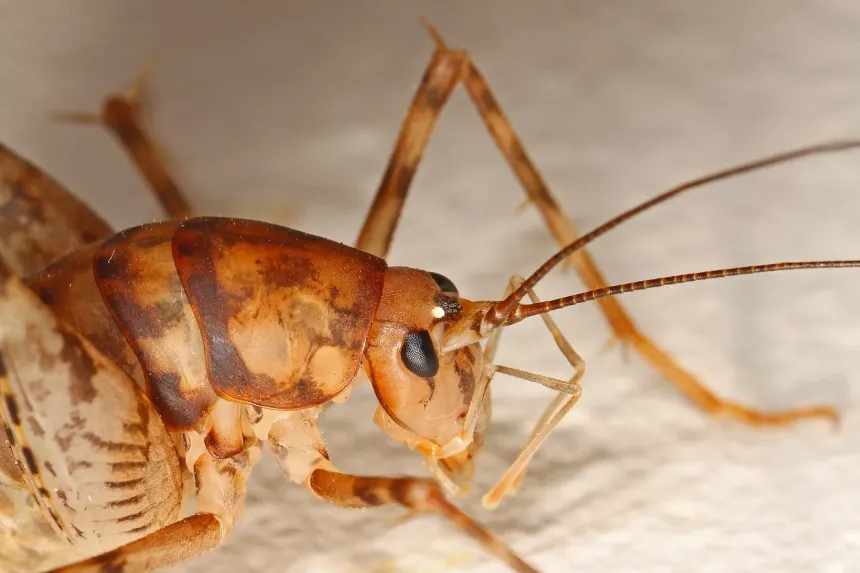
- Scientific name
- Rhaphidophoridae (family)
- Also called
- cave cricket, spider cricket, sprickets, greenhouse stone cricket
- Size
- Body about 1/2–1 1/2 in, with long legs and antennae
- Color
- Light to dark brown, often mottled or banded
- Found in
- Basements, garages, crawl spaces, sheds, laundry rooms
- Harmful?
- No. Can damage stored fabric in heavy infestations
- Active
- Year-round; worse in very wet or very dry weather
Camel crickets are wingless, humpbacked crickets with very long legs that gather in damp basements, crawl spaces and garages. They’re harmless to people and silent, but in large numbers they can chew stored fabric and cardboard. The one thing to do: dry out the space and seal gaps around doors, vents and crawl-space openings.
This page covers how to identify camel crickets, tell them from house crickets and keep them out. It rests on NC State Extension and UC IPM guidance.
How to Identify a Camel Cricket: Humped Back, Long Legs
- Humped back, like a camel.
- Very long hind legs and antennae; the antennae are often longer than the body.
- No wings, light to dark brown with mottled or banded markings.
- Jumps toward you when startled, which is why they’re sometimes called spider crickets.
- Silent: camel crickets don’t chirp.
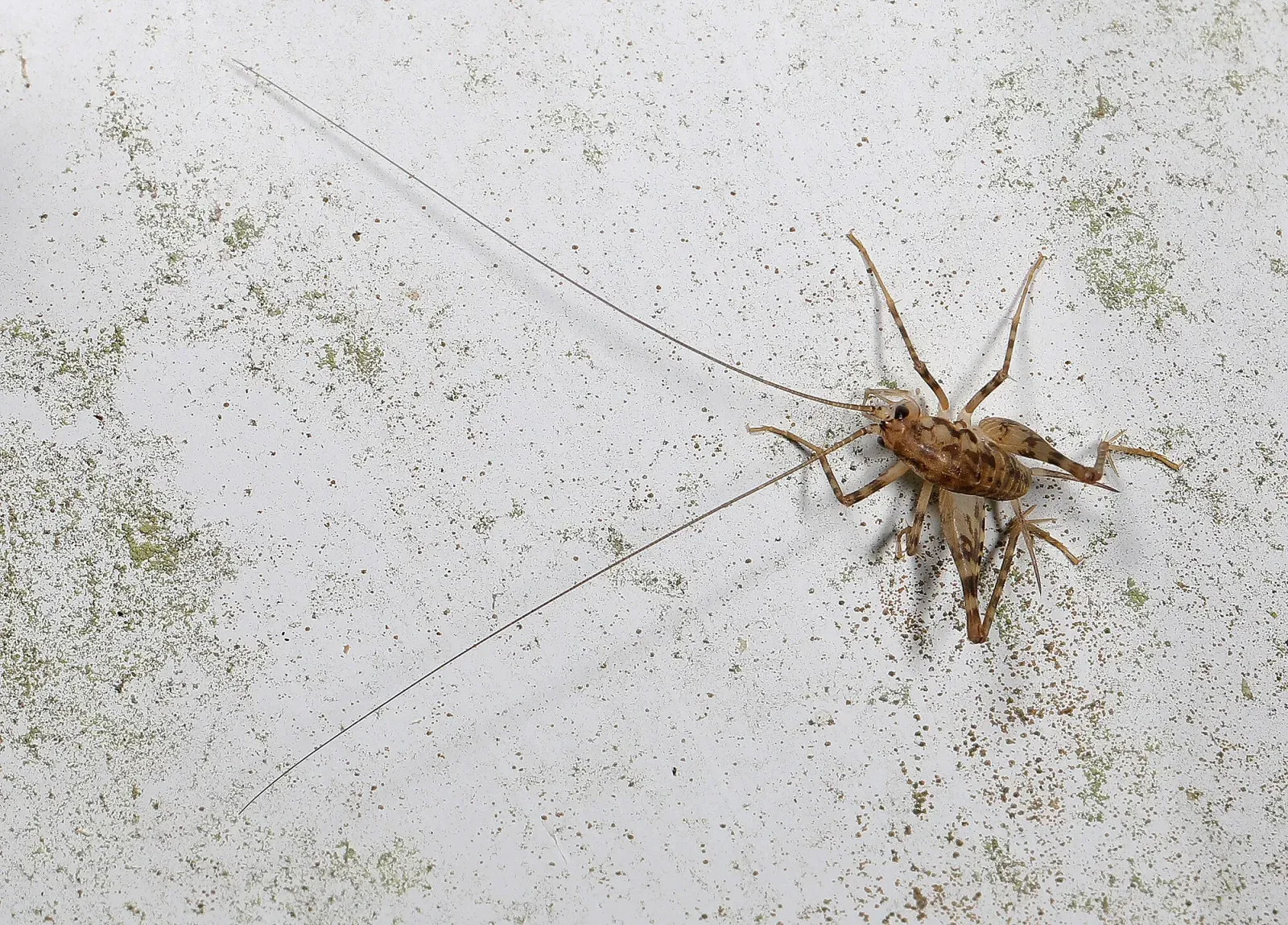
A camel cricket on a damp wall; the long legs and antennae make it look spider-like. Photo: Judy Gallagher (CC BY 2.0), via Wikimedia Commons.
Camel Cricket vs. Look-Alikes: Hump and Silence
| Creature | How it differs | How to tell |
|---|---|---|
| Camel cricket | Humpbacked, wingless, silent | Damp basements and crawl spaces |
| House cricket | Flat back, wings, light yellowish brown | Chirps at night; three bands on the head |
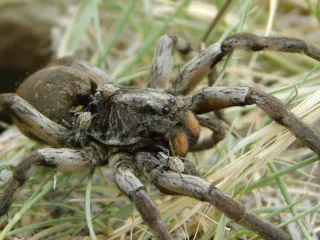
| Wolf spider | Eight legs, hairy, no antennae | Runs rather than jumps |
A chirping cricket indoors is a field or house cricket, not a camel cricket.
Why Camel Crickets Come Inside: Cool, Damp Shelter
Outdoors they hide under stones, logs, firewood and ivy. They move indoors into cool, damp spaces, especially during very wet or very dry weather. Like other crickets, they’re active at night and hide by day (UC IPM).
Where You’ll Find Them: Damp Lower Floors
- Basement corners, sump pits and floor drains
- Garages, sheds and crawl spaces
- Laundry and utility rooms
- Window wells and under decks
Are Camel Crickets Harmful? Mostly a Nuisance
They don’t bite or carry disease. In large numbers they can chew stored clothing, linens and cardboard in damp basements and leave dark droppings on joists and walls. Ragged holes in soiled fabric are one of the patterns on holes in clothes.
How to Confirm It’s a Camel Cricket
- Look for the hump and the missing wings.
- Listen: no chirping.
- Check the setting: a damp basement, crawl space or garage.
What to Do: Dry Out, Seal, Trap
Dry out the space with a dehumidifier and better ventilation, seal gaps around doors, vents and crawl-space openings, and clear ivy, woodpiles and debris near the foundation. Sticky traps along basement walls catch large numbers; how to get rid of crickets has the step-by-step plan. Sizing a dehumidifier for a damp basement is covered in dehumidifiers for bugs. For other pests, browse all pest guides.
Often confused with
Sources
Last reviewed Oct 4, 2026.