Pest guide
Pantry Moth Guides
Find the infested food, clear the pantry, store dry goods so moths can’t get back in, and use traps the right way. Practical, sourced DIY guides.
2 guides · Updated Oct 5, 2026
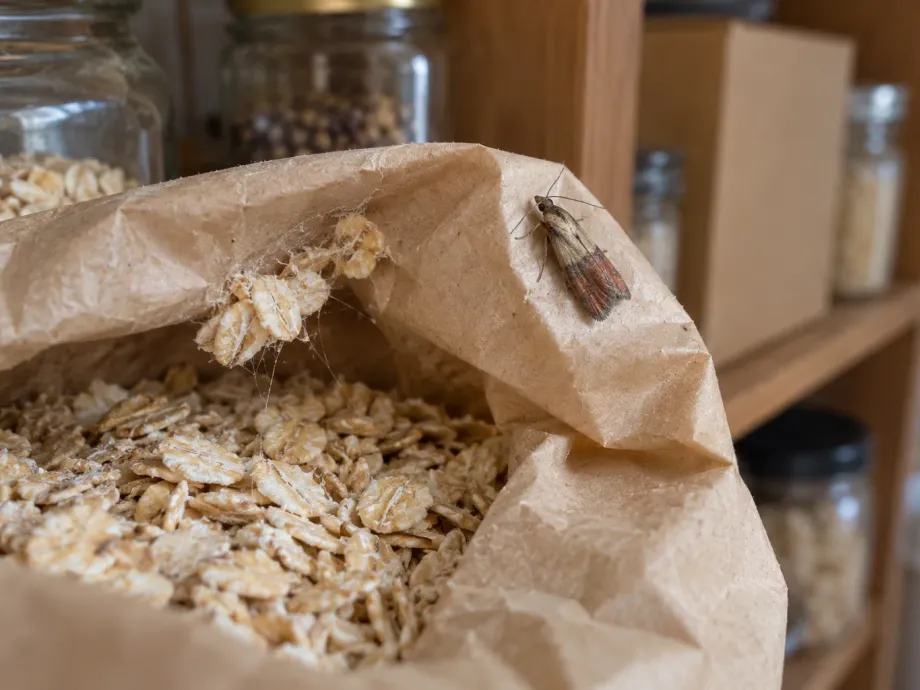
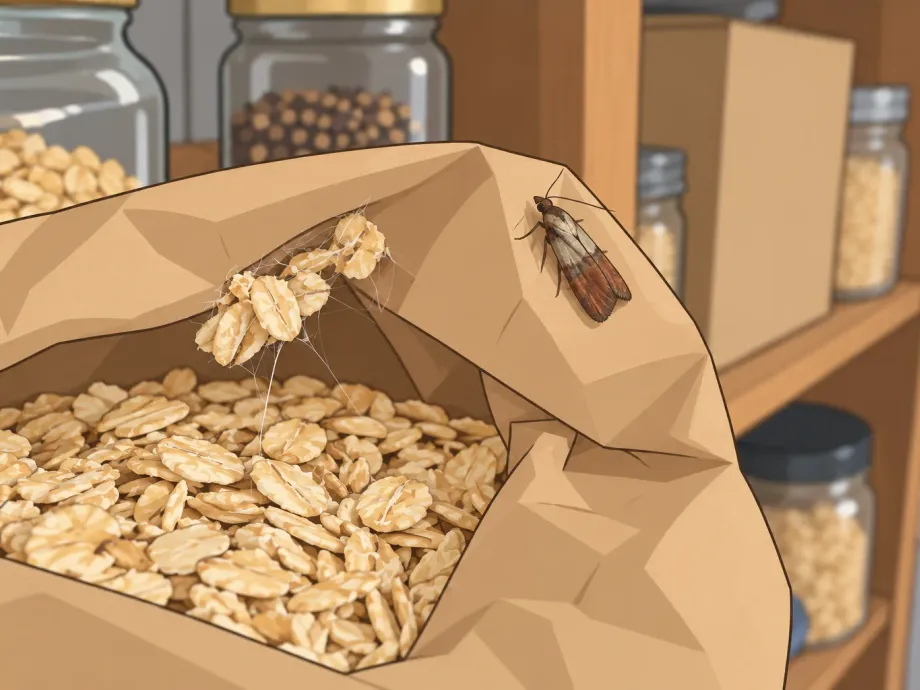
Pantry moths overview
How to identify pantry moths
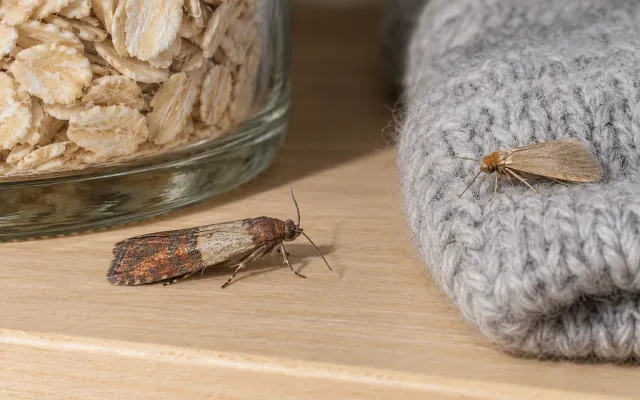
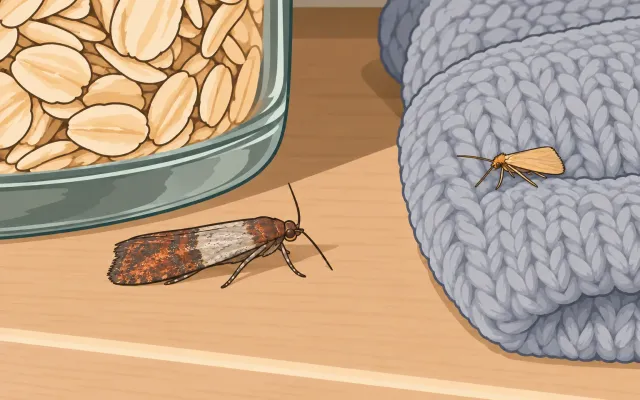
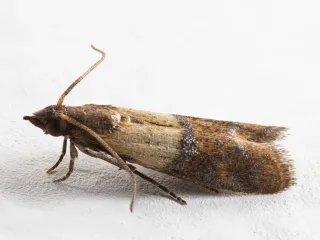
The usual pantry moth is the Indian meal moth: about ½ inch long at rest, with wings pale gray near the body and coppery red-brown on the outer two-thirds. Adults fly at night and are often seen in the kitchen. The larvae are small caterpillars that leave webbing in package folds and clump food together with silk (UC IPM, Clemson).
Why they’re in your house
Pantry pests usually come home in an infested package, often one damaged at the store or opened and forgotten (UC IPM). Flour, cereal, nuts, dried fruit, chocolate, spices, dry pet food and birdseed are the usual sources, and a single missed package can restart things within a month or two.
Where to start
Read how to get rid of pantry moths: find every infested package, throw it out sealed, freeze anything you suspect, vacuum and wash the shelves, and store dry food in containers with tight lids. Pheromone traps then show whether you found the source. If the moths are in your closet rather than your food, see pantry moths vs. clothes moths.
How to keep them out
Plastic bags aren’t enough: pantry moth larvae can chew through plastic and zip-top bags (NPIC). Store flour, rice, pasta and cereal in glass jars or thick plastic containers with tight lids, keep pet food and birdseed in a lidded bin, and freeze rarely used flours, grains and spices. UC IPM advises keeping susceptible food sealed, refrigerated or frozen for at least several months after a cleanout. Use older packages first, and check new ones for webbing or holes.
When to call a pro
Call a professional only if you have thrown out every infested package and sealed your dry goods, but moths or larvae still turn up after six to eight weeks. Sprays aren’t needed in food cupboards.
Sources: UC IPM: Pantry Pests; Clemson HGIC: Indian Meal Moth; University of Kentucky: Stored Product Pests in the Pantry (EF612)
Clothes moth guides that also cover pantry moths
1 guideWritten mainly about clothes moths, with advice that applies to pantry moths too.
Identify the species
Pictures, size and look-alikes in the Pest Library.
Not a pantry moth?
Guides for other pests.
- Mouse Control Guides44 guides
- Rat Control Guides34 guides

- Pantry Beetle and Weevil Guides2 guides
- Clothes Moth Guides2 guides
- Carpet Beetle Guides6 guides
- Cockroach Guides19 guides
- Silverfish Guides3 guides
- Springtail Guides2 guides
- Fly and Gnat Guides6 guides
- Stink Bug Guides2 guides
- Fall Invader Guides7 guides
Pantry moth questions
Where do pantry moths come from?
Almost always from an infested food package brought home from the store. The eggs and larvae are already in the food.
Do pheromone traps get rid of pantry moths?
No. They only catch males and show whether moths are still around, but the fix is throwing out the infested food and sealing the rest.
Can I keep food that had pantry moths in it?
Throw out anything with webbing, larvae or holes. Food you only suspect can be frozen to kill eggs and larvae, then stored in a sealed container.