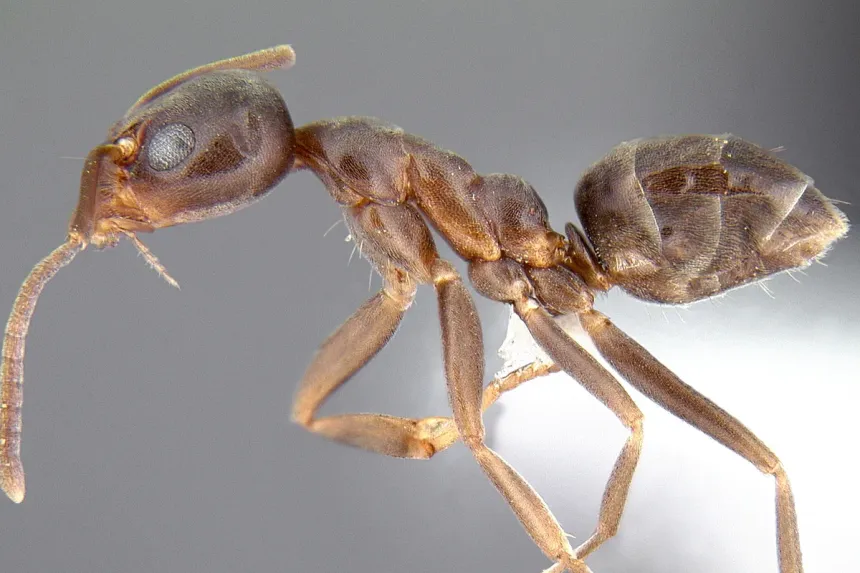
- Scientific name
- Linepithema humile
- Size
- About 1/8 in
- Color
- Light to dark brown
- Found in
- Mulch, soil, under pots; indoors along counters and pipes
- Harmful?
- Nuisance; protects plant pests in gardens
- Active
- Year-round in mild climates; invades in hot, dry or wet spells
- Pro quotes
- $250–$500
The Argentine ant is a small, plain brown ant that marches in thick, steady trails and is the most common household ant in much of California and widespread in the Southeast. Its nests link into enormous supercolonies with many queens, which is why wiping out one trail barely makes a dent. The one thing to do: use slow-acting baits along the trails, indoors and out, instead of spraying.
This page covers how to identify Argentine ants, tell them from look-alikes and why they swarm indoors. It rests on UC IPM and University of Kentucky guidance.
How to Identify an Argentine Ant: Small, Brown, Steady Trails
- About 1/8 inch, light to dark brown, all the same size.
- Single bump at the waist and no stinger.
- Thick, steady trails that run along edges, often several lines wide.
- Little or no smell when crushed, unlike the odorous house ant’s coconut smell.
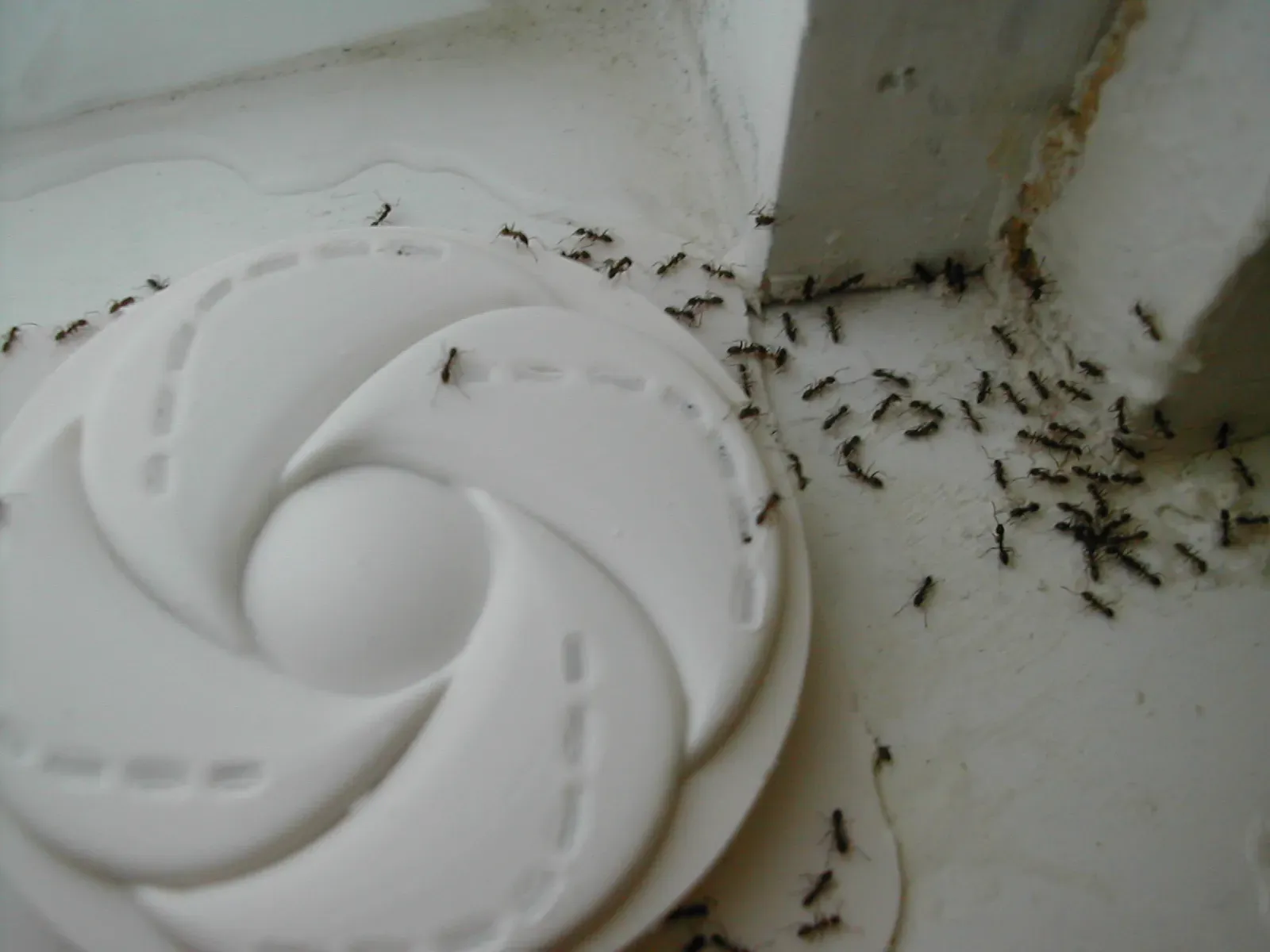
Argentine ants crowding a bait station; dozens show up within hours of finding food. Photo: Thmazing (Public domain), via Wikimedia Commons.
Argentine Ant vs. Look-Alikes: Smell and Color
| Ant | How it differs | How to tell |
|---|---|---|
| Argentine ant | Light to dark brown, one size | No strong smell; huge trails |
| Odorous house ant | Darker, slightly smaller | Rotten-coconut smell when crushed |
| Pharaoh ant | Tiny, pale yellowish | Indoors near heat and water |
| Pavement ant | Dark, grooved head | Soil piles in sidewalk cracks |
Why There Are So Many: Supercolonies
UC IPM says Argentine ant colonies aren’t separate but linked into one large supercolony with multiple queens. Nests are shallow, just below the soil surface, and new queens leave with workers rather than alone. In some areas their competition has slowed the spread of fire ants.
Where You’ll Find Them: Next to the House and on Plants
- In mulch, soil and under pots next to the house
- Trailing up plants to feed on honeydew from aphids and scale
- Indoors along counters, around sinks, in pet food and trash
They push indoors in large numbers during hot, dry spells and after heavy rain.
Are Argentine Ants Harmful? Not to People
They don’t sting or damage the house. In gardens they protect aphids, scale, whiteflies and mealybugs from their natural enemies for the honeydew, which makes those plant pests worse.
How to Confirm It’s Argentine Ants
- Crush one: no strong smell.
- Look at the trail: steady, several ants wide, all one size.
- Check plants near the house for ants tending aphids or scale.
What to Do: Bait, Seal, Clean Trails
Put slow-acting liquid or gel baits along the trails, both indoors and outside; refillable stations with a dilute borate-sugar bait are best for severe Argentine ant problems (UC IPM). Seal entry points, wipe trails with soapy water, and keep sweet foods sealed. UC IPM says baits beat sprays for ants: workers carry the bait back so the whole colony, queens included, can be killed, while sprays mostly kill foragers. If you hire a pest control company, ask for baits and spot treatments rather than monthly perimeter sprays. For other pests, browse all pest guides.
Often confused with
Sources
Last reviewed Oct 5, 2026.